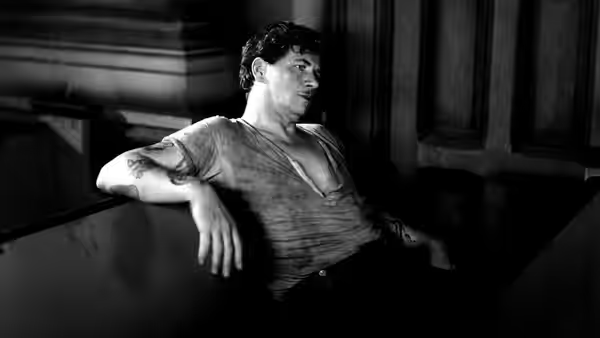
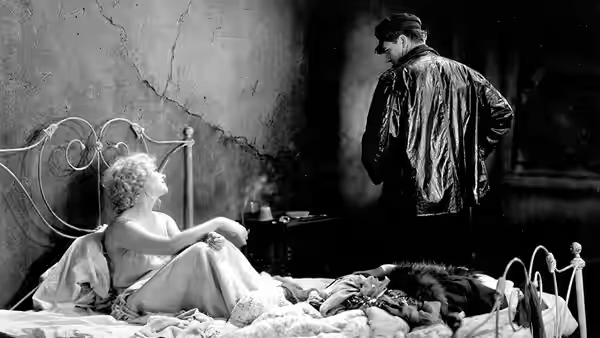
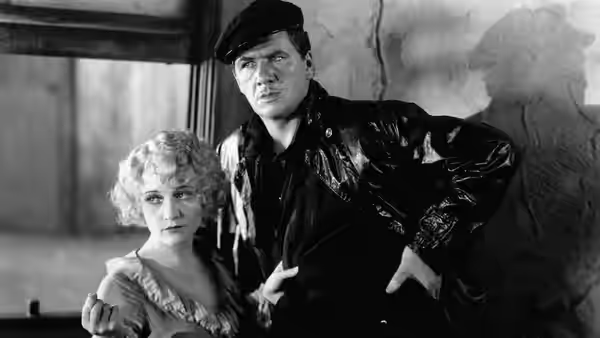
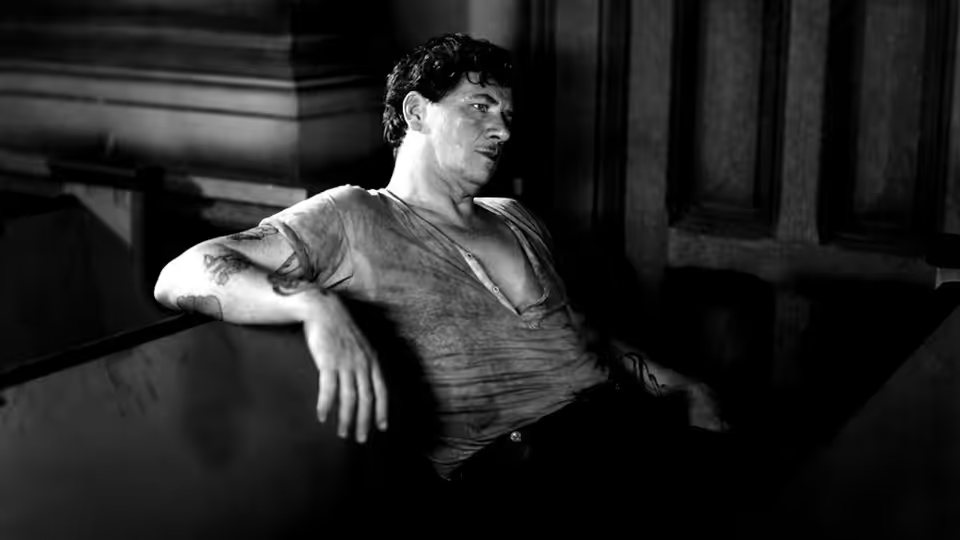
Bill Roberts (George Bancroft) reclines against a wall in an open-necked shirt
Film review

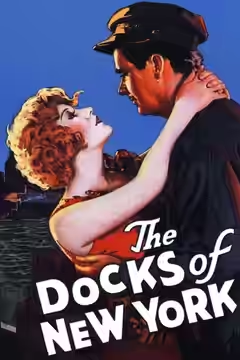
The Docks of New York

1928 · Directed by Josef von Sternberg · 1h 16m

In a sentenceWe would trust the women in this tavern with our troubles, and nobody else

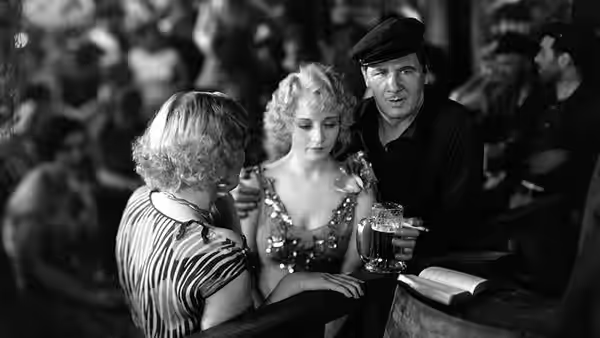
The Manhattan waterfront is the setting for a silent romantic drama centred on Bill Roberts (George Bancroft), Mae (Betty Compson) and Lou (Olga Baclanova). At the Sandbar tavern, the film’s dockside company gathers in communal scenes. ‘Sugar’ Steve (Clyde Cook) and Andy (Mitchell Lewis) are also among its characters. The story gives attention to the women as well as to Bill, placing its romance within the surrounding waterfront life. Smoke, faces and small gestures fill its account of people living beside the water.

Fi1m review

Josef von Sternberg’s waterfront romance is well worth seeing for its smoke-filled images and the women who hold our attention within them. Some of the melodrama is blunt, though the performances kept us interested.

The Docks of New York is a rewarding romantic melodrama, with a little more dramatic emphasis than it needs. Josef von Sternberg gives the waterfront enough smoke and human activity to reward close looking, then makes the people worth that attention. The women are especially well served, retaining our sympathy when the romance becomes more predictable. At 76 minutes, the film leaves room for a surrounding company without allowing that company to overwhelm its leads.

Harold Rosson’s cinematography gives the billowing smoke a practical purpose as well as a decorative one. It makes us look through the image, picking out people and gestures instead of taking in the setting at a glance. The waterfront has weight and depth, and the Sandbar tavern supplies a busy human centre. There is pleasure in simply looking, though the prettiness can occasionally distract from the harder feelings. The director is usually alert enough to bring our attention back to an actor.

George Bancroft gives Bill Roberts the presence the male lead needs, though we found Betty Compson’s Mae and Olga Baclanova’s Lou more compelling. Both suggest enough pride and hurt to make the simpler emotions around them look a little thin. We were moved by the communal scenes at the Sandbar tavern, where individual faces keep catching our attention within the gathering. The crowd feels like people whose troubles continue when we stop looking at them. The women are central to that effect.

Helen Lewis’s editing keeps the crowded material readable without making the film feel hurried. We have time to notice a gesture and still keep track of the larger scene, which matters when the setting offers so much to inspect. Jules Furthman’s screenplay is less persuasive when it leans hardest on familiar romantic melodrama. We sometimes recognise the sort of scene we are watching before the actors have had a chance to make it particular. The writing occasionally pushes for a feeling the performances have already made clear.

The film makes a good case for silent romance by trusting us to notice small gestures. Its stronger passages allow a face to hold our attention without demanding that every emotion be equally large. When the acting becomes more emphatic, we miss that trust. The moments that linger are smaller, especially within the tavern’s communal life. We would not trade that company for a tidier or more restrained film.

There is no need to approach it as homework in early cinema. The waterfront is inviting enough, and the people have sufficient life to make its conventions matter. It does ask for undivided attention, since a small movement can carry as much as a whole scene of romantic insistence. Watch it when you can give the people at the back of the tavern as much attention as the leads.
Critical consensus AI synthesised

77
Positive
5
Mixed
0
Negative
0
Time Out
15 March 2012
85*

The page presents the film as a silent classic and gives it an admiring verdict. It singles out von Sternberg’s visual detail, from billowing smoke to a character’s gestures.

Read the full review →
Radio Times
★★★★ · Adrian Turner
80

Turner describes the film as a compelling melodrama whose rediscovery corrects for its disastrous original timing. He praises von Sternberg’s striking imagery of lowlife settings and the story’s romantic fatalism.

Read the full review →
Slant Magazine
23 August 2010 · ★★★★ · Bill Weber
80

The critic finds The Docks of New York an engaging, emotionally assured silent film. He singles out its more compelling female characters and the memorable communal scenes at the Sandbar tavern.

Read the full review →
The New York Times
27 February 2004 · A.O. Scott
70*

The Critic’s Choice item recommends the film. Its headline singles out the meeting of Manhattan and the water.

Read the full review →
Variety
1 January 1928 · Variety Staff
70*

The review calls it a strong program picture, though not one of von Sternberg’s best. It praises George Bancroft’s performance and the photography, while faulting Betty Compson’s casting.

Read the full review →

Straight answers AI written, from our review

Is The Docks of New York worth watching?
The Docks of New York is well worth watching for its smoke-filled waterfront images and compelling women, and we score it 84. We recommend it to anyone willing to give a silent romance close attention: the small gestures and tavern faces reward it, though the writing sometimes presses emotions the performances already make clear.
How long is The Docks of New York, and what is it rated?
The Docks of New York runs 1h 16m. It is a drama and romance film.
Where can I watch The Docks of New York in Indonesia?
The Docks of New York is not on any streaming or rental service in Indonesia at the moment. It is available in 1 other country; change your country at the top of the page to see where. Availability is checked daily.
How does The Docks of New York compare to The Last Laugh?
The Docks of New York offers a broader, more communal romance than The Last Laugh, whose hotel doorman’s humiliation supplies a more concentrated source of pain. We favour the waterfront film for its women and crowded tavern life, and recommend the hotel drama for its painfully immediate central performance; both sometimes underline feelings that already register.
What should I watch after The Docks of New York?
After The Docks of New York, try The Last Laugh (1924, Fi1m 84): For another silent drama that makes public humiliation painfully easy to read. Then L'Atalante (1934, Fi1m 90): Another waterside romance, with tenderness surviving cramped quarters and difficult tempers.

Cast

If you liked this, try…

  1. The Last Laugh (1924, Fi1m 84)For another silent drama that makes public humiliation painfully easy to read.

  2. L'Atalante (1934, Fi1m 90)Another waterside romance, with tenderness surviving cramped quarters and difficult tempers.

  3. Port of Shadows (1938) · not on Fi1m yetFor fog, waterfront longing and people who struggle to trust their luck.

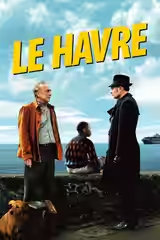
  4. Le Havre (2011) · not on Fi1m yetA gentler port community, where small practical kindnesses carry the story.

  5. The Immigrant (2013) · not on Fi1m yetFor a woman negotiating dependence in a period world thick with atmosphere.

The Docks of New York (1928) review: a fine romance in the smoke (Indonesia) | Fi1m