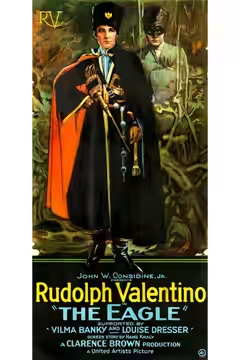
Clarence Brown’s adventure gets considerable mileage from Rudolph Valentino’s charm and Louise Dresser’s amused authority. The romance is less persuasive than the comedy, but the brisk running time helps keep its limitations manageable.
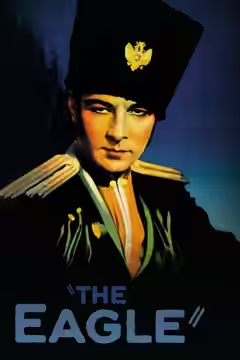
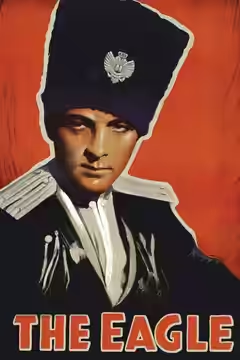
The Eagle works best when it allows its leading man to be amusing. Clarence Brown’s adventure gives Rudolph Valentino room to suggest that being handsome need not be a solemn occupation, and that makes him agreeable company. We recommend it as a light entertainment, with reservations about a romance that does not always earn the attention it receives. Across 73 minutes, the balance of adventure, affection and comedy is sufficiently lively to carry the less engaging passages.
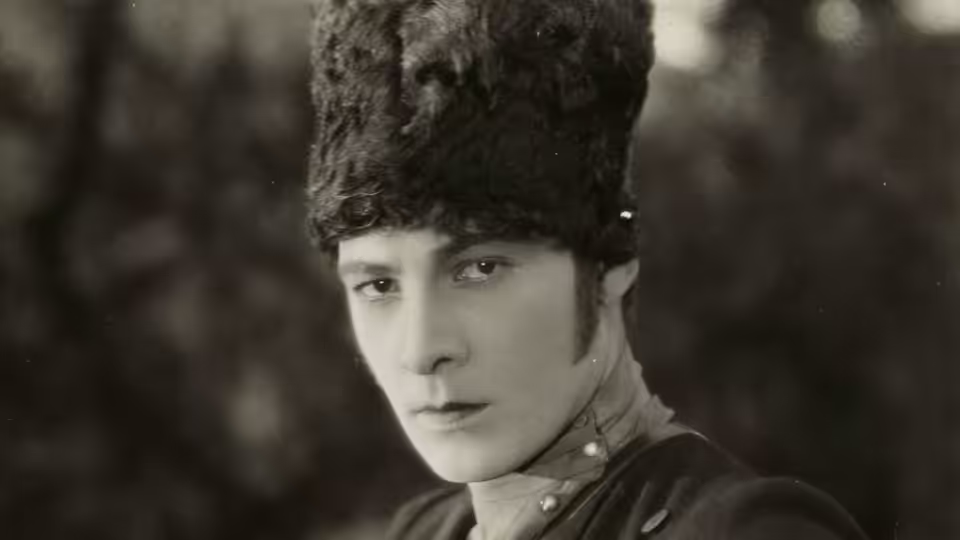
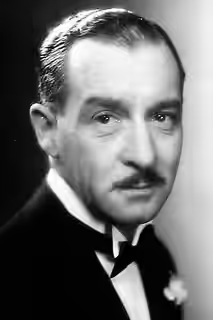
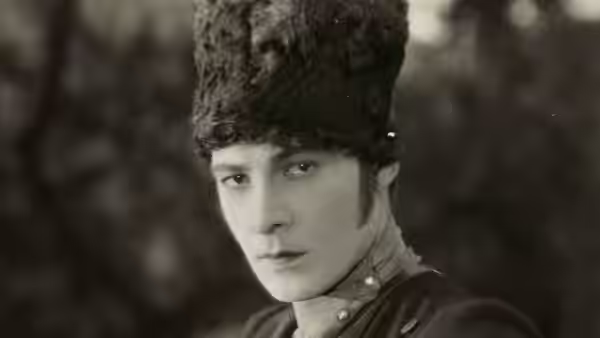
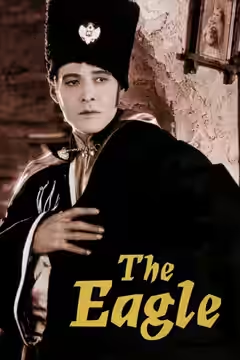
Valentino plays Lt. Vladimir Dubrovsky with an appeal that depends on more than the audience accepting him as desirable. There is pleasure in the difference between his formal bearing and the lighter impression he makes within it. Brown gives that quality sufficient attention; the leading performance does not become merely an excuse for the next piece of action. By the standards of romantic adventure, this is a useful strength: the company matters, particularly when the story asks us to take its hero’s attractions for granted.
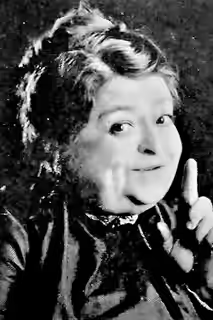
Louise Dresser supplies the sharper pleasure as Catherine II. She makes authority funny without making it seem harmless, and her performance has a confidence that Valentino can profitably encounter rather than simply dominate. We laughed at Dresser’s enjoyment of imperial importance; she makes the character’s rank feel like a personal advantage she has every intention of enjoying. Her contribution also exposes a weakness elsewhere, because the comedy gives us a more immediate reason to watch closely than the love story does.
Vilma Bánky’s Mascha Troekouroff is an appealing presence, but the romantic emphasis can feel more dutiful than persuasive. Bánky and Valentino are easy to look at together; we were less consistently persuaded to care about them together. Hanns Kräly’s screenplay, drawn from a novel by Alexander Pushkin, is more satisfying when judged for its lightness than for emotional depth. That is not a demand for heavier treatment, merely for the romantic passages to hold our attention as readily as Dresser’s performance does.
George Barnes’s cinematography serves the performers well: faces remain the chief attraction, and the attention given to Valentino feels justified by what he contributes. Adrian’s costume design supports the distinction in bearing between the officer and the imperial figure, helping the performances establish their relative importance. Hal C. Kern’s editing keeps the entertainment moving, though briskness cannot make every romantic passage equally absorbing. These are useful, complementary contributions, and Brown’s direction benefits from their willingness to keep the people prominent within an adventure.
The mixture is more rewarding than any expectation of a sustained romantic spell would suggest. Brown understands that a leading man can remain attractive while allowing somebody else to be funnier, and Dresser makes full use of that freedom. The reservations matter, but they need not rule out an evening with a film this compact and this amiable about its pleasures. Choose it for Valentino with a lighter touch, and leave room for Dresser to become the main attraction.