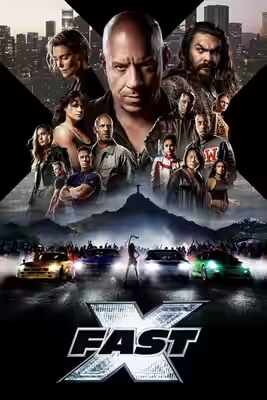
F. Gary Gray’s action sequel is entertaining in stretches and much too solemn between them. Jason Statham and Dwayne Johnson make a persuasive case for spending less time discussing the family.
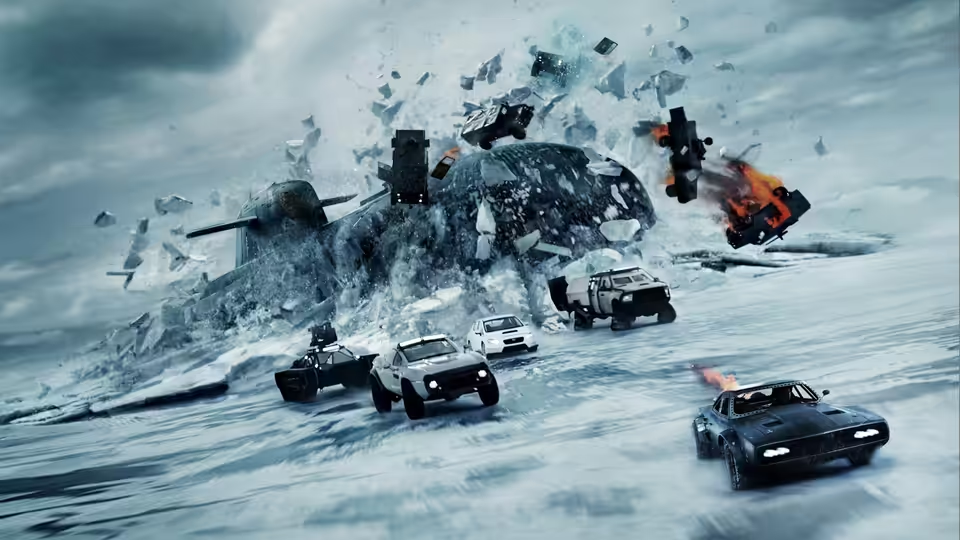
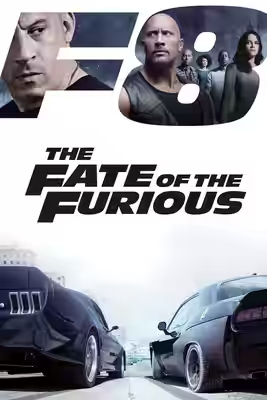
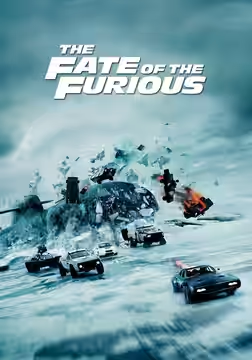
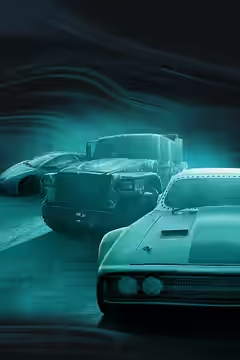
F. Gary Gray’s The Fate of the Furious is entertaining when the cars or the cast are allowed to misbehave. It is a decent, overlong action sequel, held back by a family drama that asks for more concern than it earns. We have no objection to the improbable stunts; the solemn conversations are harder to accept. At 136 minutes, there is plenty of time for both.
The opening drag race in Havana gets the scale right: there are cars to follow and an immediate reason to care about their progress. Cinematographer Stephen F. Windon puts us close to the cars, where their bulk and speed do useful work. The race has a concentration that some of the larger action lacks, letting us enjoy the driving without demanding that we admire everything else happening around it. As the spectacle grows, the number of vehicles becomes a less reliable measure of how much fun we are having.
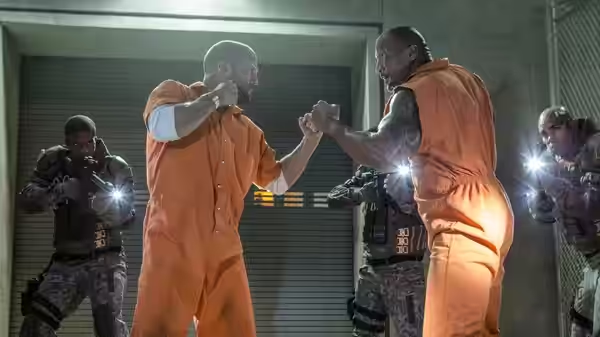
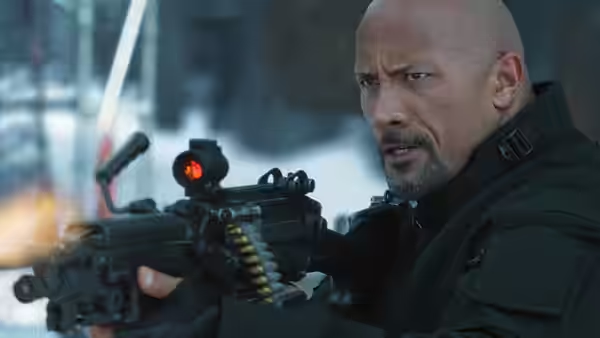
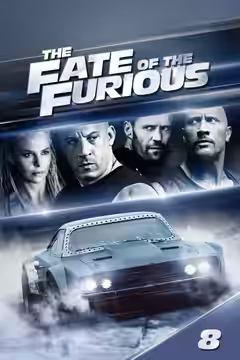
Jason Statham, as Deckard Shaw, is the strongest reason to persevere through the heavier passages, because he treats a joke as something worth delivering properly. Dwayne Johnson’s Luke Hobbs is a useful match, with a forcefulness that becomes funnier when someone answers back. We laughed at their competitive bluster; both actors let these men look ridiculous without seeming embarrassed by them. Their exchanges make us want to spend time with the gang, which is more than the speeches about loyalty manage.
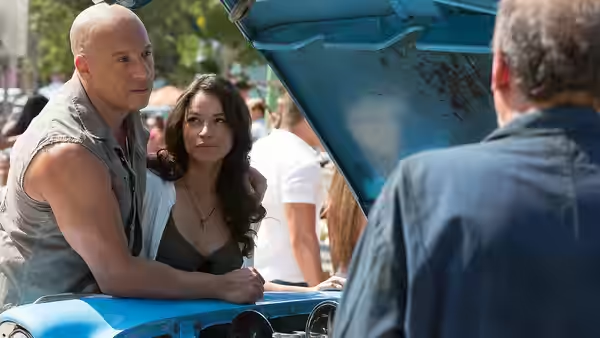
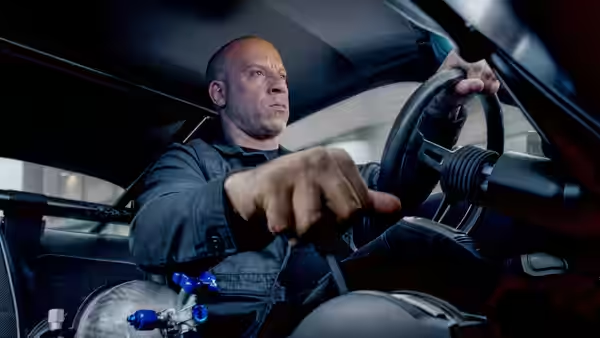
Vin Diesel has the less rewarding job. As Dominic Toretto, he plays the family drama with such unwavering gravity that the performance begins to make the surrounding jokes feel out of place. Chris Morgan’s screenplay supplies explanations and declarations where a few convincing exchanges might have done more. Charlize Theron, playing Cipher, brings commitment to an underwritten villain, but she cannot supply the variety the role lacks. Too many of these scenes ask accomplished performers to make thin material sound important.
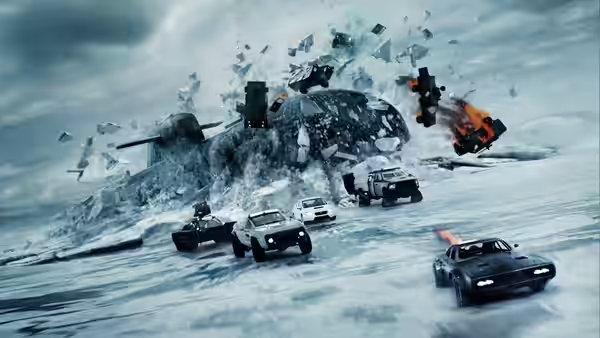
Editors Christian Wagner and Paul Rubell face a difficult problem: the film keeps stopping to explain itself after working hard to get us excited. Their cutting does not make those interruptions feel any shorter. Brian Tyler’s music pushes for excitement even when the cars already provide it, adding to the sense that the film distrusts a quiet moment. Bill Brzeski’s production design accommodates the increasing scale, though the surroundings seldom become as interesting as the machinery passing through them. There is a lot to look at and too little time to take much of it in.
The trouble is not that the action has become implausible. An action sequel can ask us to accept a great deal when its characters are good company and its scenes have a rhythm we can follow. Here, the recurring insistence on family makes the uneven attention paid to those relationships harder to ignore. F. Gary Gray is more convincing when he lets the performers be funny or gives the driving his full attention. Come for the cars and the competitive insults, and allow for a fair amount of waiting between the better examples of each.