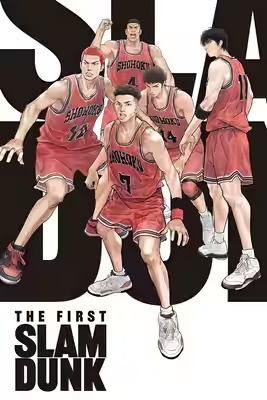
The First Slam Dunk makes animated basketball feel physically demanding and worth caring about. The flashbacks sometimes break the match’s grip, and the tactics can get dense, but the movement earns our attention back.
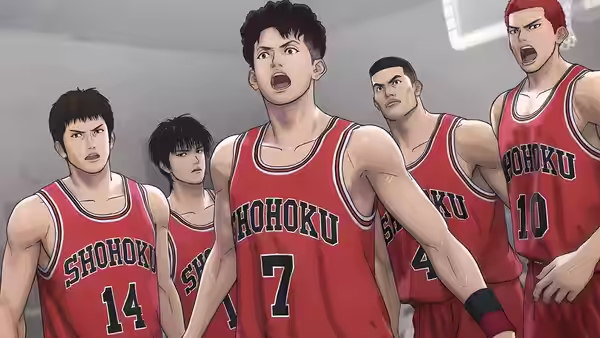
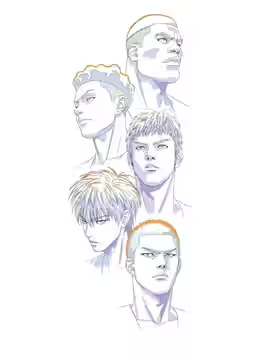
Takehiko Inoue’s The First Slam Dunk is an absorbing sports film with an occasional reluctance to leave its match alone. It wants the basketball to carry enough drama for 125 minutes, while finding room for the experiences that make the players care about winning. The frequent trips away from the court do not always help, but the ambition is worth taking seriously. This is a film interested in how people play together, and in how difficult that becomes when each has something personal at stake.
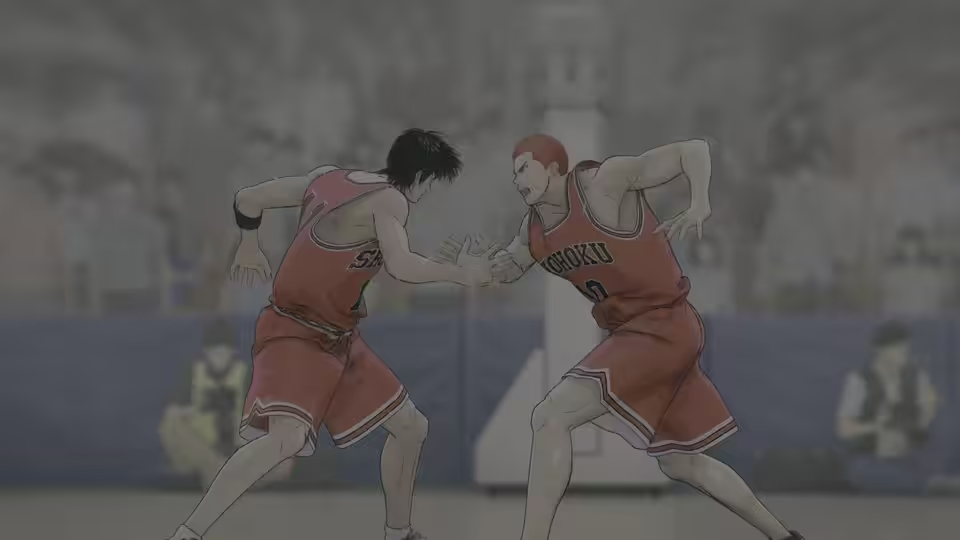
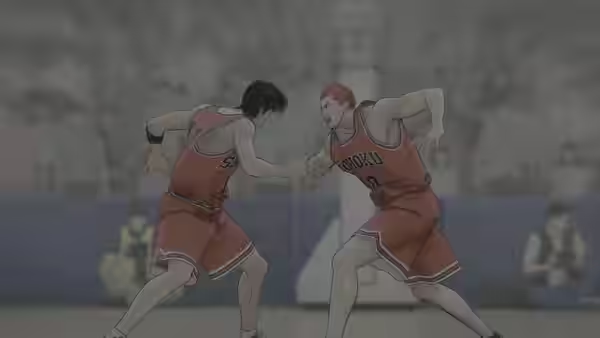
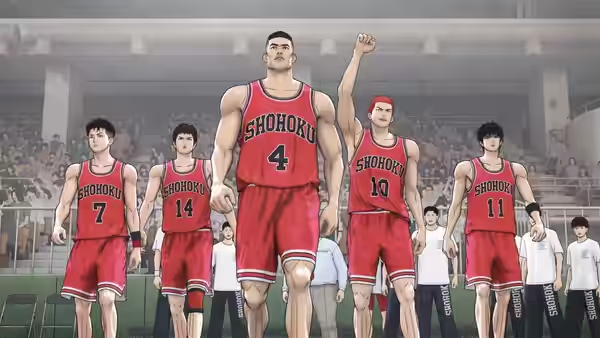
The animation gives the players weight without making them lumber, and speed without turning the court into a blur. Cinematographer Shunsuke Nakamura keeps the action readable, with bodies distinct enough for us to follow the competition for space. The relatively spare images help: there is little to distract from the movement, and changes of pace have a satisfying physical force. The choreography is detailed enough to hold our attention through an extended passage of play, without requiring a new visual trick every few seconds.
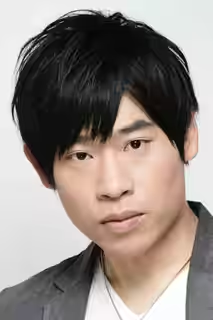
We were surprised by how tense we became watching the players try to keep up with one another. The animation makes the effort visible, so an advantage feels worked for rather than handed out by the script. Shūgo Nakamura, voicing Ryota Miyagi, gives the personal drama enough feeling to keep us listening when the basketball stops. His performance helps connect the more openly emotional scenes to the pressure of the game, and makes Ryota Miyagi someone worth following through both.
Editors Jun Watanabe and Ryuichi Takita have the awkward job of fitting the flashbacks around a contest that keeps building its own momentum. Some pauses give us useful time with the people playing; others arrive when we would rather stay on the court. The more successful transitions make the return to play feel urgent, because we have been given another reason to care about a player. Elsewhere, the film spends too long recovering tension that it had already established, and the repeated interruptions become noticeable.
Takehiko Inoue’s screenplay also expects a fair amount of patience with basketball strategy. The action is often clear enough to communicate the immediate difficulty, yet the tactical detail can demand more concentration than the emotional story needs. That is the main caveat for anyone drawn by the animation rather than the sport, and a few passages would benefit from less explanation. Within the familiar sports-drama conventions, though, the film finds convincing ways for athletic effort to express feelings that might sound ordinary in dialogue.
There is no shortage of films about players hoping to win, and another account of perseverance needs to give us a reason to sit through it. Here, the reason is the care taken over the basketball itself, which keeps the familiar material from feeling merely dutiful. Even when the storytelling grows insistent, the next stretch of play offers something exact and absorbing to watch. Choose it for the animation if basketball is not your sport, and be prepared to miss a few tactical details.