Agnès Varda makes an absorbing, funny documentary about finding uses for what other people discard. Her curiosity gives people space to speak, though the wandering occasionally takes us away from someone worth hearing.
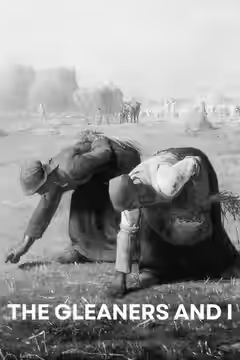
The Gleaners and I is a fine documentary about a practice most of us seldom consider: living from what other people leave behind. Agnès Varda approaches gleaning with interest rather than alarm, and the film benefits from her refusal to treat every encounter as an emergency. She wants to know the people doing it. The result is warm, funny and more searching than its casual manner first suggests.
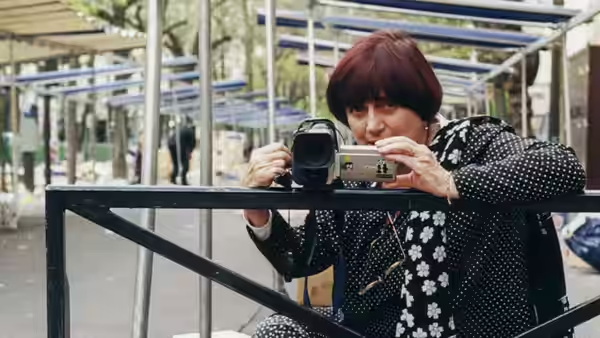
The lightweight digital camerawork helps. Cinematography is shared by Didier Rouget, Agnès Varda, Didier Doussin, Pascal Sautelet and Stéphane Krausz. The unpolished images suit a film interested in what gets overlooked. The pictures have the quickness of someone noticing something and wanting to show us, and their playfulness suits a director happy to be distracted. We can follow her attention without having every change of direction explained.
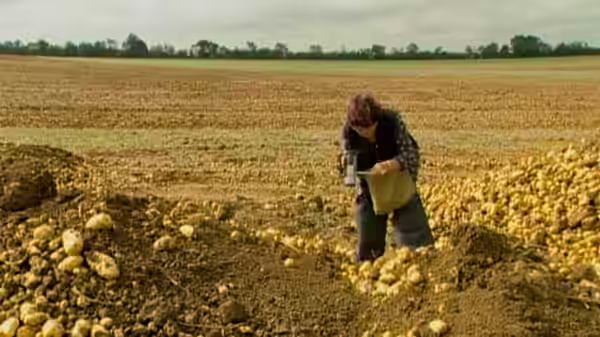
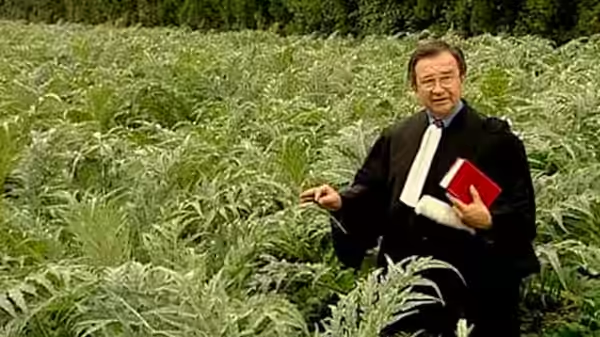
The people she meets are the reason that restlessness matters. She listens without turning every reply into proof of how decent or resourceful somebody is, even though resourcefulness keeps appearing. We were moved by the gleaners talking about getting by, and by her willingness to listen. Their accounts are allowed to be ordinary; she does not hurry them towards a dramatic declaration about their circumstances. The conversations reward that patience because the speakers have room to decide what they want to tell her.
The editing by Agnès Varda, Jean-Baptiste Morin and Laurent Pineau gives that curiosity plenty of room. The film asks us to accept a detour simply because she finds it interesting, and mostly that is enough. Occasionally we wanted her to stay with a person a little longer, and the movement towards the next discovery felt premature. At 82 minutes, the film is short, but there are still moments when its freedom to wander becomes an excuse for not pressing further. We leave some encounters wishing she had asked another question.
Joanna Bruzdowicz and Isabelle Olivier are credited with the music, which suits the film’s unforced manner. There is no need for the score to manufacture warmth when Agnès Varda supplies so much of it herself. As both filmmaker and participant, she is amused, interested and quite happy to follow an apparently minor thought. Her presence could have made the film tiresome: a visitor congratulating herself for noticing other people’s lives. Instead, her humour makes her good company, and she remains interested in the people she has come to meet.
There is a familiar danger in documentaries about people living on the margins: the audience gets to feel compassionate while learning surprisingly little about anybody. This film earns our trust by giving the people it meets room to be funny, practical and individual. They need not become examples of how the rest of us ought to live. Anyone expecting a methodical account of gleaning may find the personal diversions frustrating, and we sometimes shared that frustration. Give it an evening when there is no hurry to get to the point.