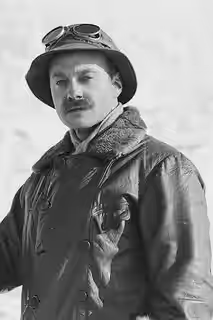
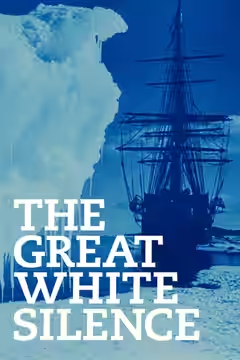
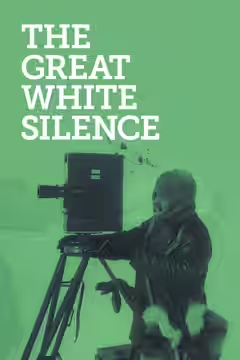
Herbert G. Ponting’s Antarctic documentary is absorbing even when the camera cannot follow the expedition. Its landscapes hold our attention, and its maps and miniatures mostly earn the patience demanded by a heavily explained journey.
The Great White Silence is an absorbing account of an Antarctic expedition, made with considerable ingenuity where the footage runs out. Herbert G. Ponting uses intertitles, maps and miniatures to tell the parts of the story he could not film. The change of method asks something of our patience, especially at 108 minutes, but it also gives the film more scope than a collection of striking views. We recommend it, provided a documentary that sometimes needs to be read sounds like a reasonable evening.
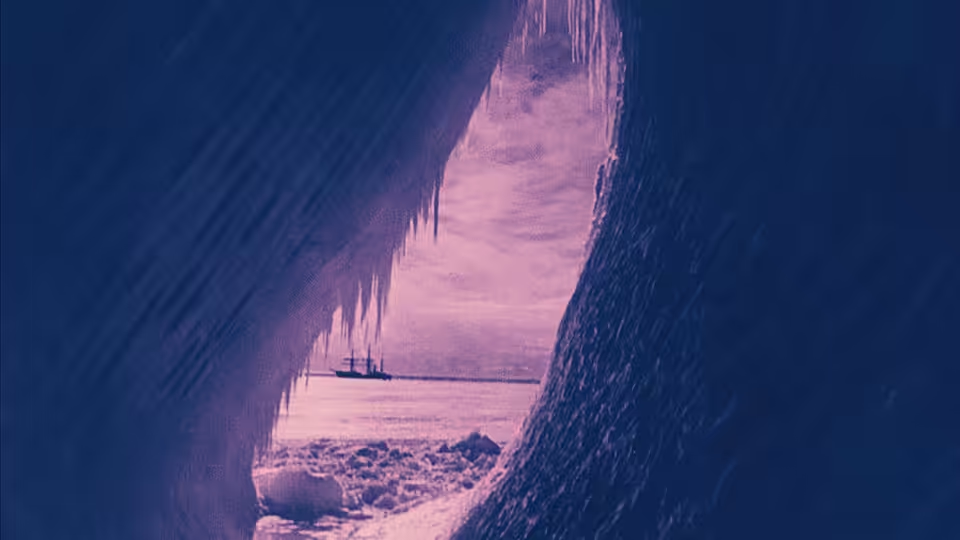
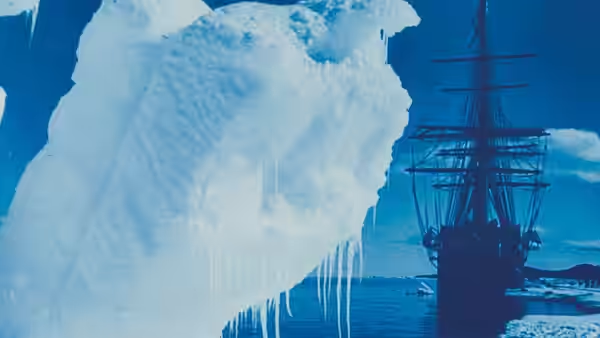
The Antarctic landscapes deserve the time given to them. Their scale is difficult to take in, and the film allows that difficulty to become part of the pleasure of looking. We were unsettled by these views: they remain forbidding even when the accompanying explanations help us find our bearings. Herbert G. Ponting gives us enough information to follow an expedition without suggesting that looking at the scenery amounts to knowing how to cross it.
The maps do essential work. They give a shape to a journey that the landscapes alone cannot make clear, while the miniatures supply a practical way of representing what the camera missed. Neither device needs to pass for direct observation, and there is something refreshing about a documentary making its means of explanation so visible. The transitions between footage and reconstruction hold our interest because each answers a different question about the same journey.
In the restored version considered here, Simon Fisher Turner’s score adds an unease that we found persuasive, though not always necessary. The Antarctic images already suggest how little comfort the place offers, and the music sometimes presses that feeling harder than it needs to. Elsewhere, its ominous character gives the explanatory passages a tension they might struggle to sustain unaided. It is a strong accompaniment, best when it lets our attention stay on the landscape rather than anticipating our response to it.
The intertitles are the principal reservation. They are expressive, but their insistence on guiding us through the account can make the film feel more laborious than its images do. We sometimes wanted the editing to return to the footage sooner, rather than keep explaining the journey after its difficulty was already apparent. The maps and models generally justify these interruptions by making the route clearer; the writing occasionally continues after we have understood enough to move on.
An expedition documentary usually benefits from being able to show us what happened, so the gaps in this one could have defeated it. Instead, we found the visibly constructed passages involving enough to justify the effort they demand, even if the explanatory writing occasionally holds things up. Give it an uninterrupted evening, and be prepared to spend some of it studying a map.