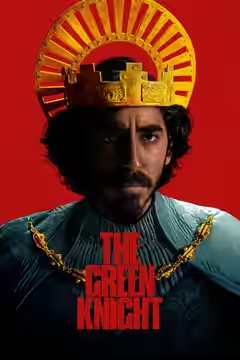
David Lowery’s retelling of the medieval poem is slow, strange and beautiful more often than not, and Dev Patel carries it on a face that keeps failing to turn into a hero’s. The middle sags. Stay for the last twenty minutes.
David Lowery has taken a fourteenth-century poem about a knight who owes a stranger a blow to the neck and must ride out to receive it, and made it slower, stranger and far less sure of its hero than the poem was. Gawain (Dev Patel) is a king’s nephew with no deeds to his name, and the film is about whether he can pick some up on the road. It is beautiful more often than not and in no hurry at all. We liked it a good deal, and we looked at our watch once.
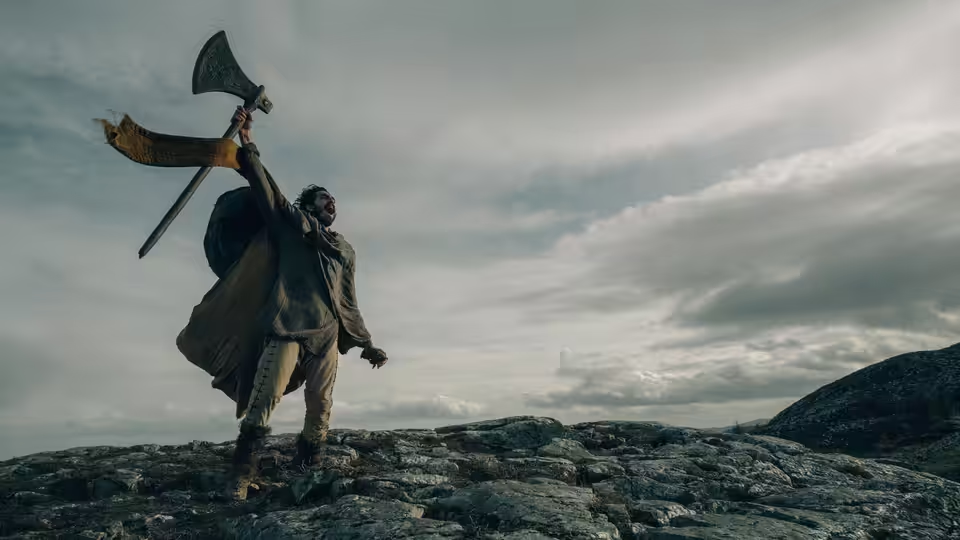
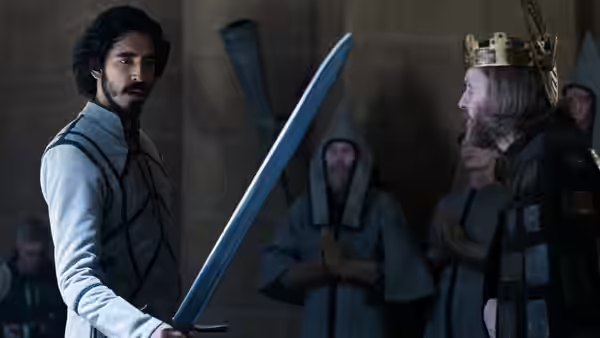
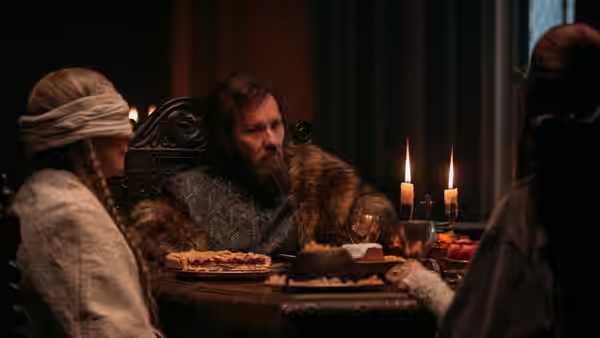
The opening is the film at its most confident. Jade Healy’s court is a low timber hall lit by candles and a fire, and Andrew Droz Palermo lets the smoke sit in the frame so that faces come and go out of brown dark. Sean Harris plays the King as an old man with a cracked voice who asks his nephew for a story and gets none, and then the Green Knight arrives. Ralph Ineson is somewhere inside him, and what sits on the horse is a piece of design as much as a performance: bark for skin, a face like a split trunk, a voice that seems to come up from the floor. He creaks when he moves, and it is the most frightening sound in the film.
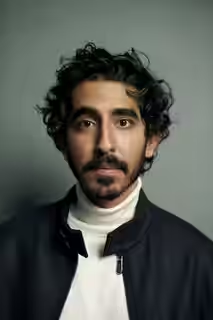
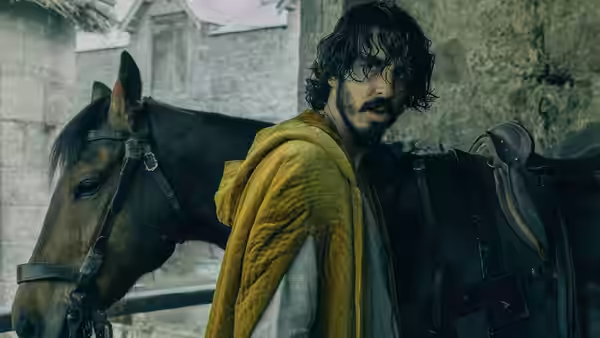
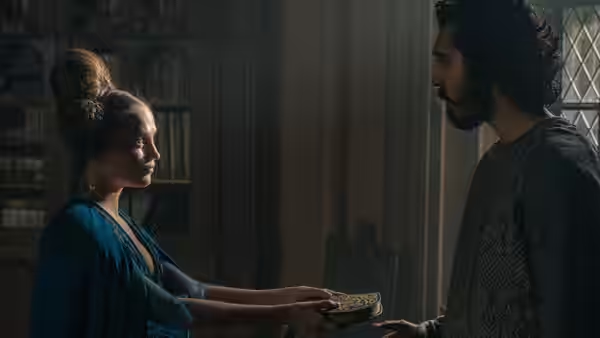
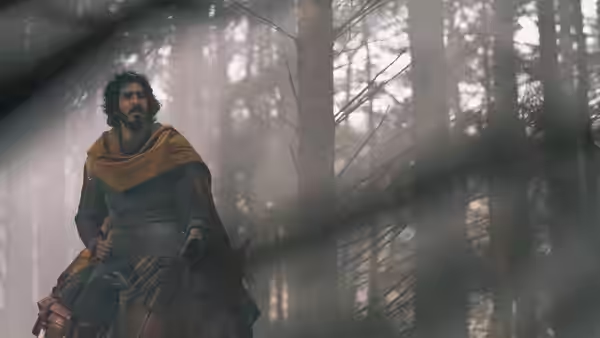
Patel is the reason the rest holds. He plays Gawain as a young man who wants the story of being a knight more than he wants to do anything a knight does, and the film keeps giving him chances to notice the difference. Malgosia Turzanska puts him in a yellow cloak, the brightest thing in a film of browns and greens, with his Mother’s green sash tied beneath it, and the cloak gets dirtier as the face above it gets older. Alicia Vikander, as Essel, the woman he sleeps with and will not marry, has two early scenes that tell us most of what is wrong with him.
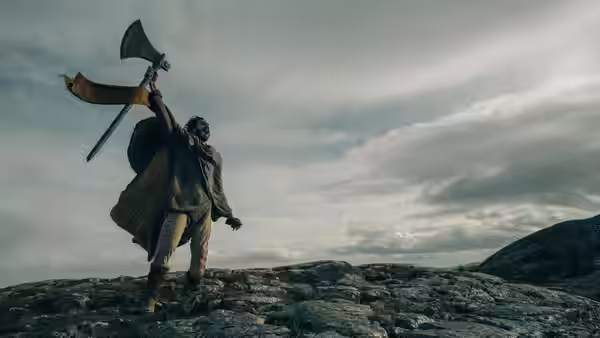
The road is where the film earns its reputation and tries our patience. Barry Keoghan turns up on a battlefield of the dead as a grinning Scavenger, and he is funny and then frightening inside a single sentence. Erin Kellyman’s Winifred, in a cottage by a lake, gives the film its one properly ghostly passage. Later, in fog, Gawain watches giants walk across a valley, and Palermo holds them in one wide frame while Daniel Hart’s score drops to a hum of voices, and the film is briefly as large as it wants to be. Between these episodes there is a great deal of a man walking through country, and Lowery, cutting his own film, does not always know when a shot has said its piece. We were bored for a quarter of an hour and cross about it, because the film had already shown it could do better.
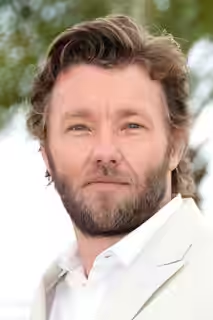
It does better again when Gawain reaches a castle whose Lord (Joel Edgerton) is too hospitable and whose Lady is played by Vikander a second time, which is not a mistake. Edgerton gives the Lord a warmth with something waiting under it, and Vikander gets a speech about the colour green, delivered almost without blinking, that is the best written thing in the film. What the household wants from Gawain we will leave you to find out. Hart’s music here turns to plucked strings and a choir, and for a while the film is as dangerous as a fairy tale.
Lowery made A Ghost Story (2017), in which a man under a sheet watched time pass in a house, and this has the same patience and the same willingness to let a viewer walk out. A few critics found it cold, and we see why. Gawain is not easy to like and the film does not ask us to like him, only to watch him, and Patel is good enough that we did.
The last twenty minutes do something with the appointment at the Green Chapel that we will not describe, except to say that it moved us more than the two hours before it had prepared us for, and that it makes sense of the slowness. It is 130 minutes and a 15 certificate. See it in the dark, with the curtains drawn and the phone in another room. The frames are wide and the film is quiet, and both are lost with the lights on.