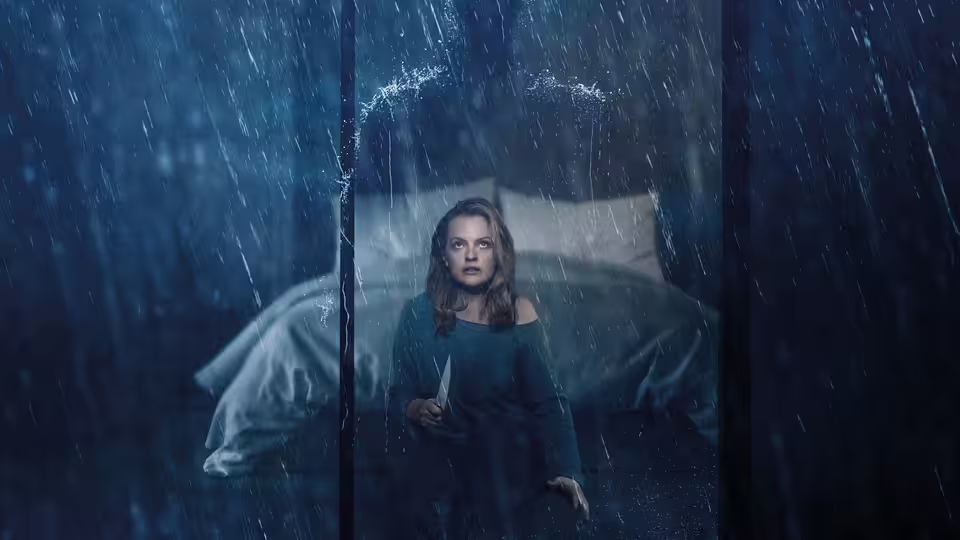
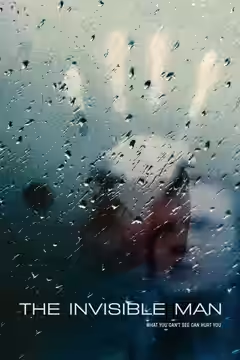
Leigh Whannell turns H. G. Wells’s monster into a controlling ex and, for an hour, makes an empty corner of a room the most frightening thing on screen. Elisabeth Moss is superb; the second half settles for a thriller with a body count.
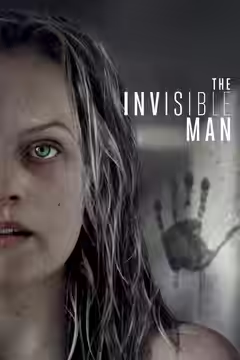
Leigh Whannell has kept H. G. Wells’s title and almost nothing else. His invisible man is Adrian Griffin, a controlling partner, and he is barely in the film; it belongs to Cecilia, the woman who left him, and it is about what happens to a woman nobody believes. It runs 124 minutes and carries a 15. For an hour it is as controlled a horror film as we have seen in years. Then it has to show how the trick is done, and after that it is a good thriller rather than a frightening one.
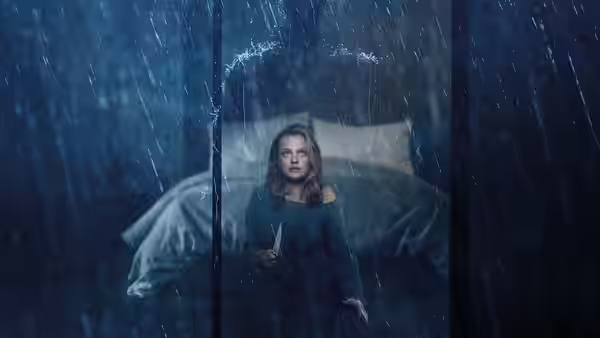
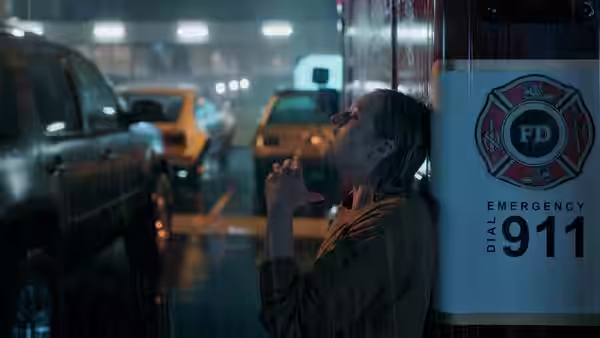
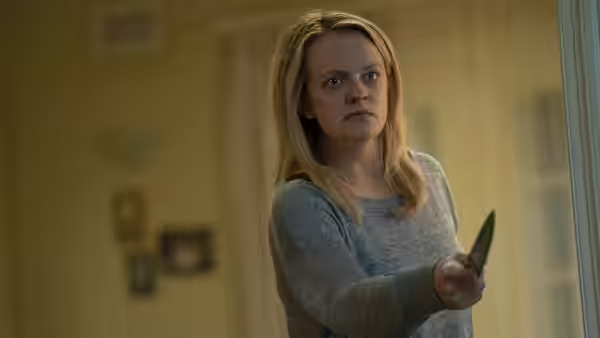
Elisabeth Moss plays Cecilia, in the early scenes, as someone who has forgotten how to take up space. Her shoulders are pulled in, her eyes stay on the floor, and a stranger passing the house is enough to send her back inside. Whannell gives her few lines and she does not need them; you can read on her face which doorways and corners she has already checked. When the film later asks her to be quick and fierce she is, but it is the frightened woman at the start we believed, and that performance holds when the script wobbles.
The fear is made with the camera, and Stefan Duscio makes it patiently. He shoots rooms wide, Moss to one side and a great deal of nothing beside her, then drifts to a chair, a doorway, the end of a hall, and waits. Usually nothing happens. Alex Holmes designs Adrian’s house in concrete and glass, every wall a window; James’s house is wood and clutter and family photographs, and the film makes that frightening too, which is harder. Benjamin Wallfisch’s score is mostly a low mechanical hum kept so quiet that you notice when it stops, and Whannell and his editor Andy Canny let silences run well past the point where most horror films would have cut.
Here is what it did to us. For most of an hour we were looking at the wrong part of the screen on purpose. Moss would be talking in the middle of the frame and we would be checking the corners, the space behind her, the door she had left open. An early scene in the kitchen, Moss alone and the camera holding on the empty half of the kitchen, is built out of nothing, and it had us properly scared.
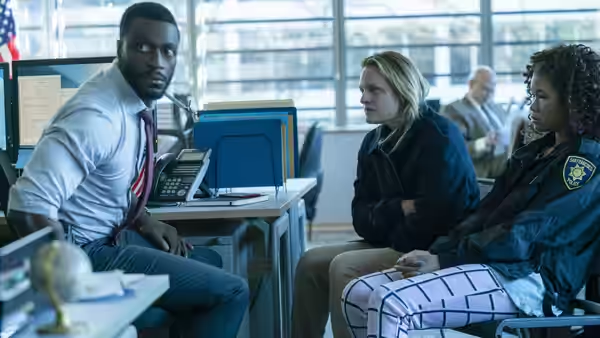
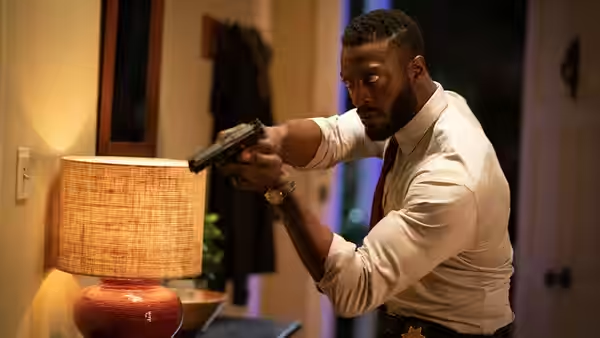
Aldis Hodge plays James, the friend who takes her in, with a steadiness that makes his doubt hurt more than hostility would. Storm Reid, as his daughter Sydney, watches everything and says little. Harriet Dyer’s Emily is a sister whose patience has a bottom to it. Oliver Jackson-Cohen is barely on screen as Adrian and the film keeps him in our heads anyway, because everyone talks about him the way you talk about weather that is on its way. Michael Dorman, as Adrian’s brother Tom, is exactly as pleasant as a man bringing news should be.
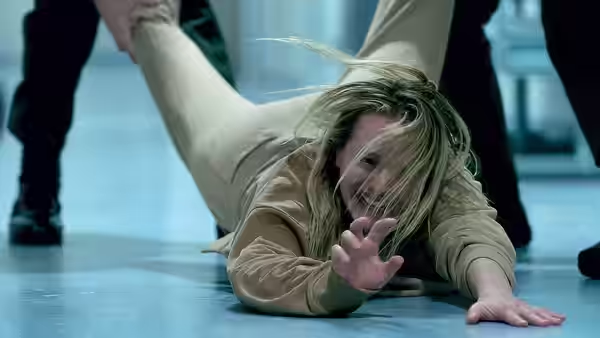
The trouble is the second half. Once we have seen how Adrian does it, dread turns into plot, and the plot does not survive a moment’s thought. Institutions behave as the film needs them to. People stand where the next scare needs them to stand. There is a fight through a treatment centre that belongs in a louder film. The second act takes a turn we will not describe, and the third ties everything off more neatly than the first hour had promised. In the last forty minutes we noticed we were no longer frightened, only interested, and we minded.
Then there is what the film is using. It is about coercive control, a man isolating a woman until nobody will take her word, and it uses that to make us jump. A few critics have found this exploitative. We think it mostly earns the right, because Moss never lets us forget what it is costing Cecilia, but the balance tips at the end, when her story becomes a mechanism for a finale. Watch it in the dark, with someone whose arm you can grab, and save the plot for the walk home, where it will not survive and will not need to.