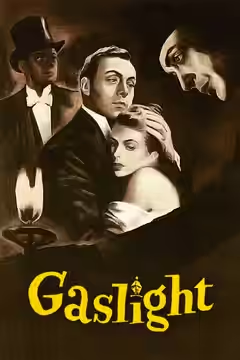
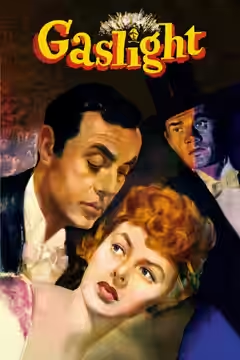
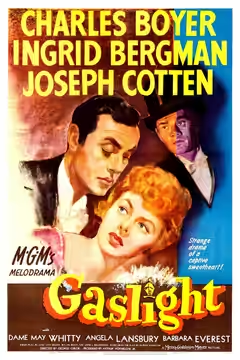
George Cukor’s Victorian thriller is slow, plush and quietly horrible, and Ingrid Bergman is superb as a woman being talked out of her mind. It dawdles in Italy and the detective is a device, but the house scenes are as good as the form gets.
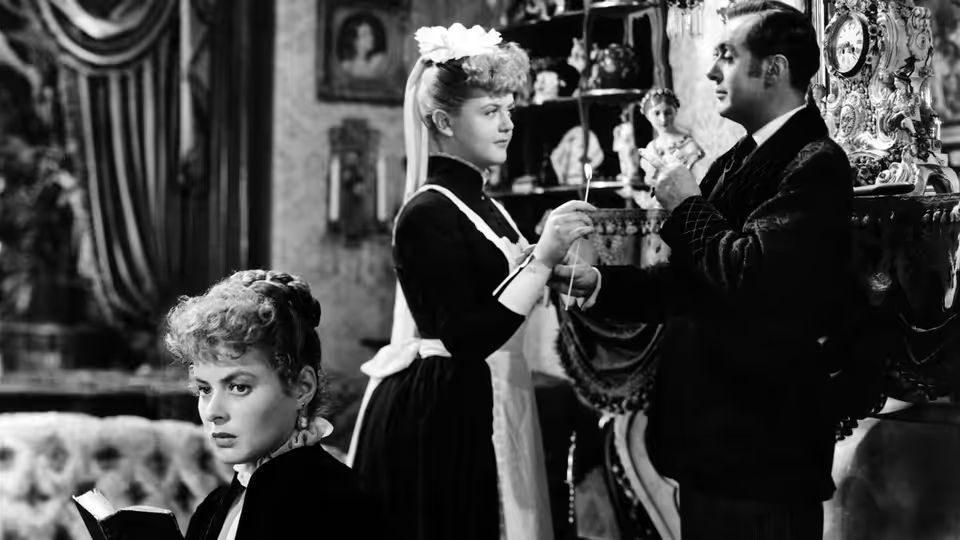
George Cukor’s Gaslight is a film about a marriage in which one partner is quietly taking the other apart. Adapted from Patrick Hamilton’s stage play, it brings a young woman back to the London house where her aunt was murdered, gives her a devoted husband, and then lets that husband spend the best part of two hours persuading her that she cannot trust her own memory. It is slow, plush and unhurried, and it frightens without once raising its voice. We recommend it, with a caveat about the opening, and we would have recommended it for Ingrid Bergman alone.
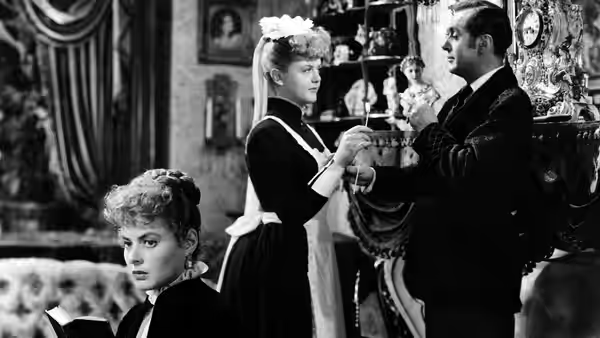
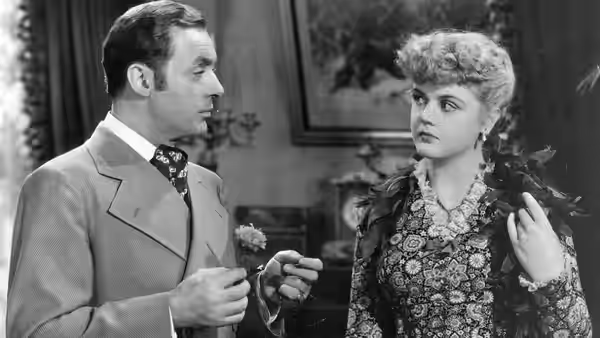
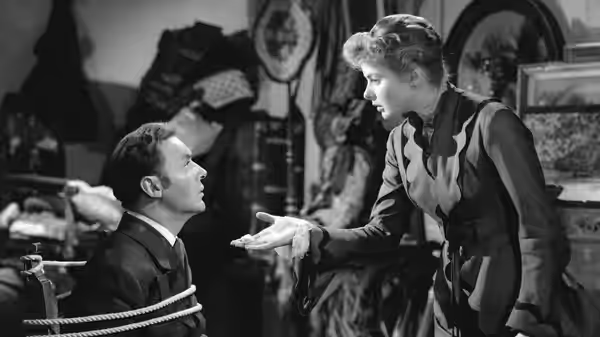
Bergman plays Paula as a woman who arrives already half apologising. She loses a brooch and blames herself before anyone else can; she hears footsteps overhead and asks rather than tells. The performance is in the hands, which never quite know where to settle, and in a face that keeps checking her husband’s for permission to be well. There is a scene where Gregory takes a picture from the wall, waits for her to notice, and then makes her search the house for it in front of the servants. We were angry watching it, properly angry, and it took a moment to realise the anger was at Charles Boyer’s manners rather than at anything he had done with his hands.
Boyer never shouts. Gregory is soft-spoken, patient and forever concerned for his wife’s health, and every kindness takes something away from her: a friend, an outing, a fact. He tells her she is tired in the tone of a man tucking in a blanket. Boyer plays the concern straight, so that for long stretches we could see how a woman with nobody else in the house might take it for love. He is the only person who is ever nice to her, and that is the method.
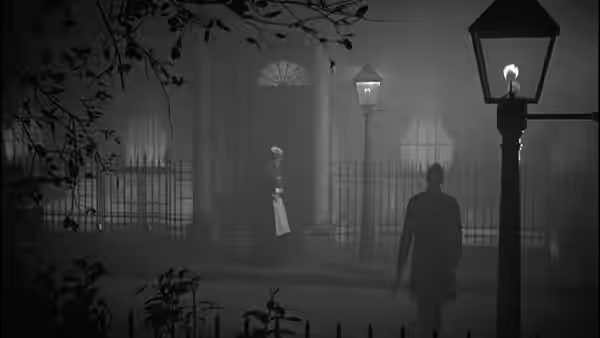
Joseph Ruttenberg photographs the house in Thornton Square as a place with too many doors and not enough lamps. Fog sits on the square outside, the hall is mostly shadow, and when the gas dims because a jet has been lit somewhere else in the building, we watch the light fall on Bergman’s face rather than being told it has. Ralph E. Winters cuts patiently and holds on her longer than a thriller normally would, which is where the dread comes from. Bronislau Kaper’s score leans on the strings at every fright, and the film is better in the stretches where he stays quiet and we hear only the house. Irene Lentz buttons Bergman to the throat in dark silks that look heavy to move in.
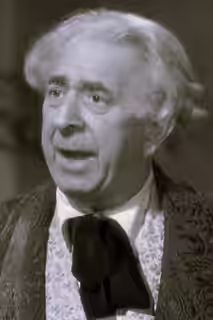
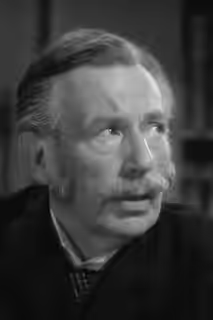
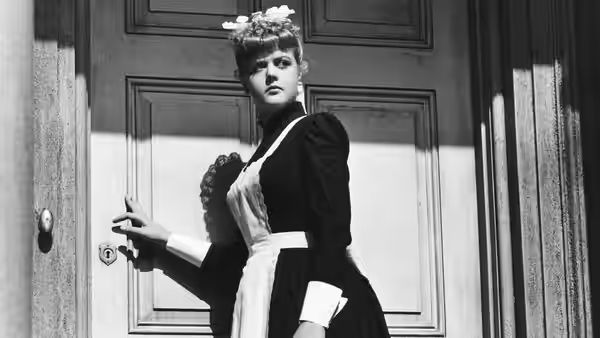
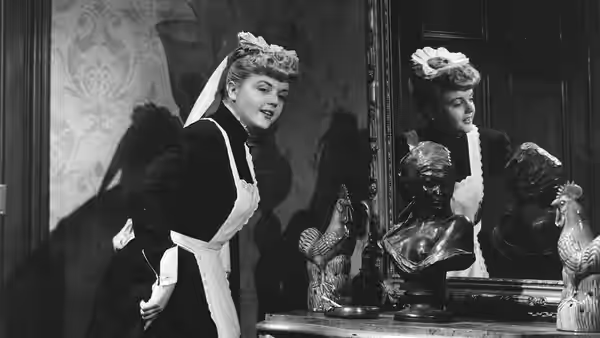
Angela Lansbury, in her first film, plays Nancy the maid with a cigarette, a London vowel and an open contempt for her mistress, and she is a jolt every time she comes in, the one person in the house who says what she thinks. May Whitty’s Miss Thwaites, across the square with her murder novels and her window, is the comic relief and also the only neighbour paying attention. Barbara Everest’s Elizabeth, hard of hearing and loyal, is the household’s decency. Joseph Cotten, as the Scotland Yard man Brian Cameron, is likeable and a little dull, because the script by John L. Balderston, Walter Reisch and John Van Druten needs him to notice things and turn up, and gives him nothing much else to do.
That is one of two flaws. The other is the start. The film opens in London, then goes to Italy for a courtship under Maestro Guardi (Emil Rameau) that is sunny, brief and weightless; we knew where the story was going and wanted it to get there. Once it does, the pressure builds steadily, though the last stretch goes back to the play for its confrontations and you can feel the boards under the carpet. There is also the matter of suspense. The film does not seriously hide what Gregory is doing, only why, so the question is never whether but when, and how much of her will be left.
The word the film gave the language has outlasted most of its contemporaries, and having watched it again we understand why: it is a precise account of a particular cruelty, done by people who knew exactly how it worked. It runs 114 minutes and opened in British cinemas on 14 July 1944. Watch it at night with the lamps turned down, and see how long you last before you turn them up.