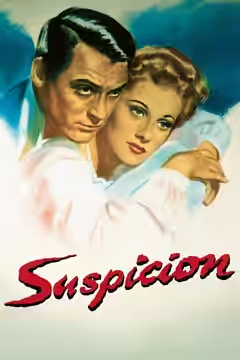
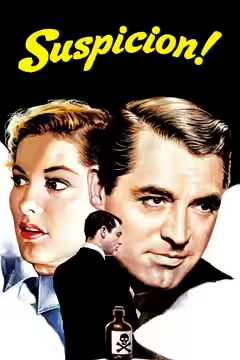
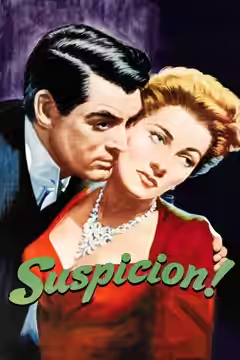
Film review

Suspicion

1941 · Directed by Alfred Hitchcock · 1h 39m · MPA PG

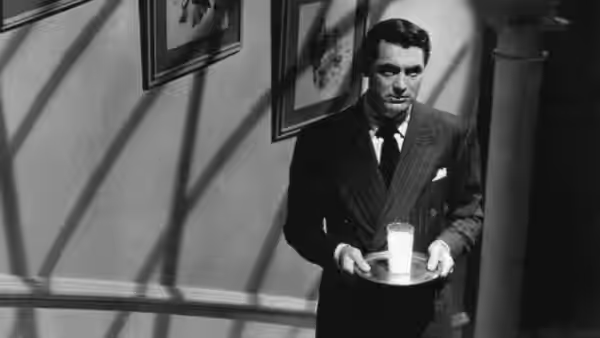
In a sentenceCary Grant carries a glass of milk up a staircase and we have not trusted dairy since

MysteryRomanceThriller

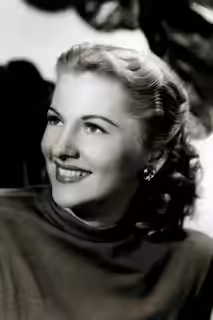
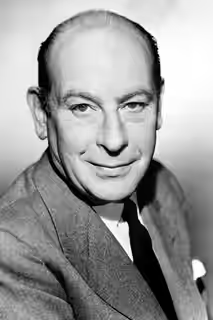
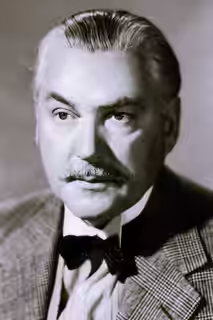
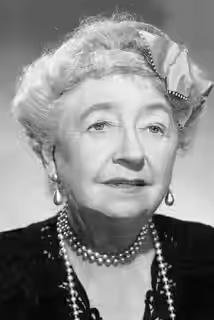
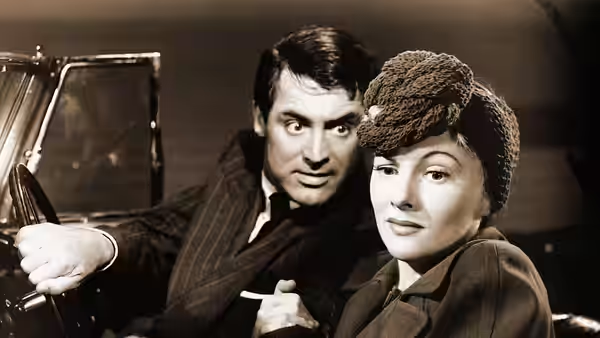
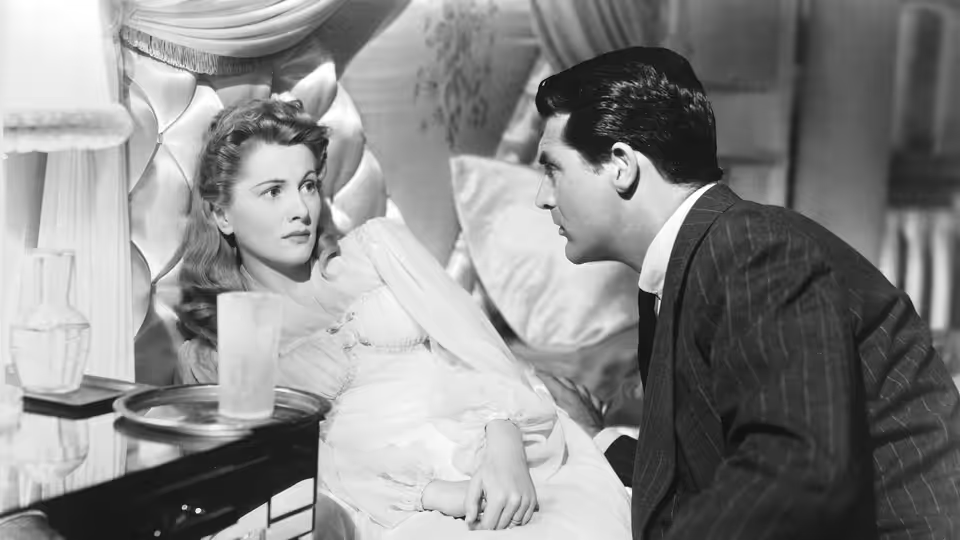
In the English countryside, Lina McLaidlaw Aysgarth (Joan Fontaine), daughter of General McLaidlaw (Cedric Hardwicke) and Mrs. McLaidlaw (May Whitty), meets John D. ‘Johnnie’ Aysgarth (Cary Grant) on a train, where he borrows the shortfall on his first-class ticket from her purse. He is handsome, idle and short of money, and turns up again at the hunt. After overhearing her parents call her a spinster in the making, Lina slips out to meet him and marries him. They return from honeymoon to a large house with no income to run it, and Johnnie’s friend Gordon Cochrane ‘Beaky’ Thwaite (Nigel Bruce) arrives to back a land scheme. Two wedding-present chairs vanish. Johnnie’s job with his cousin Captain George Melbeck (Leo G. Carroll) has ended, and Lina begins counting his lies.

Plays from YouTube when you press play; nothing loads from them until then.

Fi1m review

Hitchcock’s domestic thriller runs on one question, whether Cary Grant means to kill his wife, and Joan Fontaine’s frightened face keeps it taut for ninety minutes. The final ten are another matter, and nearly everyone who has seen it knows it.

Alfred Hitchcock made this the year after Rebecca (1940), and he gave Joan Fontaine another large house and another husband she cannot read. Lina McLaidlaw is a general’s daughter in tweed and spectacles who meets John D. ‘Johnnie’ Aysgarth (Cary Grant) on a train, where he borrows the difference on his ticket from her handbag and forgets to give it back. That is the whole of his character in one scene, and the film’s cleverness is to let her see it and marry him anyway. What follows is 99 minutes of a wife adding up her husband’s lies and arriving at the worst possible total. It is tight and frightening for most of its length, and it does not know how to stop.

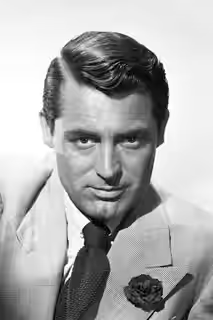
The screenplay, by Samson Raphaelson, Joan Harrison and Alma Reville from Anthony Berkeley Cox’s novel, stays almost entirely on Lina’s side of every door. We see what she sees: a house furnished on credit, her father’s wedding-present chairs gone one morning, a job with cousin Captain George Melbeck (Leo G. Carroll) that ended weeks ago and not by resignation. Each discovery is small and each is worse than the one before. Johnnie has an explanation for all of them, and Grant delivers each with a lightness that is exactly as charming as it is slippery. We could not decide whether we liked him, and the film runs on that indecision.

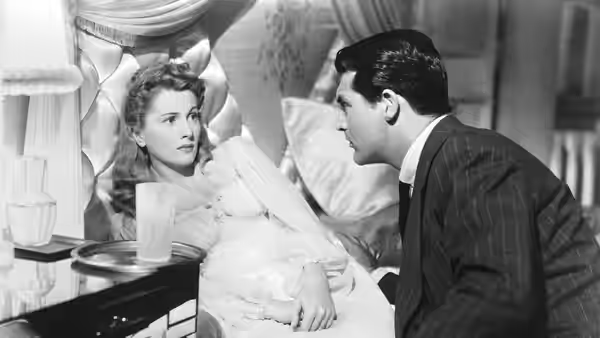
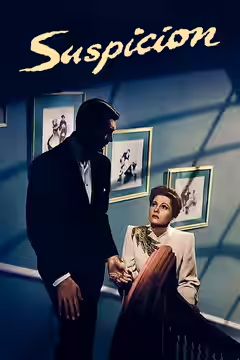
Fontaine has the harder job and does it well. Her Lina starts buttoned to the neck, grows a spine when she falls in love, and then loses it an inch at a time. She listens at doors, reads a letter she should not, and Harry Stradling keeps the light on her eyes so that we watch a thought arrive before she has finished having it. Stradling’s other good idea is the hall: light through a tall window throws a web of shadow across the floor, and Lina walks into it more than once, which is not subtle and does not need to be.

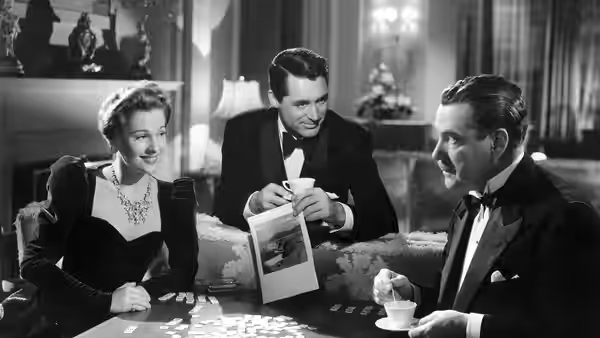
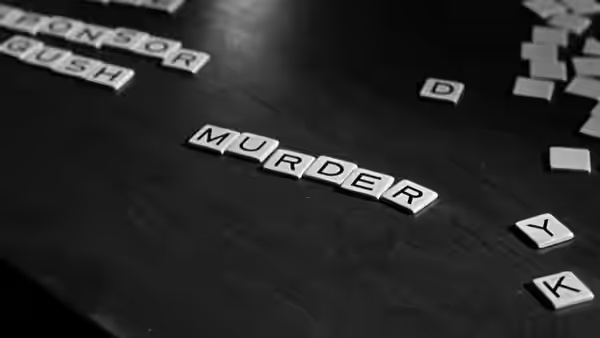
Then there is the milk. Late one night Johnnie carries a glass of it up a dark staircase to his wife, and it is the brightest thing in the frame. We held our breath, and we are slightly embarrassed to report how frightened a glass of milk made us. Franz Waxman helps, threading a Strauss waltz that Johnnie whistles when he is happy through the score until a tune about pleasure sounds like a warning. Edward Stevenson dresses Lina in wool and glasses before the wedding and in silk after it, none of it paid for. William Hamilton cuts a dinner with the crime novelist Isobel Sedbusk (Auriol Lee), who chats about untraceable poisons over the soup, so that the camera keeps leaving the talk and returning to Lina’s face.

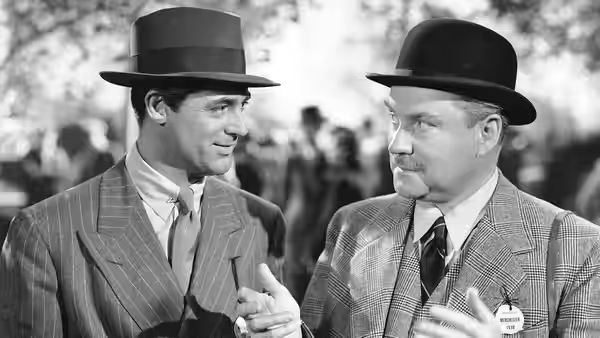
The supporting cast is mostly British and mostly excellent. Nigel Bruce’s Gordon Cochrane ‘Beaky’ Thwaite, all “old bean” and helpless affection, is the warmth in the film and the one person who takes Johnnie’s schemes at face value. Cedric Hardwicke and May Whitty have a handful of scenes as Lina’s parents, and the General’s remark about his daughter, overheard through a window, is what sends her out of the house and into the marriage. Isabel Jeans and Heather Angel fill the edges with gossip and worried looks.

The last ten minutes take a turn we will not describe. Most critics since 1941 have described it anyway, because they dislike it, and so do we. The film spends an hour and a half building a question and then answers it at speed, in a way that asks us to set aside a good deal of what we have just watched. The reviews have long blamed studio interference; whoever is responsible, what is on screen is an ending that arrives out of breath and leaves before it has finished explaining itself. We were gripped, and then, within a few minutes, we were annoyed, which is a poor way to send an audience home.

Against Hitchcock’s own work it sits in the middle. Rebecca let the house do the frightening; Shadow of a Doubt (1943) would take the same fear, that the person you love is not who they say, and hold its nerve to the finish. This one has the better husband and the weaker last reel. See it for Fontaine, for the staircase and for Grant being pleasant in a way that never quite settles. At home you can pause on the glass of milk and choose your own ending, which is roughly what the writers appear to have done.
Critical consensus AI synthesised

70
Positive
5
Mixed
1
Negative
0

Most critics like Suspicion and rank it as gripping, well-made Hitchcock rather than the director at full stretch. The praise gathers around the two leads. Joan Fontaine’s nervy, fear-driven wife is singled out in nearly every review as the film’s centre, and Cary Grant is credited with making his bounder charming and unsettling in the same breath. The direction draws steady approval for its expressionistic touches and for keeping the audience guessing alongside the heroine.

The reservations cluster almost entirely on the ending, which several reviews call abrupt, contrived or a cop-out, with The Telegraph blaming studio interference. A second, milder complaint is that the material is thinner than Hitchcock’s best. The spread is narrow: five positive notices and one mixed, with The Times the only dissenter, finding too little action to carry the film despite admiring what Fontaine and Grant do with it.

Variety
31 December 1940 · Variety Staff
90*

The critic praises Hitchcock's vivid cinematic development of suspenseful drama through the mental emotions of the principals in a class production with excellence in direction, acting and mounting. He highlights Joan Fontaine successfully transposing her innermost emotions and fears, and Cary Grant's sparkling characterization as the bounder.

Read the full review →
Los Angeles Times
21 January 1942 · Edwin Schallert
70*

The critic finds the web of suspicion tightly and deftly spun, keeping characters and spectators guessing in a unique way loyal to Hitchcock's precedent, with marked interest and curious reactions evoked. He notes the ending is possibly somewhat abrupt and the picture not quite as strong as some of the director’s best preceding films, but singles out Joan Fontaine's portrayal as especially notable.

Read the full review →
The New York Times
21 November 1941 · Bosley Crowther
70*

The critic calls it a tense and exciting psychological thriller packed with lively suspense that entertains from beginning to almost the end, though not Hitchcock at his best due to less intricate material and an ending not up to his usual style. He singles out Joan Fontaine's fluid and compelling portrayal of the fear-tortured wife for unstinted praise.

Read the full review →
The Telegraph
70*

Suspicion stands out among Hitchcock's Hollywood films as highly ingenious and gripping, thanks to strong British supporting cast and Grant's superb performance as a rotter, despite studio interference with the ending.

Read the full review →
Time Out
22 September 2014 · GA
70*

The critic describes it as a gripping domestic thriller despite a cop-out ending and some artificial elements, praising Joan Fontaine's nervy performance and Cary Grant's ability to be both charming and sinister, along with Hitchcock's expressionistic touches like the glass of milk.

Read the full review →
The Times
16 May 2020 · Tom Shone
50*

The film is not among Hitchcock's best due to limited action and a contrived ending, but it effectively roots the story in Fontaine's point of view and gives Grant an edge of coolness and cruelty.

Read the full review →

Cast

Awards

Academy Awards, 1942

Nominated
Best Original Dramatic Score
Nominated
Best Picture
Won
Best Actress

If you liked this, try…

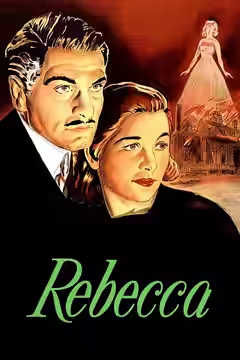
Rebecca poster85

Rebecca

1940 · Fontaine and Hitchcock the year before, with a house that does the menacing

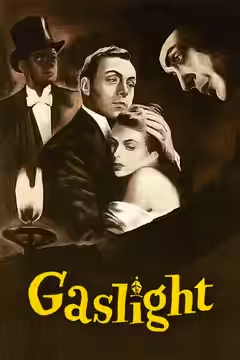
Gaslight poster

Gaslight

1944 · Ingrid Bergman is told she is imagining things; she is not

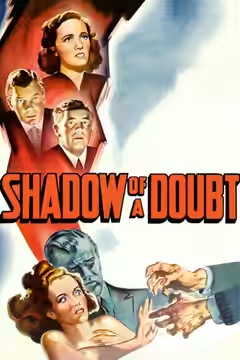
Shadow of a Doubt poster88

Shadow of a Doubt

1943 · Hitchcock does the beloved relative you should not trust, and keeps his nerve

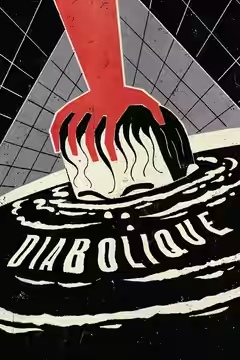
Les Diaboliques poster

Les Diaboliques

1955 · Clouzot’s marriage thriller, wetter and crueller, with an ending that holds

Rosemary's Baby poster

Rosemary's Baby

1968 · A wife in a big flat, a charming husband, and nobody listening to her