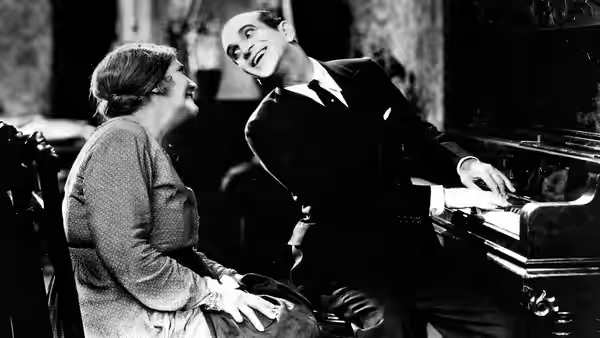
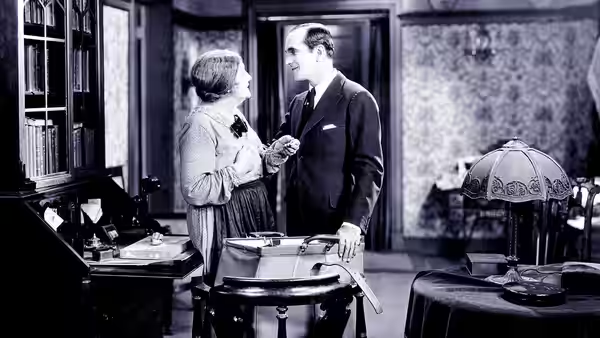
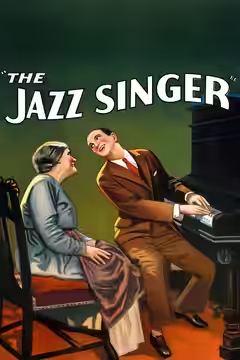
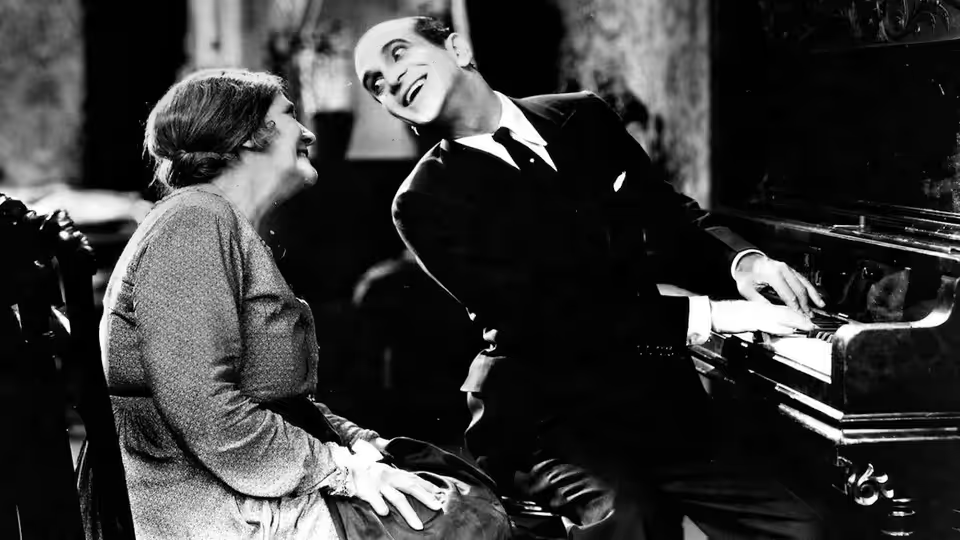
Jakie Rabinowitz (Al Jolson) leans over a seated woman beside a piano
Film review

The Jazz Singer

1927 · Directed by Alan Crosland · 1h 36m

In a sentenceAl Jolson sings with enough force to make the family argument seem like an unwelcome interval

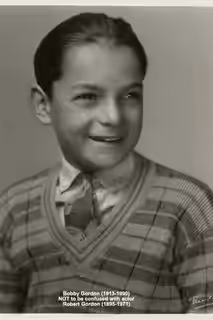
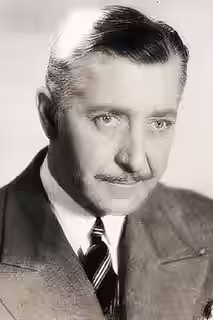
In New York, Young Jakie Rabinowitz (Robert Gordon) sings popular songs in a saloon while his father, Cantor Rabinowitz (Warner Oland), expects him to follow the family’s religious calling. His mother, Sara Rabinowitz (Eugenie Besserer), is caught between them, and the boy leaves home. Years later, Jakie Rabinowitz (Al Jolson) pursues a stage career, with dancer Mary Dale (May McAvoy) taking an interest in his singing. He wants to make his living entertaining an audience, while the expectations attached to his family name remain unresolved. The synagogue and the stage offer him different futures.

Plays from YouTube when you press play; nothing loads from them until then.

Fi1m review

Alan Crosland’s The Jazz Singer still comes alive when Al Jolson sings. The family melodrama is stiff, and the blackface demands scrutiny; this is worth seeing chiefly for those curious about early sound cinema.

Alan Crosland’s The Jazz Singer is worth seeing for its singing and its awkward, absorbing changes between silent-film storytelling and recorded voices. As a family drama, it is much harder to recommend. Al Jolson brings an immediacy to the sung passages that the rest of the film struggles to sustain. Alfred A. Cohn’s screenplay establishes a painful disagreement, then spends too much time having the characters repeat their positions.

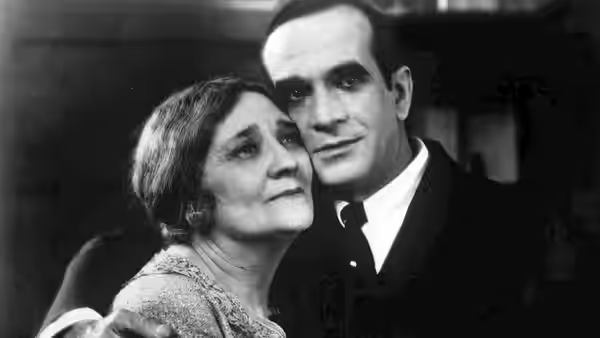
Jakie Rabinowitz wants to sing popular music; Cantor Rabinowitz expects him to sing in the synagogue. There is enough here for a substantial drama, because their shared devotion to music gives both men a reason to feel betrayed by the other. Warner Oland gives the father’s disapproval weight, although the repeated declarations leave him too predictable. Eugenie Besserer is a gentler presence as Sara Rabinowitz, but she has little room to do anything beyond suffer through the estrangement.

We were stirred when Al Jolson’s singing broke into the silent-film storytelling. His voice makes the performance feel close in a way the written exchanges cannot manage, and his eagerness to hold an audience’s attention is hard to resist. The appeal is not subtle, but subtlety would scarcely suit the job. These brief passages give a clear sense of why the arrival of recorded voices could excite an audience, without requiring much knowledge of film history.

Hal Mohr’s cinematography keeps the performers legible, giving Al Jolson’s expansive delivery space without adding distracting flourishes from the camera. Harold McCord’s editing is most effective at the changes between silent passages and recorded performance, where the altered pace becomes part of the attraction. The dramatic passages settle into a more dutiful rhythm, and the wait for another song can feel longer than it should. Louis Silvers’s music helps those stretches along, though its emphasis adds to the melodrama’s habit of insisting on each emotion. The accompaniment rarely gives the actors much relief from that pressure.

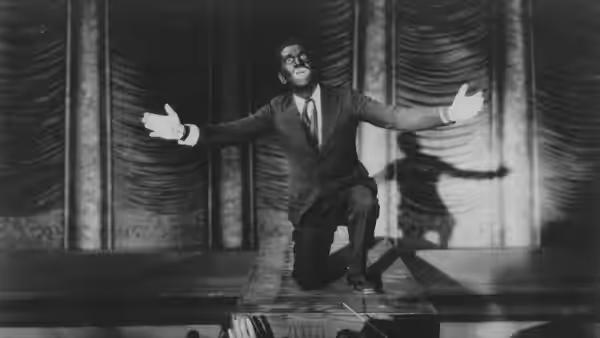
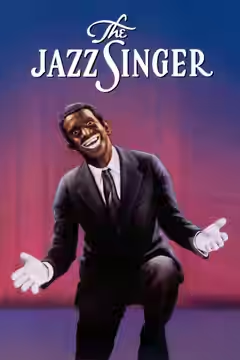
The blackface is a more serious obstacle, and it cannot be set aside as a detail of the period. Al Jolson performs in blackface, drawing on the racist caricatures of Black people used in stage entertainment. In a story asking us to understand a singer’s wish to belong, that caricature deserves sustained attention rather than a hurried apology before the next song. We found the spectacle repellent. His vocal skill does not make the image harmless.

Judged as a musical melodrama, the film is limited by how neatly it sorts the people around its star. May McAvoy’s Mary Dale offers encouragement, but the part has little force or complication of its own, so another potentially interesting relationship becomes largely a matter of support. The family scenes have recognisable pain in them, and the actors occasionally make that pain register despite the blunt writing. Too often, however, the next scene brings another statement of the same grievance, and we begin waiting for the drama to stop and the singing to resume.

For anyone exploring early sound, the unevenness is part of what makes the film worth examining. Allow the singing to make its immediate impression, then look as closely at the kind of entertainment being offered. A casual evening’s musical diversion is a different request. We would choose something else for that.
Critical consensus AI synthesised

3 of 6
Positive
2
Mixed
1
Negative
0
The AV Club
23 January 2013 · B · Noel Murray
77

Murray finds the film flawed but historically important, with solid melodrama and lasting cultural interest. He praises its inventive transitions between silent-film conventions and brief sound sequences, and highlights Jolson’s vitality.

Read the full review →
Variety
12 October 1927 · Sid Silverman
75*

Silverman considers the film a strong success with Vitaphone, though less compelling without it. He singles out the power of Jolson’s singing, especially “Kol Nidre” and the “Mammy” finale.

Read the full review →
The New York Times
7 October 1927 · Mordaunt Hall
64*

The page appears to be a contemporary review of The Jazz Singer, but its text is inaccessible. Its verdict and specific praise or complaints cannot be verified from the available page.

Read the full review →

Straight answers AI written, from our review

Is The Jazz Singer worth watching?
The Jazz Singer is worth watching chiefly for those curious about early sound cinema, and we score it 65 out of 100. Al Jolson’s singing gives the film an immediacy its stiff, repetitive family drama lacks, while his blackface performances demand scrutiny for their racist caricature. We would choose something else for a casual evening’s musical entertainment.
How long is The Jazz Singer, and what is it rated?
The Jazz Singer runs 1h 36m. It is a drama and music film.
Where can I watch The Jazz Singer in Poland?
The Jazz Singer is not on any streaming or rental service in Poland at the moment. It is available in 7 other countries; change your country at the top of the page to see where. Availability is checked daily.
How does The Jazz Singer compare to Singin' in the Rain?
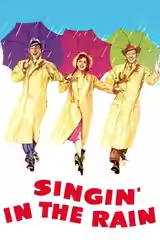
The Jazz Singer is the more specialised choice for exploring early sound, while we recommend Singin’ in the Rain more readily for an evening’s entertainment. The former gains its force from the shifts between silent storytelling and recorded singing, despite a stiff family drama and racist blackface; the latter turns the transition to sound into comedy, with assured timing and pleasurable performances.
What should I watch after The Jazz Singer?
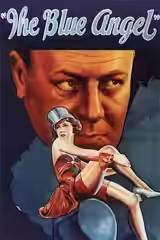
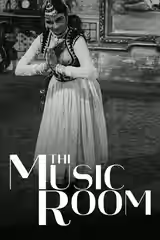
After The Jazz Singer, try Singin' in the Rain (1952, Fi1m 93): The switch to sound becomes a comedy about performers learning what survives. Then The Blue Angel (1930, Fi1m 81): Another early sound film where a singer’s appeal makes sensible judgement difficult; and The Music Room (1958, Fi1m 88): Music and inherited duty receive a quieter, more searching treatment.

Cast

If you liked this, try…

  1. Singin' in the Rain (1952, Fi1m 93)The switch to sound becomes a comedy about performers learning what survives.

  2. The Blue Angel (1930, Fi1m 81)Another early sound film where a singer’s appeal makes sensible judgement difficult.

  3. The Music Room (1958, Fi1m 88)Music and inherited duty receive a quieter, more searching treatment.

  4. The Long Day Closes (1992) · not on Fi1m yetSongs, family and childhood memories matter more here than the pursuit of fame.

  5. Bamboozled (2000) · not on Fi1m yetFor a furious examination of blackface and the audiences willing to applaud it.