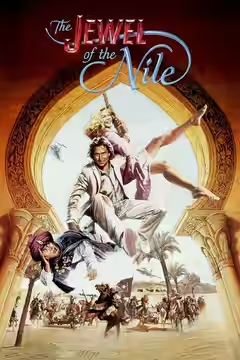
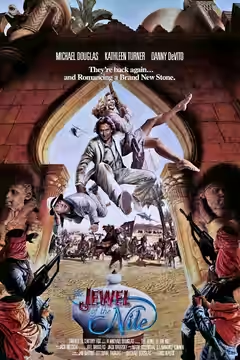
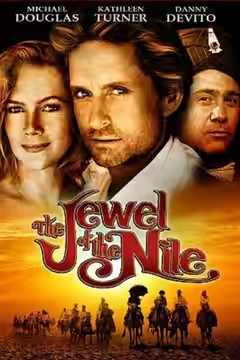
Kathleen Turner and Michael Douglas make this adventure sequel tolerable company, but the forced plotting gives them little worth returning for. Some lively action and comic exchanges cannot disguise how thin the reunion feels.
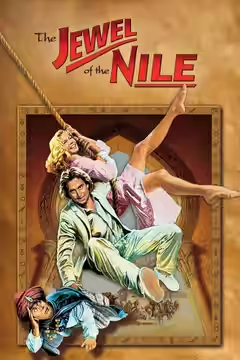
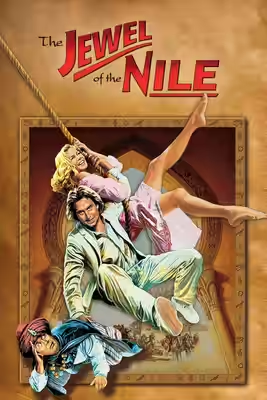
The Jewel of the Nile offers the familiar pleasure of spending more time with actors who work well together. That is a reasonable starting point for an adventure sequel, but director Lewis Teague struggles to make it sufficient. The film is busy, occasionally funny and easy enough to sit through. It is also short of reasons to exist beyond bringing back its leads, and their charm has to cover too many weaknesses in the writing.
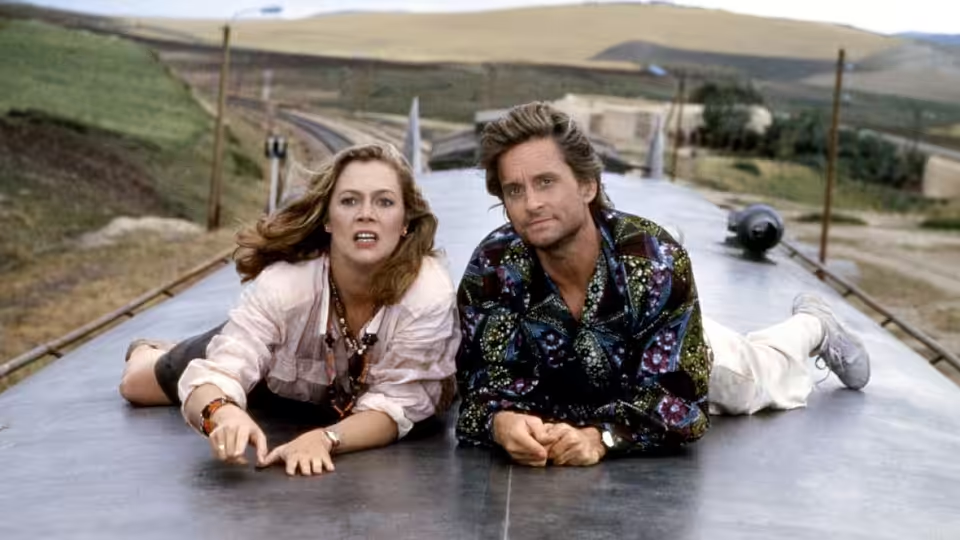
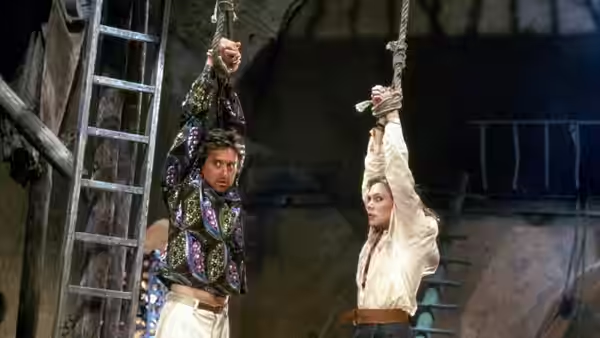
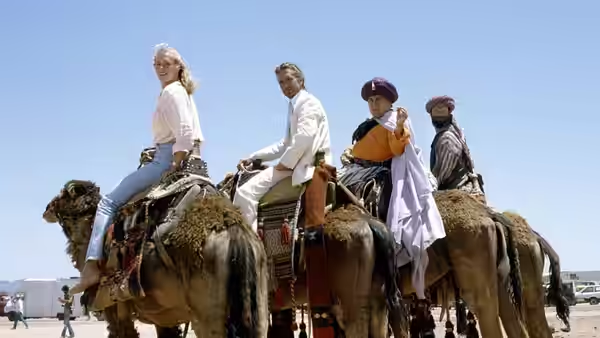
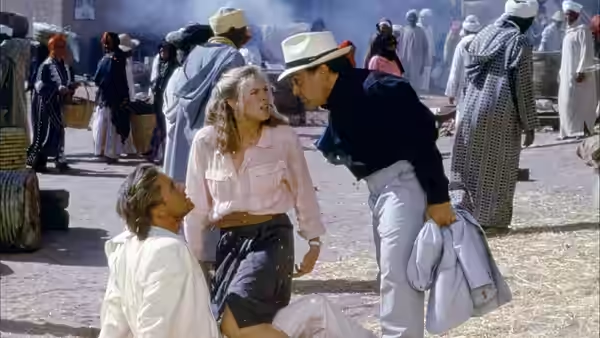
Kathleen Turner and Michael Douglas remain the chief attraction. As Joan Wilder and Jack T. Colton, they can give a routine exchange enough amusement to keep us listening, even when the surrounding story offers little encouragement. We laughed at their brisk exchanges because the pleasure they take in answering each other briefly makes the dialogue feel spontaneous. Those moments matter, though they also make the more dutiful stretches conspicuous. The pairing survives better than the adventure built around it.
Danny DeVito’s Ralph adds another welcome comic presence, but returning performers cannot supply everything a sequel needs. Lawrence Konner and Mark Rosenthal’s screenplay keeps finding business for its characters without making that business feel especially necessary. The action provides movement; the writing too often leaves us waiting for a convincing reason to care about it. At 106 minutes, this is hardly an endurance test, yet the story feels stretched because its complications generate so little curiosity.
Jan de Bont’s cinematography gives the action a finish that helps sustain attention when the plot cannot. Richard Dawking’s production design likewise contributes to the film’s appeal as an adventure spectacle, although the surroundings make a stronger impression than the situations. Teague can keep things lively, and some of the action works perfectly well on those terms. The difficulty comes when the film expects that liveliness to carry scenes whose dramatic purpose is already wearing thin.
Editors Peter Boita and Michael Ellis preserve enough forward movement to stop the weaker passages becoming a complete drag. Their work cannot make the transitions between action, romance and comedy feel consistently natural, however. Jack Nitzsche’s music contributes energy, but there is only so much a score can do when the excitement depends on our investment in a forced complication. These are competent contributions to a film whose central problem remains the screenplay. More urgency would not necessarily improve it.
The portrayal of Middle Eastern people is a more substantial objection than the familiar plotting. Too much characterisation settles for broad types, which makes the adventure feel lazy where it needs curiosity and wit. There is no requirement for a light entertainment to become a history lesson. There is a requirement to make its supporting people interesting enough to share the screen with its stars, rather than rely on those stars to provide nearly all the personality.
An adventure comedy needs room for a little nonsense, and we would not demand rigorous logic from this one. What it needs is a stronger comic rhythm and a story that makes the reunion feel worth arranging. Turner, Douglas and DeVito offer enough pleasure to prevent outright dismissal, but not enough to earn a recommendation. Fondness for the returning cast will have to do most of the work.