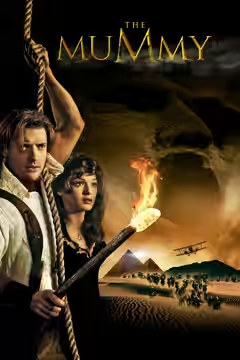
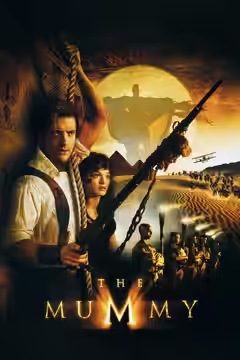
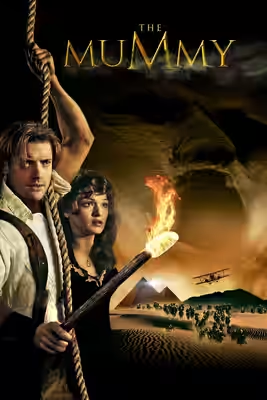
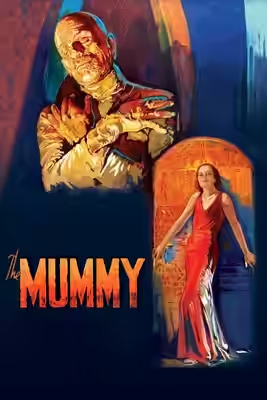
Stephen Sommers’s remake of the 1932 Universal picture is a loud, cheerful adventure serial with a good cast and a script that thinks a shrug is a joke. The effects have aged; Fraser, Weisz and Hannah have not.
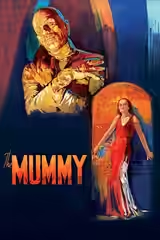
Stephen Sommers has taken the title and premise of the 1932 Universal picture, a slow and mournful thing in which Boris Karloff mostly stood in doorways, and turned it into a Saturday serial. Then it is 1926, and Evelyn Carnahan (Rachel Weisz), a librarian at the Cairo museum, and her sponging brother Jonathan (John Hannah) get hold of a map to Hamunaptra and buy the freedom of Rick O’Connell (Brendan Fraser), who has been there and would rather not go back. It is good fun most of the way, and it knows how much fun it is aiming for: a moderate amount, delivered loudly.
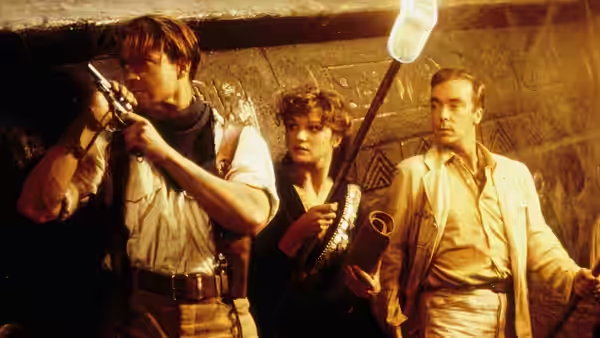
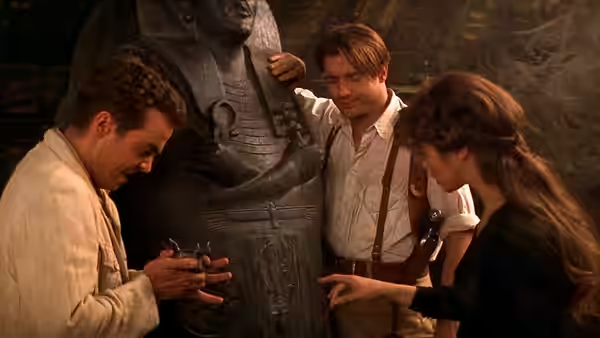
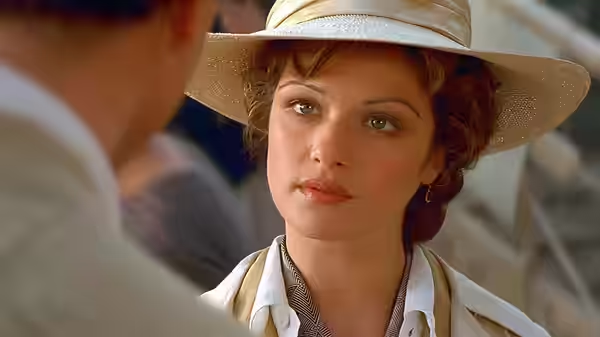
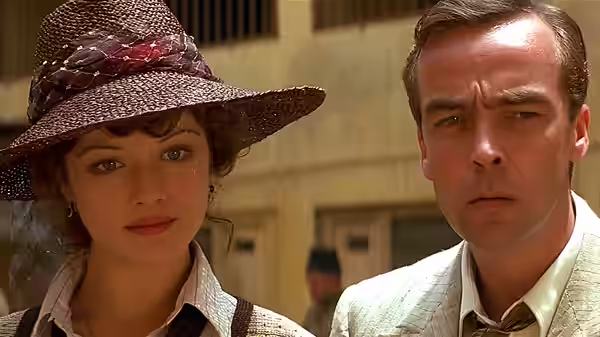
The company carries it. Fraser plays Rick as a man braver than he is clever and aware of the gap; his best moments are reactions, a face that has just seen something and is deciding whether to run or hit it. Weisz gives Evelyn a clumsiness that has nothing to do with weakness, a woman who topples a library and then corrects a colleague’s Egyptian. Hannah treats cowardice as a hobby he has put real hours into. Sommers keeps the three of them in the same frame as often as he can.
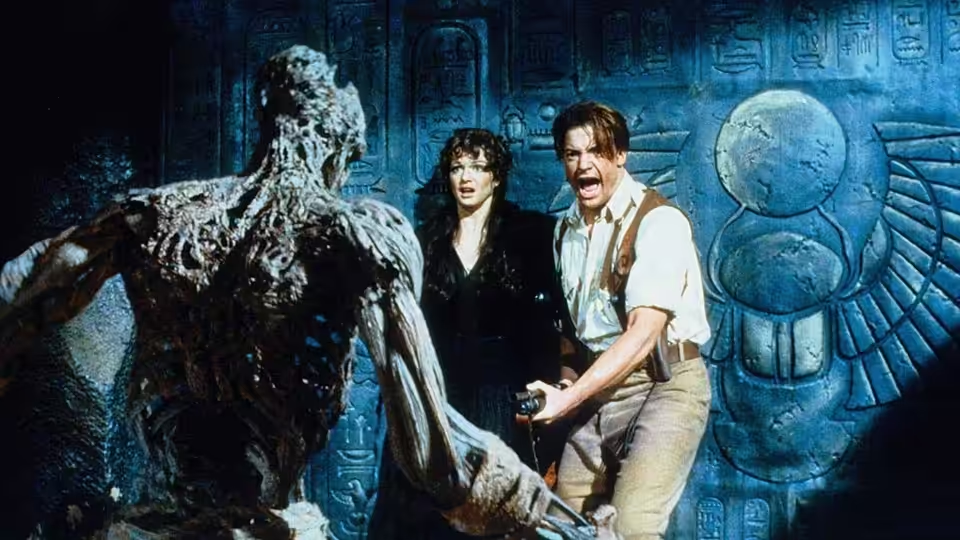
Vosloo, as Imhotep, is the smart piece of casting. He has almost no lines in a living language and does his work by standing still and looking at people as if they were already dead. Kevin J. O’Connor’s Beni, a weasel who changes sides the way other men change hats, gets the best comic business. Oded Fehr’s Ardeth Bay is given a stern jaw and a warning and little else, and the film’s Egyptians are otherwise sinister, greedy or ridiculous. Critics said so in 1999 and it reads worse now.
Adrian Biddle shoots the desert in hot gold and the underground city in a blue-green that seems lit from below, and when the party first goes down into Hamunaptra a chamber of angled mirrors carries the sun into the dark in one cut, the prettiest thing in the film. Allan Cameron’s sets are the real spectacle: a treasure room, a hall of jars, corridors, all with the too-clean finish of a place nobody has stood in for three millennia. Jerry Goldsmith’s score is brass and drums played dead straight, and it does more than anything on screen to persuade us the stakes are real.
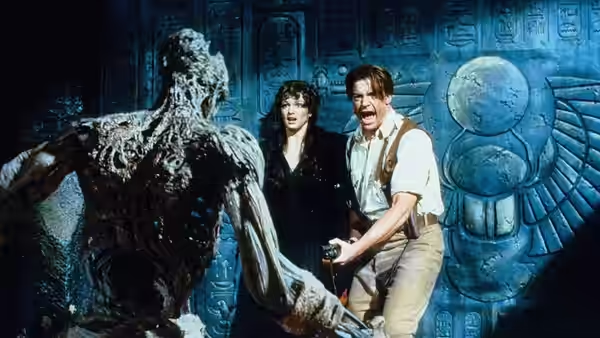
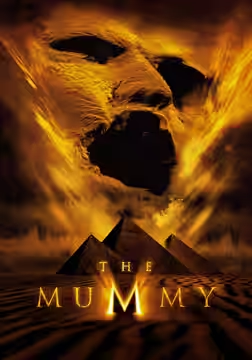
The digital work is where the film has aged, and it had little to spare. Imhotep’s half-rotted face, jaw and cheek missing and the eyes intact, was the selling point and now looks like an early demonstration of the idea. The scarabs are another matter: small, fast and under the skin, they gave us the one honest jump of the evening, and we were briefly and properly revolted. Bob Ducsay and Kelly Matsumoto cut the action so we can always see who is where, though there is a slack half hour while people shuttle between Cairo and the desert.
Sommers the writer is the weak link. Every scene ends on a quip and about one in four of the quips is funny. The rival American expedition exists to be picked off in order. What we felt, mostly, was a large uncomplicated pleasure with a small discomfort under it: we laughed at the bookshelves, we jumped at the beetles, and around the ninety-minute mark we noticed the film had run out of new ideas and was repeating the old ones at higher volume, and we did not mind as much as we should have.
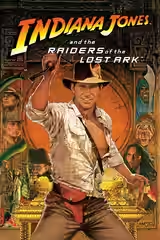
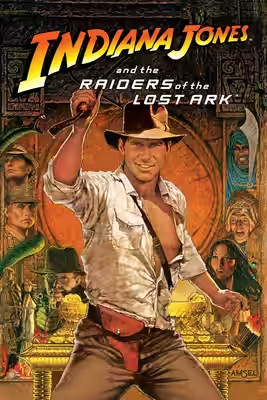
Against Raiders of the Lost Ark (1981), it has none of Spielberg’s care about where a body is in a room and how a joke sets up a scare. Against the Karloff film it has none of the sorrow. It has three actors who like each other and a director who wants us to enjoy ourselves and is not fussy about how. It runs 124 minutes and carries a 12 certificate, which is about right: children will love the beetles and adults will enjoy watching the children. Watch it on a wet Sunday afternoon with someone who talks back to the screen.