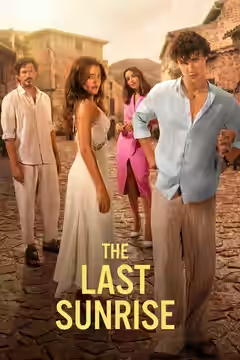
Carlson Young’s Mallorca romance, from Anna Todd’s novel, sends a dancer with epilepsy into the arms of a fisherman and then photographs them like the scenery. Handsome, tidy and almost entirely without heat; the reviews so far are right about it.
Carlson Young directs The Last Sunrise from a novel by Anna Todd, who also produces, with a screenplay by Anna Klassen, and the idea is old and sturdy. A girl with a serious illness goes somewhere hot for the summer, meets a boy who lives there, and has to decide how much of herself to risk on him. Oriah ‘Ry’ Pera (Maia Reficco) is a dancer with epilepsy; Julián (Fernando Lindez) is a fisherman on Mallorca; her mother Isolde (Eva Longoria) would like her to sit in the shade. The tagline promises one summer to feel everything. It runs 107 minutes and we felt little in any of them, which for a romance is the one failure that matters.
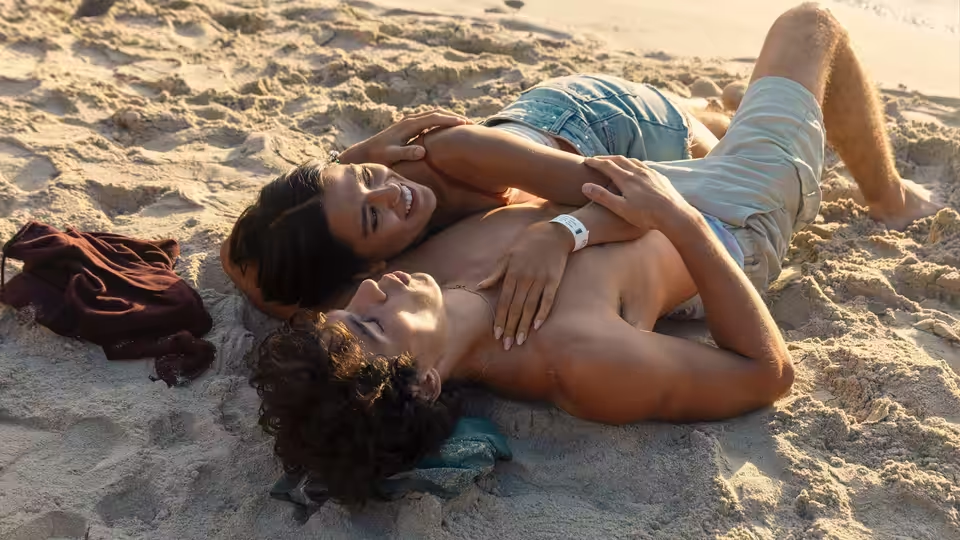
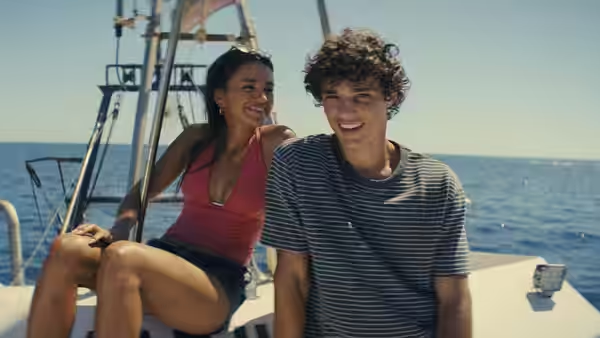
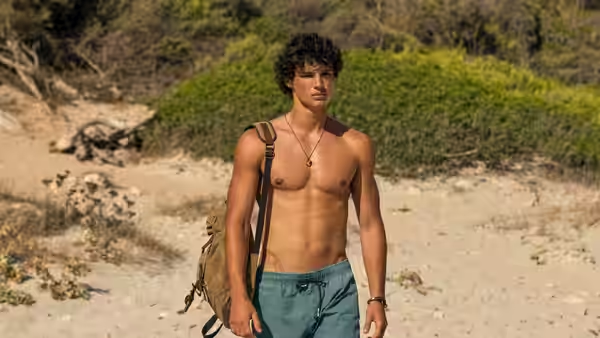
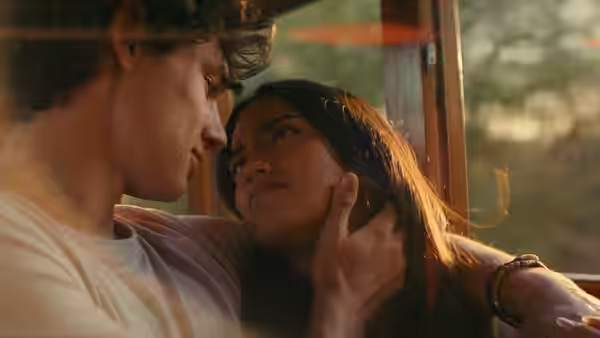
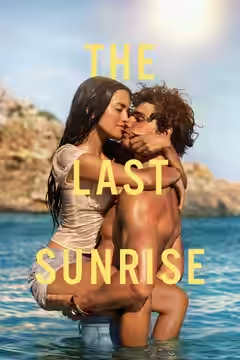
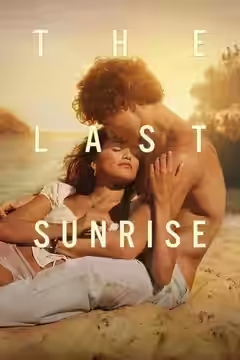
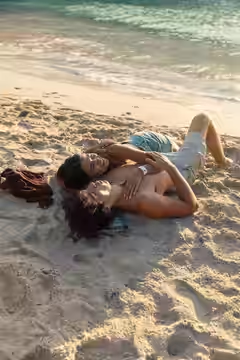
The meeting is the best thing in it. Ry and Julián first collide on a nude beach, and for a few minutes the film has some mischief about it: two embarrassed people arguing about where to look, and a camera that shares the problem. Then everyone gets dressed and stays dressed, in every sense, for the remaining hour and a half. Reficco is likeable and alert, and she does the small physical work of a dancer well, always aware of where her feet are. Lindez is handsome and calm and the script gives him nothing to be calm about. They are photographed side by side a great deal and touch rather less, and when they kiss it is lit and framed like the rest of the island, as something to be looked at rather than felt.
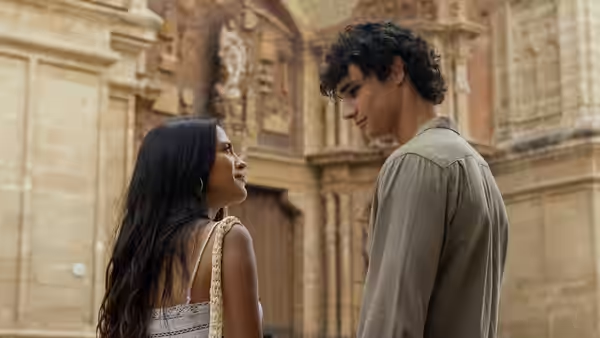
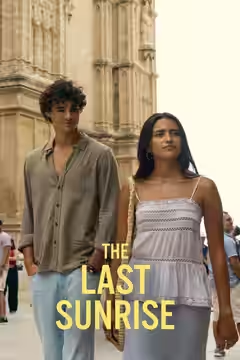
Rob C. Givens shoots Mallorca at the hour when the light goes amber and the sea turns the colour of a hotel pool, and he shoots it that way in scene after scene. Coves from above, a boat cutting a white line through blue, a terrace at sunset, a girl in linen walking away from the camera. Víctor Molero’s production design and Miguel Cervera’s costumes agree with him: whitewashed walls, wooden hulls, clothes with no creases in them. Every frame could sell the holiday. Almost none tells us who lives here, what Julián’s job costs him, or what the island is like in the parts a visitor does not photograph. Pedro Morla plays a fisherman, credited simply as Fisherman, and that is about the depth of the film’s interest in fishing.
Klassen’s screenplay handles the epilepsy as a scheduling device. Ry’s condition is established early, honestly enough, and then it is put away until the plot needs a jolt, at which point a seizure arrives on cue and is handled the way the genre has taught us to expect. We were bored for a long stretch of the middle, and then we were cross, because the illness is the one true thing in the film and it is being used to move the furniture. Longoria, as the mother who has seen what the condition does, plays her scenes straight and small. She is the only adult treated as a person rather than an obstacle, and even she is mostly an obstacle.
Julia Wong and Regino Hernández cut the summer as a series of montages, and Isom Innis and Kambiz Aghdam’s score swells the moment two people look at one another, so we are told what to feel a second before the actors are allowed to try. The pattern repeats: a scene of talk, a montage of the island, a song, a long look, a cut to the sea. By the fourth pass we could have called the shots ourselves. Amara (Chloé Sweetlove) and Mateo (Andrés Velencoso) drift through as friends and complications, and neither gets a scene that is about them.
The summer-abroad romance has a template, and there is no shame in using one; the good ones fill it with particular people in a particular place, so that you remember the town and the argument and not just the light. This one fills it with light. The three reviews we have read are all unfavourable, for much the same reasons, and we are not going to argue with them.
Teenagers who want the island and the boy will get both, in focus, at the right time of day, and may be content. Anyone hoping for the film the title promises, with a deadline in it and something at stake before the sun goes down, will find it glimpsed in two scenes between Reficco and Longoria and then lost under another sunset. With the sound down it makes a decent screensaver. With the sound up you can hear what the people in it are saying, and that is where the trouble starts.