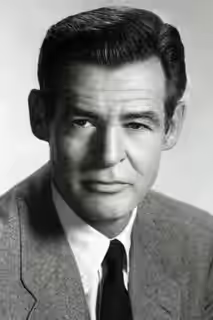
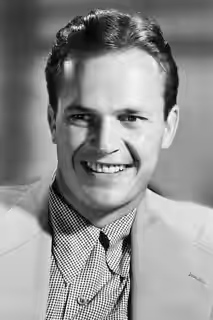
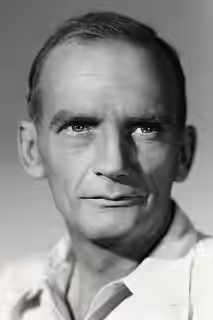
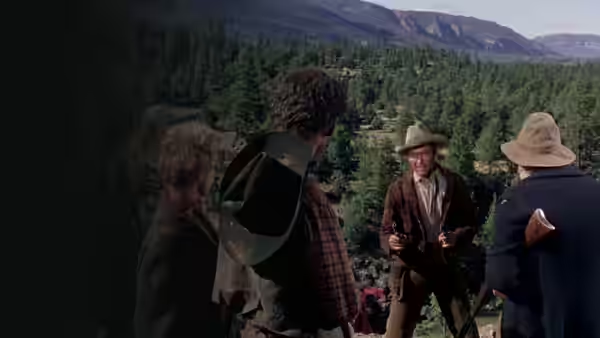
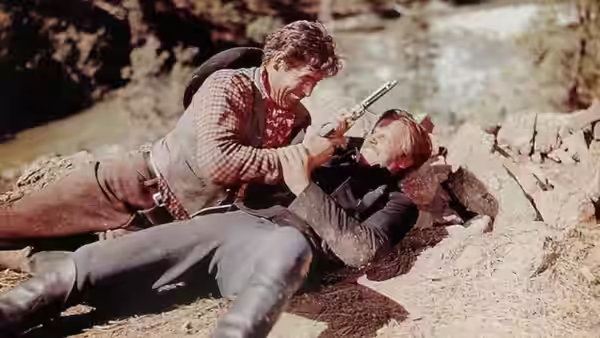
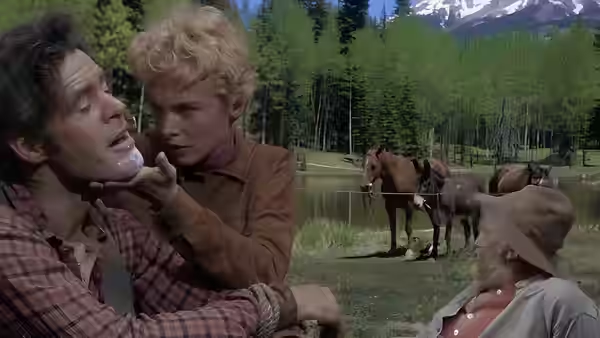
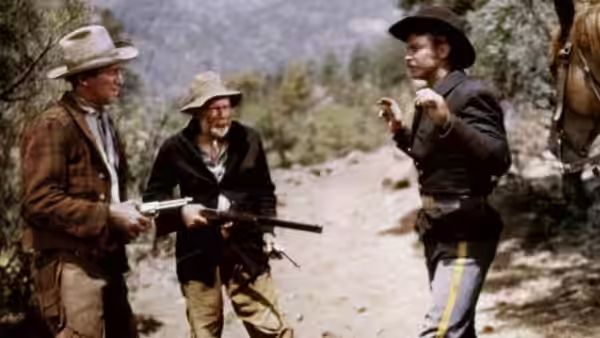
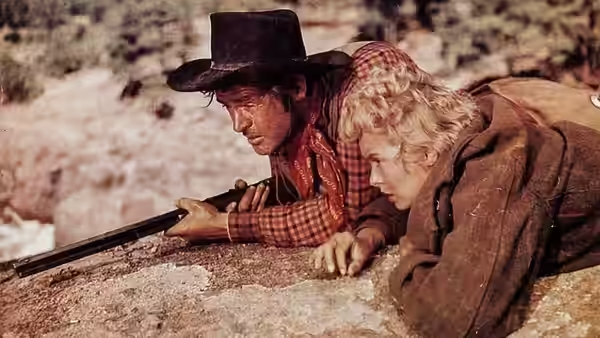
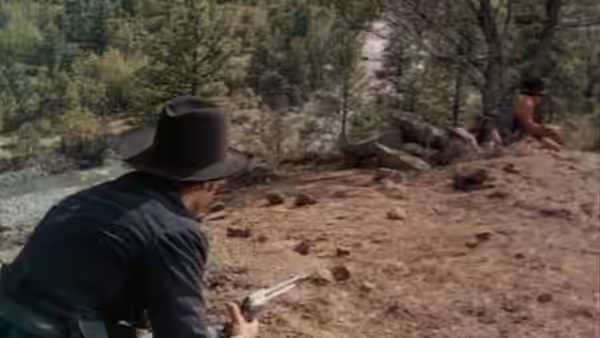
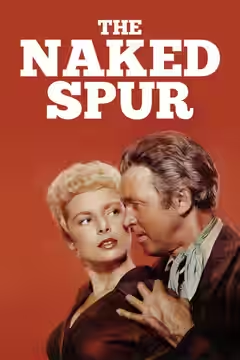
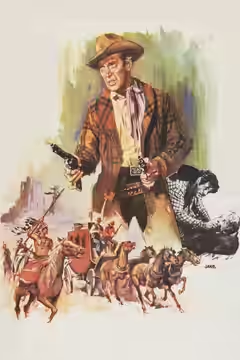
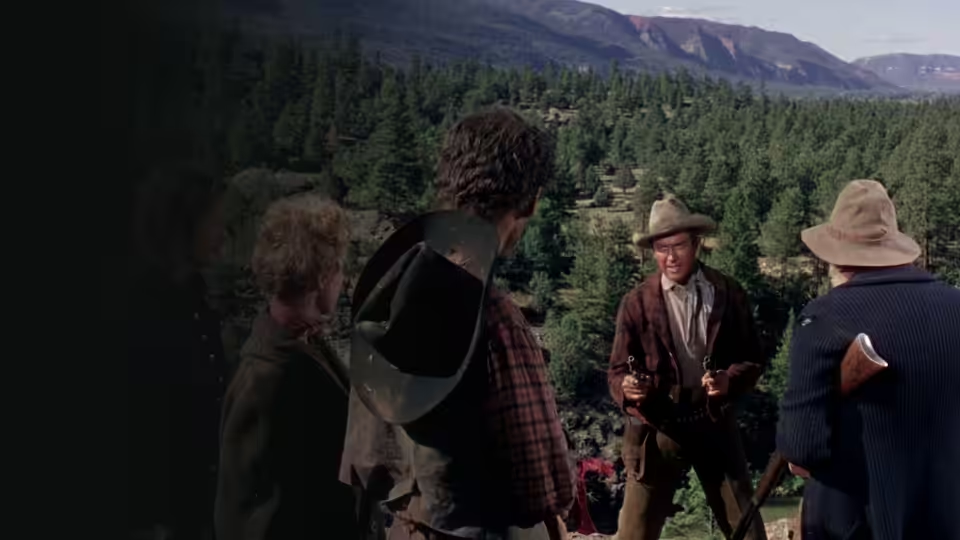
Four men gather near a mountain camp, with horses and forested slopes behind them
Film review

The Naked Spur

1953 · Directed by Anthony Mann · 1h 31m

In a sentenceFive people in the mountains, and the man under arrest seems to be enjoying the company most

In the Colorado mountains, Howard Kemp (James Stewart) is tracking Ben Vandergroat (Robert Ryan) for a reward. He recruits prospector Jesse Tate (Millard Mitchell), then accepts help from former soldier Roy Anderson (Ralph Meeker) when the trail leads to a rocky refuge. Ben is travelling with Lina Patch (Janet Leigh), who remains with him when the men take him prisoner. Howard wants to bring Ben in and collect the money. His helpers expect a share, and Ben recognises that their quarrel may offer him a way out. The journey now depends on three armed men trusting one another with a valuable prisoner.

Plays from YouTube when you press play; nothing loads from them until then.

Fi1m review

Anthony Mann makes a tense Western out of a prisoner, a reward and competing claims to it. James Stewart’s anger is hard to shake, even when the melodrama becomes too emphatic.

The Naked Spur is a tense, forceful Western, with James Stewart making the man in charge difficult to trust. Anthony Mann builds the trouble around a reward: Howard Kemp wants to collect it, and accepting help threatens to reduce his share. We recommend it for the performances and the pressure sustained around that simple dispute. The melodrama sometimes pushes harder than the actors need it to.

Sam Rolfe and Harold Jack Bloom give the captured man plenty of opportunities to interfere with his own escort. Robert Ryan plays Ben Vandergroat with an ease that makes the armed men around him look increasingly strained. His pleasure in their quarrelling is funny, though his enjoyment of other people’s weaknesses gives us little reason to feel comfortable. His captors have to keep listening to someone who has every reason to make them distrust one another.

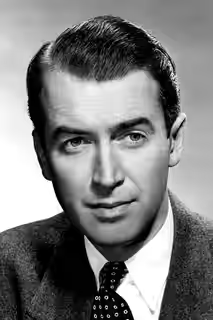
James Stewart gives Howard Kemp so little comfort in his own authority that even a practical disagreement can seem dangerous. We were unsettled by his anger when the reward becomes something to divide. He makes the prospect of losing money feel like a personal injury, and that gives a discussion about shares considerable force. The performance lets us understand his desperation without assuming that we will excuse whatever comes out of it, and the strain in his delivery makes even his reasonable demands sound suspect.

William C. Mellor’s photography gives the Colorado mountains their size without allowing the people to disappear into the scenery. The rocky ground makes the difficulty of approaching and securing a prisoner immediately apparent. Even with so much open country around them, these people must keep watching one another, and the landscape offers little reassurance. It is an effective use of a Western setting, keeping the practical difficulties of the journey in view while giving us something worth looking at.

Ralph Meeker gives Roy Anderson a pushiness that keeps the group uneasy, while Millard Mitchell makes Jesse Tate’s interest in a share seem almost reasonable. The difference matters, because the film would soon grow wearying if every argument sounded alike. Janet Leigh has less room as Lina Patch, and the writing sometimes asks her to supply the decency the men lack. She gives the character enough firmness to keep her from becoming merely the person who objects.

George White’s editing keeps the quarrels brisk without making their terms hard to follow. At 91 minutes, there is little room for the central dispute to grow stale, and the film makes good use of that compression. Bronislau Kaper’s music is less persuasive to us, pressing emotions that the performances have already made clear. It suits the film’s taste for melodrama, but a little less insistence would sometimes leave more room for James Stewart’s unease.

For a Western built around pursuit and capture, the conversations are unusually dangerous. Anthony Mann trusts a dispute over money to hold our attention, and the actors justify that trust even when the writing grows emphatic. Choose it when a straight contest between hero and villain sounds too comfortable.
Critical consensus AI synthesised

79
Positive
4
Mixed
1
Negative
0
Empire
1 March 2007 · Kim Newman
95*

Newman calls the film a masterpiece and a serious contender for the best Jimmy Stewart Western. He praises its tightly told story and emotional punch, especially Stewart’s climactic breakdown-catharsis scene.

Read the full review →
Time Out
15 March 2012
85*

The review presents the film as an exceptionally psychologically complex Western and urges readers to see it. It singles out the contrast between Jimmy Stewart’s squeaky-clean image and the film’s darker character work.

Read the full review →
Radio Times
★★★★ · Adrian Turner
80

The critic describes it as a tough, melodramatic western with tragic ambitions. They praise James Stewart’s fierce performance and the imposing Colorado setting.

Read the full review →
Variety
31 December 1952 · Variety Staff
70*

Variety calls it a taut, rugged melodrama made for western action fans. It praises the vivid cinematography of the Colorado mountain locations.

Read the full review →
The New York Times
26 March 1953
65*

The inaccessible page does not reveal the critic’s verdict. It also provides no details about what the critic praised or criticized.

Read the full review →

Straight answers AI written, from our review

Is The Naked Spur worth watching?
The Naked Spur is worth watching for a tense Western driven by mistrust rather than comfortable heroics, and we score it 84 out of 100. James Stewart’s anger and Robert Ryan’s enjoyment of his captors’ quarrels keep the dispute over a reward gripping. We find the melodrama and insistent music occasionally overstate what the actors already make clear.
How long is The Naked Spur, and what is it rated?
The Naked Spur runs 1h 31m. It is a western film.
Where can I watch The Naked Spur in Ukraine?
The Naked Spur is not on any streaming or rental service in Ukraine at the moment. It is available in 2 other countries; change your country at the top of the page to see where. Availability is checked daily.
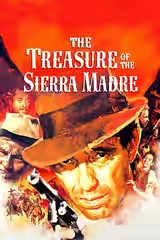
How does The Naked Spur compare to The Treasure of the Sierra Madre?
The Naked Spur is as strong a recommendation as The Treasure of the Sierra Madre, with a prisoner’s reward rather than gold prospecting setting its mountain travellers against one another. We favour The Naked Spur for the pressure of its pursuit and capture, and The Treasure of the Sierra Madre for its humour and frankness about how people excuse their greed.
What should I watch after The Naked Spur?
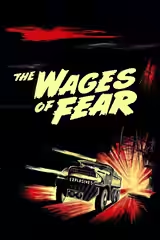
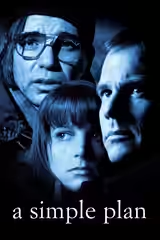
After The Naked Spur, try The Treasure of the Sierra Madre (1948, Fi1m 88): Another mountain journey where the prospect of money makes companionship steadily less reassuring. Then The Wages of Fear (1953, Fi1m 90): For more men discovering how quickly dangerous paid work turns colleagues into liabilities; and A Simple Plan (1998, Fi1m 86): A change of climate, with money again making ordinary loyalties dangerously negotiable.

Cast

Awards

Academy Awards, 1954

Nominated
Best Writing, Original Screenplay

If you liked this, try…

  1. The Treasure of the Sierra Madre (1948, Fi1m 88)Another mountain journey where the prospect of money makes companionship steadily less reassuring.

  2. The Wages of Fear (1953, Fi1m 90)For more men discovering how quickly dangerous paid work turns colleagues into liabilities.

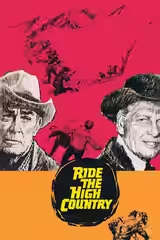
  3. Ride the High Country (1962) · not on Fi1m yetA quieter Western about paid duty, damaged pride and competing ideas of honour.

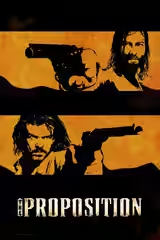
  4. The Proposition (2005) · not on Fi1m yetFor a harsher landscape and another bargain that makes violence difficult to avoid.

  5. A Simple Plan (1998, Fi1m 86)A change of climate, with money again making ordinary loyalties dangerously negotiable.