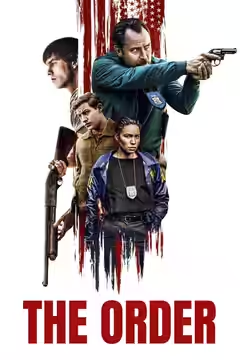
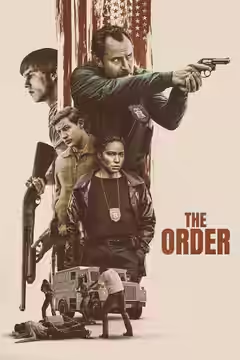
Justin Kurzel’s account of the 1983 hunt for a white-supremacist gang in the Pacific Northwest is a lean, well-made procedural with a frightening Nicholas Hoult at its centre. Jude Law’s agent is a type we have met many times, and the film knows it.
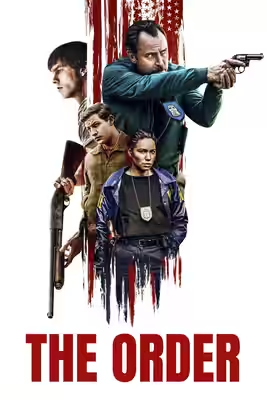
The Order is a manhunt film, and Justin Kurzel has made it plainly. In 1983, in the Pacific Northwest, a handful of men broke away from the Aryan Nations compound at Hayden Lake and began robbing banks to fund a war on the American government. Zach Baylin’s screenplay follows them, and the FBI agent who slowly works out that a run of robberies is one organisation. Kurzel has spent his career on men who do terrible things, in Snowtown and Nitram, and this is the most conventional film he has made, and a good one. We were held for all of its 116 minutes.
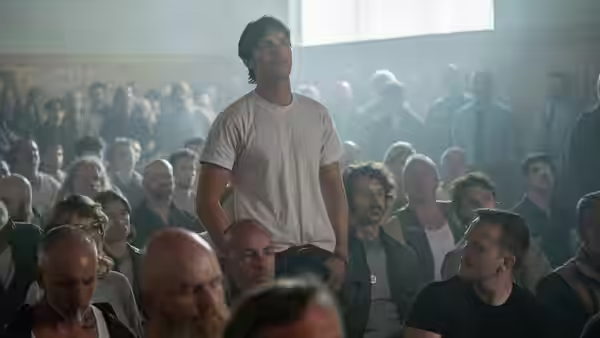
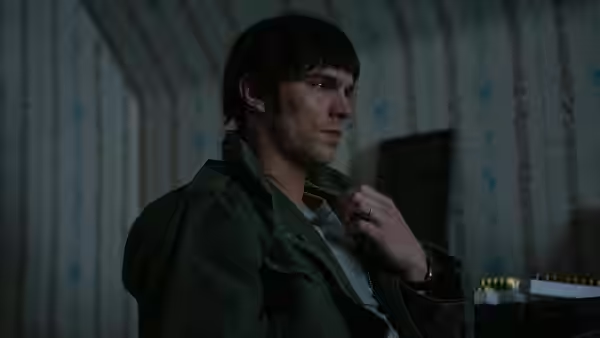
Nicholas Hoult plays Robert Jay Mathews, the man who leads them, and he is the reason the film frightens. Hoult barely raises his voice. He talks to his followers in the tone of a man explaining a mortgage, he is patient with Richard Butler (Victor Slezak), the old preacher who counsels patience, and he means every word. We were horrified, and what horrified us was how reasonable he sounded; we kept following his sentences for a beat before hearing what was in them. Rachel Dainer-Best puts him in work shirts and a quilted waistcoat, and Kurzel gives him a wife (Alison Oliver), a small son and a kitchen table. We see him at breakfast as often as we see him with a gun.
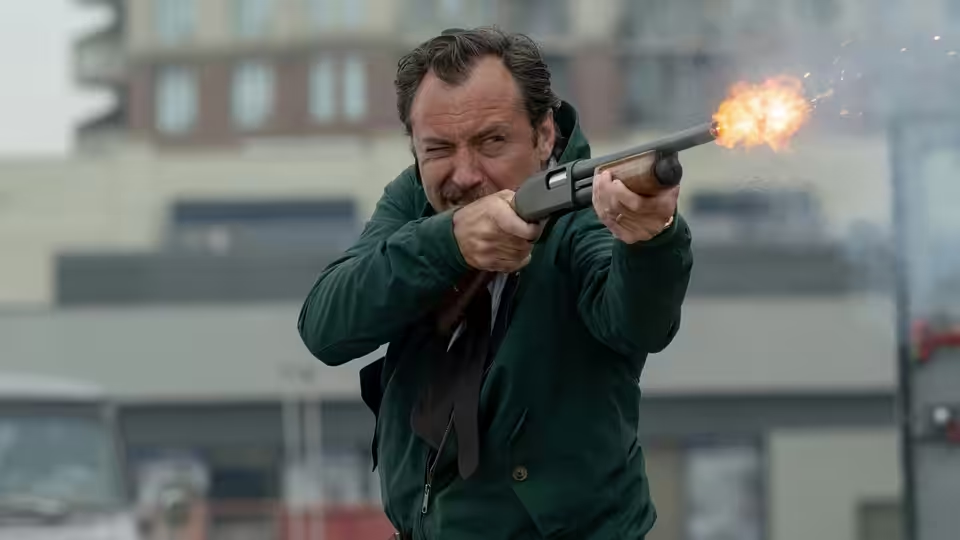
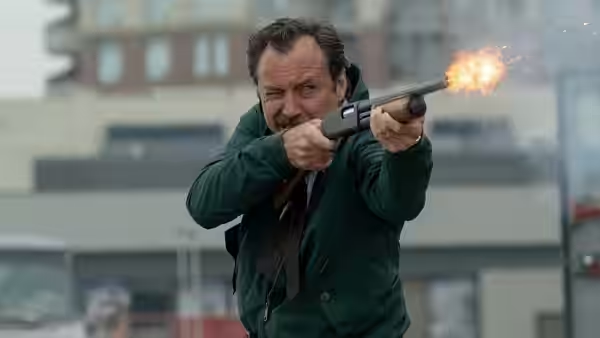
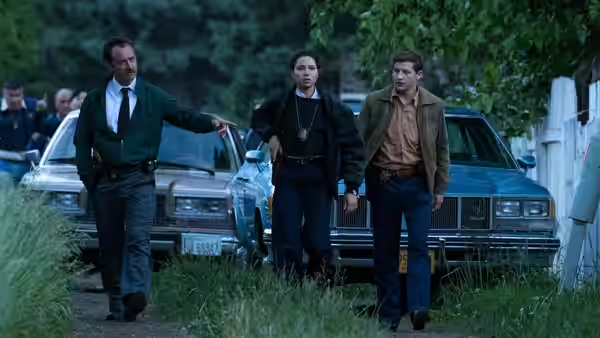
Jude Law’s Terry Husk is the other half, and he is a man we have met in a great many films. Husk is an FBI man with years on the Klan and the Mob behind him; he drinks, his wife and daughters no longer live with him, and he gets nosebleeds when he is under strain. Law knows the type and plays him without apology: heavier than we are used to seeing him, slow to speak, and prickly about being helped. His best scenes are with Tye Sheridan’s Jamie Bowen, a local deputy who has been watching the compound on his own time. Sheridan is open where Law is shut, and the film is at its warmest when the two of them are in a car.
Adam Arkapaw shoots Idaho and Washington in wide, level frames: pine hills, long roads with nothing on them, a grey sky that never quite rains. The men in it look small and the mountains look permanent. Karen Murphy’s production design gives the compound peeling white paint and folding chairs, so that it looks like a church hall, and gives Husk a rented house with nothing in the fridge. Jed Kurzel’s score is mostly low strings and a held drone, and it does its best work by stopping. Nick Fenton cuts the robberies fast but legibly. We always know where the door is, which is what makes them frightening.
What does not work is mostly what the genre brings with it. Baylin’s plot knows exactly where it is going and does not stop for anyone who is not carrying a gun. The women are there to tell us about the men. Jurnee Smollett-Bell comes in as Joanne Carney, an FBI agent sent to help; the film treats her as a colleague and then gives her little to do beyond stand beside Husk in briefings. Odessa Young’s Zillah Craig, a woman in the group with her own claim on Mathews, gets one good scene and is then set down.
The Times found it leaden, and it is true that most of it we have seen before. But all of it has been built with care, and the film makes its case about what these men were mostly by showing them. Kurzel rarely points at the present, and the film is better for the restraint; these people are on screen, in daylight, being polite, and that is argument enough. Mathews and his crew take their plan from a novel, The Turner Diaries, and Kurzel shows them reading it like scripture and working through its chapters.
See it if you like your crime films spare and your villains quiet. And watch Hoult. If you catch yourself nodding along to him for half a sentence, that is the film working.