Ben A. Williams’s film of John Donnelly’s play about a closeted footballer barely leaves its hotel rooms and does not need to. Russell Tovey is first-rate as a man who has traded himself for a career; the middle section works too hard to make its point.
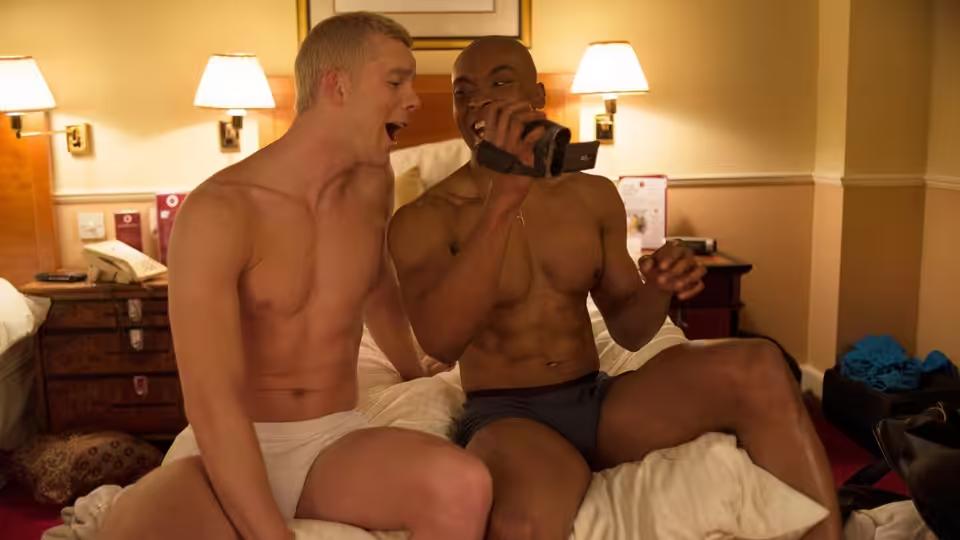
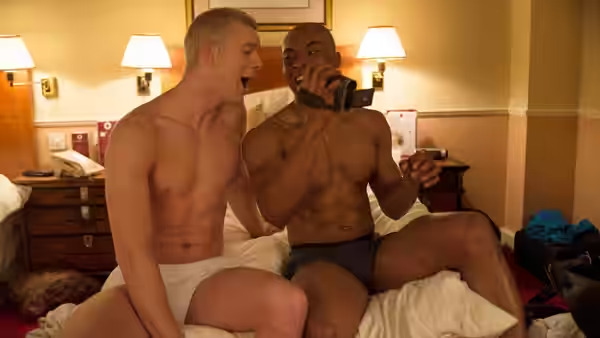
Two nineteen-year-olds in a hotel room, the night before a match, with one place in the team between them. That is the whole of the first act of The Pass, and it is the best stretch of a good, small film. Jason (Russell Tovey) is the one who talks. Ade (Arinze Kene) is the one who listens and then says the thing Jason did not want said. John Donnelly, adapting his own play, lets them fill forty minutes with dares and insults and a long argument about pizza, and underneath all of it is a question neither boy will ask out loud. Ben A. Williams directs it without fuss. The hotel room is beige, the window shows nothing, and the camera stays close enough that we can see Jason decide, several times, not to look at his roommate.
We recommend it, with the usual caveat about a play on film, and with a stronger one: the people who call it urgent and unmissable have oversold it. It is worth your evening if you like watching two actors in a room, which is what it is.
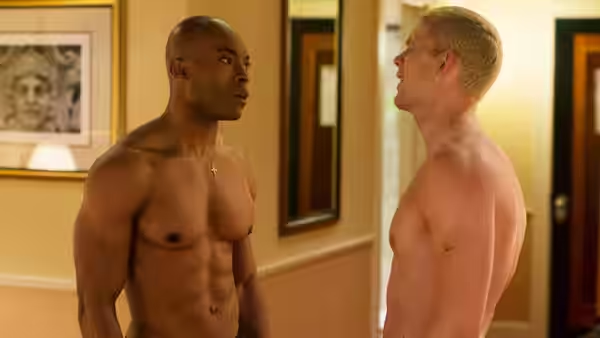
Tovey and Kene are plainly older than nineteen and get away with it because the swagger is right. Jason strips, flexes, stamps about half-dressed, checks himself in the mirror and pretends not to; Ade lies on the bed and lets him. Then the lights go down and the first act ends on something small and quiet, and we were surprised by how little it was on screen and how much it obviously cost. Tovey plays the seconds afterwards with his back to us. It is the moment the whole film is built on and Williams does not underline it.
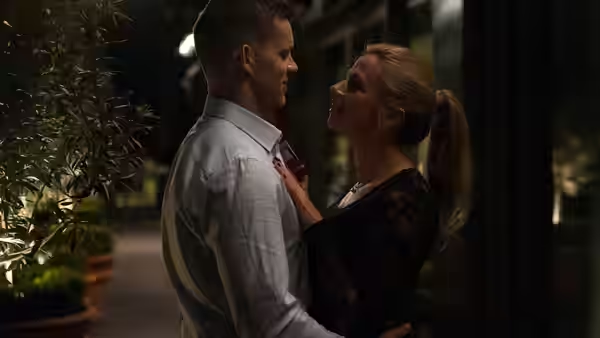
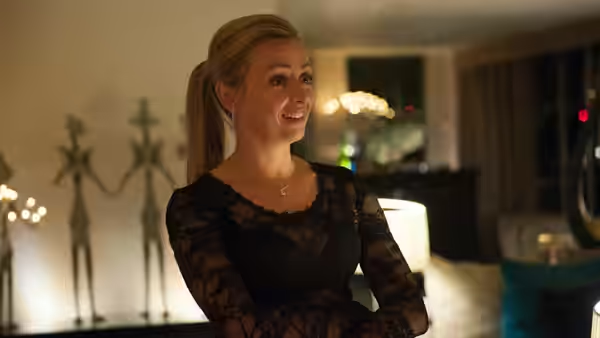
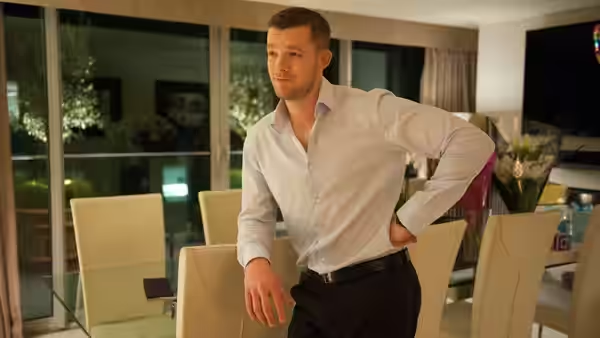
Five years on, Jason is a star, and the hotel suite is bigger and whiter. Lyndsey (Lisa McGrillis), a dancer, has been brought to it for reasons that become clear, and McGrillis gives the film a welcome dose of someone who can see straight through its lead and says so. This is the section where the play shows. People deliver positions rather than talk, a mobile phone does more plotting than it should, and the turn at the end of the act is the one time we could feel the writer’s hand on our shoulder. Most critics have noted the staginess and most have forgiven it; we forgive the first and third acts and not quite the second.
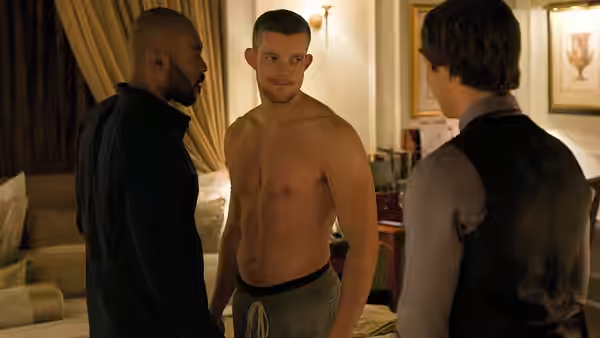
The third act returns to a hotel, the most expensive yet, and to Ade, and we will not say in what circumstances. We will say that it is where Tovey earns the praise he has had. Jason’s voice has gone flat and his body has gone stiff, and he has turned the old game of dares into something colder, pulling Harry (Nico Mirallegro), a young member of the hotel staff, into it because he no longer knows how else to be in a room with a man. We did not like Jason. We did not like him at nineteen and we liked him less at twenty-nine. We were moved anyway, more than we expected, by the sight of someone trying to restart a joke with the only person who ever understood it, ten years too late. Kene matches him, and does it with less: a stillness, a refusal to be wound up, that tells us where Ade has been without a speech.
The craft is modest and mostly sound. The three rooms are graded from cheap to lavish so that the furniture tells us how Jason’s career has gone before anyone mentions it. The cutting is patient in the first act and twitchier in the second, which fits the material if not always the mood. Williams never opens the film out to a stadium or a pitch, and we think that was right; the football is the thing Jason has chosen over everything else, and keeping it offscreen makes the choice look exactly as hollow as it is.
At 87 minutes, with a 15 certificate, it asks little of a night in. Watch it with someone who follows the game and someone who does not. They will disagree about Jason, and the film will have done its job.