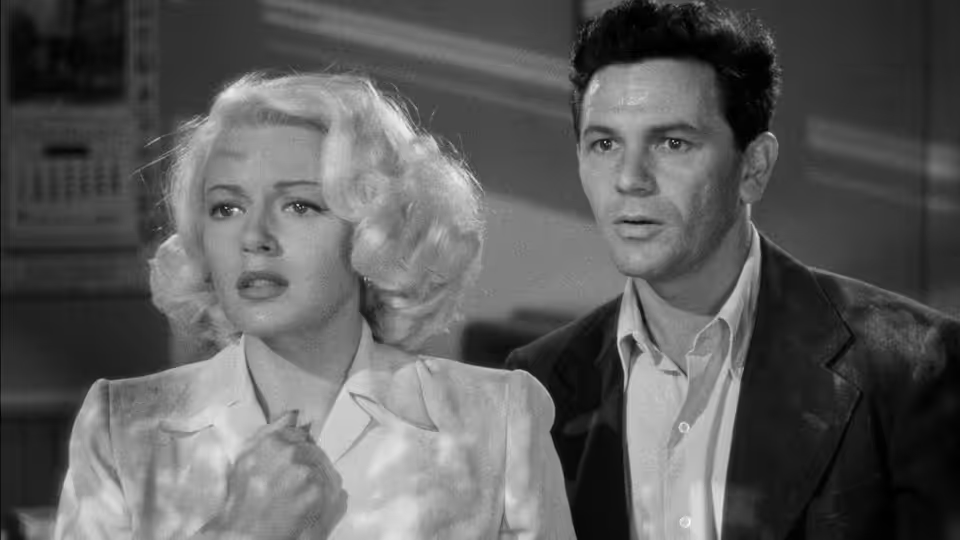
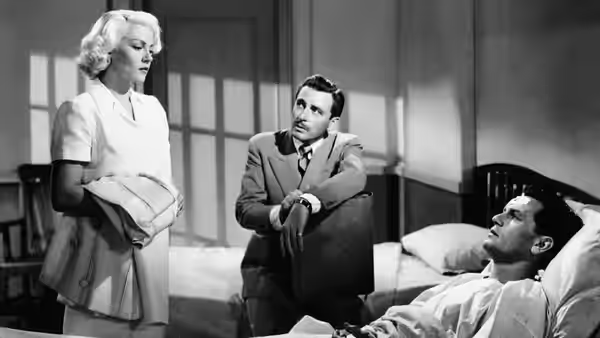
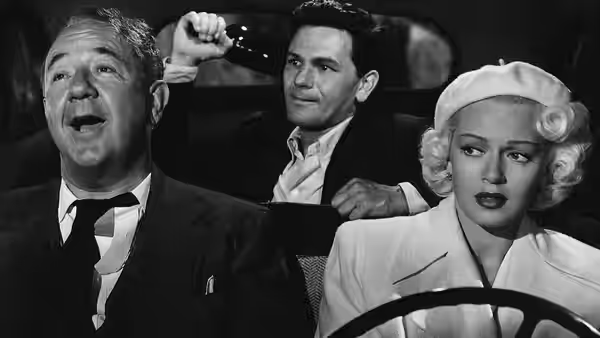
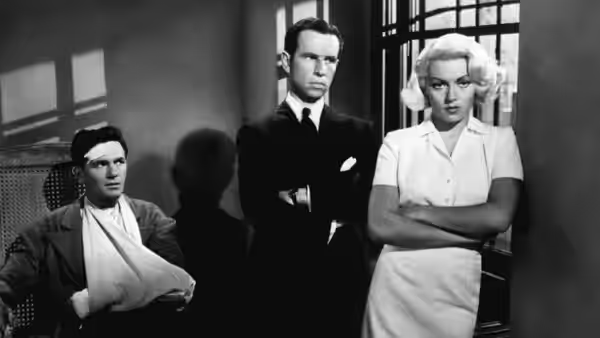
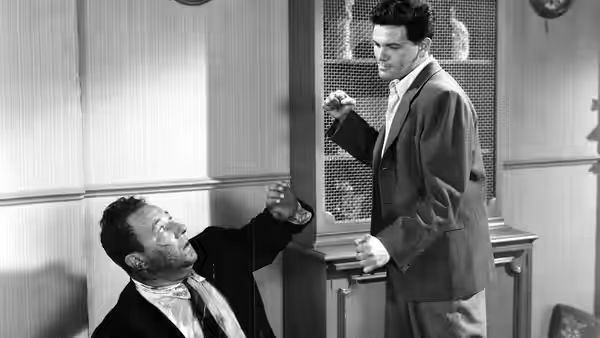
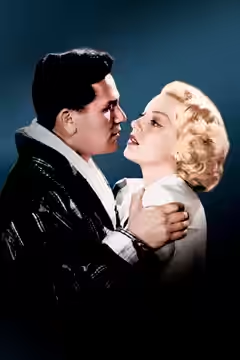
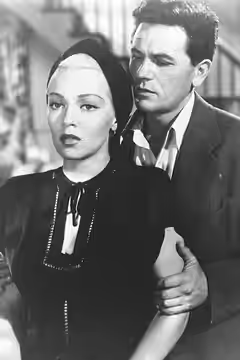
Lana Turner and John Garfield make this restrained crime romance persuasive, with Sidney Wagner’s shadowed photography supplying much of the unease. We recommend it for the performances, though the deliberate opening takes its time.
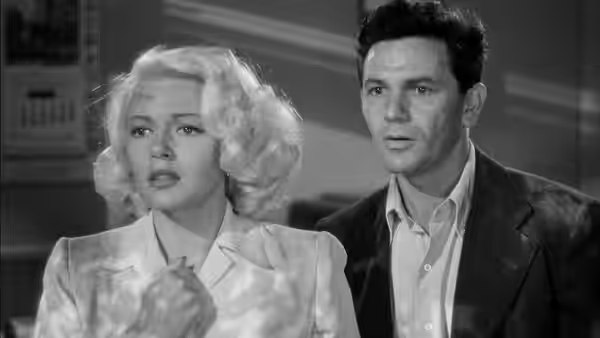
The Postman Always Rings Twice is worth the patience its opening asks of us. Tay Garnett directs as though the attraction between John Garfield and Lana Turner needs to be established before the suspense can matter, and he is right. We have to believe these people want each other enough to behave badly. The film’s restraint about sex occasionally makes that harder than it should be, but the two leads do most of the necessary work without explicitness.
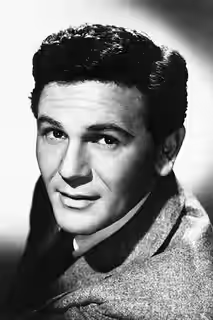
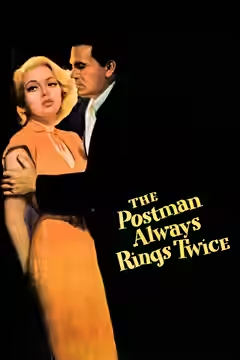
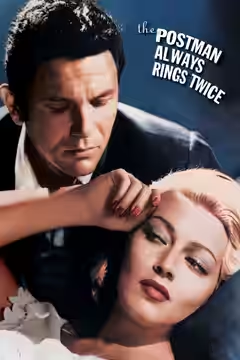
Lana Turner makes Cora Smith compelling without making her comfortable company. Her performance gives us little reassurance about the character’s judgement, yet holds our attention firmly enough that we keep hoping to find some. John Garfield’s Frank Chambers provides a convincing partner, and their chemistry makes the attraction credible before we start assessing their choices. We were unsettled by how readily we accepted their desire as an excuse for bad judgement. That response comes from the performances, which make the attraction persuasive even when good sense ought to intervene.
Niven Busch and Harry Ruskin’s adaptation of James M. Cain’s novel gives the actors dialogue that is terse without sounding pared down for effect. Its plainness is useful: people caught up in desire do not need to provide elegant accounts of their motives. Hume Cronyn makes Arthur Keats worth watching in his own right, even with the two leads dominating our attention. His contribution helps prevent the film from becoming merely an extended exercise in admiring its stars, and the writing gives him enough space to make an impression without labouring every point.
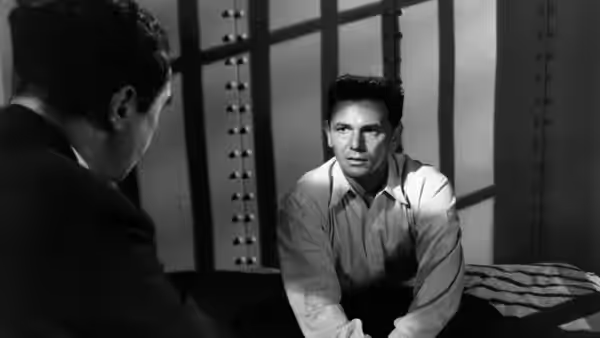
Sidney Wagner’s cinematography gives the suspense much of its weight. The layered shadows complicate the images without making them merely decorative, while the sinister night imagery sustains an unease the restrained sexual material cannot always provide. We find ourselves looking into the darkness rather than simply admiring the stars. That is an effective use of noir lighting, and it matters here because glamour could so easily make everything feel safe and comfortably distant from ordinary bad decisions.
George White’s editing allows the setup to take its time, a sensible decision that still asks more patience than every scene earns. We understand the need to establish the attraction, but we also begin to want the crime story to move. George Bassman’s music makes less of an impression on us than the photography, though the film does not need every element to compete for attention. The craft works most effectively when it keeps us attentive to the performances and gives the actors room to make desire convincing.
The film’s restraint remains a real qualification to our recommendation. Desire drives this kind of crime story, and there are moments when the caution about showing it feels imposed rather than convincing. Even so, the performances and shadowed images keep the attraction troubling, and the plain dialogue prevents the material from becoming grandiose. Choose it for Lana Turner and John Garfield, and allow the opening the time it needs.