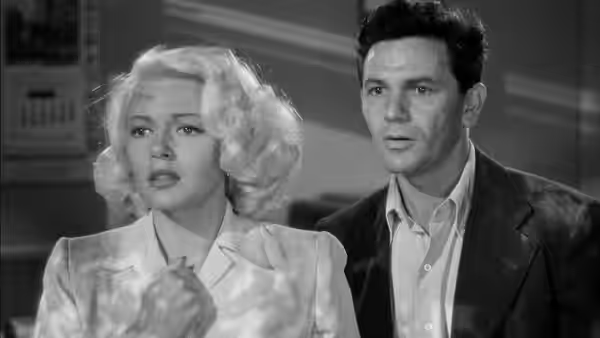
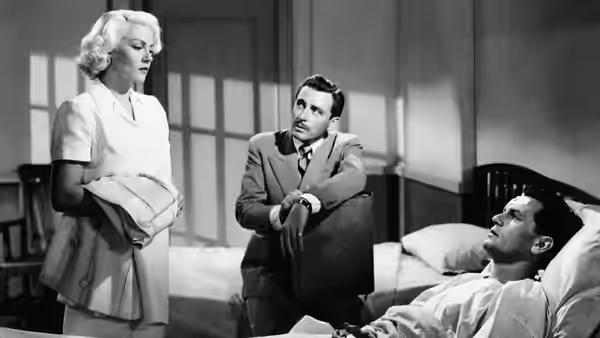
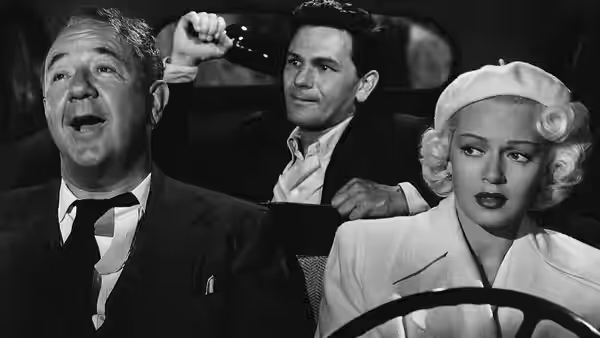
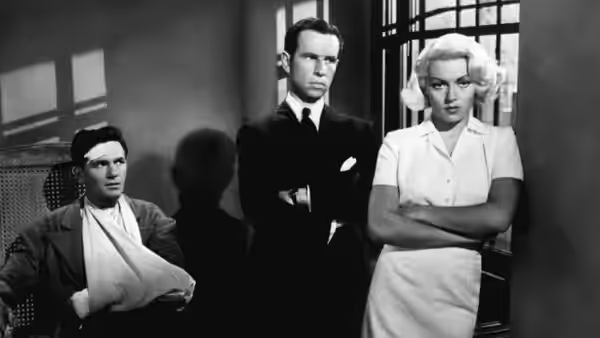
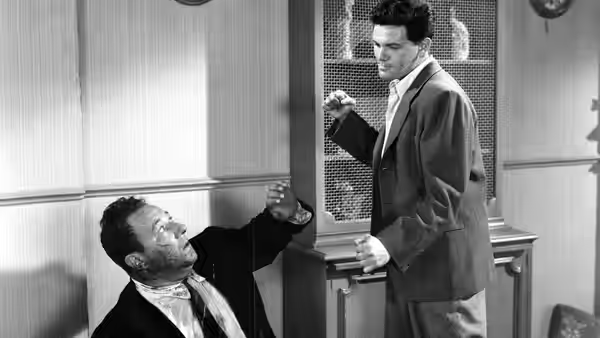
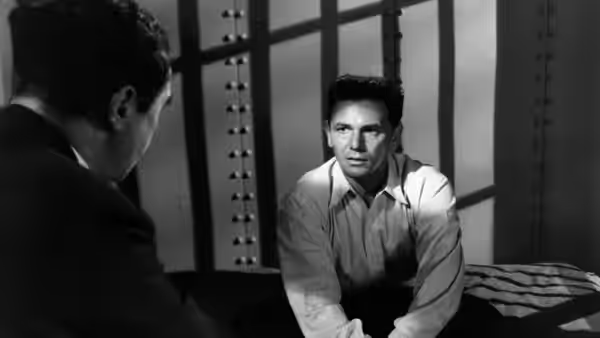
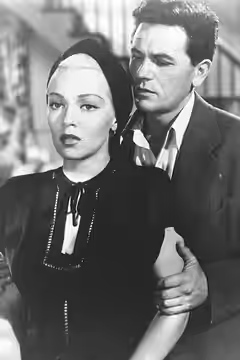
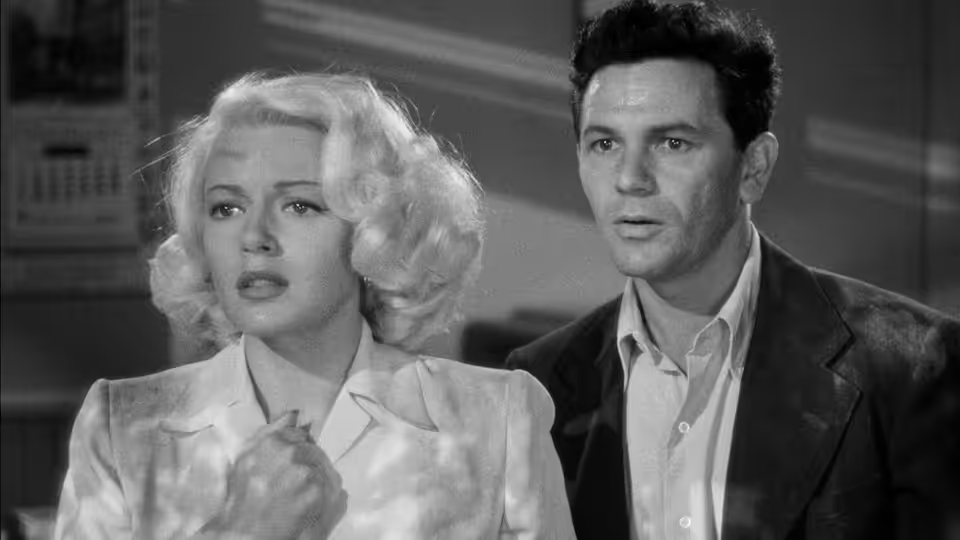
Cora Smith (Lana Turner) and Frank Chambers (John Garfield) stand side by side indoors
Film review

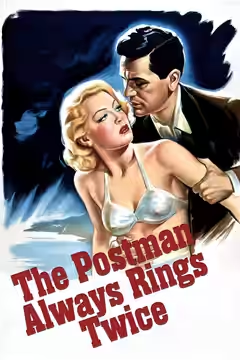
The Postman Always Rings Twice

1946 · Directed by Tay Garnett · 1h 53m · BBFC PG

In a sentenceLana Turner and John Garfield make poor judgement look tempting enough to require a second opinion

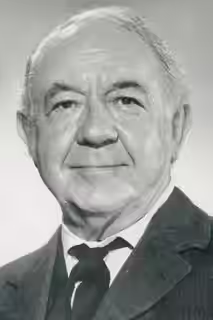
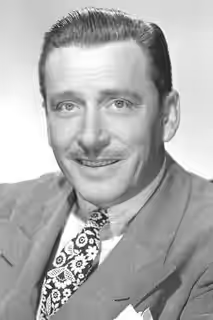
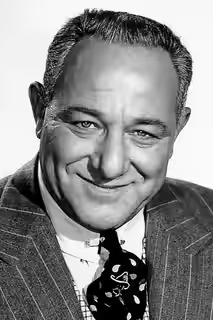
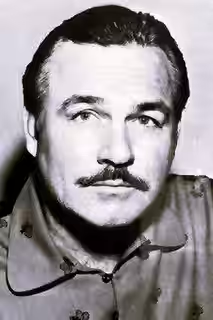
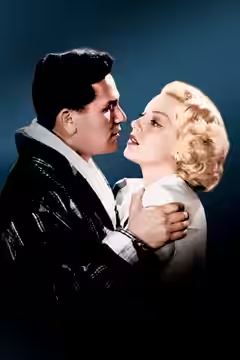
Frank Chambers (John Garfield) and Cora Smith (Lana Turner) are drawn to each other in a story of desire and crime. Nick Smith (Cecil Kellaway) completes the central trio, with Arthur Keats (Hume Cronyn), Kyle Sackett (Leon Ames) and Madge Gorland (Audrey Totter) also involved. Attraction complicates moral judgement as the story moves between romance and suspense. Adapted from James M. Cain’s novel by Niven Busch and Harry Ruskin, Tay Garnett’s film concentrates on the pull between its leads and the trouble that follows.

Plays from YouTube when you press play; nothing loads from them until then.

Fi1m review

Lana Turner and John Garfield make this restrained crime romance persuasive, with Sidney Wagner’s shadowed photography supplying much of the unease. We recommend it for the performances, though the deliberate opening takes its time.

The Postman Always Rings Twice is worth the patience its opening asks of us. Tay Garnett directs as though the attraction between John Garfield and Lana Turner needs to be established before the suspense can matter, and he is right. We have to believe these people want each other enough to behave badly. The film’s restraint about sex occasionally makes that harder than it should be, but the two leads do most of the necessary work without explicitness.

Lana Turner makes Cora Smith compelling without making her comfortable company. Her performance gives us little reassurance about the character’s judgement, yet holds our attention firmly enough that we keep hoping to find some. John Garfield’s Frank Chambers provides a convincing partner, and their chemistry makes the attraction credible before we start assessing their choices. We were unsettled by how readily we accepted their desire as an excuse for bad judgement. That response comes from the performances, which make the attraction persuasive even when good sense ought to intervene.

Niven Busch and Harry Ruskin’s adaptation of James M. Cain’s novel gives the actors dialogue that is terse without sounding pared down for effect. Its plainness is useful: people caught up in desire do not need to provide elegant accounts of their motives. Hume Cronyn makes Arthur Keats worth watching in his own right, even with the two leads dominating our attention. His contribution helps prevent the film from becoming merely an extended exercise in admiring its stars, and the writing gives him enough space to make an impression without labouring every point.

Sidney Wagner’s cinematography gives the suspense much of its weight. The layered shadows complicate the images without making them merely decorative, while the sinister night imagery sustains an unease the restrained sexual material cannot always provide. We find ourselves looking into the darkness rather than simply admiring the stars. That is an effective use of noir lighting, and it matters here because glamour could so easily make everything feel safe and comfortably distant from ordinary bad decisions.

George White’s editing allows the setup to take its time, a sensible decision that still asks more patience than every scene earns. We understand the need to establish the attraction, but we also begin to want the crime story to move. George Bassman’s music makes less of an impression on us than the photography, though the film does not need every element to compete for attention. The craft works most effectively when it keeps us attentive to the performances and gives the actors room to make desire convincing.

The film’s restraint remains a real qualification to our recommendation. Desire drives this kind of crime story, and there are moments when the caution about showing it feels imposed rather than convincing. Even so, the performances and shadowed images keep the attraction troubling, and the plain dialogue prevents the material from becoming grandiose. Choose it for Lana Turner and John Garfield, and allow the opening the time it needs.

Critical consensus AI synthesised

80
Positive
5
Mixed
1
Negative
0

Most critics respond warmly to The Postman Always Rings Twice, with praise clustering around its tense storytelling, dark atmosphere and performances. The stars’ sexual chemistry and Tay Garnett’s direction draw particular approval, while Lana Turner and Hume Cronyn receive individual praise. The reviews also value the terse, natural screenplay and the cinematography’s layered shadows and sinister nighttime imagery. Taken together, the positive responses describe a film whose plotting and moral ambiguity sustain its unease.

The differences are chiefly matters of emphasis and enthusiasm rather than outright rejection. Variety notes a deliberate setup but finds the portrayal of evil forceful, while Time Out acknowledges sexual restraint yet considers the adaptation more striking than the later remake. The scores range from qualified approval to marked enthusiasm, with no negative verdicts recorded. The New York Times supplies the sole mixed rating, but its unavailable review text leaves the grounds for that reservation unclear.

Radio Times
★★★★★ · Tony Sloman
100

The critic says the film remains electrifying. They single out the stars’ sexual chemistry and Tay Garnett’s tense direction.

Read the full review →
Empire
1 January 2000 · Kim Newman
90*

Newman gives the film a strongly positive verdict, calling it a triumph of plot-driven storytelling. He singles out its dark atmosphere, moral ambiguity and powerful ending.

Read the full review →
Time Out
· TM
70*

The critic presents this adaptation as more striking than the later remake, despite its restraint around sexuality. The opening shot is singled out as a strength.

Read the full review →
Variety
31 December 1945 · Variety Staff
70*

The review finds the film controversial but effective, with its deliberate setup giving way to a forceful portrayal of evil. It singles out Hume Cronyn’s performance and praises the screenplay’s terse, natural writing.

Read the full review →
The New York Times
3 May 1946 · Bosley Crowther
64*

The page appears to be a New York Times review, but its text is unavailable. I cannot verify the critic’s verdict or what the review singles out.

Read the full review →
Eye for Film
18 February 2017 · Jennie Kermode
90*

Kermode calls the film a masterclass in noir and finds it unsettling and unforgettable. She especially praises Lana Turner’s performance and the cinematography’s layered shadows and sinister nighttime imagery.

Read the full review →

Straight answers AI written, from our review

Is The Postman Always Rings Twice worth watching?
The Postman Always Rings Twice is worth watching for its persuasive crime romance and the chemistry between Lana Turner and John Garfield; we score it 82 out of 100. We recommend it to anyone who enjoys morally troubling attraction and shadowed suspense, though the opening takes its time and the sexual restraint sometimes weakens the drama.
How long is The Postman Always Rings Twice, and what is it rated?
The Postman Always Rings Twice runs 1h 53m and is rated PG by the BBFC in the UK. It is a drama and romance film.
Where can I watch The Postman Always Rings Twice in the UK?
The Postman Always Rings Twice is available to rent from Amazon Prime Video from £3.49. Availability is checked daily; the links above go straight to each service.
How violent or frightening is The Postman Always Rings Twice, and is it suitable for children?
The Postman Always Rings Twice has a UK PG certificate, suggesting parental guidance rather than unrestricted suitability for children. Its sex is restrained rather than explicit, while sinister night imagery and the connection between desire and crime create unease. We would steer it towards older viewers interested in adult relationships rather than choose it for a family evening.
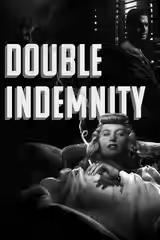
How does The Postman Always Rings Twice compare to Double Indemnity?
The Postman Always Rings Twice is the more qualified recommendation beside Double Indemnity, which we would recommend more broadly for its viciously funny dialogue and finely judged lead performances. Both make desire a persuasive excuse for crime, but we recommend The Postman Always Rings Twice chiefly for Turner and Garfield’s chemistry, with patience required for its deliberate opening.
Is The Postman Always Rings Twice based on a true story or a book?
The Postman Always Rings Twice is adapted from James M. Cain’s novel, rather than presented as a true story, with a screenplay by Niven Busch and Harry Ruskin. We find the terse dialogue and focus on the central attraction effective on their own, so knowing the book is not a prerequisite for enjoying the film.
What should I watch after The Postman Always Rings Twice?
After The Postman Always Rings Twice, try Double Indemnity (1944, Fi1m 92): Another persuasive demonstration of desire making criminal plans seem perfectly reasonable. Then Ossessione (1943, Fi1m 75): A rougher, less polished treatment of desire turning towards crime; and Body Heat (1981, Fi1m 83): For a crime romance considerably less cautious about showing the attraction.

Cast

If you liked this, try…

  1. Double Indemnity (1944, Fi1m 92)Another persuasive demonstration of desire making criminal plans seem perfectly reasonable.

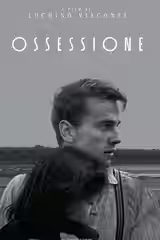
  2. Ossessione (1943, Fi1m 75)A rougher, less polished treatment of desire turning towards crime.

  3. Body Heat (1981, Fi1m 83)For a crime romance considerably less cautious about showing the attraction.

  4. The Last Seduction (1994) · not on Fi1m yetLinda Fiorentino makes manipulation fascinating company, with little interest in reassurance.

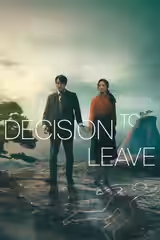
  5. Decision to Leave (2022) · not on Fi1m yetA Korean crime romance where looking closely becomes a dangerous occupation.