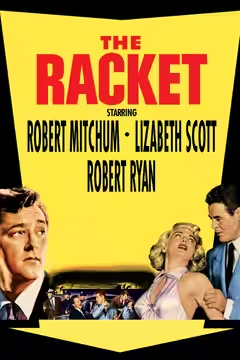
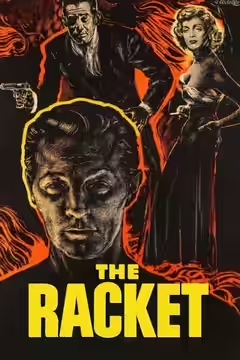
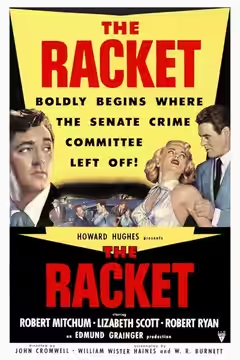
A remake of a hoodlum melodrama dressed up as a report from the crime hearings. Robert Ryan’s old-school gangster is worth the evening on his own; around him John Cromwell directs as if reading out minutes, and Robert Mitchum barely wakes up.
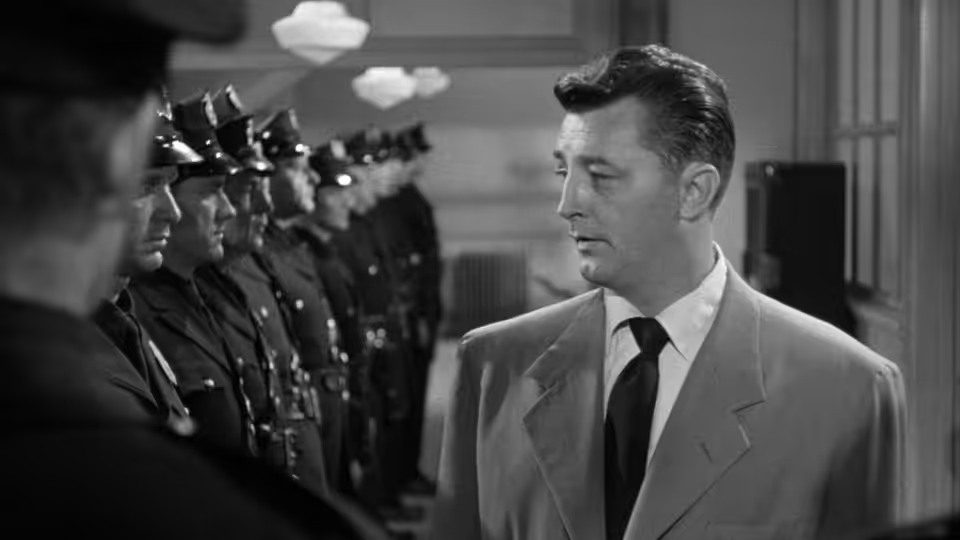
The Racket is a remake of an old gangster play, redone for the moment when a Senate committee was putting racketeers on the wireless, and the film would like credit for both. The city has no name. The syndicate has no face, only a voice on a telephone. Between them stand an honest police captain, Thomas McQuigg (Robert Mitchum), and a gangster who has not noticed the times have changed, Nick Scanlon (Robert Ryan). It is a tight, plain, watchable 88 minutes, and it has one performance that deserved a better film around it.
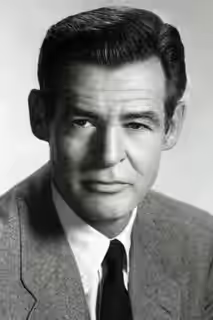
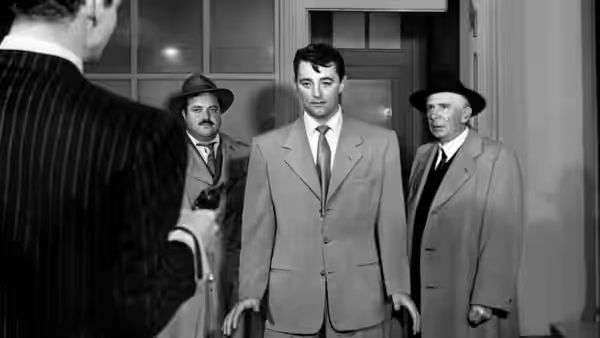
That performance is Ryan’s. Scanlon is a leftover, a man who made his money with a gun in a decade when that was how it was done, and who now takes orders from people in good suits who would prefer he kept quiet and let the judges do the work. Ryan plays him as a temper on legs. He walks into a room he thinks he owns, discovers that he does not, and the discovery goes across his face before he has time to hide it. We were frightened of him, properly frightened, in the scene where he is told to calm down and does, because the calm is worse than the shouting.
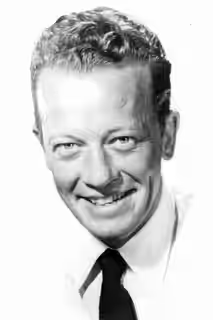
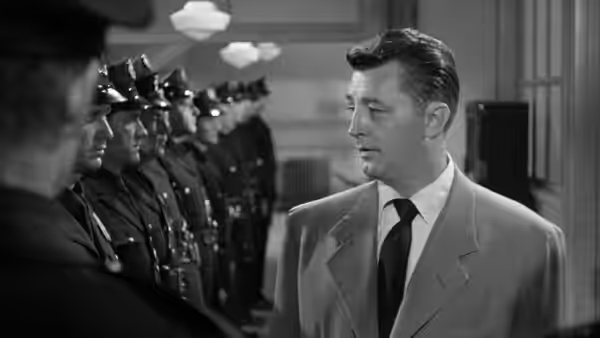
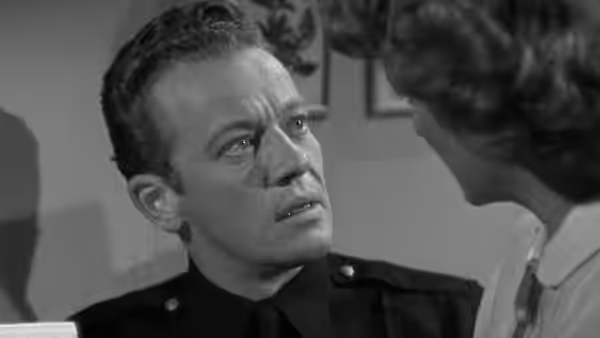
Mitchum is the other half of the star clash and he does not turn up for it. McQuigg is written as a decent man with a wife (Joyce Mackenzie) and a set of speeches about civic duty, and Mitchum delivers the speeches the way he might read out a menu. He is at his best when he does nothing, leaning in a doorway while someone else talks, and the script by William Wister Haines and W.R. Burnett keeps giving him things to say. William Talman, as the young patrolman Johnson, is the more interesting policeman, earnest and slightly out of his depth, and the film knows it.
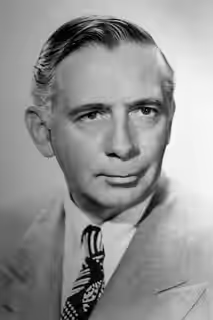
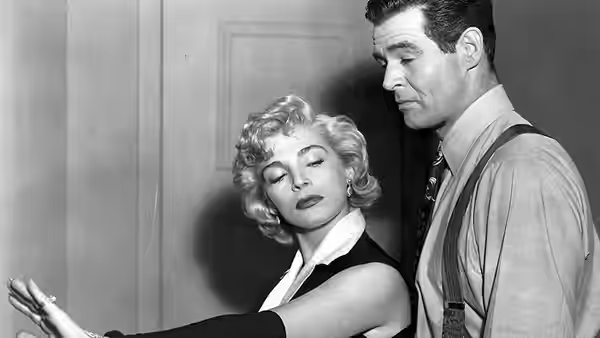
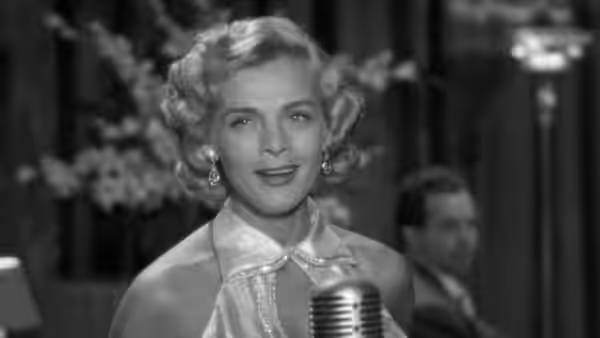
Lizabeth Scott gets one good scene and a song. The scene is an interrogation at the precinct house, Irene Hayes across a desk from McQuigg, and for four or five minutes the writing is quick and hard and she matches it line for line in that low, worn voice. Then the film sets her aside and remembers her only when it needs a witness. Ray Collins, as the judicial candidate Welsh, is oily in the practised way, and William Conrad, as Turk, does his heavy-lidded menace in three or four scenes and is missed in the rest. Robert Hutton’s reporter Dave Ames is there to be told things.
George E. Diskant shoots it like the noir it keeps threatening to become. The precinct house at night is one desk lamp and a great deal of shadow; the streets are wet whether or not it has rained; faces come out of the dark and go back into it. Sherman Todd cuts to the point and the picture never dawdles, though scene after scene ends on a fade that feels like a curtain coming down. Jimmy McHugh gives it a brassy main title and a nightclub number for Scott and otherwise keeps out of the way. Michael Woulfe puts Scanlon in suits that cost more than his taste can carry.
The trouble is Cromwell, or whoever was in the chair on a given day. Whole stretches are men in offices explaining the structure of the syndicate to each other, framed straight on, lit evenly, held for the length of the dialogue. The crime commission man, R. G. Connolly (Don Porter), exists to sit and listen to these explanations. We were bored in these scenes, and then a little annoyed, because the material for something sharper is plainly in the building. The syndicate boss as a phone voice is a good idea. The film uses it the way a play would, as a device, and never as a threat.
The better crime films of these years treated the mob as weather, something you lived under and did not lecture about. This one keeps stopping to lecture, and every time it stops Ryan is off screen. Most critics have landed somewhere in the middle on it and so do we, though for us the middle tilts up a little, because Ryan’s Scanlon is not a middling piece of work.
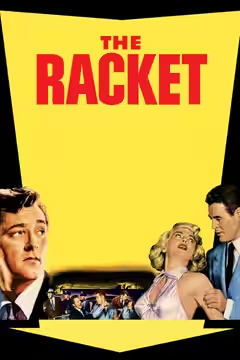
Watch it for him, on a night when you want something short and old and mean. It is not the film its poster promised, and the report from the hearings it claims to be is mostly a man at a desk saying the word syndicate. The gangster in the too-good suit is the real thing.