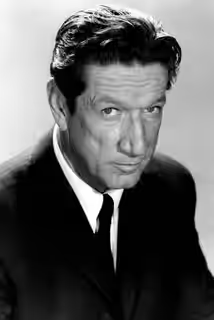
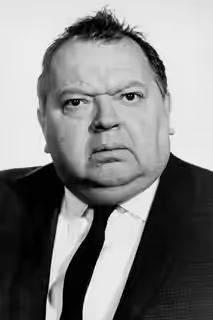
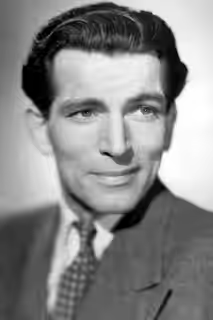
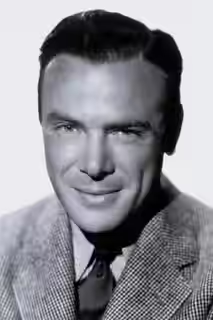
The first film in CinemaScope fills its enormous frame with Rome and Jerusalem, then asks the cast to stand in it and talk. Burton finds a real crack-up and Newman’s choir does the rest; too much of the remainder is a sermon in sandals.
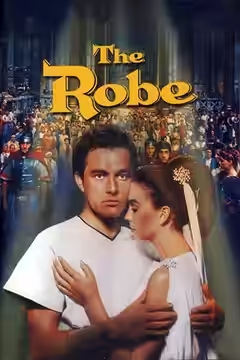
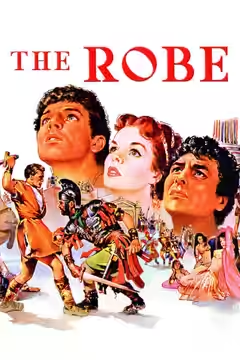
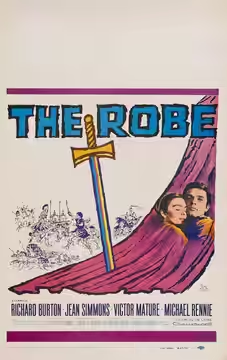
The Robe is 135 minutes of Lloyd C. Douglas’s novel about a Roman tribune who supervises a crucifixion and is undone by the dead man’s clothing. It was also, as its own poster shouted, the first film released in CinemaScope, and it reached British cinemas on 19 November 1953. Henry Koster was handed a frame more than twice as wide as anyone had worked in and a story about a soul. He filled the frame. The soul had to wait.
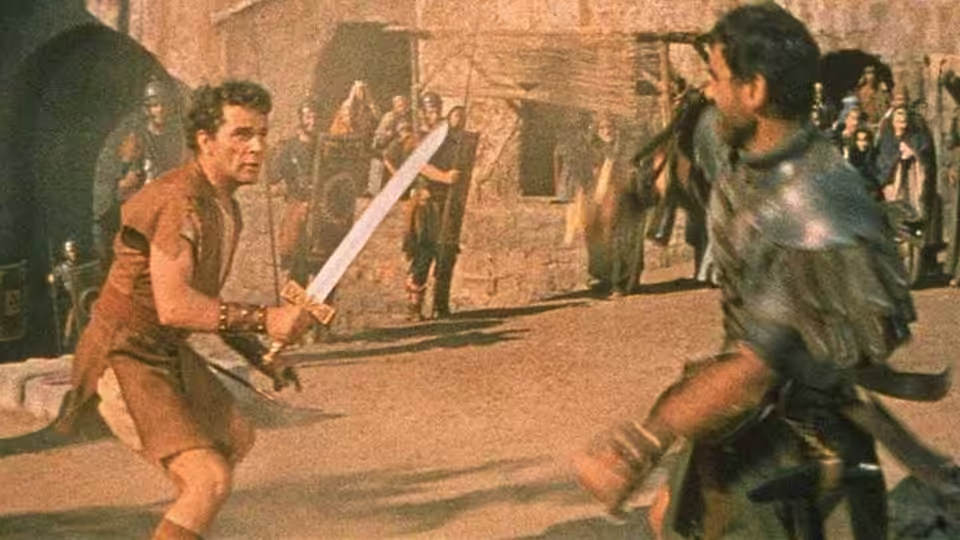
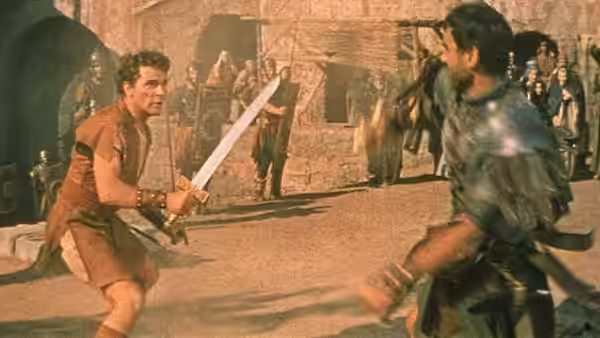
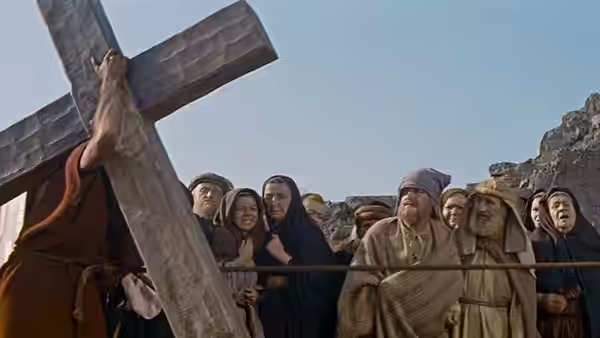
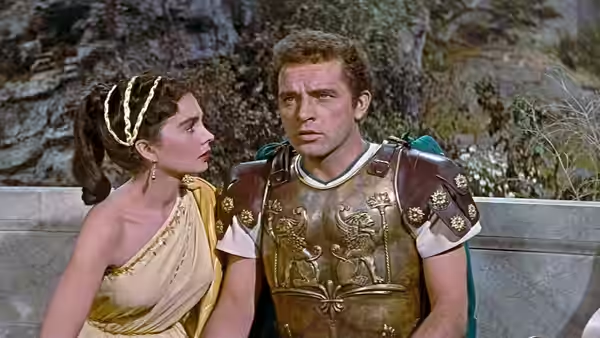
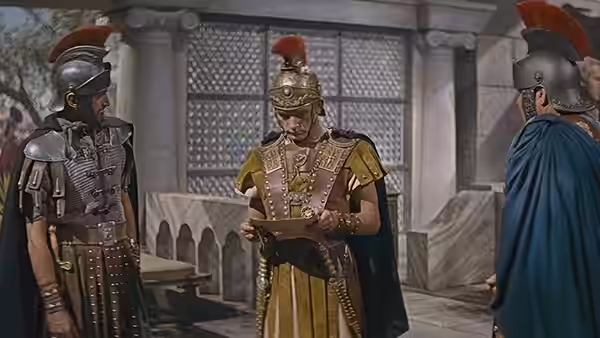
Leon Shamroy’s camera stays well back, because the new lenses would not let it do much else, and so the film is built out of tableaux: the slave market as a long row of bodies, Pilate’s hall as a line of columns, the road to Calvary as a procession filmed from the side. Some of it is handsome, and Emile Santiago’s costumes are the reason: scarlet cloaks, white togas, the plum and gold of Caligula’s court, laid out across the frame like bolts of cloth on a counter. But nothing moves towards you. After half an hour we stopped noticing the width and started noticing that everybody was standing still in it.
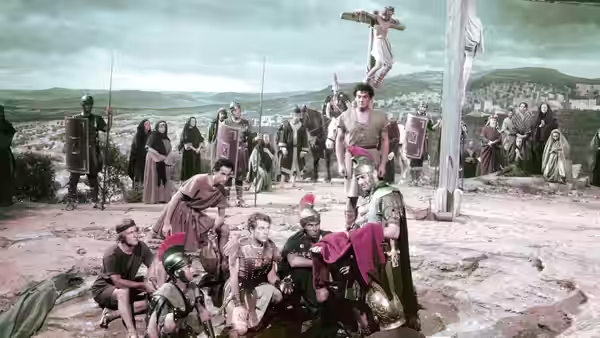
The crucifixion is the exception, and it is the best sequence in the film. Koster keeps Christ almost entirely off screen, a pair of feet on the road, a hand, a shadow on the ground. The storm comes over the hill, the rain runs down Burton’s face and he pulls the wet robe around his shoulders and shakes. Alfred Newman’s choir comes in under it, low and wordless. We were moved, more than we expected from a picture of this kind, and the reason is that for four or five minutes nobody was explaining anything to us. Then the film goes back to explaining, and it keeps at it for another ninety minutes.
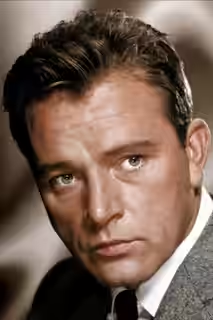
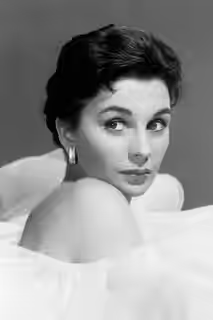
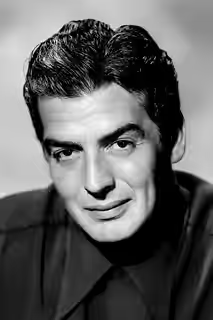
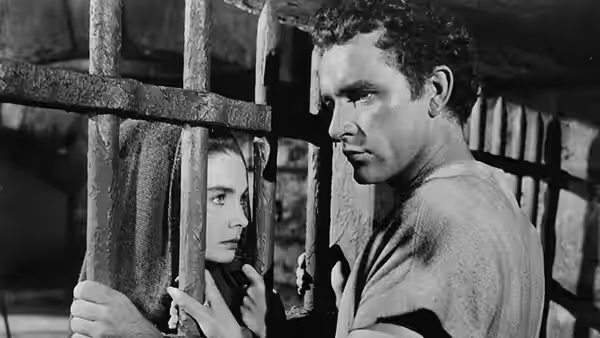
Burton is the reason to watch. He plays Marcellus as a spoilt, clever man who has never had a thought he could not drink off, and when the robe starts to work on him he does not go pious; he goes to pieces, clutching his head in his father’s house, shouting at a slave who is no longer there. It is raw, a size too big, and better than the film around it. Jean Simmons has a quiet intelligence as Diana and is asked mostly to wait in doorways. Victor Mature plays Demetrius on the jaw, with an aggrieved decency that is hard not to like. Richard Boone’s Pilate washes his hands like a man who has done it before and expects to do it again. Jay Robinson’s Caligula shrieks every line as if the wide screen were a matter of volume, and the effect is exhausting long before it is meant to be frightening.
The middle hour is the problem. The script, credited to Philip Dunne and Albert Maltz, sends Marcellus back out after the robe, and we will not say where he goes or whom he finds, except that the supporting players he meets there, Dean Jagger, Betta St. John and Michael Rennie among them, are given lessons to deliver rather than parts to play. Every scene is a sermon, and Barbara McLean lets each one run until the sermon has been fully delivered. We were bored, in the specific way of a child in a pew, and we say that as people who came prepared to be patient with a 1953 film about faith.
The Roman pictures that followed learned to put things across that frame: chariots, armies, ships. Ben-Hur, six years later, set a race in the middle of a similar story and let everything else lean on it. Koster had made Harvey three years before this, a small comedy with an invisible rabbit and a light hand, and none of that lightness survives here. He was not a director of spectacle, and the studio needed one.
It carries a U certificate and earns it; nothing in it would trouble a child except the length. See it for Burton’s collapse and for the crucifixion in the rain, both of which arrive in the first hour, and know that the second hour is why most critics have been lukewarm and why we are too. At home the width shrinks to a letterbox and the stillness is harder to forgive, though you can at least get up during the parables.