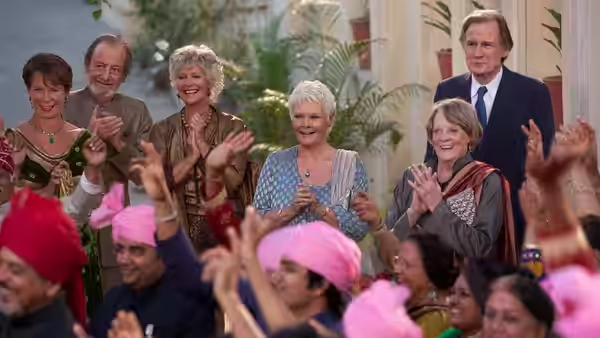
John Madden reassembles the cast, adds Richard Gere and a wedding, and finds he has more storylines than one film can hold. Maggie Smith and Judi Dench are worth the trip; most of the rest is pleasant, sunlit padding.
The first Best Exotic Marigold Hotel sent a party of English pensioners to Jaipur and let them find out they were not finished. This one has nothing left for them to find out and knows it, so Ol Parker’s script gives everyone a job instead. Sonny wants a second hotel. Evelyn is offered work as a fabric buyer. Douglas guides tours. Muriel does the accounts. It is a pleasant, well-dressed 122 minutes that is always doing something and rarely doing anything that matters, and the two women at its centre are the reason to bother.
Maggie Smith is the film’s spine. Muriel has stopped being a bigot and become a bookkeeper, co-managing with Sonny and deflating him once a scene with a line delivered to her ledger rather than to his face. In San Diego she treats a boardroom of executives as people who have not yet learned to make tea, and the film is funnier there than anywhere else. Smith plays Muriel’s sharpness as a habit kept up because the alternative is admitting she is fond of someone, and she lets the fondness show twice. Both times it lands.
Judi Dench and Bill Nighy are the other reason. Evelyn and Douglas have spent a year failing to say an obvious thing to each other, and Parker lets them go on failing. Nighy’s stammering, apologising Douglas, garbling the dates a schoolboy feeds him through an earpiece, is the one character who seems embarrassed to be in a sequel, and it suits him. In one short scene they walk and talk about nothing in particular, and it moved us more than the writing had earned, because Dench lets you watch Evelyn decide not to hope and then hope anyway. Nothing else here is that precise.
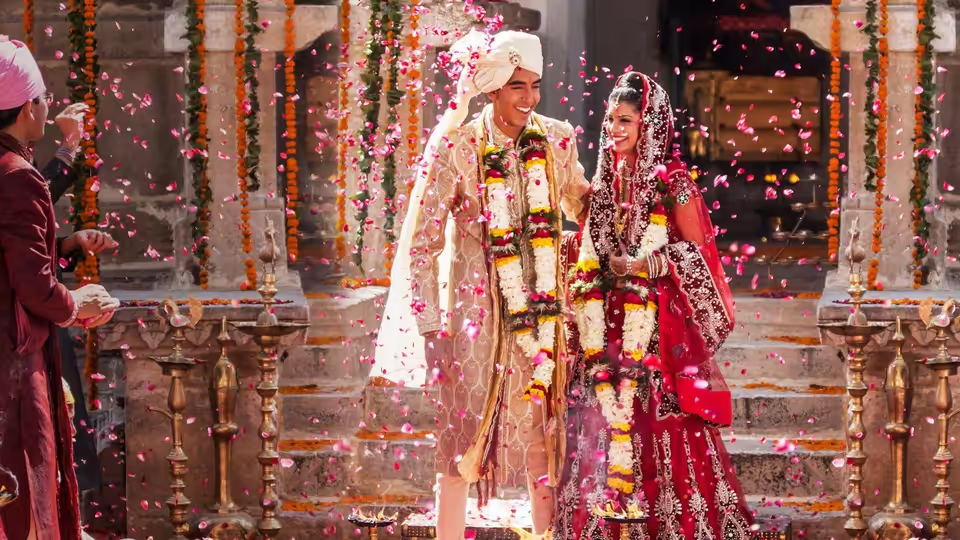
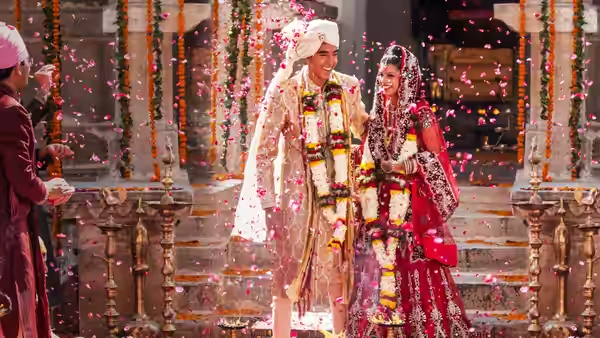
Ben Smithard shoots Jaipur in marigold orange and dusty pink, nearly every exterior in the last hour of daylight, so the city looks like a place somebody is selling. Martin Childs keeps the hotel’s courtyard peeling and crowded, pot plants and bicycles and washing, and the second property Sonny covets is its opposite: whitewashed, empty and far too grand. Thomas Newman’s score is sitar and plucked strings, and sounds like a second pass at a tune we already know. It tells us the mood of each scene a beat before the scene does.
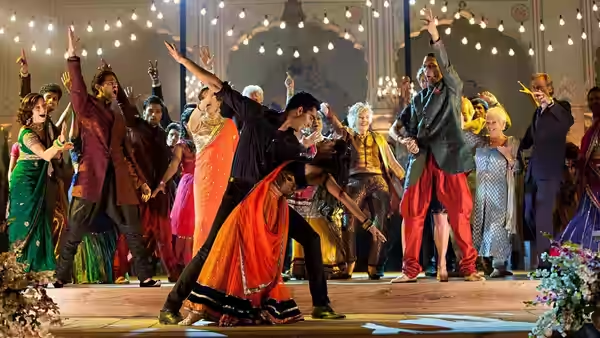
The trouble is quantity. Victoria Boydell has to cut between Sonny’s hotel deal, Sonny’s wedding, Sonny’s jealousy of a rival, Evelyn and Douglas, Madge (Celia Imrie) choosing between two suitors, Norman (Ronald Pickup) and Carol (Diana Hardcastle) working out what they are, Guy Chambers’ novel and his interest in Sonny’s mother. No scene runs long enough to turn into anything. The film arrives at a subplot, states its position and leaves, and by the hour mark we were, for stretches, bored, and faintly cross that so many good actors were being rationed.
Dev Patel carries the heaviest load and the script does him no favours. Sonny was comic relief last time and is now the lead, and Parker writes him as a man who gets everything wrong at the top of his voice: he decides Guy is the inspector on no evidence, neglects his fiancée (Tina Desai) and shouts at people trying to help. Patel plays it all with energy and we believed none of it; nobody we are meant to like would behave this badly for two hours. Richard Gere strolls in with the hair and the smile and has nothing to do but be handsome at Lillete Dubey, who answers with the driest double takes in the film.
John Madden made Shakespeare in Love and can run a large cast through a crowded plot, so the untidiness looks like a choice: give every regular a scene, keep the tone sunny, send everyone home happy. But it also keeps pretending to be a film with a story, eight of them, and not one is given time to finish. See it for Smith and Dench, on a Sunday afternoon, with someone who saw the first one and does not mind being told it again.