Ben Lewin’s The Sessions is a warm, frank comedy-drama about sex and disability, carried by John Hawkes and Helen Hunt. The filmmaking is ordinary and some moral questions get short shrift, but the intimacy feels earned.
The Sessions is good company for a subject that films so often approach with a lowered voice. Writer-director Ben Lewin treats Mark’s wish for sexual intimacy as a reasonable human want, and gives embarrassment room to be funny without making disability the joke. We recommend it for the performances, with some patience required for the rather plain filmmaking. It does, however, hurry past some of the harder questions raised by Mark’s encounters.
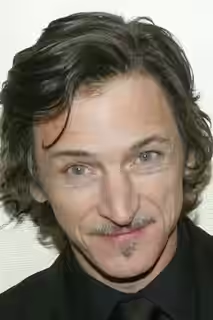
John Hawkes gives Mark enough wit and vulnerability to prevent him becoming merely someone whose progress we are supposed to applaud. Humour belongs to his personality, which matters in a film where every awkward exchange could otherwise become a lesson in being kind. The performance allows need, self-consciousness and pleasure in other people’s company to exist together. Mark is engaging without having to spend every moment proving that he deserves affection.
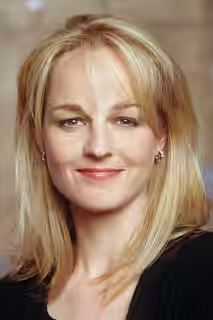
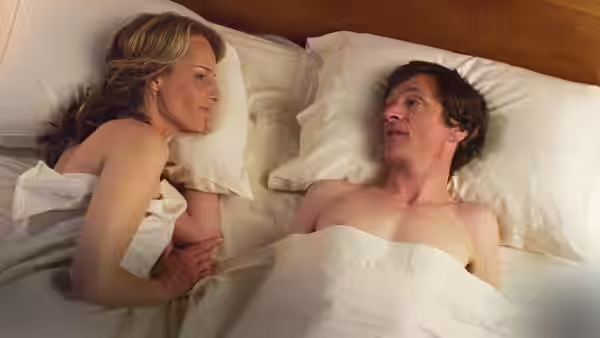
Helen Hunt is just as important as Cheryl, the sex surrogate whose practical approach makes the intimate conversations believable. Her restraint gives the relationship weight: she need not underline every sympathetic response for us to understand that she is paying attention. We were moved by her matter-of-fact exchanges with Mark about sex, because she allows his embarrassment without making a ceremony of her patience. Both performances make frankness feel possible even when confidence is in short supply.
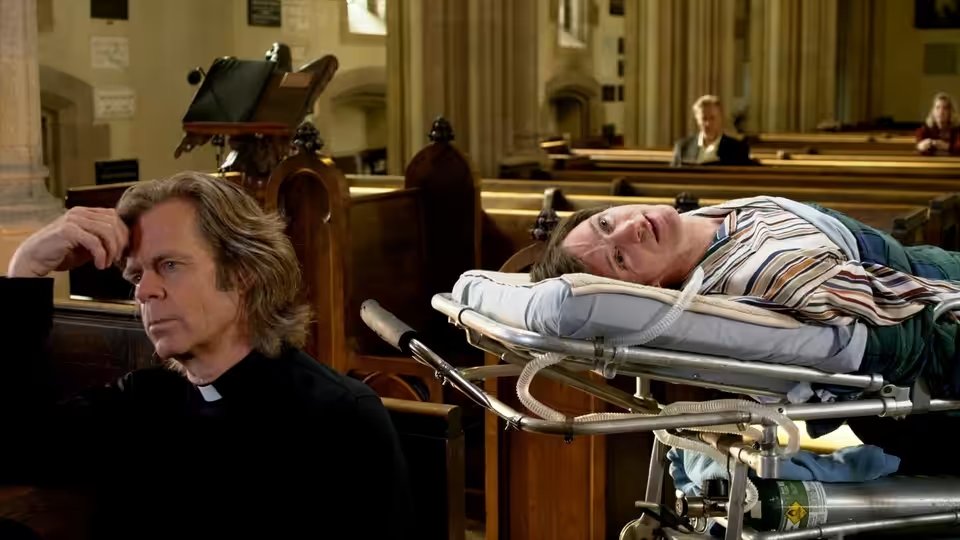
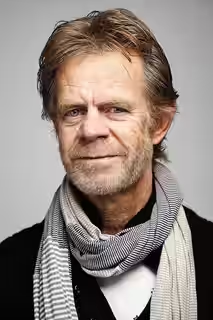
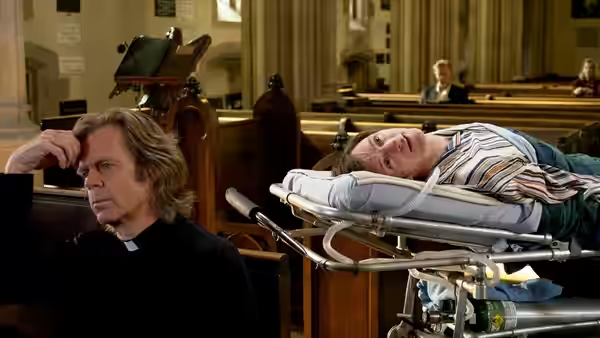
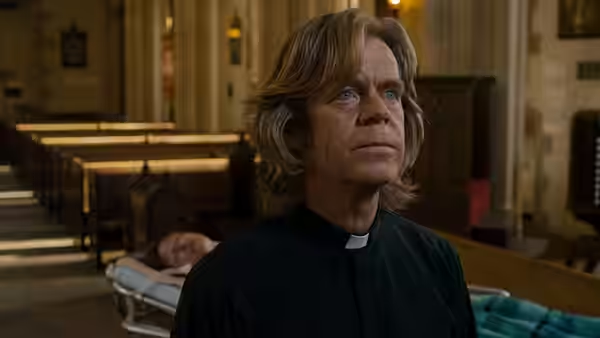
William H. Macy’s Father Brendan supplies a different kind of listening, and the discussions with the priest give Mark’s desires a moral complication. These scenes also contain some welcome humour, although the dialogue can make the priest sound too conveniently equipped with a response. Ben Lewin seems keener to keep the conversation companionable than to follow its harder implications. That limits the drama without cancelling the warmth of the performance.
Geoffrey Simpson’s cinematography is serviceable, and the static staging gives it little chance to do more than accommodate the conversations. John Mott’s production design is similarly unobtrusive; we seldom find ourselves studying the surroundings instead of the people. There is sense in that restraint, but the images do not always contribute enough when the dialogue has already explained a feeling. Several conversations might have gained from less explanation and a little more trust in a pause.
Lisa Bromwell’s editing keeps the film brisk, though some emotional complications need longer than the story gives them. At 95 minutes, there is little danger of exhaustion, but more time spent on uncertainty might have helped. Marco Beltrami’s music supports the tenderness without becoming what we remember; the actors’ voices are more distinctive. The principal weakness is how readily the film smooths a difficult subject into something agreeable.
This suits an evening when we want adults to talk about sex without behaving as though the subject has just been invented. Anyone hoping for a searching examination of the ethics will have to supply some of it afterwards. Watch it for John Hawkes and Helen Hunt, and allow for a script that is sometimes too anxious to put everyone at ease.