Jaume Collet-Serra’s shark film is lean, bright and properly frightening for most of its 86 minutes, and Blake Lively carries it nearly alone. The finish is silly; the hour on the rock is as good as this kind of thing gets.
Jaume Collet-Serra has spent two films putting Liam Neeson in confined spaces, a plane in Non-Stop (2014) and a car in Run All Night (2015), and here he strips the idea to its bones. One woman, one rock, one shark, 86 minutes. The Shallows is a B-picture and knows it, and it is a good one: tense, clean, well lit and over before it can bore you. It spends its last fifteen minutes doing the things shark films do when they run out of ideas, and we minded less than we expected to.
Anthony Jaswinski’s script gets Nancy into the water fast. She has lost her mother, and the beach is bound up with that. Blake Lively plays her as competent before she is frightened, a woman who checks the swell and times the sets, and when the trouble starts the competence is what she has left. She tourniquets a leg with the cord from a wetsuit and keeps up a conversation with a seagull on the rock. Lively is funny in the way frightened people are funny, snapping at the bird, apologising to it, and she carries long stretches of the film alone.
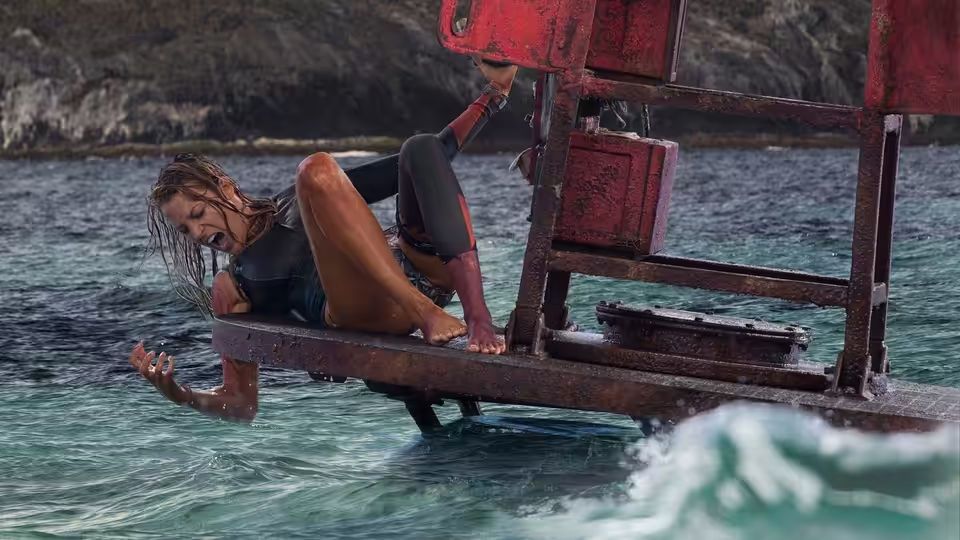
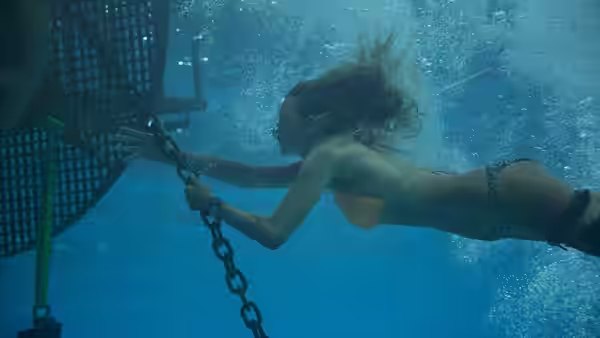
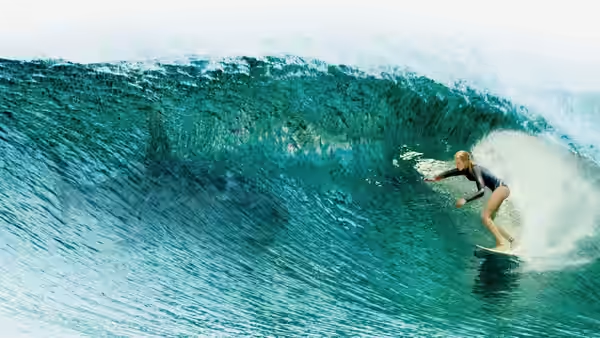
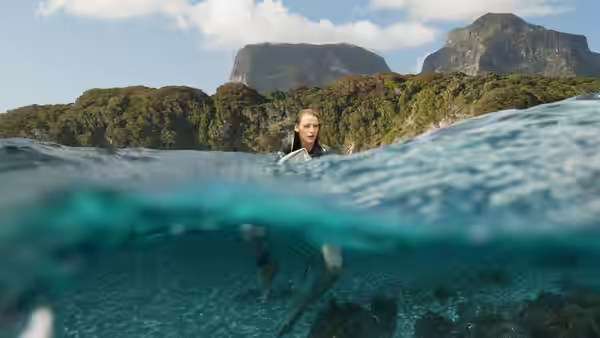
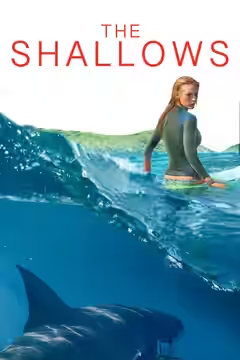
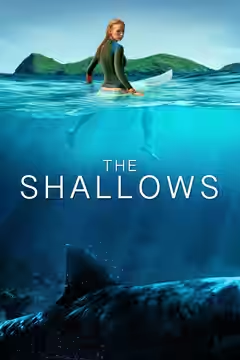
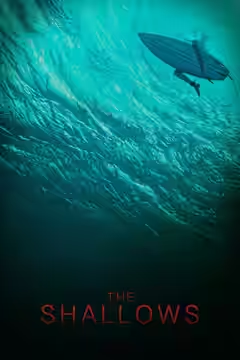
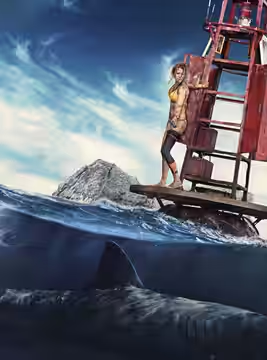
Flavio Martínez Labiano shoots the water from everywhere a camera will go. Half the frame is above the surface and half below, so we see Nancy’s legs hanging from the board while she looks the other way. The shark is first shown as a shape inside the curl of a wave with the sun behind it. Blood spreads in a slow cloud that Labiano films from underneath, and the cove, turquoise and gold until then, is suddenly a place we wanted to leave. Hugh Bateup gives Nancy a rock the size of a kitchen table, with a tide line on it we learn to read.
Joel Negron cuts the surfing as a short bright montage and then slows down once she is stranded, so that minutes on the rock feel like minutes. He lays Nancy’s phone on the frame as a graphic, the video call sitting in a corner of the sky, which spares us exposition. Marco Beltrami’s score stays low under the waiting and comes up hard for the attacks; it is not subtle and it is not meant to be.
We flinched at the first bite, properly. It is staged from the surface, a jolt and then nothing, and the nothing is worse. Later Nancy does something to her own leg with her jewellery, and we watched most of it through our fingers, while admiring that Collet-Serra holds the shot and lets Lively’s face do the screaming. It is the best sequence in the film and it is over quickly. We came out grinning, which is not what we expected from a film about a woman bleeding on a rock.
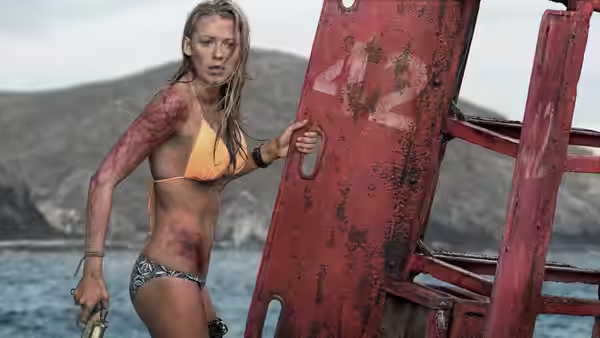
The weaknesses are all off the rock. Jaswinski has given Nancy a dead mother and a worried father, and every so often the shark has to wait while she remembers them. The video call with Brett Cullen is written to tell us what the film is about, and the film did not need telling. The shark circles the rock as though it had taken the business personally, and the effects, so good in silhouette, look worse in daylight. The last act moves to a buoy, takes a turn we will not describe, and is sillier than everything before it. Most critics have stopped there, complaining of the backstory and the finish. We think they are weighing the wrong parts: the backstory is a few minutes, the finish is ten, and in between is an hour of thriller built as well as the genre allows.
Next to Jaws (1975) this is a small thing; Spielberg had a town and three men in a boat, and Collet-Serra has a woman and a bird. Against the director’s Neeson films it is tighter and better looking. The gull, credited as Sully ‘Steven’ Seagull, gives the second-best performance.
Watch it at home with the lights down and the sound up, and forgive it the buoy. It carries a 15 certificate for the leg, which it earns.