Film review

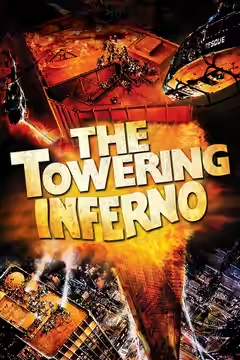
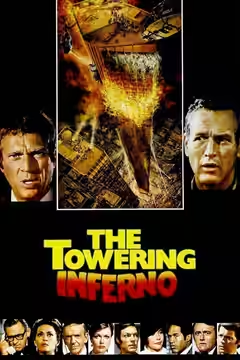
The Towering Inferno

1974 · Directed by John Guillermin · 2h 45m · MPA PG

In a sentenceEveryone is in evening dress, the building is on fire, and only Steve McQueen seems to have read the fire code

ActionDramaThriller

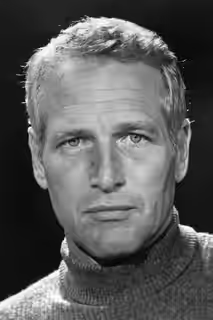
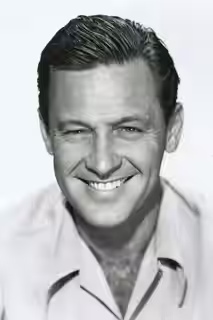
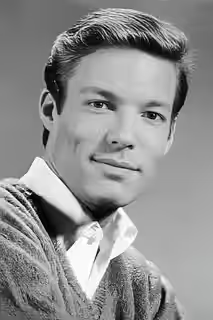
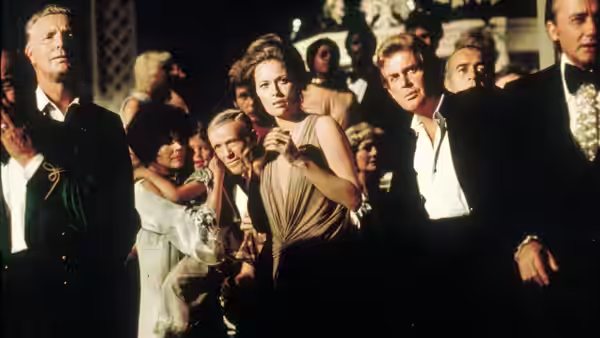
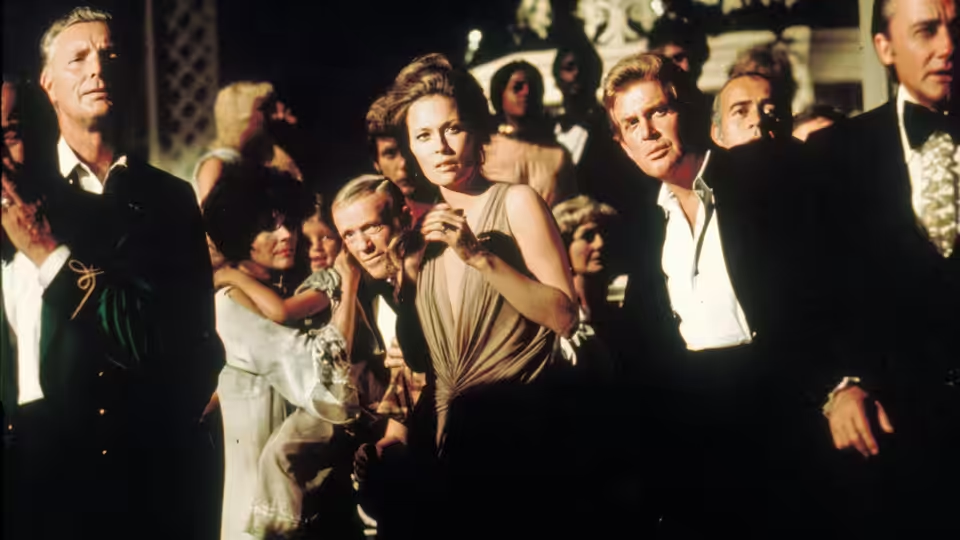
San Francisco, the night the Glass Tower opens. At 135 storeys it is the tallest building in the world, and its architect, Doug Roberts (Paul Newman), has flown back to see it dedicated. He finds the wiring cheaper than he specified, cut back by the electrical contractor Simmons (Richard Chamberlain) with the blessing of the builder, Jim Duncan (William Holden). Duncan wants no fuss tonight: Senator Parker (Robert Vaughn) is guest of honour at a party in the Promenade Room at the top. Roberts’s girlfriend Susan (Faye Dunaway) has a job offer he would rather she refused. On the 81st floor, a storeroom begins to smoke. When the alarm finally goes out, Fire Chief O’Hallorhan (Steve McQueen) arrives to find several hundred guests dancing above the fire.

Fi1m review

Irwin Allen’s skyscraper fire is the best made of the seventies disaster films, and for its first ninety minutes it is properly frightening. It is also 165 minutes long, and the people trapped above the flames are a good deal less interesting than the flames.

Irwin Allen, who sank an ocean liner in The Poseidon Adventure two years earlier, here sets fire to the tallest building in the world on the night of its opening party. The Glass Tower stands in San Francisco, 135 storeys of steel and bronze glass. Doug Roberts (Paul Newman), its architect, comes home to find the wiring is not what he specified; Jim Duncan (William Holden), the builder, does not want to hear about it with a senator on his way up. A storeroom starts to smoke. John Guillermin directs what follows as a procedural: how a fire moves through a building, and how people are got out of one.

The fire itself is superb. Fred Koenekamp shoots it first as orange light behind smoked glass, then up close and filling the frame, and he holds on the flames rather than cutting away. William J. Creber’s tower is a shaft of bronze and mirror with a rooftop restaurant called the Promenade Room and a scenic lift up the outside, and every part of it is later turned against somebody. The helicopter approach over the bay that opens the film shows where the money went.

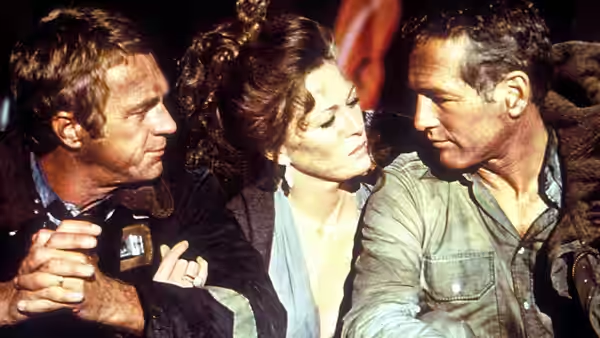
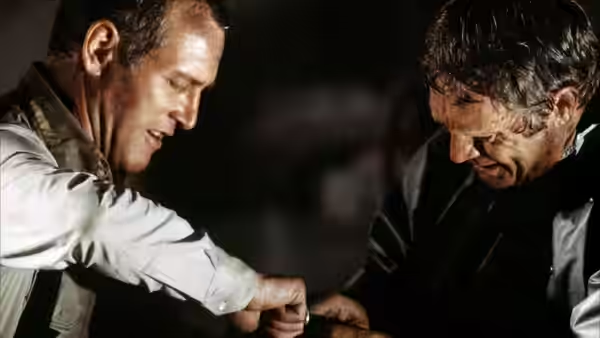
Steve McQueen plays Chief O’Hallorhan, the fire chief who arrives, looks at the building and says what it will take, with almost no words. Newman’s Roberts is the guilty conscience, an architect who climbs into ducts and down stairwells because he cannot bear what has been done to his building. The two share perhaps a dozen scenes and are better in them than the script deserves. McQueen’s stillness makes Newman look busy, and Newman’s busyness makes McQueen look wise.

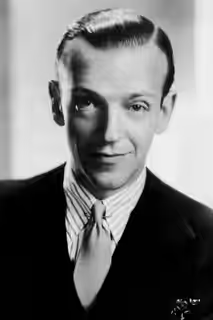
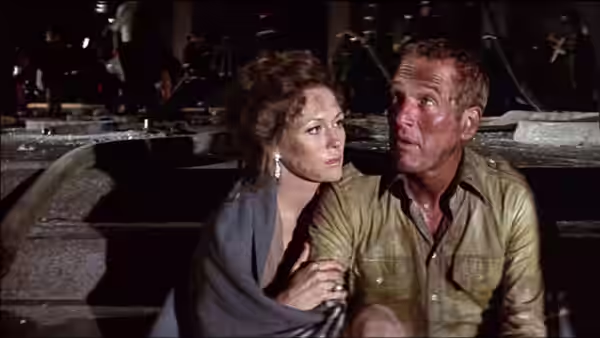
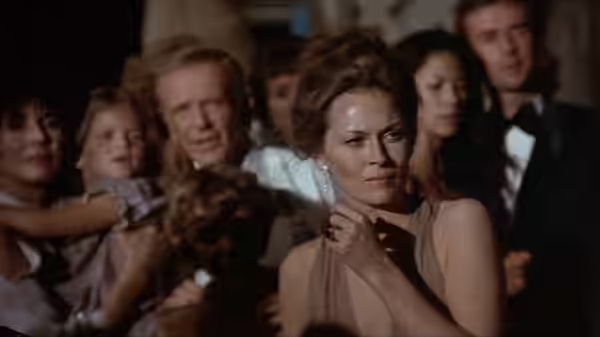
The trouble is everyone upstairs. Stirling Silliphant’s screenplay, adapted from novels by Richard Martin Stern, Thomas N. Scortia and Frank M. Robinson, gives the guests in the Promenade Room the lines people say in lifeboats. Faye Dunaway, as Susan, spends the first hour choosing between a job and a man and the rest waiting to be rescued. Richard Chamberlain’s Simmons, the contractor who cheapened the wiring, sweats and sneers like a villain in a school play. Fred Astaire, as an ageing conman called Harlee Claiborne, and Jennifer Jones, as the widow Lisolette he means to swindle, are the only two who make anything human of it, and they do it by playing quietly.

The most frightening minutes are the quietest: a junction box that sparks, a smear of heat behind a door, O. J. Simpson’s security chief Jernigan watching a warning light and deciding it is probably nothing. We sat forward. Then the fire arrives properly and the film starts rescuing people, and it rescues them for nearly two hours, each rescue well staged and each the same shape: a group, a gap, a rope or a lift or a ledge, a countdown. By the third hour we were no longer frightened. We were counting how many people were left upstairs, and at 165 minutes the film is a good half hour longer than the fire needs.

Harold F. Kress and Carl Kress cut between the party and the floors below with a patience that pays off early, while the band plays and the storeroom fills with smoke; later, with several rescue parties on the go, they keep us clear about who is where. John Williams gives the party a lounge tune and the fire brass over low drums, and it works, though he leans on the brass when the pictures had already told us to be afraid. Paul Zastupnevich puts the women in chiffon and the men in black tie, and none of it is made for stairwells.

Against the rest of the seventies disaster cycle it stands up. The Poseidon Adventure was livelier and sillier; this is soberer, better built and more inclined to lecture. It closes with a dedication to firefighters, which is meant kindly and sits oddly on a film that has just spent three hours enjoying a fire.

Watch it for the first ninety minutes, for McQueen, for Astaire and Jones, and for the building. The second half can be something you walk away from and come back to; the fire will still be going. It carries a 15 certificate, and it has earned it.
Critical consensus AI synthesised

58
Positive
6
Mixed
1
Negative
4

Most critics rate it as the best of Irwin Allen’s disaster pictures and among the strongest of the mid-seventies cycle, and the praise clusters on the fire itself: the effects, the stunt work and the cutting between several rescues at once. The set pieces are widely admired even by reviewers who dislike the rest, and the pairing of McQueen and Newman is credited with carrying a cast otherwise assigned to roles the reviews compare to seats in a lifeboat.

The reservations fall on the screenplay. Nearly every review, favourable or not, finds the personal drama overwrought and the dialogue cheesy, and several object to the running time. The spread is wide, from raves to outright dismissal. The New Yorker’s Pauline Kael is the sharpest dissenter, calling it slick, empty and cynical, while The Hollywood Reporter finds it more ordeal than entertainment. Later reappraisals, notably Empire’s, are warmer than the reviews of the time.

Variety
31 December 1973 · Variety Staff
90*

The critic hails it as one of the greatest disaster pictures made and a personal and professional triumph for producer Irwin Allen, with a magnificent production that balances spectacle and thoughtful personal drama. The all-star casting strategy is said to pay off handsomely.

Read the full review →
RogerEbert.com
1 January 1974 · Roger Ebert
85*

The critic calls it a brawny blockbuster and by far the best of the mid-1970s disaster films, praising its convincing special effects, stunt coordination and skillful interweaving of multiple action threads. He notes the strong performances and effective portrayal of high-rise fire dangers.

Read the full review →
Empire
1 January 2000 · Andrew Collins
80*

The critic views the film as a reassessed giant of the disaster genre, praising its expensive swagger, helicopter shot into San Francisco, and breathtaking set pieces despite cheesy dialogue. It stands out as rocking good superleague disaster adventure with top stars like McQueen and Newman.

Read the full review →
Slant Magazine
8 May 2006 · Eric Henderson
70*

It is the far more accomplished of Irwin Allen’s two major disaster epics, with better controlled pacing, stronger effects, and a classically tragic structure. However, its grim realism and lack of memorable characters or camp make it harder to love than its predecessor.

Read the full review →
The New York Times
20 December 1974 · Vincent Canby
70*

The critic describes it as this year's best end-of-the-world movie and a first-rate visual spectacle with smashing special effects and old-fashioned Hollywood make-believe. He finds the personal drama overwrought and silly but praises the vivid, safe nightmare it delivers.

Read the full review →
Time Out
10 September 2012 · MA
70*

This is the disaster film which set the style for the genre, with a starry cast in roles that are more like places in a lifeboat. Director Guillermin handles the mounting disasters efficiently, though some rescues become desperate and outlandish.

Read the full review →

Cast

Awards

Academy Awards, 1975

Nominated
Best Original Dramatic Score
Nominated
Best Picture
Nominated
Best Production Design
Nominated
Best Sound
Nominated
Best Supporting Actor
Won
Best Cinematography
Won
Best Film Editing

If you liked this, try…

The Poseidon Adventure poster

The Poseidon Adventure

1972 · Allen’s earlier sinking, sillier and quicker, with Gene Hackman shouting at God

Juggernaut poster

Juggernaut

1974 · Richard Lester’s bomb-on-a-liner thriller, with all the tension and none of the speeches

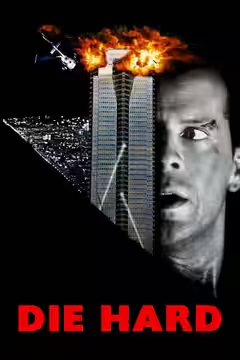
Die Hard poster89

Die Hard

1988 · The same tower, one man in a vest and a much better script

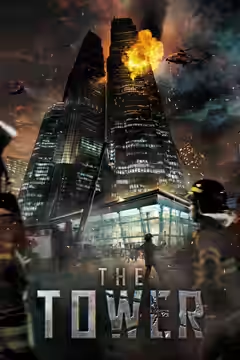
The Tower poster

The Tower

2012 · The South Korean remake in all but name, and it knows exactly what it owes

Chernobyl poster

Chernobyl

2019 · Five hours of engineers and firemen and a fire nobody can see