John McTiernan’s action thriller earns its excitement through clear staging, Bruce Willis’s vulnerability and Alan Rickman’s composure. The foolish police business is a drag, but the central contest remains tense, funny and worth an evening.
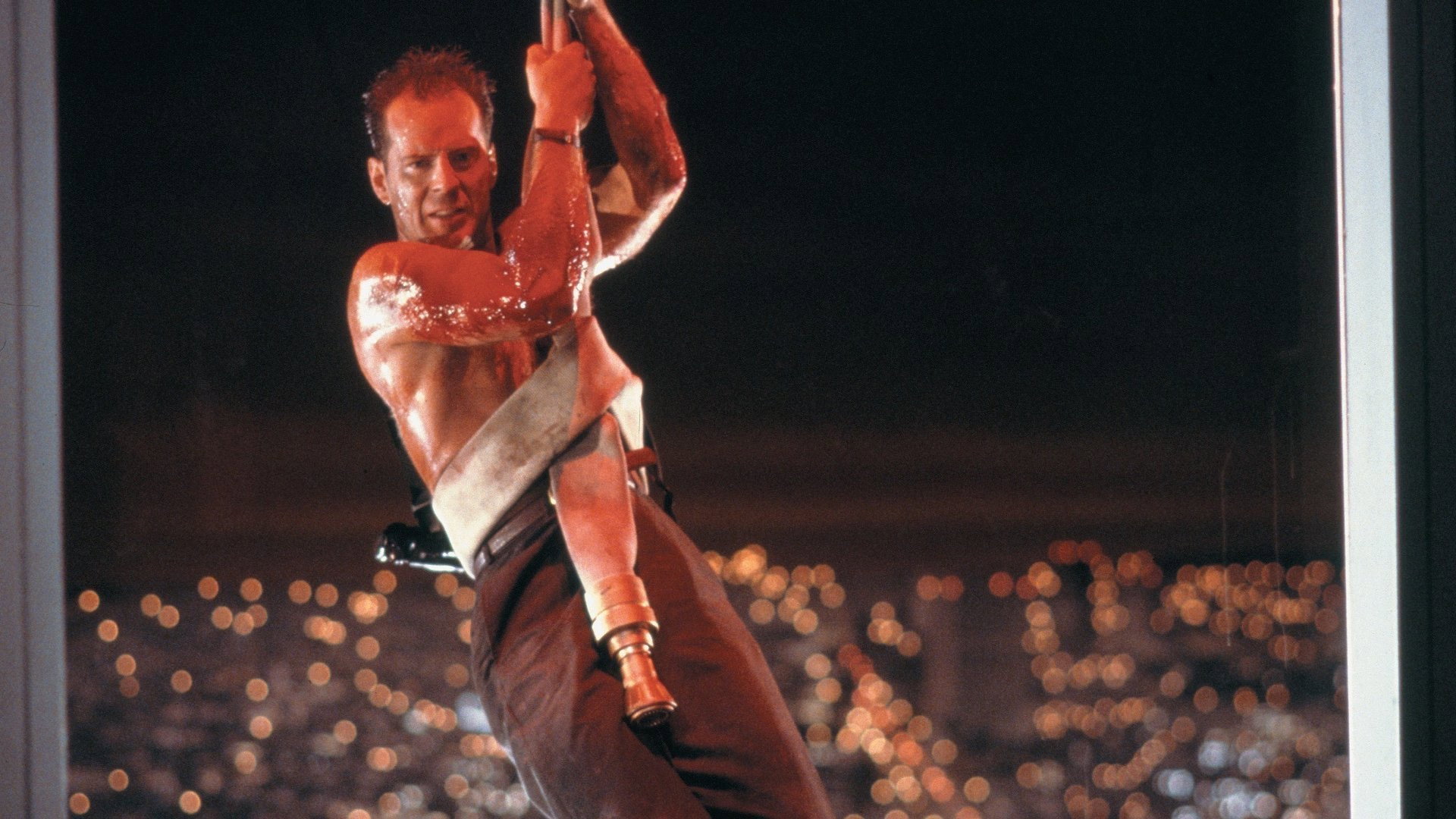
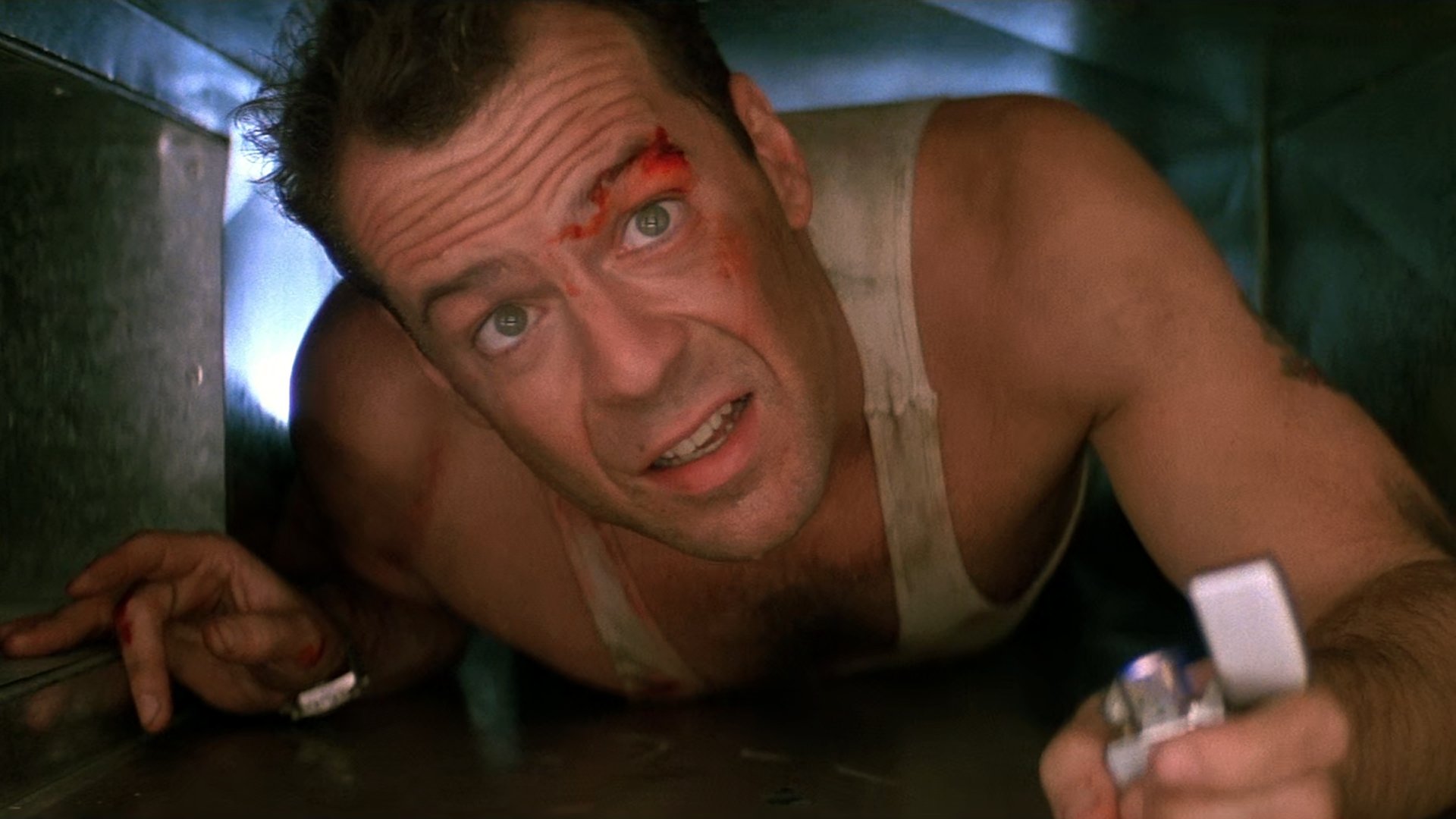
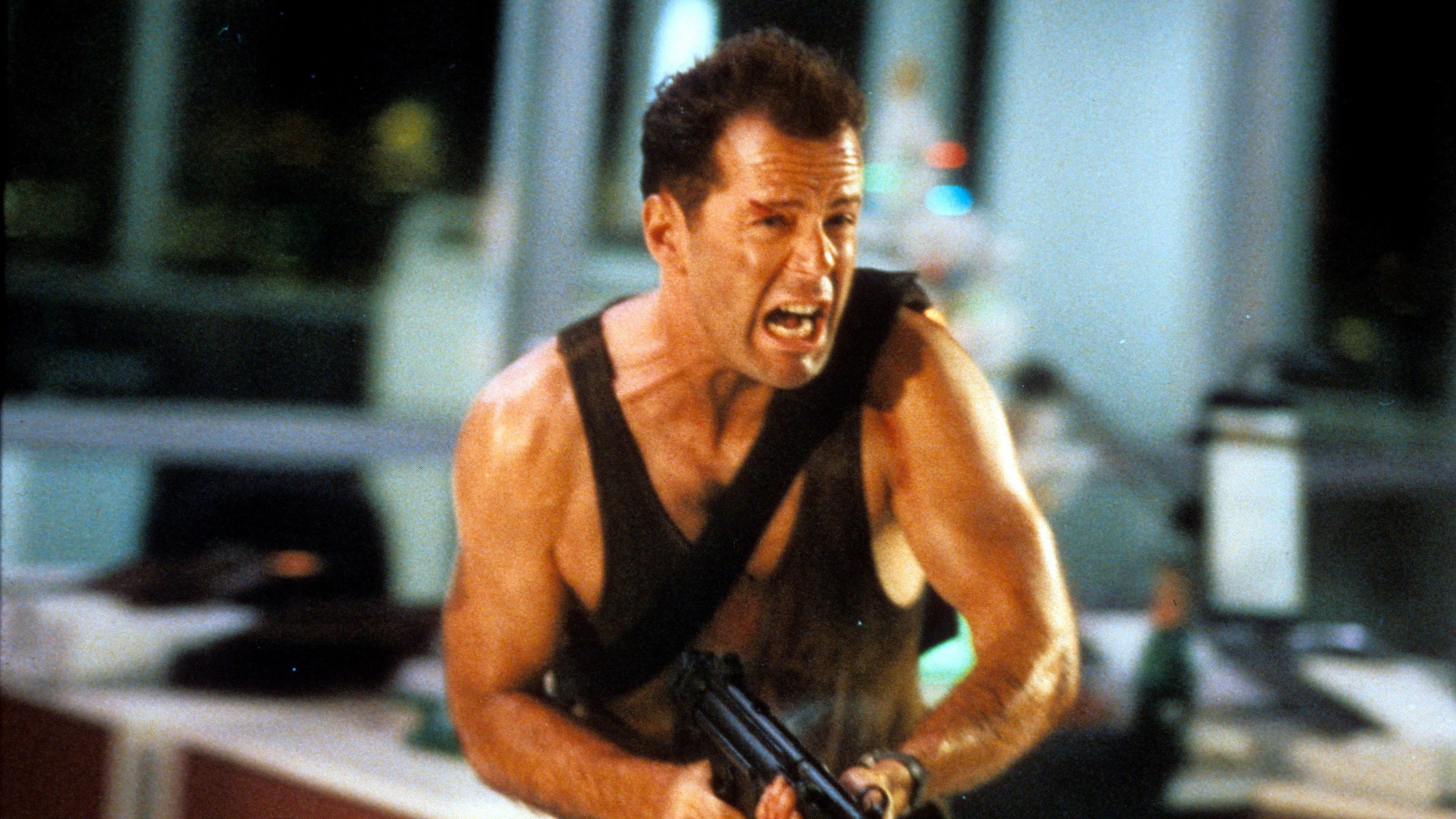
Die Hard is an action thriller we recommend with one reservation: it keeps interrupting a compelling siege to make some remarkably easy jokes about incompetence. John McTiernan gives the central contest a firm shape, setting Bruce Willis’s lone police officer, John McClane, against Alan Rickman’s terrorist leader, Hans Gruber, inside a high-rise. The screenplay by Jeb Stuart and Steven E. de Souza gives McClane enough wit to make him company as well as a man to worry about. We want him to survive, and we want to hear what he will say next.
Willis makes the physical work count. McClane’s vulnerability matters because the performance keeps effort visible, even when the dialogue gives him something funny to say. We were anxious during the fights because Willis never lets a quick remark convince us that McClane has stopped being in danger. He delivers the jokes as a man trying to get through an intolerable situation, and that keeps the character likeable without making the violence feel harmless.
Rickman gives him an opponent worth the trouble. He plays Gruber with a courtesy that makes the threats more unpleasant, keeping his enjoyment just visible enough to be funny. There is no need for him to compete with the explosions; his measured delivery already gives him our attention. Much of the pleasure comes from these different temperaments confronting the same crisis, with Willis looking put upon and Rickman sounding almost content.
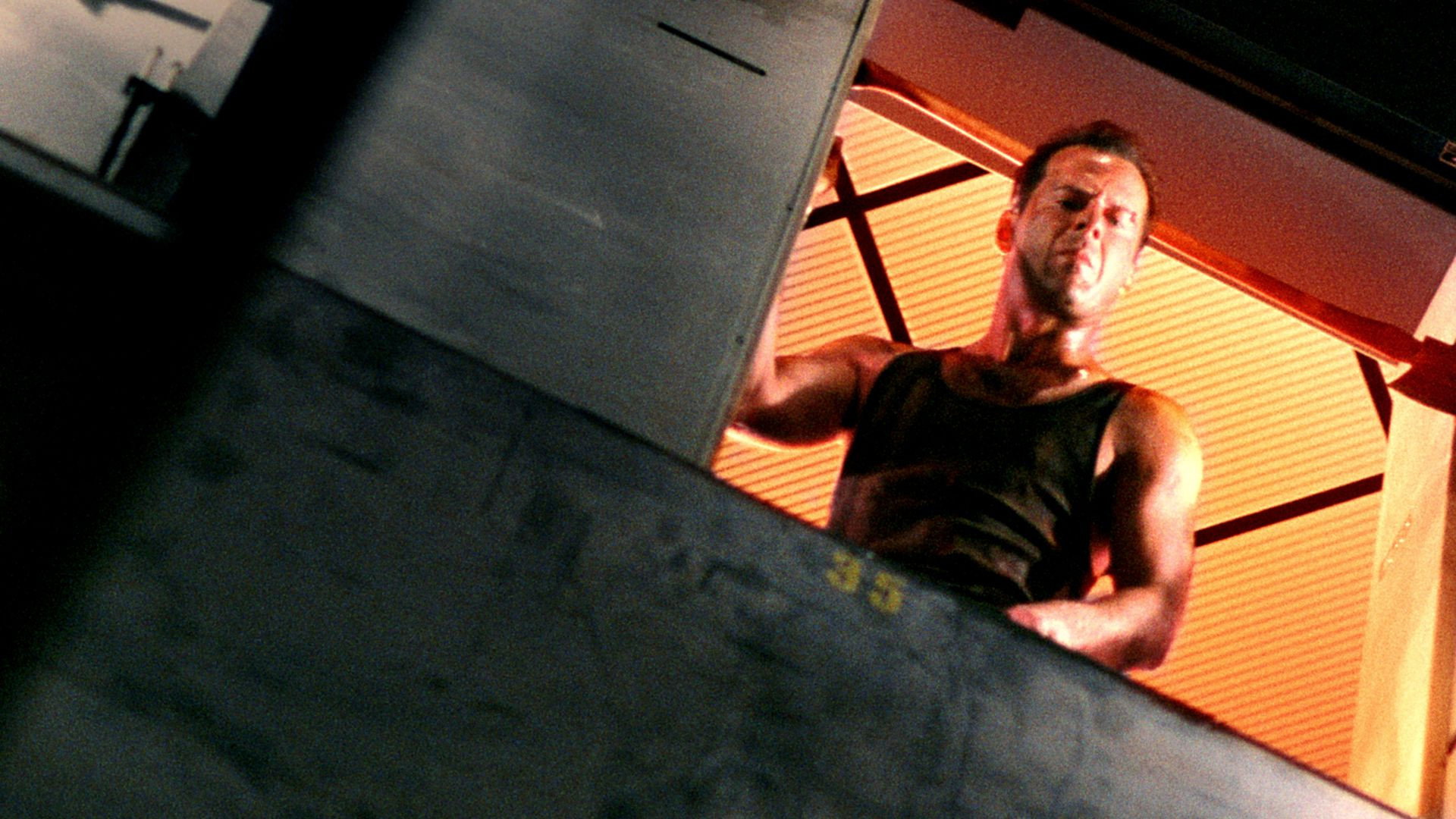
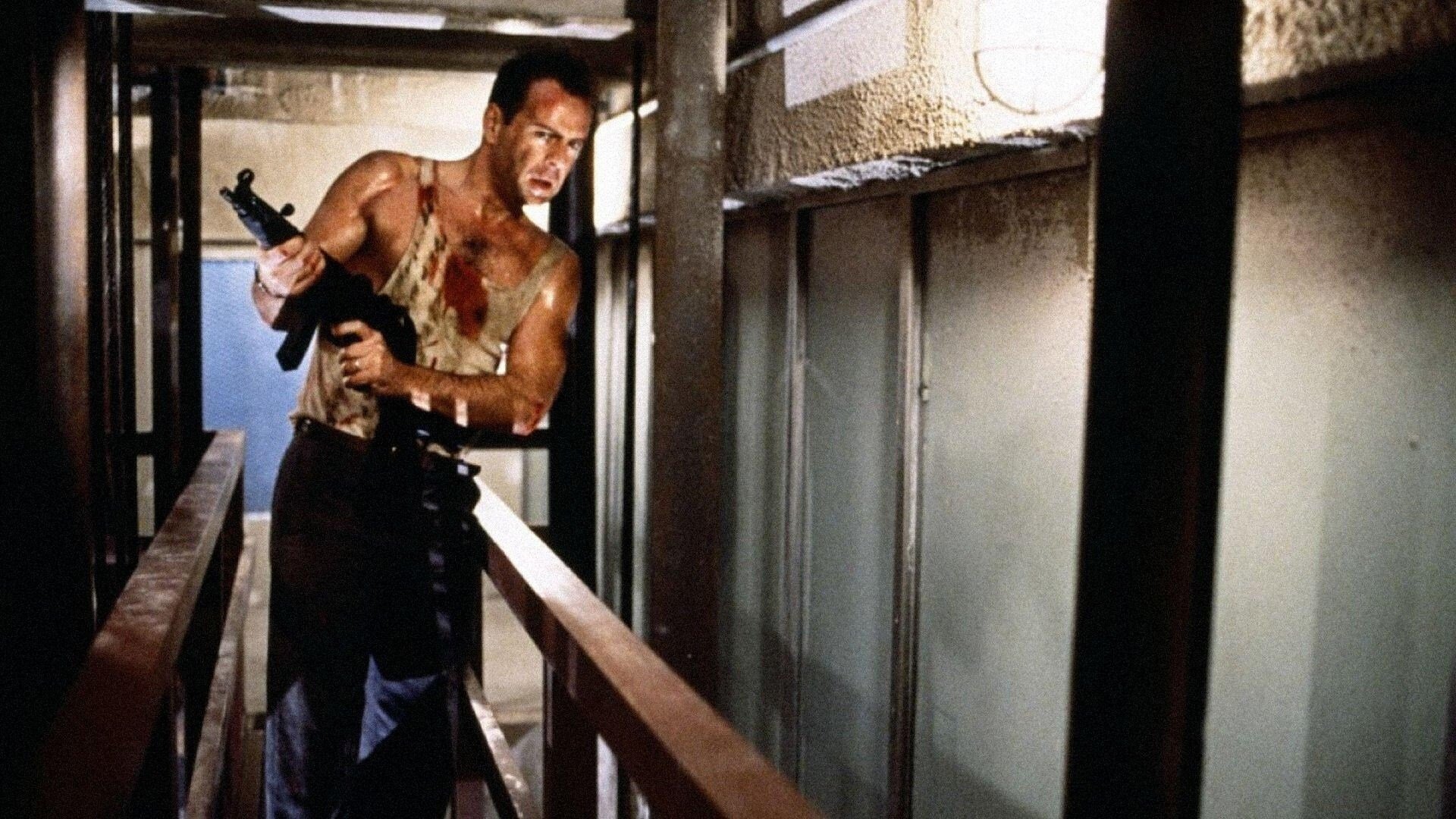
Jan de Bont’s cinematography and Jackson De Govia’s production design make the high-rise useful to the action. The building feels substantial and restrictive, and the images let us follow the fighting without making it look tidily rehearsed. McTiernan gets excitement from where people are in relation to one another, so a burst of movement has consequences we can follow. This is particularly valuable in the shootouts, where suspense depends on understanding who is exposed.
Editors John F. Link and Frank J. Urioste judge the pauses well, giving a reaction or a joke enough time to land before the next rush of action. The quieter passages are welcome, and Willis remains interesting when he has no immediate physical problem to solve. Michael Kamen’s score adds urgency without making every joke sound like an interruption. At 132 minutes, the film is long enough for repeated confrontations to become wearying; the changes of pace mostly prevent that.
The trouble is Paul Gleason’s Dwayne Robinson. The deputy police chief’s foolishness offers an easy way to make McClane look sensible, but it also makes the film less convincing whenever the authorities become involved. Gleason gives the part force, yet the writing leaves him too little to do beyond being wrong. We would happily lose some of this business, which accounts for the stretches when the siege seems to be waiting for the film to return to it.
Its influence on action films is easy to understand: one enclosed setting keeps a large confrontation manageable, while an outnumbered hero gives each encounter a clear risk. What is harder to copy is Willis’s ability to make irritation and fear exist in the same performance. McTiernan builds the action around that vulnerability, so even the louder passages retain someone to care about. Watch it in one sitting, and give the staging as much attention as the insults.