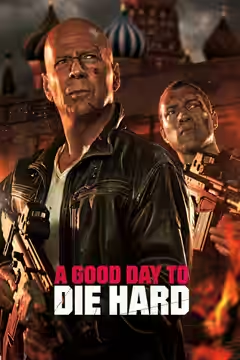
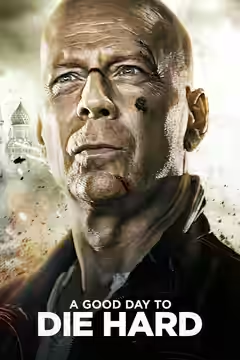
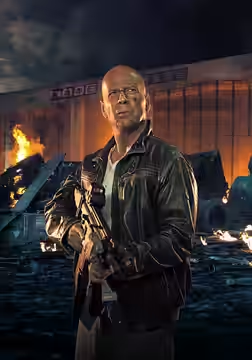
The fifth Die Hard sends John McClane to Moscow, gives him a son to argue with and a great many cars to destroy, and forgets to give either of them a reason to be there. Loud, shapeless and poor, and most critics were right about it.
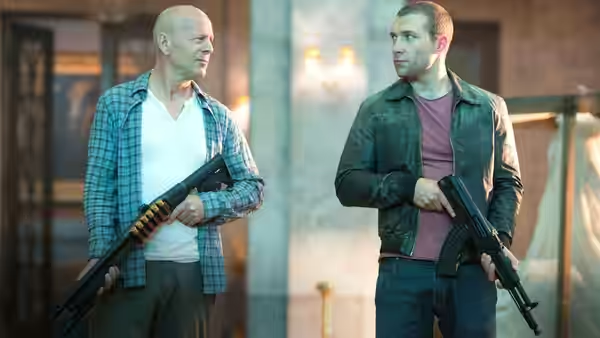
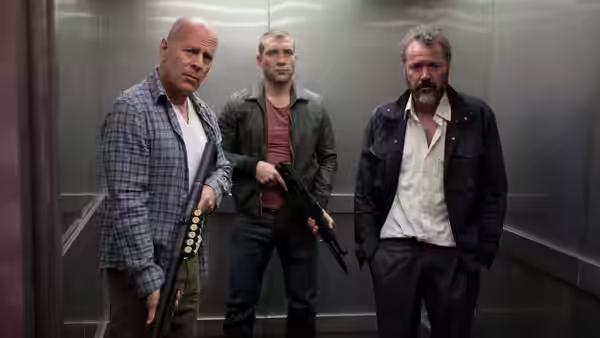
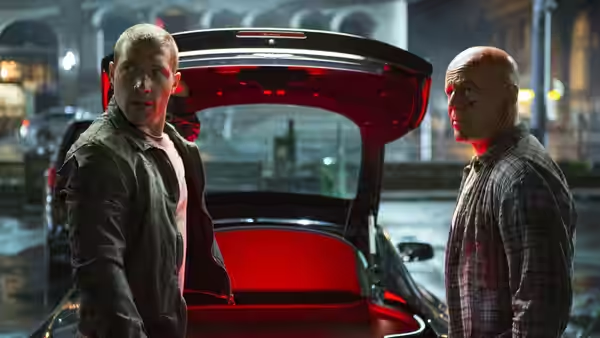
John Moore’s fifth Die Hard has one idea, and the tagline gives it away: take John McClane out of America and let him be rude to Russians. Skip Woods’s screenplay sends him to Moscow to collect his son Jack (Jai Courtney), who turns out not to be the delinquent his father assumed but a CIA officer in the middle of smuggling Yuri Komarov (Sebastian Koch) out of a courthouse. Komarov has a file. Viktor Chagarin (Sergey Kolesnikov) wants the file. Father and son bicker in the front seats of stolen vehicles while men with rifles pursue them. It runs 98 minutes and it is a poor film, and we are not going to argue with the twenty-one critics who have already said so.
The first big set piece is a chase through central Moscow, and it ought to have been the easy part. An armoured truck flattens saloon cars like drink cans, a lorry sheds its load across a flyover, and McClane drives over the roofs of a traffic jam. Jonathan Sela shoots it in grey daylight with a camera that will not hold still, and Dan Zimmerman cuts it so that no shot lasts long enough to tell us where anyone is. We were bored during a scene in which several dozen cars are destroyed, and then we were annoyed with ourselves for being bored, and then annoyed with the film for making it so easy. At no point did we know who was in front.
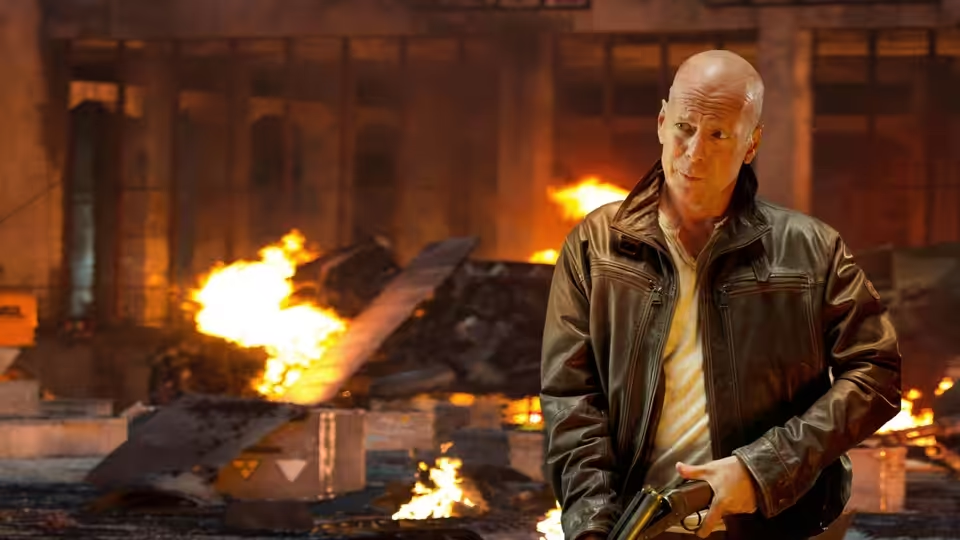
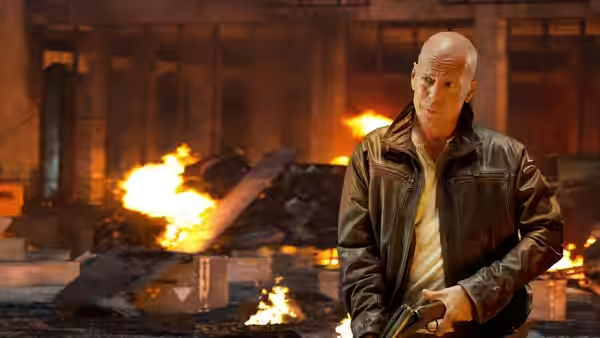
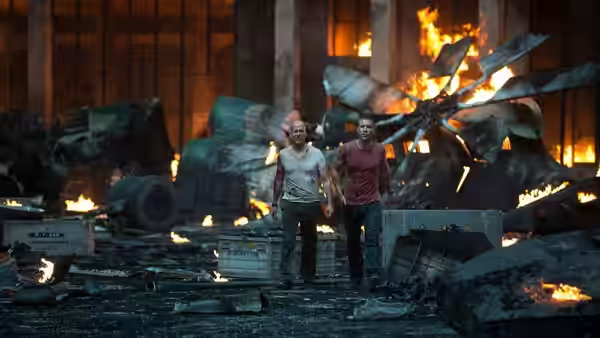
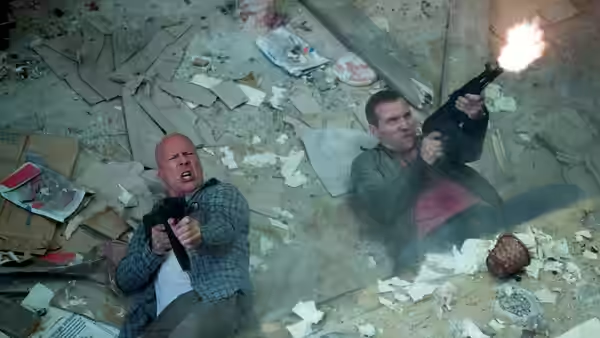
The man in the middle of it has done this four times before, and looks it. Willis plays McClane as a weary uncle who has wandered into someone else’s film, and his one joke, bellowing ‘I’m on vacation’ each time he is shot at, is repeated until it stops being a joke and becomes a tic. In 1988 McClane bled, limped, hid in a lift shaft and rang his wife. Here he falls through several floors of scaffolding, shakes off the glass and gets up. Nothing hurts him, so nothing matters. Courtney is a large young man with a firm jaw and no lines that could be mistaken for wit, and the two of them share a good deal of screen time saying ‘Dad’ and ‘Jack’ at each other in tones of irritation.
The Russians fare a little better. Koch gives Komarov a quiet, watchful softness, and he is the only actor in the film whose face seems to be thinking. Kolesnikov’s Chagarin mostly shouts into telephones. Rasha Bukvic’s Alik, the lead henchman, stops in the middle of a hostage situation to eat a raw carrot, do a few steps of a tap dance and explain how much he dislikes Americans, and we laughed, because for a minute the film seemed to know it was ridiculous. Yuliya Snigir, as Komarov’s daughter Irina, is handed a motorbike and an outfit and not much else in the first hour.
Daniel T. Dorrance’s production design gives the villains a hotel ballroom with chandeliers and long windows over the city, the handsomest room in the picture, and a helicopter then shoots it to powder in about a minute. That is the film’s method throughout: build something, then knock it down before we have had a proper look. Marco Beltrami’s score thumps under every scene, and the mix is so loud that whole exchanges of dialogue arrive as noise. The second half leaves the city and the stakes go up in a way we will not describe; the film gets sillier as they do.
It carries a 12A certificate, and it plays like a film that has been tidied up for one. The blood is brief, the swearing is clipped, and the famous catchphrase arrives so quietly and so late that it seems embarrassed to be there. Compared with its own series, this is the entry with the least in it: no building, no plan, no clock, no wife on the other end of the phone. Compared with the genre at large it is a mid-table chase film with a famous name on the poster.
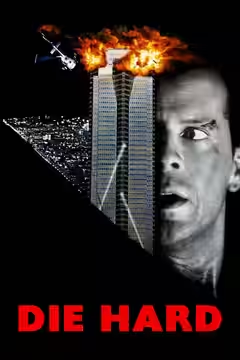
Anyone wanting a Die Hard tonight should watch the first one again. Ninety-eight minutes is not long. It felt it.