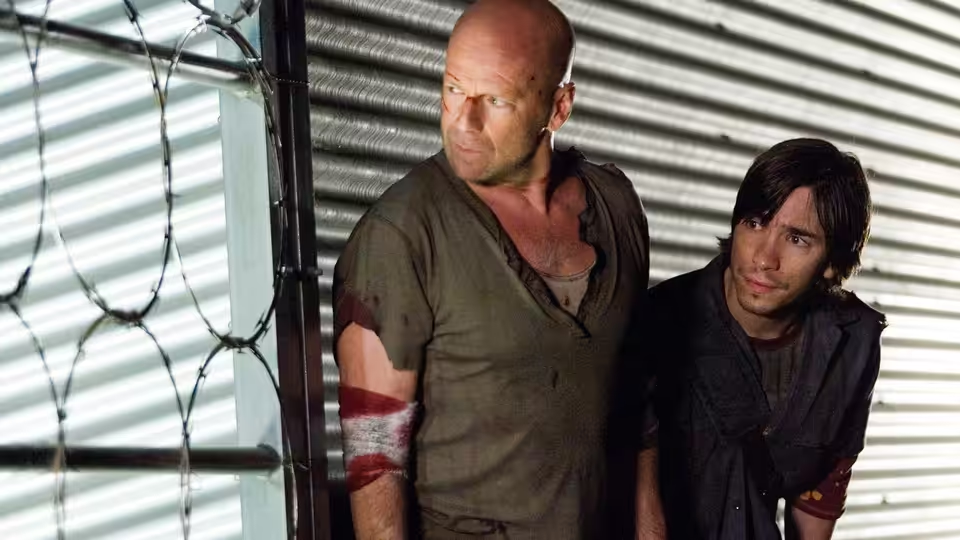
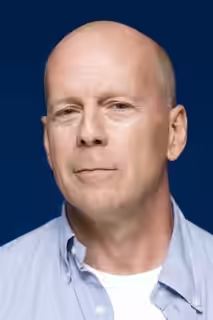
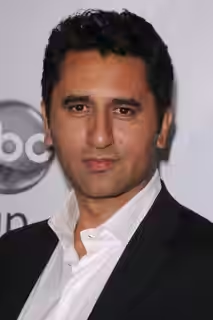
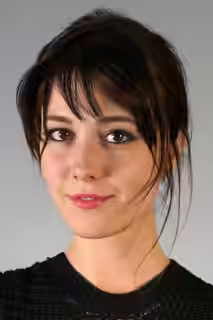
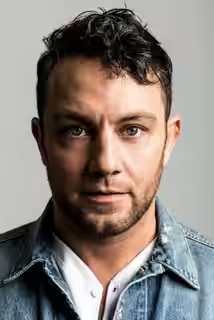
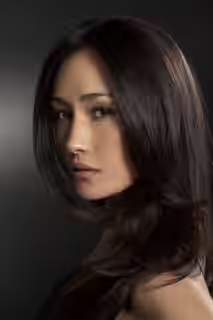
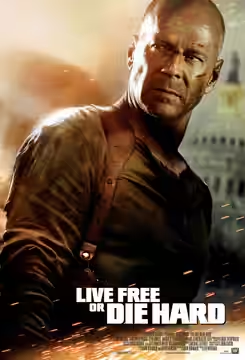
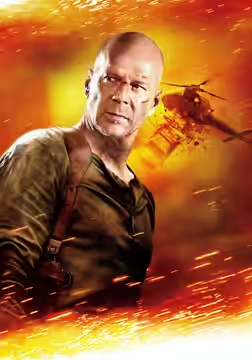
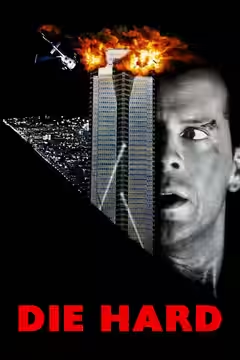
John McClane returns after twelve years, older and quieter, to save the whole eastern seaboard rather than one building. Len Wiseman stages two or three set pieces with real skill and Willis is still good company, but the scale swallows the man.
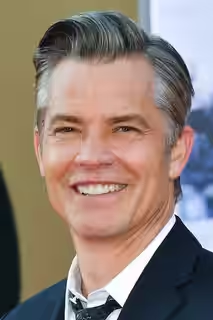
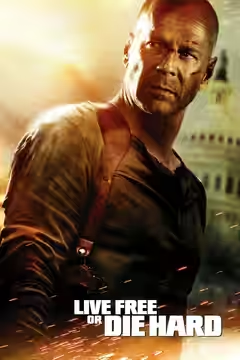
Twelve years after Die Hard with a Vengeance, John McClane is back, and this time the enemy works from a keyboard. Thomas Gabriel (Timothy Olyphant) switches off America one system at a time, traffic first, then money, then power, and the only person in his way is a New York cop who has never heard of a firewall. That is the joke of Mark Bomback’s screenplay and it is a decent one. Len Wiseman, who came to this from the Underworld films, treats it as licence to go as large as the money allows. Released in Britain as Die Hard 4.0 on 20 June 2007, at 128 minutes and a 15 certificate, it is a good action film and a middling Die Hard.
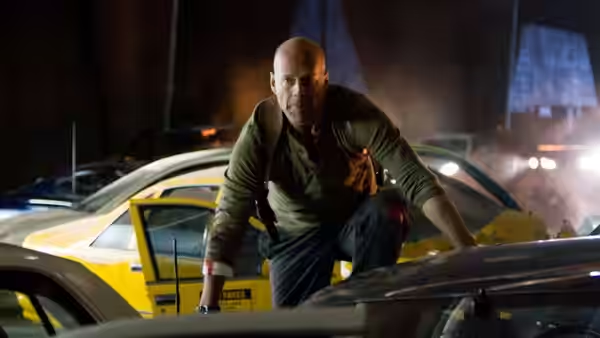
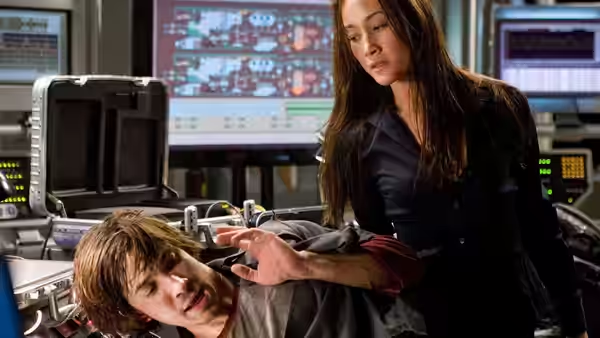
The stunts are the reason to see it, and for an hour they are terrific. Cyril Raffaelli, as the henchman Rand, runs up walls and along ledges and through plate glass, and Wiseman keeps the camera far enough back that we can see a man is doing it. Maggie Q’s Mai Linh fights McClane through an office, down a lift shaft and into a car hanging by its cables, and Nicolas De Toth cuts it fast without losing us. Then McClane, out of bullets, sends a police car up a toll-booth ramp into a hovering helicopter. We laughed out loud and did not care for a second that it was impossible, because Wiseman had shown us the car, the ramp and the helicopter in one shot before he put them together. Willis’s explanation afterwards is the best line in the film.
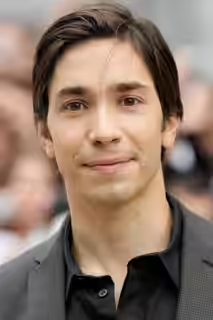
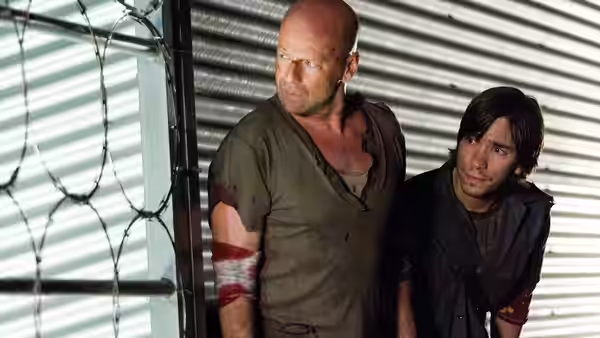
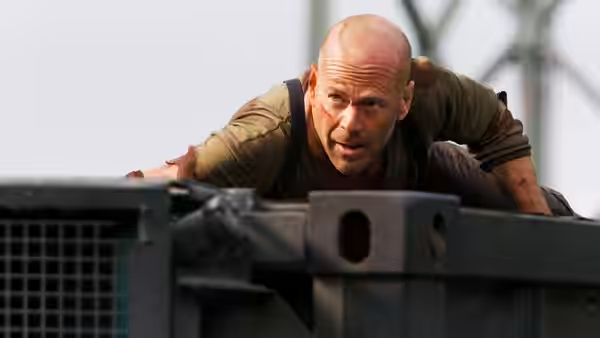
Willis is heavier, quieter and balder than he was, and he plays McClane as a man who is tired of this before it starts. It suits him. He barely raises his voice; the wisecracks come out sideways, half to himself, and the film is at its best when he is grumbling at Justin Long in a moving car. Long plays Matt Farrell as a boy who has never been hit, and the old formula, the cop and the civilian who cannot shut up, works well enough that we wanted the film to stay in the car. Olyphant is cool, clipped and slightly bored, which is a fair choice for a villain who does everything by remote, but it leaves the film without anyone to be frightened of. Cliff Curtis, as Deputy Director Miguel Bowman, spends the film in a glass room being told things too late.
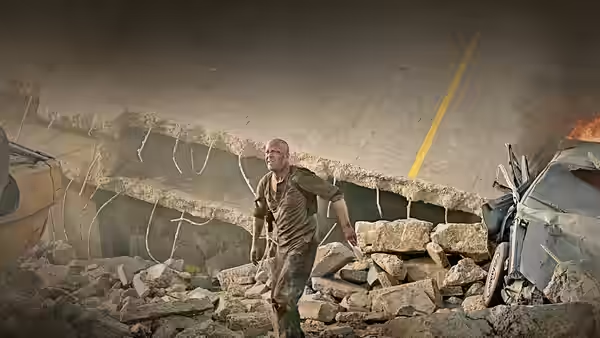
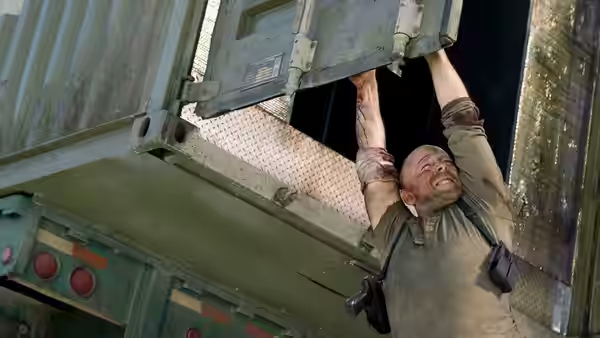
The trouble is scale. The first Die Hard was one man, one building, one night, and every floor mattered. Here the field is the whole eastern seaboard, the villain is in a lorry somewhere, and McClane spends the second half driving from one place to the next. After the ninety-minute mark a set piece pits an articulated lorry against a fighter jet, and we stopped believing a man had lived through it and started watching politely, the way you watch a cartoon. Patrick Tatopoulos’s sets, the glass FBI operations room, a power station of catwalks and blue light, are handsome and interchangeable. Simon Duggan shoots everything in steel grey and cold blue, so that Washington, New Jersey and a Virginia wood look like the same car advertisement.
Marco Beltrami’s score is loud, capable and forgettable; it drives the chases and never gives us a tune to take home. And the film has been scrubbed. McClane swears perhaps twice in two hours, and his most famous line is cut off by a gunshot, which is either a joke or a flinch, and either way somebody decided the audience could not be trusted with the word. Mary Elizabeth Winstead, as Lucy McClane, has her father’s temper and about eight lines to show it. Kevin Smith turns up in a basement as a hacker called Warlock and gets more screen time than the joke can carry.
See it for Raffaelli on the walls, Maggie Q in the lift shaft, the helicopter, and for Willis, who is still good company when he is allowed to be a man rather than an effect. Watch it at home, where the volume is yours and the jet looks less silly. Bring someone who loved the original; they will enjoy the first hour and spend the second explaining why it is not the same.