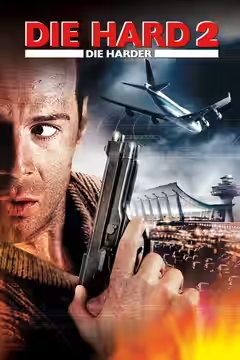
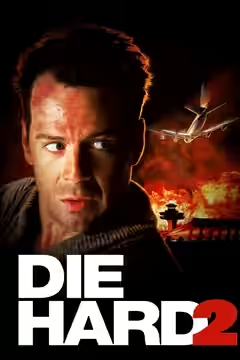
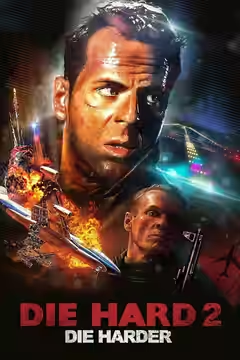
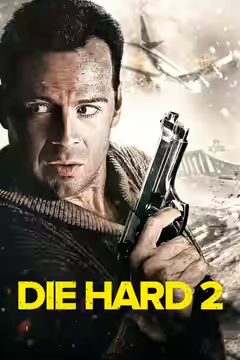
Renny Harlin swaps the tower block for an airport and the battle of wits for a blizzard of explosions. It is fast, well built and good fun, and it never finds a villain worth Bruce Willis’s trouble.
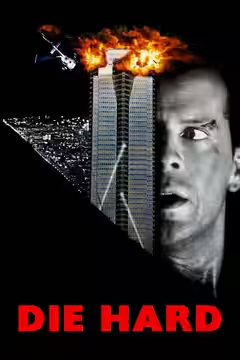
John McTiernan’s Die Hard kept its hero in one building. Renny Harlin, taking over for the sequel, has been handed an airport, a blizzard and roughly twice the explosives, and he uses all of them. Die Hard 2 puts John McClane back in trouble on Christmas Eve, at Dulles in Washington, while his wife’s plane circles overhead in the snow, and it knows exactly what it is: the same thing again, louder. It is fast, well built and good fun for 124 minutes, and about half as clever as the film it copies. If the first one is yours, this is worth an evening. Do not expect to remember much of it by Boxing Day.
Steven E. de Souza and Doug Richardson’s script, from a novel by Walter Wager, sets a team of former soldiers under a man called Stuart to seize the airport’s landing systems and free a general being flown in for trial. The writers know the first film as well as we do and let McClane say so; his complaint about the same thing happening to the same guy twice is the best joke in the picture and also a confession. Obstructive local cop, smug reporter, wife in danger, crawling through ducts: all present, all a size larger. The film mostly gets away with it because it moves too fast to be caught.
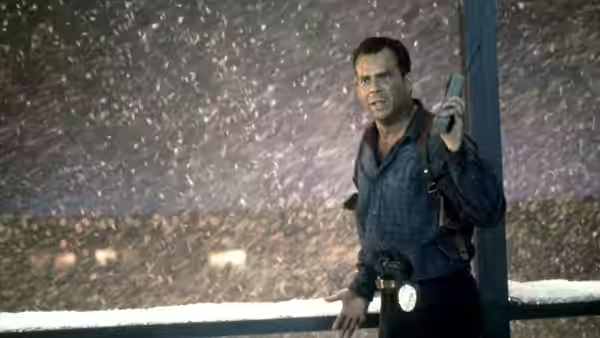
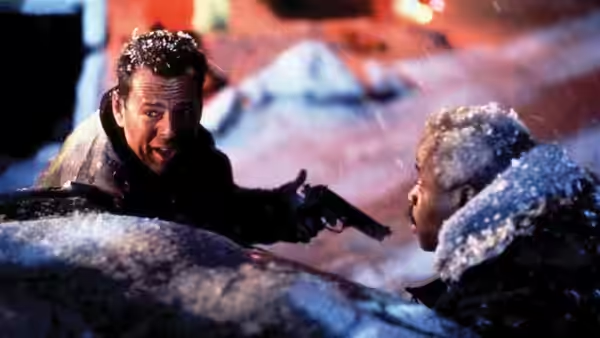
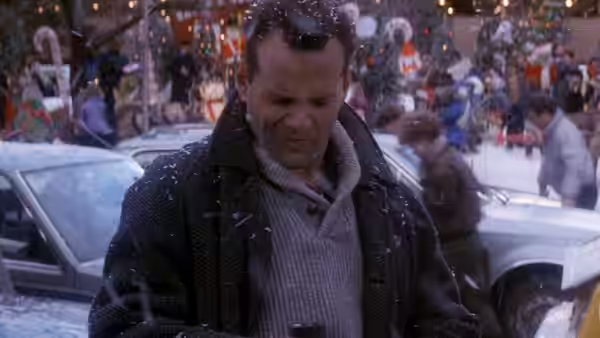
Oliver Wood shoots the whole thing at night in falling snow, and it is the film’s best decision. The runways are black, the lights amber and blue, and every explosion has a white backdrop to bloom against. John Vallone’s production design gives the villains a church annex full of monitors and the control tower the look of a room that has been worked in for years. Michael Kamen, who scored the original, brings back his sleigh bells and low brass and adds a carol. Stuart Baird and Robert A. Ferretti cut the fistfights hard and quick; when Harlin drops into slow motion for the bigger stunts, which he does more than once, the energy runs out of the frame until he stops.
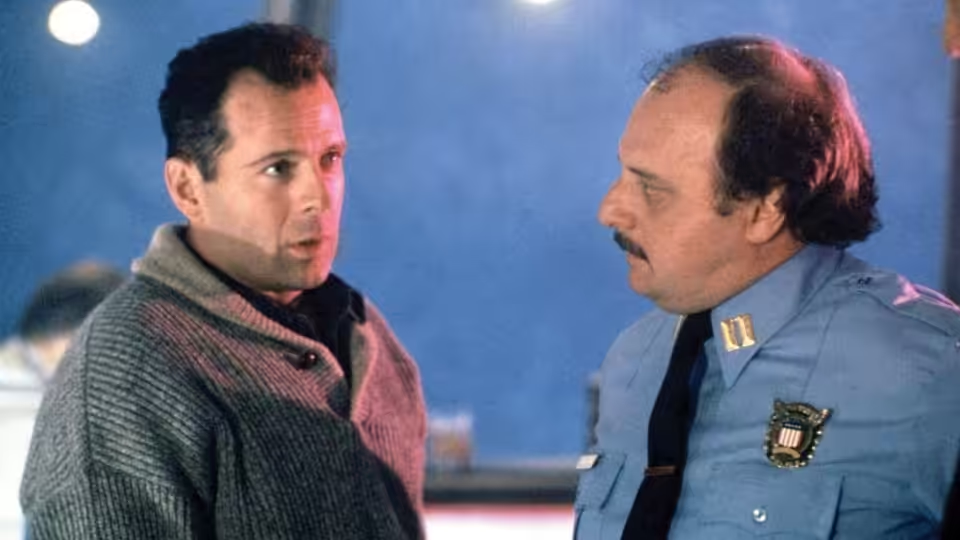
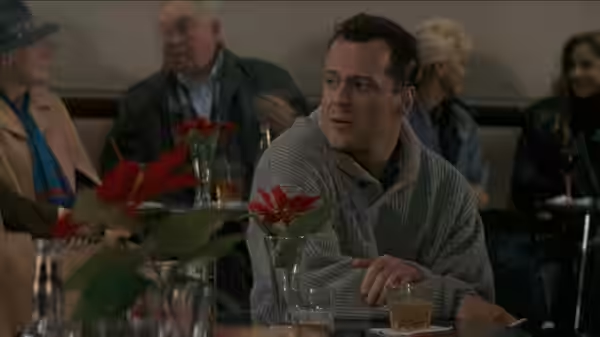
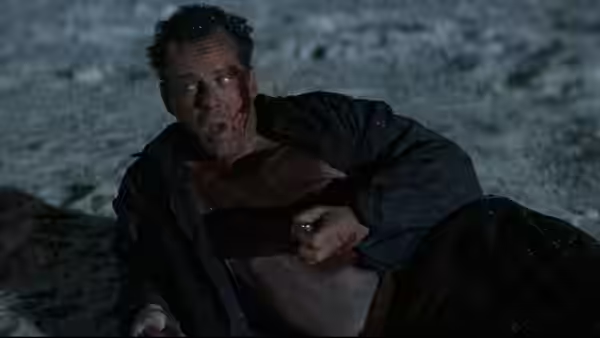
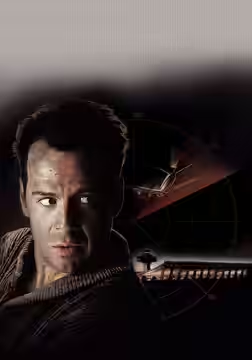
Willis is why it works as well as it does. He plays McClane as a man who is cold, tired and faintly embarrassed to be doing this again, and he apologises to the people he inconveniences, which is funnier than most of the written jokes. We laughed more than we expected to in the baggage tunnels, and it was his face that did it, not the lines: a man hitting someone while plainly wishing he were somewhere warm with a drink. Bonnie Bedelia has less to do than last time, stuck in a seat beside William Atherton’s Richard Thornberg, the reporter from the first film, and plays it as a woman quietly reconsidering the marriage.
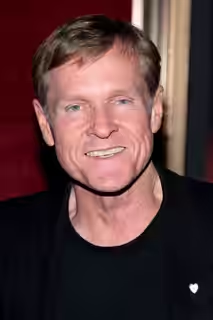
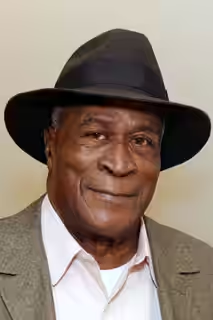
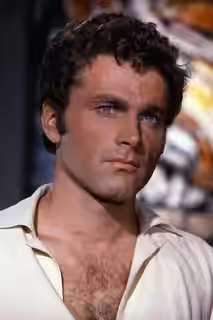
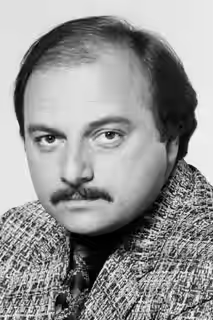
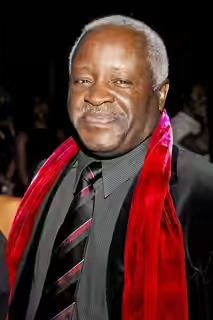
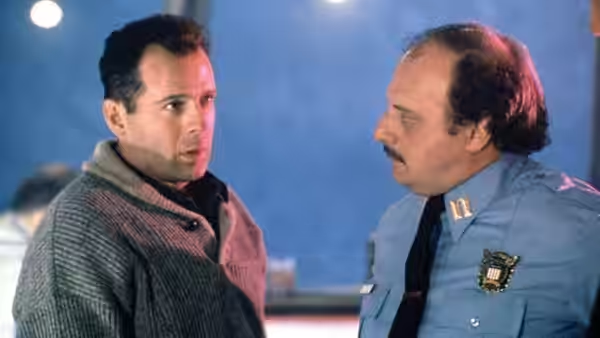
The trouble is who he is fighting. William Sadler’s Stuart is introduced exercising naked in a hotel room, a good joke and the last interesting thing about him. Sadler is cold, tidy and quick, but the script gives him orders to bark and nothing to want beyond the job, and the memory of Alan Rickman’s Hans Gruber hangs over every scene. Franco Nero’s General Ramon Esperanza is a cigar and an accent. Dennis Franz, as the airport police captain Carmine Lorenzo, shouts every line and is a pleasure for it, and John Amos arrives as Major Grant with a special forces unit and a jaw you could break rocks on. The most likeable person in the building is Tom Bower’s Marvin, a janitor who knows where everything is.
The plot does not bear looking at. The circling planes have exactly as much fuel as each scene needs. Sheila McCarthy’s television reporter Sam Coleman has a helicopter to hand at all times and the film treats it like a bus. And the last third leaves the terminal for snowmobiles and a chase along the runway, where the snow that has served the film so well becomes the thing that stops you telling who is shooting at whom.
Set against the first film it is plainly the lesser thing; it traded cleverness for volume and knew it. Set against the run of action sequels from the same years it sits high: it is made with real skill, it does not insult you, and it has a lead who understands the joke. Watch it in December with the curtains drawn, and forgive it the fuel.