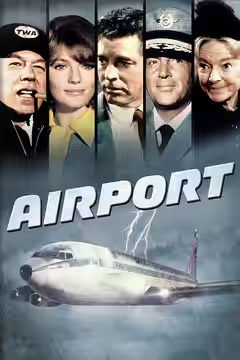
George Seaton’s glossy adaptation of Arthur Hailey’s bestseller spends most of its 137 minutes on marriages and only the last stretch on the aeroplane. Helen Hayes, Maureen Stapleton and Van Heflin earn their keep; the rest is a long wait at the gate.
George Seaton’s Airport, adapted from Arthur Hailey’s novel and produced by Ross Hunter, runs 137 minutes and spends perhaps forty of them on the thing its title promises. The rest is a series of marriages in trouble, most of them conducted over the telephone. This is the film that set the pattern for a decade of pictures in which famous people are put inside a large machine that then goes wrong, and watching it now it is plain that the machine came second. Hailey’s book was a compendium of how an airport runs, and Seaton’s screenplay keeps the facts and treats the people as the padding between them.
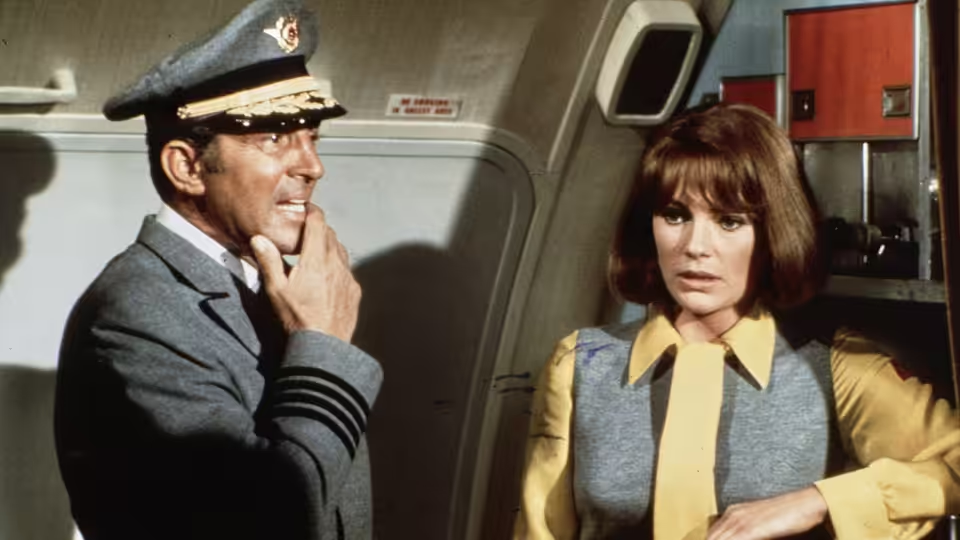
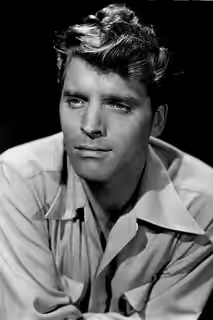
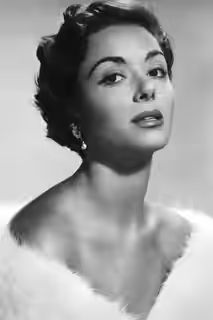
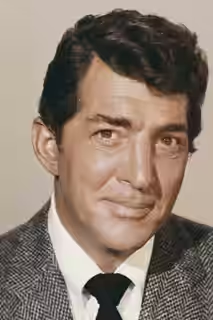
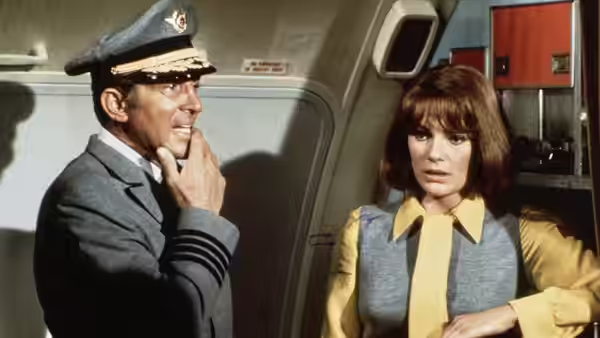
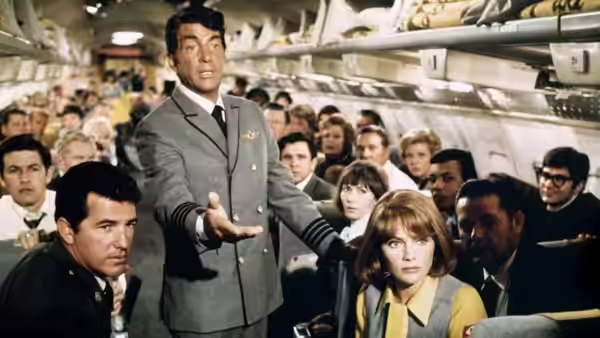
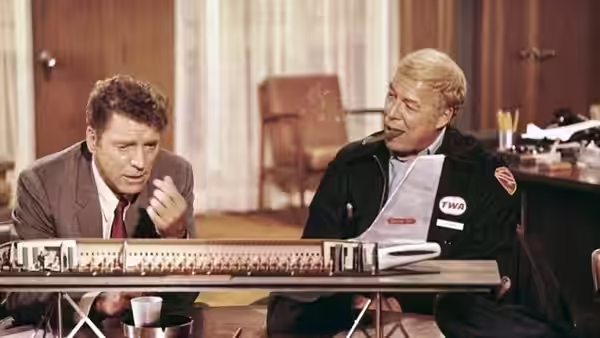
The marriages first, since the film insists. Mel Bakersfeld (Burt Lancaster) is trying to keep the airport open through a snowstorm while his wife Cindy (Dana Wynter) rings to complain and Tanya Livingston (Jean Seberg) waits in his office with a coffee and a look. Vernon Demerest (Dean Martin) has a wife, Sarah (Barbara Hale), at home and a stewardess, Gwen Meighen (Jacqueline Bisset), on his flight. Lancaster plays every scene with his jaw set, as if the divorce were a runway closure to be managed, and Martin coasts on the voice. Seaton stages the phone calls in split screen, two faces side by side, so we can watch two people be unhappy at once. We were bored by the Bakersfelds, and then irritated, because the film keeps returning to them as though it thought they were the story.
The story is elsewhere, and it belongs to two supporting players. Van Heflin plays D. O. Guerrero as a man who has already lost, hunched and sweating, hugging a briefcase in a departure lounge full of people with somewhere to go. And we were moved, more than we expected to be, by Maureen Stapleton, who has perhaps ten minutes as his wife Inez, brought into the terminal and questioned about him, and spends them apologising to everyone who questions her for something she has not done. It is the one performance in the film that seems to come from a shabby, real life rather than from a lobby card.
Helen Hayes is the other reason to stay. Her Ada Quonsett is a stowaway who has turned it into a craft, and the scene in which she talks round Peter Coakley (John Findlater), the young clerk assigned to keep an eye on her, is the lightest and best-written thing in the film. We laughed, and did not feel foolish about it. George Kennedy’s Joe Patroni, cigar clamped and voice raised, is the only person on screen who appears to enjoy his job, and the business of getting the stuck jet off the runway is the film’s best piece of ground-level staging.
The craft is expensive and mostly flat. Ernest Laszlo shoots the terminal wide and bright, the snow blue-white beyond the glass, and lights the interiors as evenly as a department store, so that nothing has a shadow to hide in. Edith Head puts Bisset and Seberg in sharp airline tailoring and Wynter in furs, which tells you who the film thinks is on the wrong side. Alfred Newman announces each change of strand with brass. Stuart Gilmore cuts between the plots every few minutes, so no scene runs long enough to build anything, and the picture proceeds like a well-run departures board.
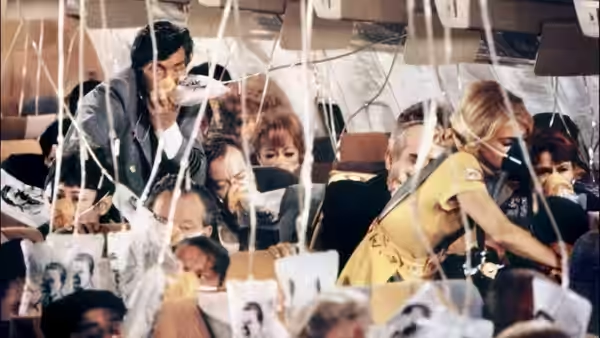
Then the flight leaves, and for the last stretch the film becomes what it should have been all along. We will not describe what happens in the cabin, but it is tense, it is cleanly staged, and Seaton, who made Miracle on 34th Street in 1947 and knew how to run a crowded public room, finally has a room he can run. Against the disaster pictures that followed, Airport is talkier and less spectacular, and it treats its ordinary passengers as scenery. Most critics have been split down the middle, and we can see why: half of this is a decent thriller and half is a magazine serial.
Watch it for Hayes, Stapleton and Heflin, and for the last forty minutes. For the first ninety, keep a phone nearby, which is roughly what the characters do.