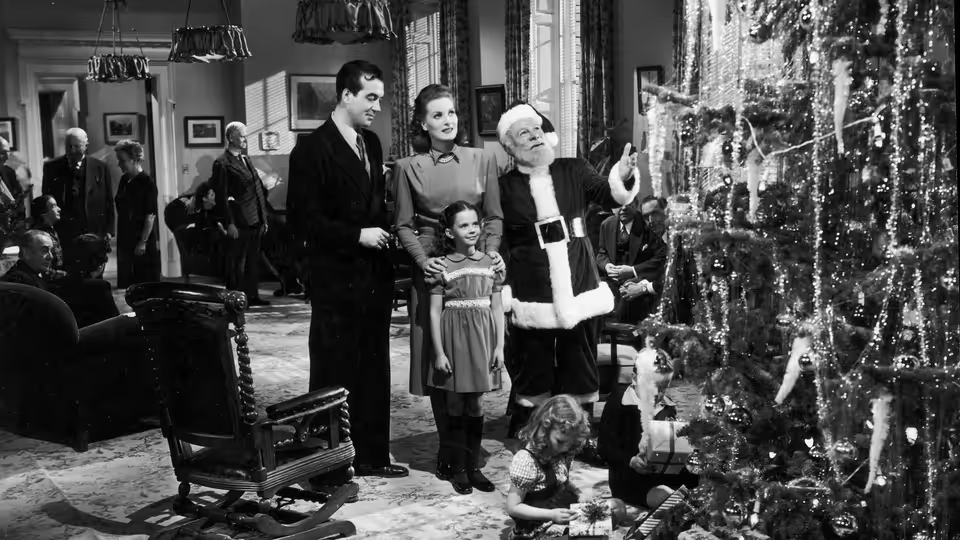
George Seaton’s comedy about a department store that hires a man who says he is Father Christmas is sharper about money than about miracles, and better for it. Edmund Gwenn carries it without a wink; the second-half hokum goes down easily.
Miracle on 34th Street asks a plain question and stays with it for 96 minutes: what would happen if a department store hired an old man who said he was Father Christmas, and he turned out to be good at the job? George Seaton, directing his own screenplay from a story by Valentine Davies, treats it as a comedy about commerce first and a fable second, which is why the fable works. Nobody in the film is stupid. The people who doubt Kris Kringle have reasons, and most of them are reasonable.
Our verdict is warm. This is a well-made, sharply written comedy that has kept nearly all of its charm since 1947, and we recommend it with one caveat: the second half asks for a good deal of hokum to be swallowed, and how easily it goes down depends on how close to Christmas the viewing is. In December it goes down without a struggle. In March the seams show.
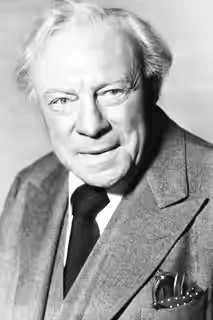
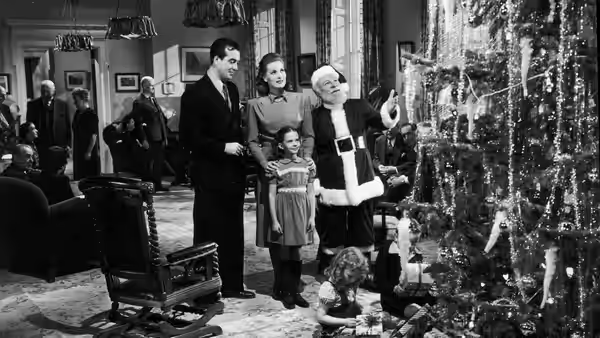
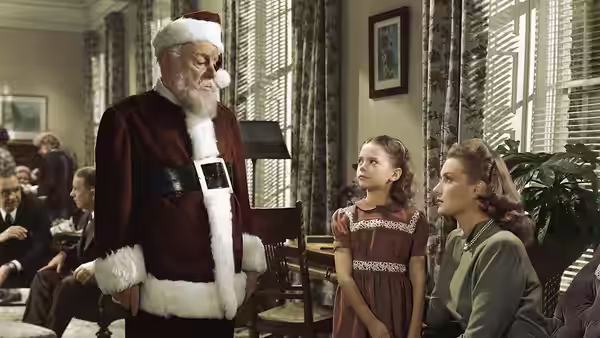
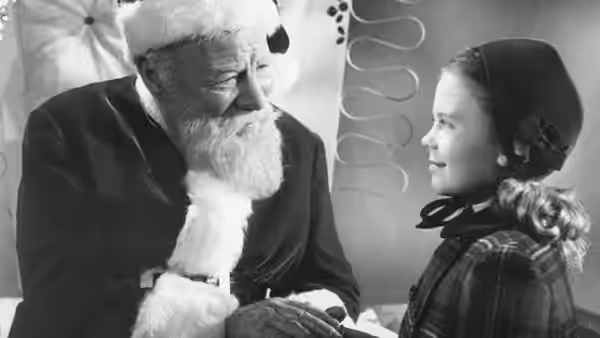
Edmund Gwenn is the reason it works. He plays Kris with as few twinkles as he can manage; he is a courteous old man with a temper, who objects to a drunk Santa the way another man might object to a badly parked car. Seaton never asks him to look at the camera and he never does. The scene we would keep if we could keep only one is the small Dutch girl on his knee in the store, newly adopted and without a word of English, whom Kris talks to and then sings to in her own language while her new mother stands back and cries. It moved us more than we expected a studio comedy to, and Maureen O’Hara’s face finishes the job: Doris Walker, watching from the side, sees something that will not fit into her rules.
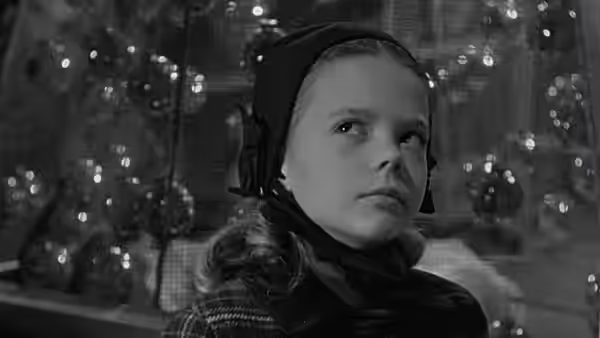
O’Hara plays Doris as a woman who has been let down once and has organised her life, and her daughter’s, so that it cannot happen again. She is not cold. She is tidy. Natalie Wood, as Susan, gives one of the least cute child performances of the period; she explains that she does not believe in fairy tales with the patience of someone who has heard her mother say it many times. Their scenes together are the spine of the film, and Seaton has the sense to let Susan come round slowly rather than all at once.
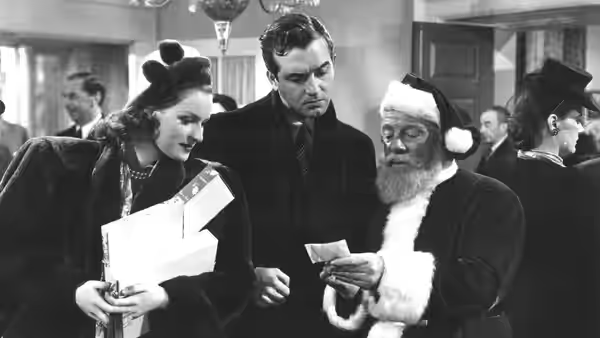
The store scenes are where the writing is best. Kris, told to push the overstocked toys, instead sends a mother to a rival shop that has the fire engine her son wants, and the mother becomes a customer for life. Harry Antrim’s R.H. Macy, summoned to find out who has been giving away his trade, smells the publicity before anyone has finished explaining. The film knows how retail feels from the shop floor: the memo from upstairs, the manager who wants a quiet season, the staff who have learned to smile on command. It is a Christmas film that understands the till.
The craft is plain and does not draw attention to itself. Charles G. Clarke and Lloyd Ahern Sr. shoot the parade and the Macy’s floors bright and level, and the crowds look like crowds rather than extras. Robert L. Simpson’s cutting leaves no fat; scenes end the moment they have made their point. Cyril J. Mockridge and Edward B. Powell’s music stays out of the way except when a carol is wanted. Charles LeMaire and Kay Nelson put Doris in suits a department manager might own and give Kris a coat that looks lived in rather than hired.
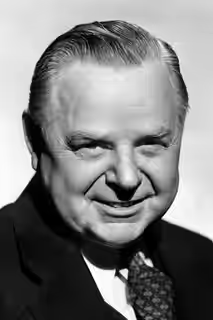
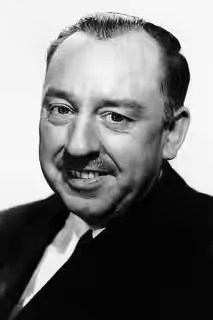
Not all of it holds. John Payne’s Fred Gailey is a nice man with nothing to play, and his romance with Doris is announced rather than shown. Porter Hall’s Granville Sawyer, the store’s psychologist, is a caricature with a nervous tic, and the film’s contempt for him is the one place it is unkind. When the action leaves the store for a hearing on Kris’s sanity, with Gene Lockhart’s Judge Harper, William Frawley’s fixer Charlie Halloran and Jerome Cowan’s Thomas Mara for the prosecution, the comedy gets broader and the jokes about re-election get repeated. We will not say how it resolves, only that the last piece of business is a little too neat, and we forgave it anyway.
There have been remakes. Watch this one, in a room with children if you have any, since it carries a U and earns it. Be ready to explain what a hearing on a man’s sanity is, because they will ask.