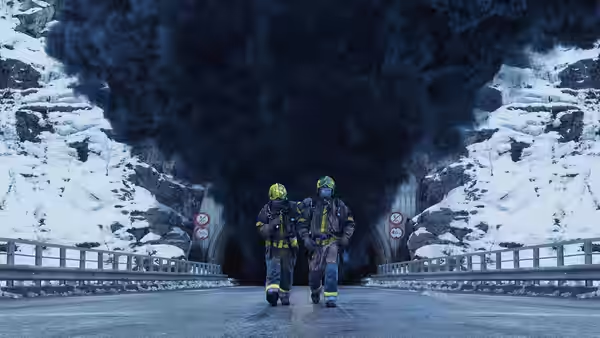
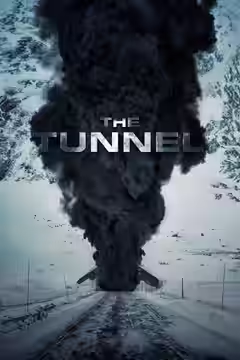
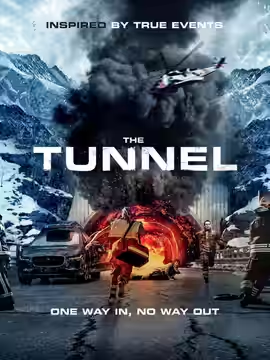
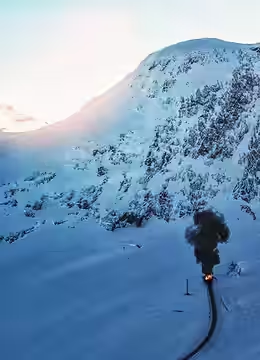
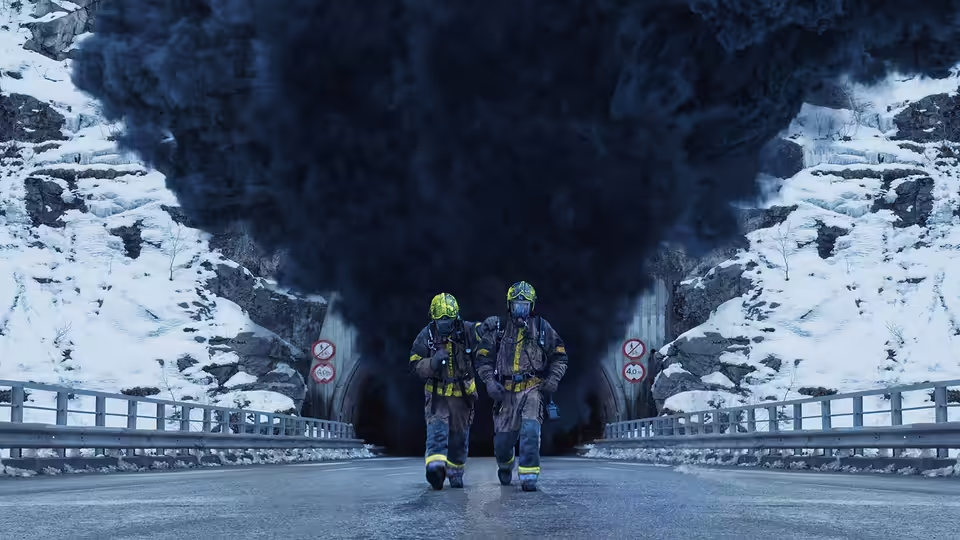
Two firefighters in rescue gear walk from a smoke-filled tunnel onto a snowy mountain road
Film review

The Tunnel

2019 · Directed by Pål Øie · 1h 43m

In a sentenceThe smoke is convincing, the fire is convincing, and the people walk into both anyway

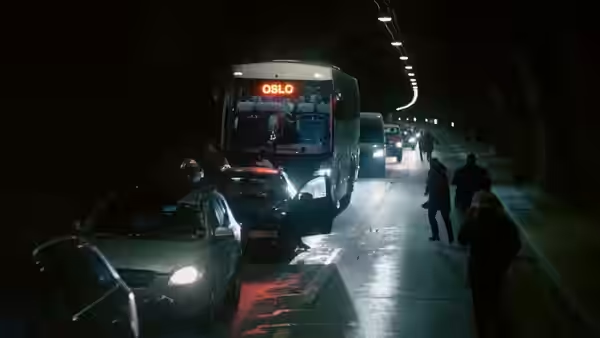
A mountain village in Norway, a few days before Christmas. Stein (Thorbjørn Harr) clears the roads for a living and lost his wife some years ago; his teenage daughter Elise (Ylva Fuglerud) has not forgiven him for taking up with Ingrid (Lisa Carlehed), and gets on the bus to Oslo rather than spend the holiday with the pair of them. A snowstorm closes the pass, so every car, bus and lorry is sent through the long road tunnel under the mountain. Inside it a tanker crashes and catches fire. The smoke spreads faster than anyone can drive, there is no phone signal under the rock, and the people in the tunnel are told to stay in their vehicles. Stein learns where Elise’s bus is and goes in after her.

Plays from YouTube when you press play; nothing loads from them until then.

Fi1m review

Pål Øie’s disaster film does the fire, the smoke and the cold with real conviction and then runs out of things to do with the people inside. Worth it for the first hour if you like your peril enclosed; the family drama you have seen before.

Norway has a great many road tunnels, and sooner or later someone was going to set a disaster film in one. Pål Øie’s The Tunnel is that film, and for its first half it is a decent one. Kjersti Helen Rasmussen’s script follows the genre’s rules to the letter: a small town, a holiday, a man who knows the ground, a child in the wrong place, and a lorry that should not have been on the road. At 103 minutes it is short for the form, and shortness is a virtue it mostly uses well.

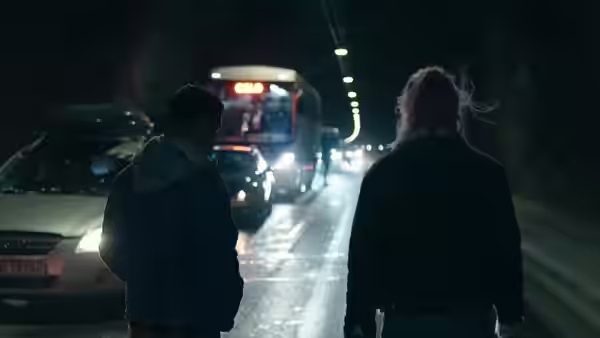
The crash is the best thing here. A tanker goes into the tunnel wall, the fire takes hold, and within minutes the long concrete tube is full of black smoke lit from below in orange. Sjur Aarthun shot the film and also cut it, and you can tell: the inside of the tunnel is close, grainy and dim, and every time the film steps outside to the white of the mountain the cut hits like cold air. We felt our chest tighten when the first wave of smoke rolls over the camera and the stranded drivers start covering their mouths with scarves. That is a physical reaction to a thing on screen, and the film earns it honestly.

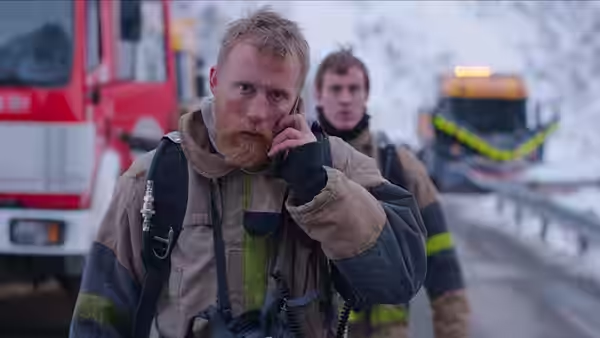
Thorbjørn Harr is the other reason to stay. He plays Stein as a quiet, practical man who has done this before and would rather not do it again, and he barely raises his voice in the whole film. When he goes in, he goes in like someone checking a boiler. It is a performance built on competence rather than heroics, and against the shouting that usually fills this genre it is a relief.

The trouble starts once the fire is burning and the film has to keep it interesting. Rasmussen’s script has one idea for peril, which is smoke, and one idea for drama, which is a father and a daughter who have not been speaking. The smoke does not escalate; it is simply there, scene after scene, and people stumble through it making the decisions people in these films make. Ylva Fuglerud does what she can with Elise, but the character is written as a grievance with a phone, and the row that sends her onto the bus is the oldest one in the book. Lisa Carlehed’s Ingrid spends most of the film beside a radio, waiting to be told things.

Three composers are credited, Lars Löhn, Ingo Ludwig Frenzel and Martin Todsharow, and the score sounds like it: strings swelling over anything that might be a feeling, as though nobody trusted the smoke to do the work. Mette Haukeland and Ida Bjerch-Andresen’s production design is better, a believable stretch of soot-blackened concrete, a crushed cab, a bus with its windows gone. Stina Lunde’s costumes are mostly reflective jackets and wool hats, and they are right.

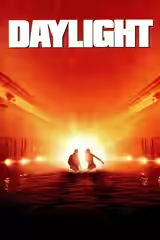
Norway made The Wave in 2015 and showed it could do a disaster picture with real scale and a family at the centre we cared about. This is the smaller, duller cousin. Against the Hollywood versions, Daylight in 1996 trapped Sylvester Stallone in a collapsing tunnel and had the decency to keep inventing new ways to kill him; here the danger is established in ten minutes and then maintained. By the hour mark we were waiting rather than watching, and that is the one thing a disaster film cannot afford.

See it if an enclosed fire with a competent man walking into it is the sort of evening you want. The 12 certificate is accurate; nobody will be badly frightened. The second half heads somewhere we will not describe, and most critics have found it as tidy as we did. Watch it on a cold night with the lights off, and the smoke will do more than the script.

Critical consensus AI synthesised

51
Positive
0
Mixed
3
Negative
3

The reviews lean cool. Nobody is enthusiastic, and the kindest notices stop at three stars. What praise there is goes to the setting: most critics find the Norwegian mountain tunnel a natural home for a disaster film, and several note how well the opening crash and the early claustrophobia work, with the cinematography’s contrast between the sealed tunnel and the icy landscape outside singled out. Variety’s Dennis Harvey adds a word for Thorbjørn Harr’s quiet, convincing lead performance.

The complaints cluster on what happens once the film is inside. Several critics find the peril repetitive and the parent-child melodrama overdone; Eye for Film’s Jennie Kermode says the danger depends on characters making implausible decisions, and Peter Bradshaw in the Guardian objects to a glib ending. Slant goes furthest, finding the film dull and short of suspense. The spread is narrow, from mild approval to flat disappointment, with no outright champions.

The New York Times
8 April 2021
64*

The page is inaccessible, so the critic’s verdict cannot be determined. No specific praise or complaint is available in the text provided.

Read the full review →
Radio Times
★★★ · Jayne Nelson
60

The three-star rating suggests a tense, effective disaster thriller. The review singles out the Norwegian mountain tunnels as an especially fitting setting for the disaster.

Read the full review →
Variety
12 March 2021 · Dennis Harvey
60*

Harvey finds the film involving and competently made, but uneven and short on memorable thrills. He praises Thorbjørn Harr’s quiet, convincing performance while faulting the repetitive peril and overdone parent-child melodrama.

Read the full review →
The Guardian
16 September 2020 · ★★ · Peter Bradshaw
40

Bradshaw finds the film an old-fashioned disaster movie, but says its clichés and glib ending weaken it. He praises its initial combination of claustrophobia and spectacle.

Read the full review →
Slant Magazine
4 April 2021 · ★½/4 · Mark Hanson
38

The critic finds the film a dull, melodramatic entry in the disaster genre that fails to build suspense. The initial truck crash briefly quickens the pulse, but the stakes never escalate enough to sustain the rest of the film.

Read the full review →
Eye for Film
27 March 2021 · Jennie Kermode
40*

Kermode finds the film a serviceable thriller, but says its emotional arc feels superficial and its peril depends on implausible decisions. She praises the claustrophobic tunnel atmosphere and cinematography’s contrast with the icy landscape.

Read the full review →

Straight answers AI written, from our review

Is The Tunnel worth watching?
The Tunnel is a mixed bag that we scored 54: a Norwegian disaster film with a convincing fire and a dull family drama attached. Thorbjørn Harr's quiet, practical rescuer and the first hour of smoke-filled concrete are worth seeing if you like your peril enclosed. By the hour mark we were waiting rather than watching.
How long is The Tunnel, and what is it rated?
The Tunnel runs 1h 43m. It is a thriller and drama film.
Where can I watch The Tunnel in Belgium?
The Tunnel is available to rent from Apple TV and Amazon Prime Video from €2.99. Availability is checked daily; the links above go straight to each service.
How violent or frightening is The Tunnel, and is it suitable for children?
The Tunnel carries a 12 certificate in the UK and we think it is accurate; nobody will be badly frightened. The threat is smoke and fire inside a road tunnel, with a crashed tanker and a bus with its windows gone, but the film shows no gore and little violence. Older children and teenagers will cope; younger ones may find the enclosed darkness unsettling.
How does The Tunnel compare to The Towering Inferno?
The Tunnel is the smaller and tidier film, and The Towering Inferno is the better of the two. Irwin Allen's skyscraper fire is properly frightening for its first ninety minutes, though it runs long and its trapped people are less interesting than its flames. Øie's tunnel is shorter and more intimate, but its danger is established in ten minutes and then merely maintained.
What should I watch after The Tunnel?
After The Tunnel, try The Towering Inferno (1974, Fi1m 68): The fire film all the others are measured against, with McQueen and Newman. Then Force Majeure (2014, Fi1m 84): A Swedish avalanche, a family holiday and a father who runs the wrong way.

Cast

Awards

Kanon People's Choice Award, 2019

Won
Kanon People's Choice Award

If you liked this, try…

  1. The Wave (2015) · not reviewed yetNorway’s other disaster film, with a bigger wave and a family worth the worry.

  2. Daylight (1996) · not reviewed yetStallone in a collapsing tunnel; silly, relentless and never once dull.

  3. The Towering Inferno (1974, Fi1m 68)The fire film all the others are measured against, with McQueen and Newman.

  4. Force Majeure (2014, Fi1m 84)A Swedish avalanche, a family holiday and a father who runs the wrong way.

  5. Buried (2010) · not reviewed yetRyan Reynolds in a coffin for ninety minutes; enclosed peril done with discipline.