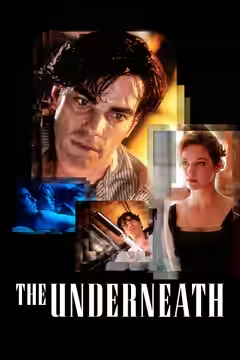
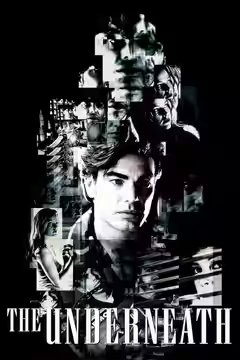
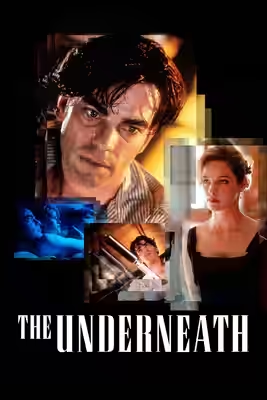
Soderbergh’s reworking of Criss Cross is cleanly built, handsomely lit and cut with real intelligence, and it left us cold. The fault is not the shuffled timeline but the man at the centre of it, who has nothing in him for the film to find.
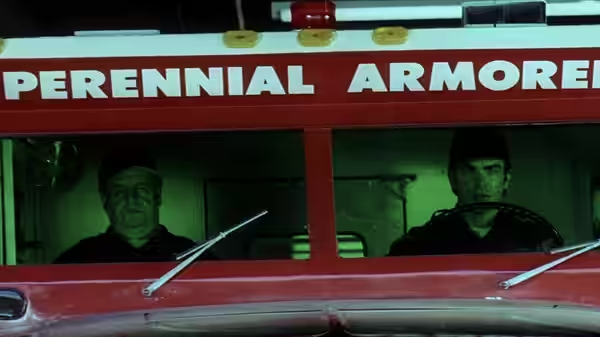
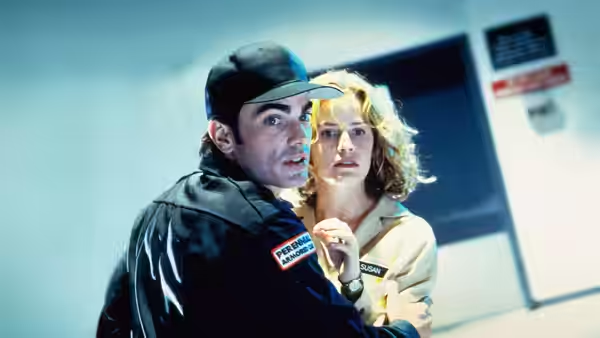
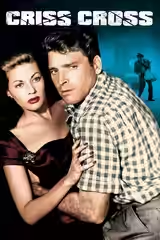
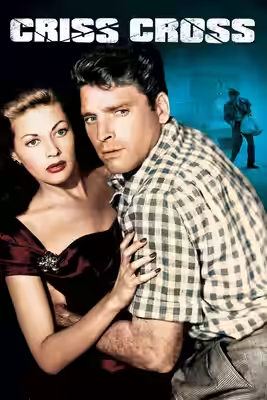
Steven Soderbergh takes Criss Cross, the 1949 noir, and deals it out of order. Michael Chambers (Peter Gallagher) comes home for his mother’s wedding, having left town some years before with gambling debts he could not pay and a wife, Rachel (Alison Elliott), he left to face them. The film tells the wedding weekend, the marriage that failed before it and a single day in the cab of an armoured car all at once, cutting between the three. It is a clever way to tell a story about a man who cannot stop going round in circles. It is also 99 minutes in the company of someone we never came to care about, and we think that is the film’s fault rather than ours.
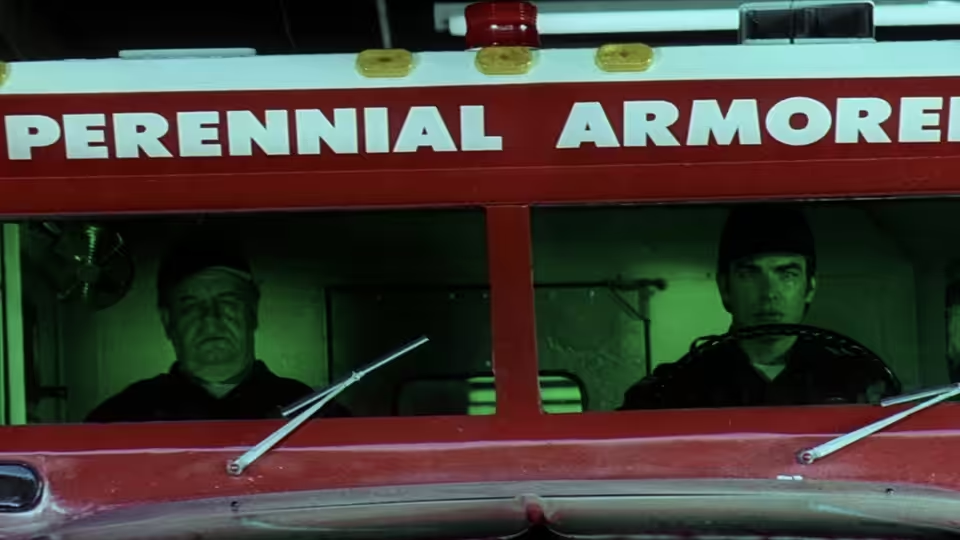
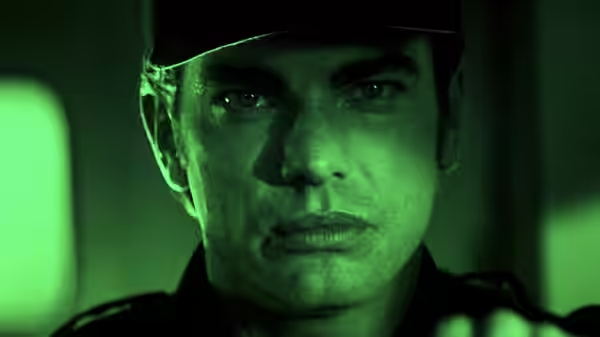
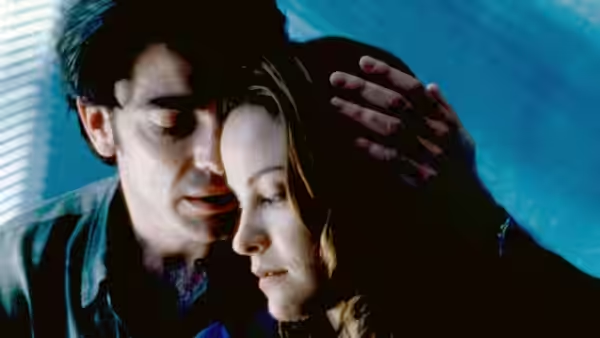
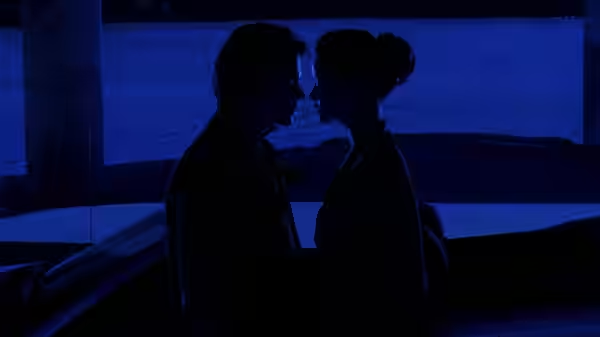
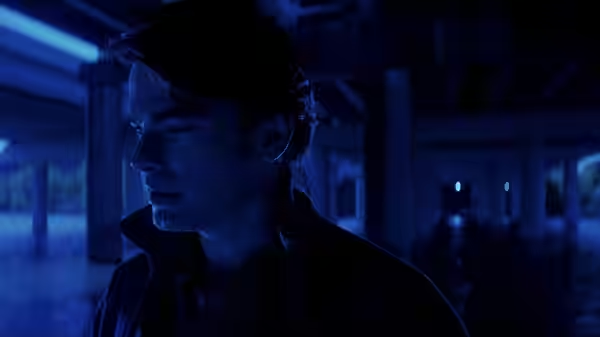
The craft is not the problem. Elliot Davis gives each strand its own light: the homecoming under a green filter so heavy that faces look ill, the past in warmer and plainer light, the day of the robbery in hard flat daylight with nowhere to hide. You always know when you are, which in a film built like this is the first thing that has to work. Stan Salfas cuts between the three on a look or a gesture rather than a caption, and we were never once lost. Cliff Martinez supplies low electronic hums and chimes that sit under nearly every scene, and they carry most of the unease the actors have been told not to show.
Howard Cummings gives the Chambers house the furniture of the decade Michael left, and the armoured-car depot the light of a fluorescent cage, which is roughly how Michael sees both. Karyn Wagner puts Rachel in colours nobody else in town seems to own. Everything is considered. The film knows exactly what it is doing at every moment, and it does it with a steadiness that starts as confidence and ends as distance.
Gallagher is the difficulty. Michael is written as a hollow man, a gambler who drifts back into other people’s lives because he has nothing of his own, and Gallagher plays the hollowness straight, with a level gaze and a voice that never rises. The trouble is that a film like this needs us to see something moving under the surface, some appetite or fear the man himself will not admit, and Gallagher does not let us. He is handsome and composed and he gives us nothing to hold. Most critics have been kinder to the performance than we are; we think they are crediting the film’s design with a depth the actor has not supplied.
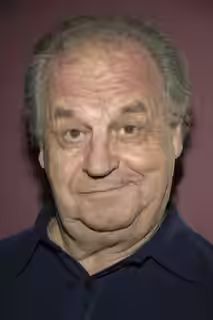
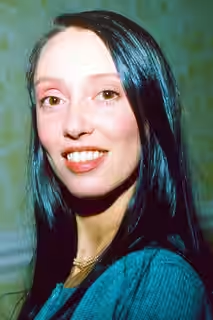
The people round him fare better. Elliott makes Rachel hard and hungry, a woman who sings in Dundee’s club and wants out of town more than she wants any particular man, and her scenes with Gallagher are the only ones in which the temperature rises. William Fichtner’s Tommy Dundee is the film’s one source of heat, a man who smiles while he threatens and means both. Adam Trese gives Michael’s brother David a grievance that has curdled into something quieter. Joe Don Baker is good company as Hinkle, Paul Dooley is a decent, worried stepfather, Elisabeth Shue is a woman Michael meets on the way home and then does not know what to do with, and Shelley Duvall turns up as a nurse and reminds us how strange and specific a presence she is. Richard Linklater minds the door at the Ember.
Here is what we felt. We waited the better part of an hour for the robbery, and when it came it was over almost before we had registered it had begun, shot without the score and without any of the usual build, and we jumped in our seat. It is the best-judged minute in the film. Then, in the scenes that follow, we noticed we had not cared who ended up with the money, and we were irritated with the film for having spent so much skill on a man it had never persuaded us to worry about.
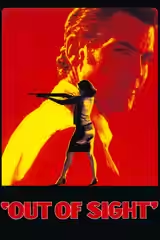
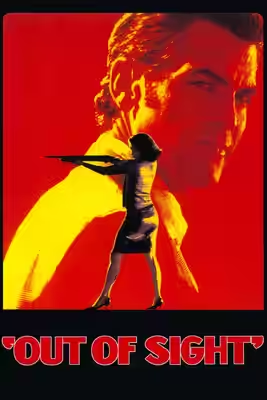
Soderbergh would shuffle time again in Out of Sight (1998), with a leading man who plainly wanted things and a heroine who plainly wanted him, and that film is warm where this one is cool. The Underneath reads now as the sketch for it. It opened in British cinemas on 19 January 1996, and it is best watched at home, late, in the dark, where its colours are at their most persuasive and its central absence is easiest to forgive.