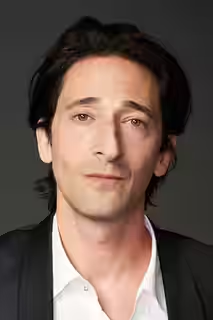
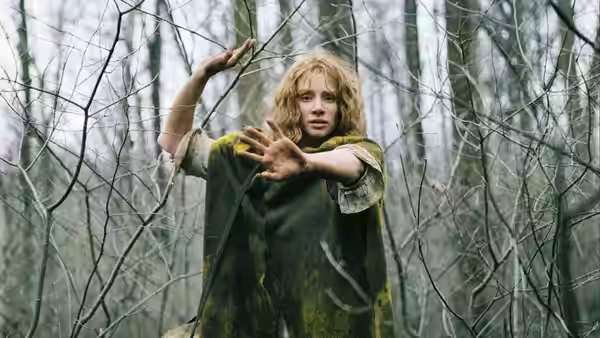
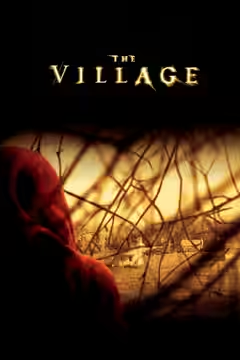
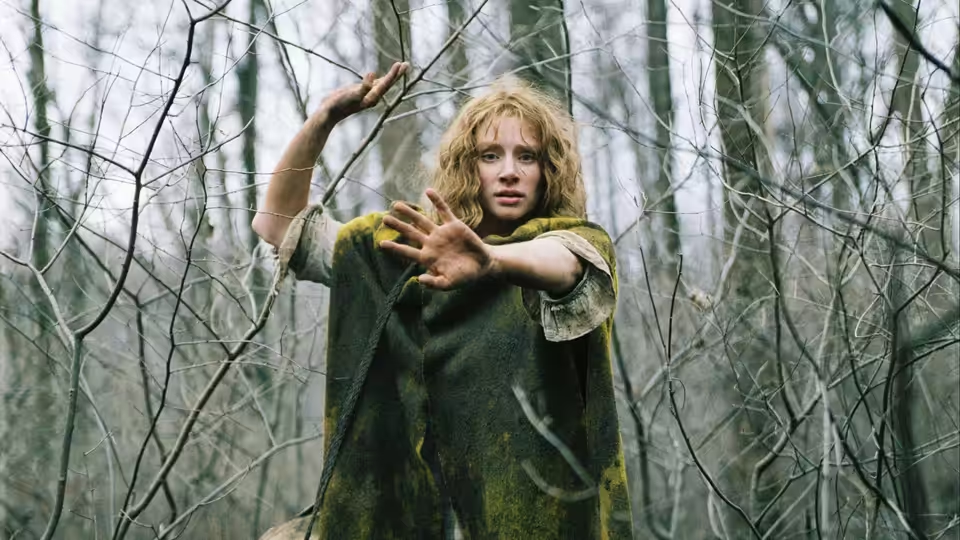
Noah Percy (Adrien Brody) raises his hands among bare trees in the forest
Film review

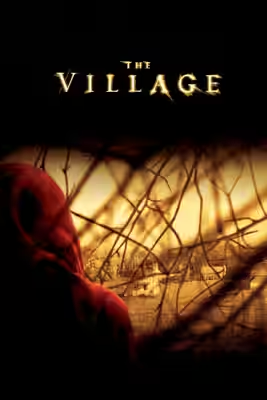
The Village

2004 · Directed by M. Night Shyamalan · 1h 48m · Medietilsynet 15

In a sentenceThe woods are frightening; the explanations need checking

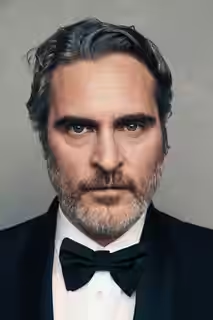
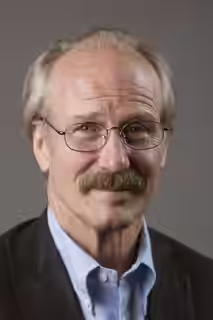
In an isolated village beside a feared forest, Ivy Walker (Bryce Dallas Howard), Lucius Hunt (Joaquin Phoenix) and Noah Percy (Adrien Brody) live within a community governed by shared customs. Edward Walker (William Hurt) and Alice Hunt (Sigourney Weaver) are also part of the settlement, where communal life continues under the threat associated with the woods. Colour marks out danger, and familiar routines offer little escape from the surrounding unease. The village’s inhabitants must live with their fear of what lies beyond the settlement as it presses into their ordinary lives.

Fi1m review

M. Night Shyamalan makes the village and its woods unsettling, with help from Roger Deakins and Bryce Dallas Howard. The storytelling is much less persuasive, making this worth considering for its atmosphere rather than its handling of the mystery.

M. Night Shyamalan’s The Village is worth considering for its atmosphere and Bryce Dallas Howard’s performance, with substantial reservations about the story. It takes an isolated settlement, the woods beyond it and the fear shared by its inhabitants, and treats each with sustained seriousness. That approach suits a mystery in which the prospect of entering the forest is troubling enough. Across 108 minutes, though, the director asks the mood to carry more than it can reasonably bear.

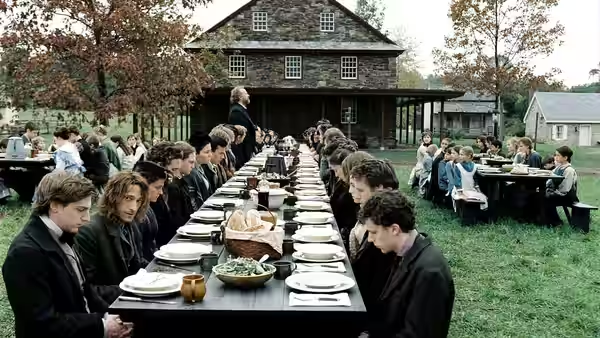
The opening interest lies in the community itself, whose ordinary customs become uncomfortable under this degree of scrutiny. The director, who also writes the screenplay, understands how communal life can become oppressive. The villagers’ routines are troubling because their familiarity does so little to make the place welcoming. Fear has become part of how these people live together, and for a while, watching them is enough to sustain our interest in the settlement.

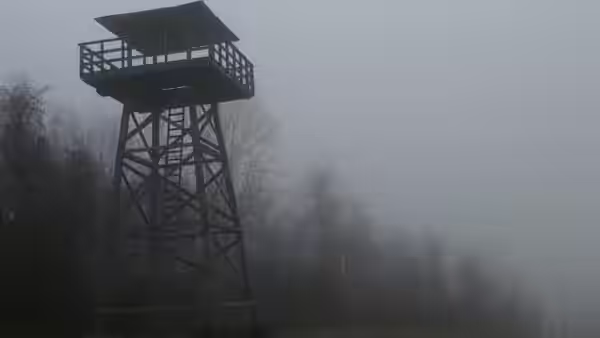
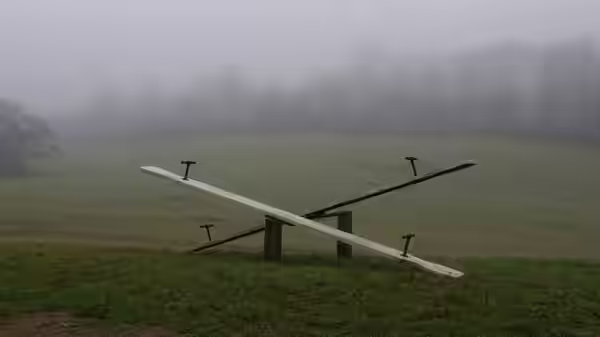
Roger Deakins’s cinematography is the strongest reason to stay, particularly in the night scenes. The framing keeps our attention on what might be outside the image, allowing unseen space to do some of the work that a less patient thriller would assign to an attack. We were unnerved by what we could not see, and caught ourselves searching the edges of the image. The director knows when to hold back, and the photography gives that restraint a purpose. We can study what is visible without feeling that we have been allowed a reassuringly complete view.

Tom Foden’s production design gives the communal setting enough solidity to support that unease; the village remains interesting even when its inhabitants are merely going about their lives. The significance attached to colour makes the fear legible, though the insistence becomes rather heavy. James Newton Howard’s score helps maintain the film’s solemn mood, but offers too little relief from it. There are passages when we wish the film would let this place feel ordinary for a moment.

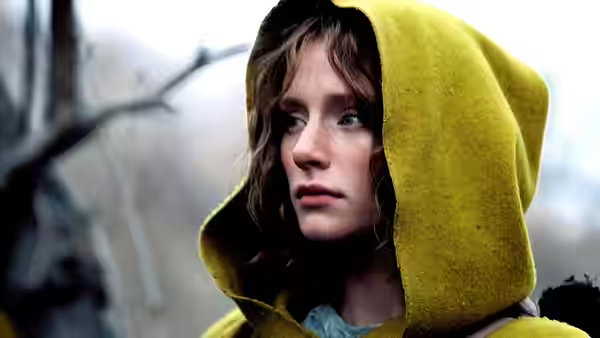
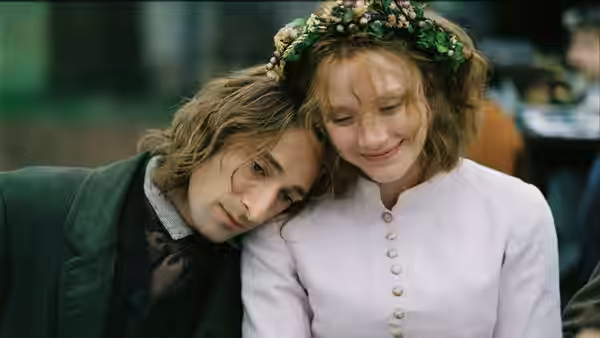
Bryce Dallas Howard, playing Ivy Walker, supplies a vulnerability that cuts through much of the ceremony. Her performance gives us someone to care about when the mechanics of the mystery threaten to occupy all our attention. The dialogue is less helpful, asking the cast to sustain a mannered formality that can make a simple exchange feel like a public declaration. The seriousness becomes tiring when every conversation seems to require the same careful handling.

Christopher Tellefsen’s editing gives the suspense time to build, and that patience pays off while uncertainty is doing the work. Once the story asks for a different kind of attention, its contrivances are harder to overlook. Without describing where it goes, the problem is that the explanations invite practical questions which the film has done too little to answer. The director has exercised such close control over what we see that the less convincing reasoning behind it feels careless.

A woodland thriller can survive a fair amount of implausibility when the fear stays immediate. This one puts too much weight on making us reconsider what we have watched, and invites scrutiny it cannot withstand. There is still enough here for viewers who enjoy a slow, solemn mystery and can tolerate some strained plotting. Choose it for the unease, and be prepared to do some forgiving.

Critical consensus AI synthesised

49
Positive
1
Mixed
7
Negative
4

Most critics find The Village mixed or disappointing, though praise repeatedly returns to its atmosphere and visual craft. Shyamalan’s controlled framing, the threat of what remains outside the image and the slow accumulation of dread earn respect even where the story does not. Roger Deakins’s cinematography draws particular admiration, while the sound design also receives credit for making the woods unnerving. Bryce Dallas Howard’s performance is another point of praise, valued for its vulnerability and emotional force.

The sharpest disagreements concern whether that suspense survives the payoff. Several reviews find the plotting contrived or predictable; others object to the mannered dialogue and unconvincing village life. The spread is wide, despite a predominantly mixed-to-negative response. The Guardian finds intriguing communal customs undone by plot holes and silliness. Eye for Film is the clear enthusiast, praising the storytelling and sustained tension that so many others find compromised.

The New Yorker
15 August 2004 · Anthony Lane
65*

Lane finds the film solemn and imperfect, but ultimately appreciates its eerie, serious approach to horror. He praises Shyamalan’s framing and the suspense created by what lurks beyond the edges of the image.

Read the full review →
Screen Daily
30 July 2004 · Geoffrey Macnab
64*

The page identifies this as a review, but its verdict is hidden behind the paywall. The accessible text does not reveal what the critic praises or criticizes.

Read the full review →
RogerEbert.com
30 July 2004 · ★★½/4 · Roger Ebert
62

Ebert finds the film atmospheric but thinks its central reveal weakens the story. The review singles out the movie’s carefully built mood, while faulting the payoff.

Read the full review →
Empire
1 January 2000 · William Thomas
60*

Thomas finds the film an elegant, carefully crafted but overripe parlour trick, likely to divide audiences. He singles out Bryce Dallas Howard’s performance for its haunted vulnerability and emotional force.

Read the full review →
Radio Times
★★★ · Brian Pendreigh
60

Pendreigh presents it as another of Shyamalan's twist-driven tales, built around an isolated village and the woods beyond it. He singles out its beautiful photography.

Read the full review →
Total Film
20 August 2004 · ★★★ · Total Film
60

The critic finds the film a frustrating mix of brilliance and nonsense, with its ending undermining the experience. They praise its controlled direction, unnerving sound design, and slow-building dread.

Read the full review →

Straight answers AI written, from our review

Is The Village worth watching?
The Village is worth considering for viewers who enjoy slow, solemn mysteries, and we score it 63 out of 100. We recommend it chiefly for Roger Deakins’s unsettling photography and Bryce Dallas Howard’s performance; the strained plotting and explanations make it harder to recommend for anyone who wants the mystery to withstand close scrutiny.
How long is The Village, and what is it rated?
The Village runs 1h 48m and is rated 15 by the Medietilsynet in Norway. It is a drama and mystery film.
Where can I watch The Village in Norway?
The Village is streaming on Disney+ in Norway, and it is also available to rent from Apple TV from kr 39.00. Availability is checked daily; the links above go straight to each service.
How violent or frightening is The Village, and is it suitable for children?
The Village has a UK 12A certificate, and its frightening atmosphere calls for caution with younger or sensitive children. We found the unseen spaces around the village and woods unnerving; the suspense builds through patient framing and uncertainty rather than constant attacks. The certificate allows children under 12 to attend a cinema screening with an adult, but does not guarantee suitability.
How does The Village compare to Picnic at Hanging Rock?
The Village is the less convincing mystery beside Picnic at Hanging Rock, which we recommend more warmly for its patient cutting and unsettling daylight photography. Both place an isolated community against a landscape that offers little reassurance, but The Village strains when it explains itself. We favour Picnic at Hanging Rock for sustained unease, despite its sometimes idealised portrayal of the girls.
What should I watch after The Village?
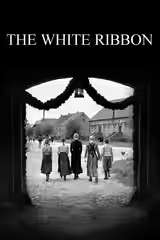
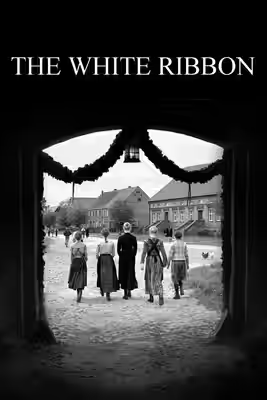
After The Village, try Picnic at Hanging Rock (1975, Fi1m 88): An isolated community struggles with uncertainty, while the landscape refuses to offer reassurance. Then The White Ribbon (2009, Fi1m 86): Village rituals and respectable authority conceal a cruelty that demands closer attention.

Cast

Awards

Academy Awards, 2005

Nominated
Best Original Score

If you liked this, try…

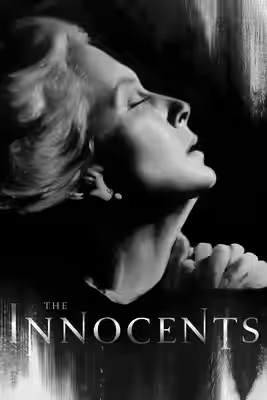
  1. The Innocents (1961) · not reviewed yetFor patient supernatural dread, troubled adults and rooms that never feel empty.

  2. Picnic at Hanging Rock (1975, Fi1m 88)An isolated community struggles with uncertainty, while the landscape refuses to offer reassurance.

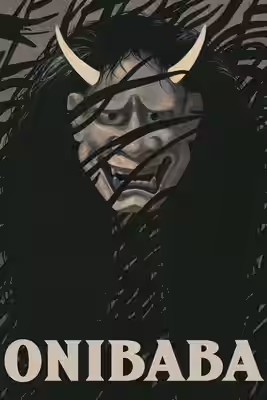
  3. Onibaba (1964) · not reviewed yetRural isolation and human fear become more threatening than any promised monster.

  4. The White Ribbon (2009, Fi1m 86)Village rituals and respectable authority conceal a cruelty that demands closer attention.

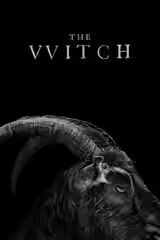
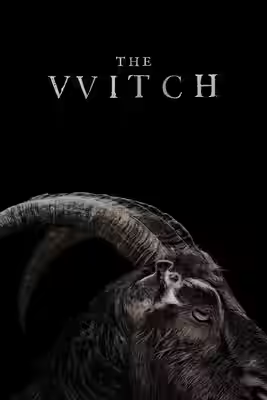
  5. The Witch (2015) · not reviewed yetA fearful rural household gives suspicion room to grow alongside the supernatural.

Free account

Know what to watch tonight

Two lists that know where things are streaming, collections you can share, your own score beside ours, and Discover that remembers what you have seen.

  • Want to see, sorted by what is streaming now
  • Seen, with your score out of ten
  • No adverts, ever