Film review

The White Ribbon

2009 · Directed by Michael Haneke · 2h 24m · MPA R

In a sentenceA village where the children are frightening and the parenting explains quite a lot

DramaMystery

In a German village before the First World War, a series of malicious incidents unsettles a community governed by religious discipline and social rank. The schoolteacher, played by Christian Friedel and voiced in old age by Ernst Jacobi, looks back on events involving the village’s adults and children. A baron (Ulrich Tukur), a pastor (Burghart Klaußner) and a doctor (Rainer Bock) occupy positions of authority as suspicion spreads. Alongside the disturbances, the teacher courts Eva (Leonie Benesch). Michael Haneke’s drama follows the relationships between households, the treatment of children and the uncertainty surrounding the crimes.

Plays from YouTube when you press play; nothing loads from them until then.

Fi1m review

Michael Haneke’s village mystery is a patient, deeply unsettling study of adults teaching children to fear authority. Its severity can become repetitive, but the performances and Christian Berger’s black-and-white photography make the long scrutiny worth enduring.

The White Ribbon is a disturbing film about what children learn from the people entitled to punish them. Michael Haneke sets his mystery in a German village before the First World War, where malicious incidents disrupt a society already practised in making people afraid. He makes those incidents absorbing while directing our attention to the ordinary conduct of the adults. We recommend it, with a warning that its 144 minutes demand patience and offer little relief.

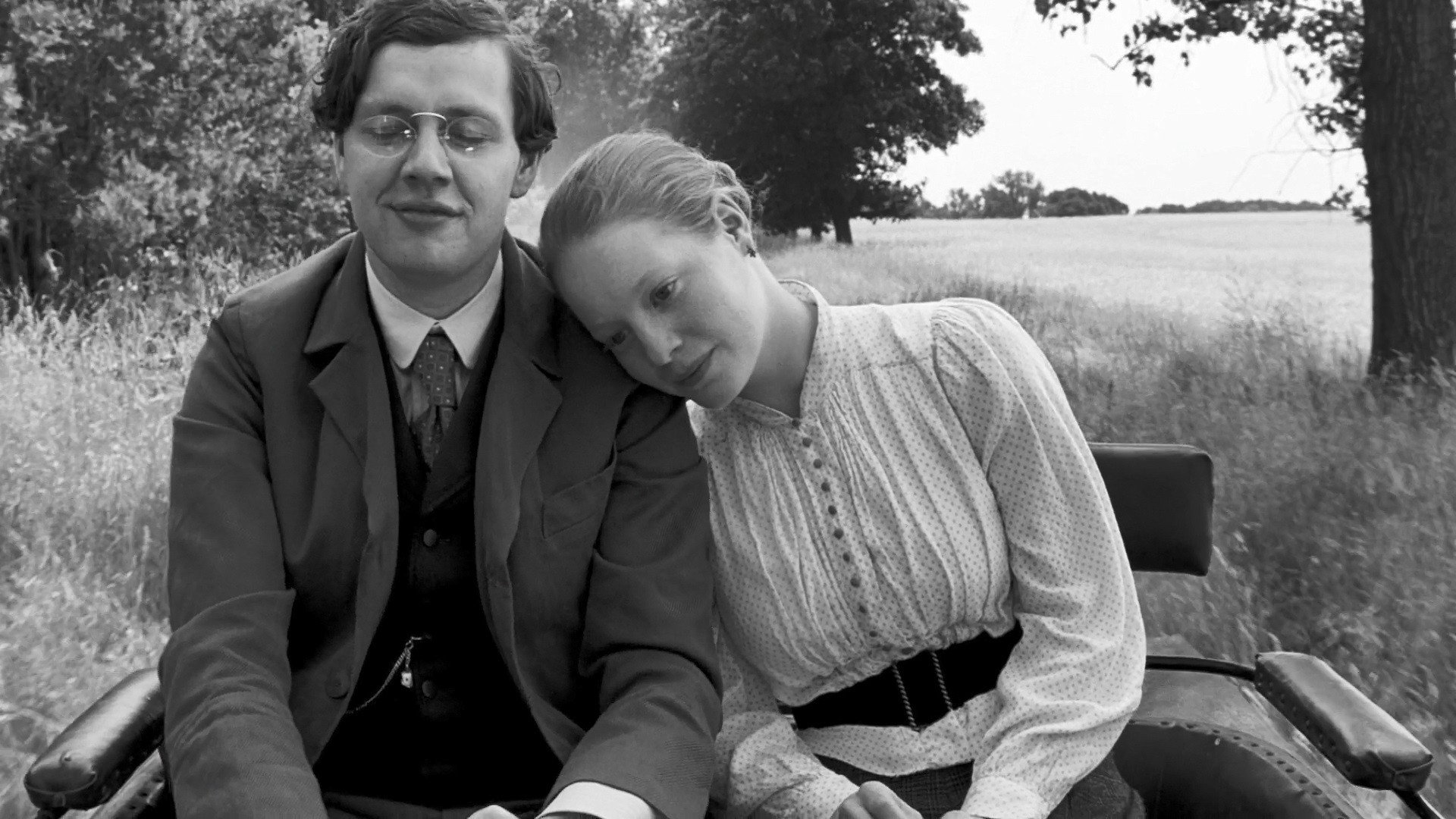
Christian Friedel gives the schoolteacher a gentleness that helps us stay with such harsh material, and Ernst Jacobi’s older voice supplies the recollection. Friedel makes decency credible without turning the teacher into someone we have been instructed to admire. The teacher’s courtship of Eva, played by Leonie Benesch, matters because Haneke lets affection occupy some of the same film as cruelty. We were moved by their awkward sweetness; after so much adult severity, the effort to be kind felt almost startling.

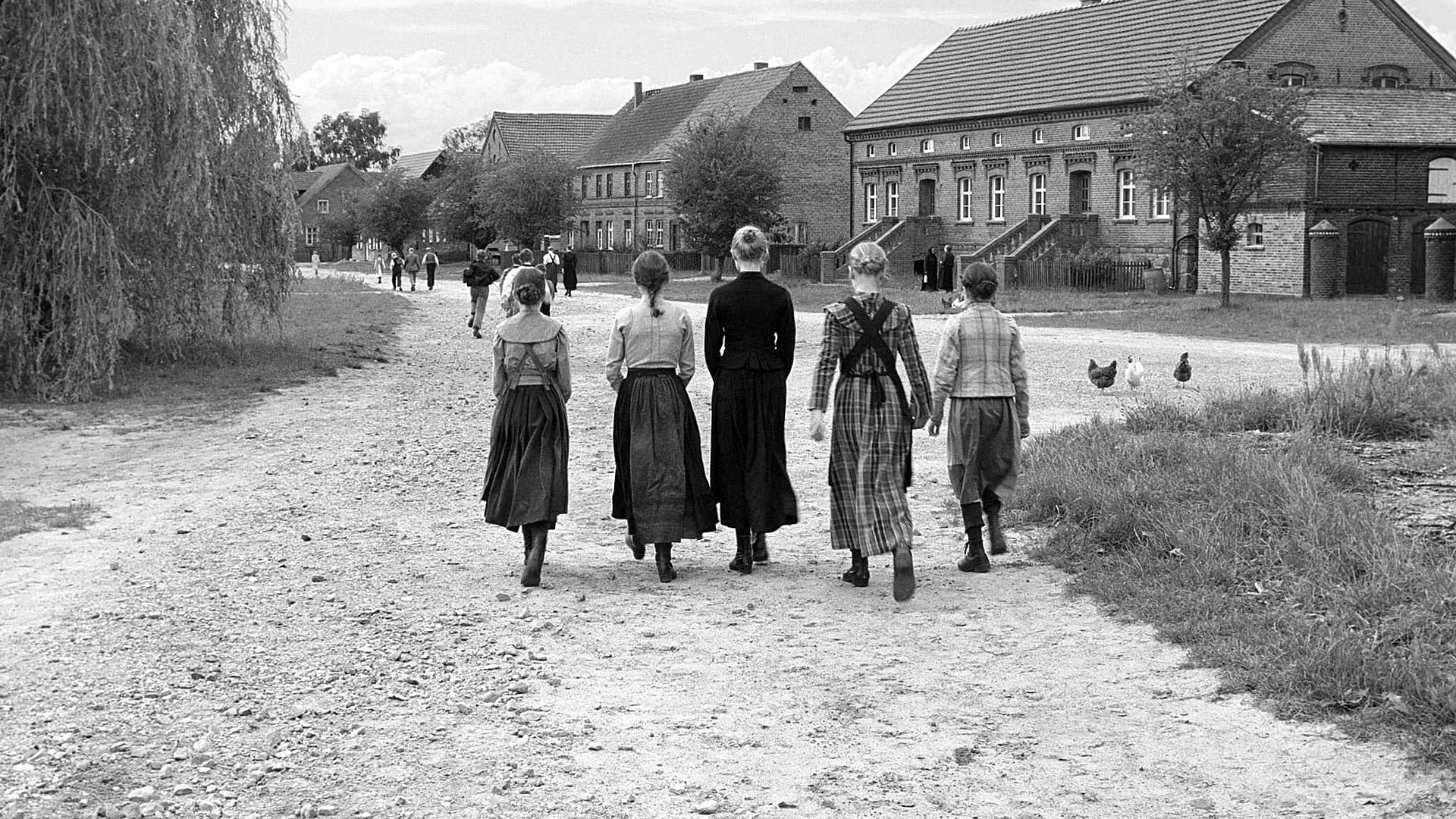
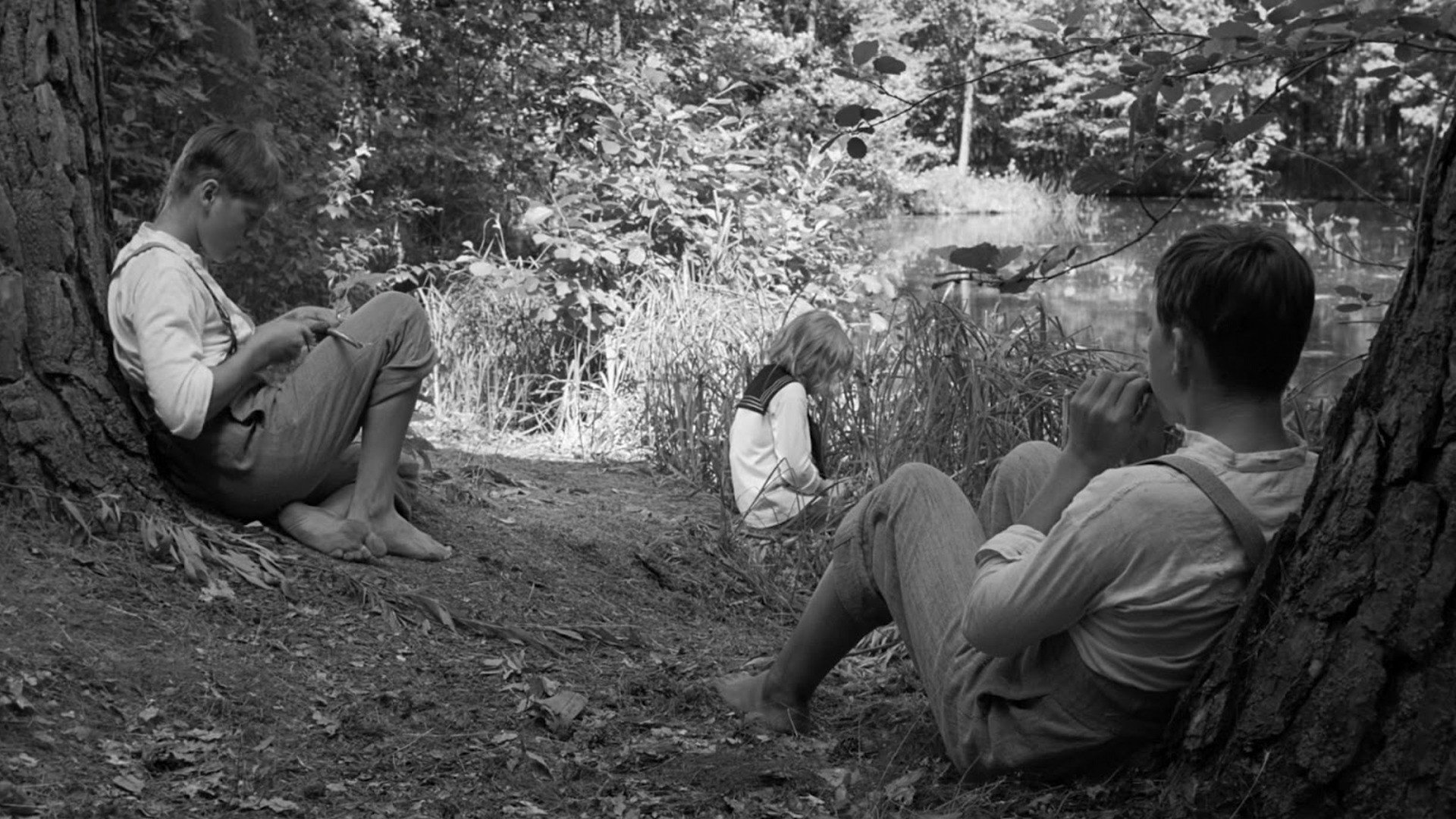
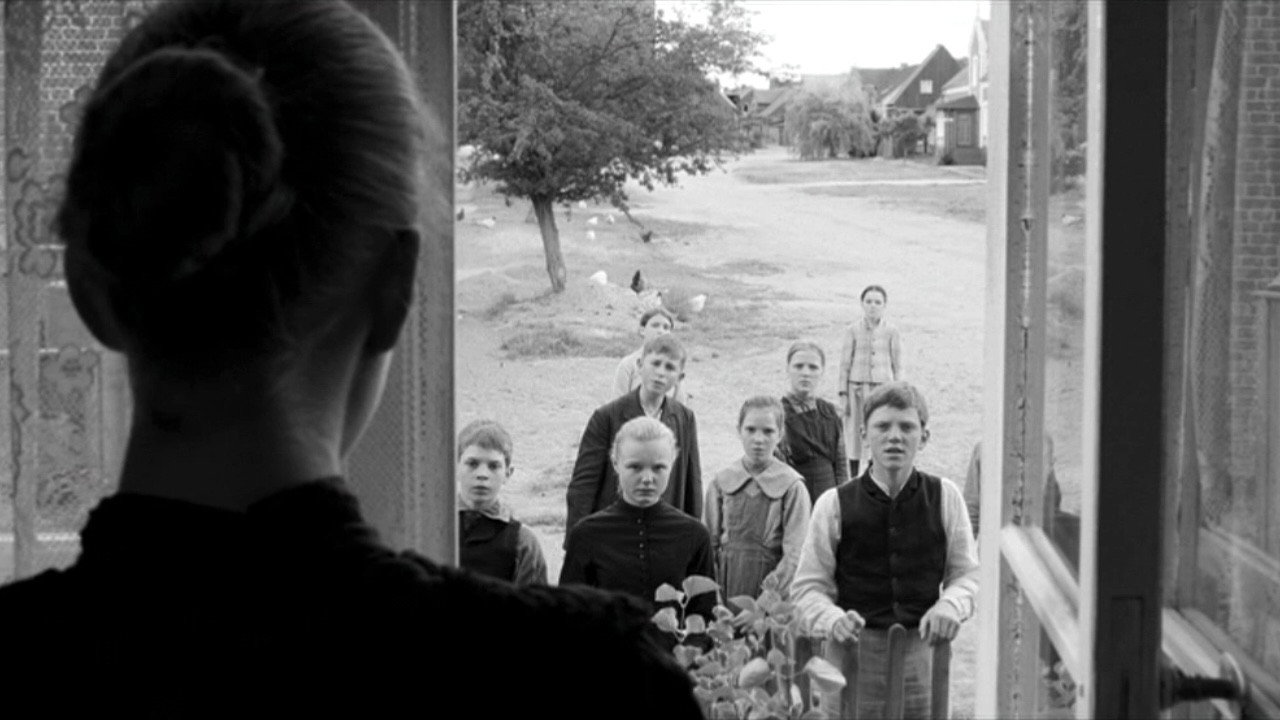
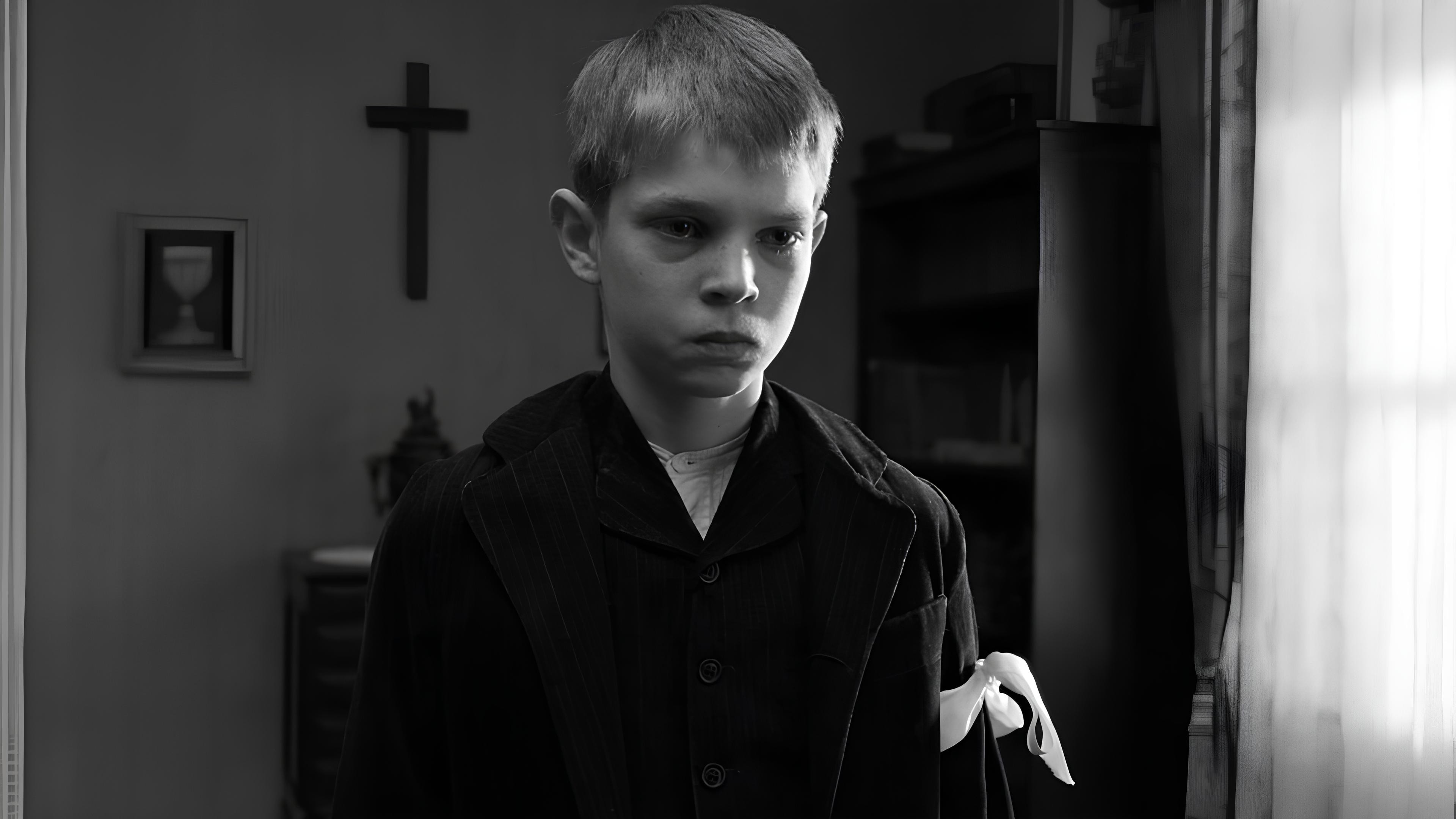
Christian Berger’s black-and-white cinematography is precise enough to make us study faces even when we would prefer to look away. The formal compositions suit a community in which everyone has an allotted place, and their restraint makes the violence harder to dismiss as a passing disturbance. Christoph Kanter’s production design gives the village a convincing historical solidity without inviting us to enjoy the past as somewhere cosier than the present. The care taken over these surroundings matters: the cruelty belongs to an inhabited place, with homes and institutions that people accept as normal.

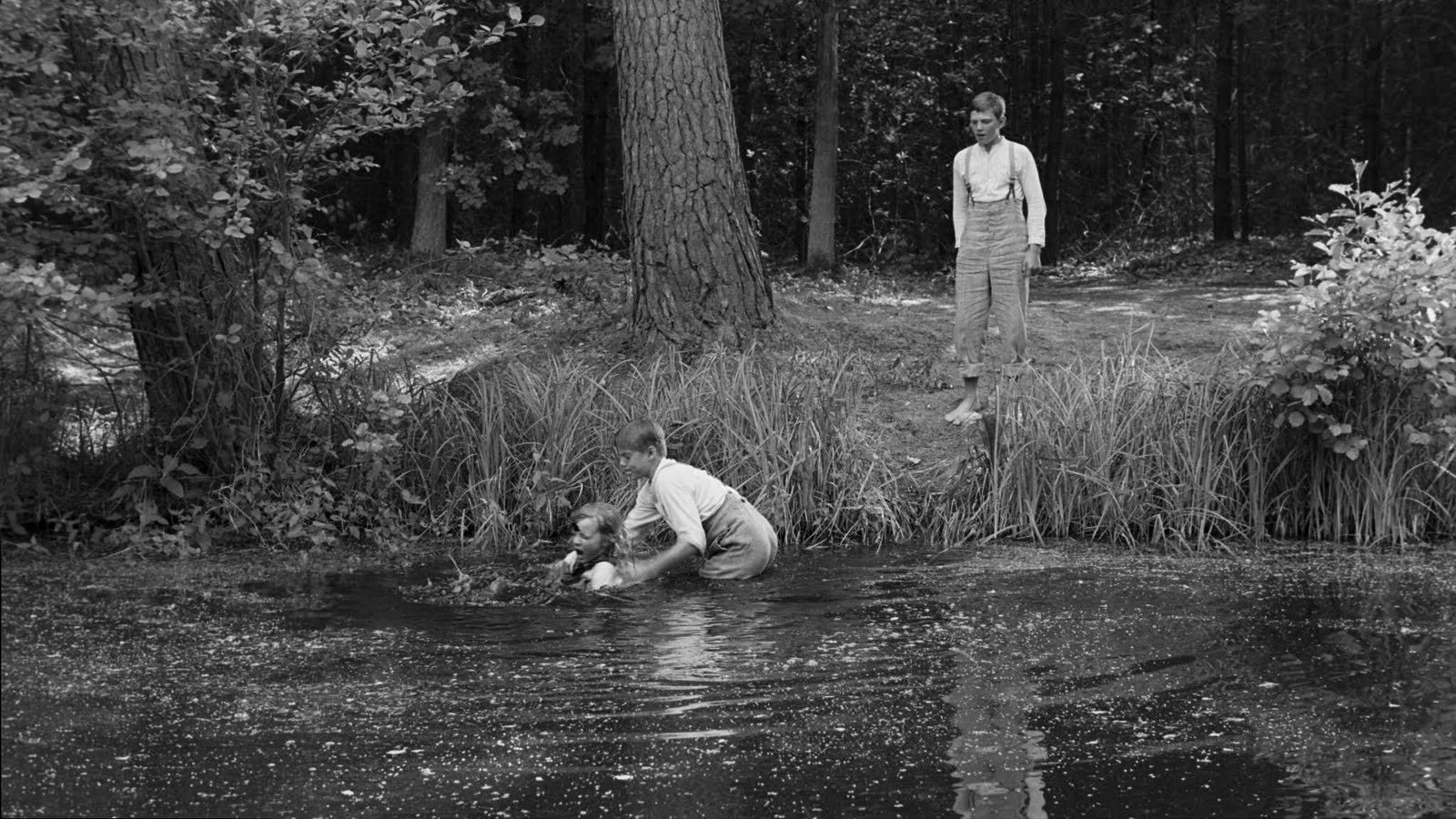
Burghart Klaußner’s pastor makes religious authority feel oppressive without requiring us to imagine a monster from outside the village. Ulrich Tukur’s baron occupies another part of the same hierarchy, and the performances give these positions a weight that an explanatory speech would struggle to supply. The children are especially unsettling because they make fear and obedience difficult to separate. We found ourselves watching them for evidence of what the adults had taught them, a suspicion Haneke encourages without making the young easy to read.

Monika Willi’s editing gives encounters time to become uncomfortable, and the deliberate pace usually works: we begin examining behaviour that a quicker mystery might hurry past. There are stretches, though, when Haneke seems to be confirming a judgement we have already made. Once the connection between humiliation and obedience is clear, another demonstration of adult cruelty does not always deepen it. We wanted a little less insistence here. The film’s control can make these people seem selected to prove a case, particularly when so many relationships return to fear.

The usual pleasure of a whodunit comes from narrowing the field of suspects. Haneke makes that habit feel inadequate in a village where respected adults already practise intimidation. The setting before the First World War encourages thoughts about the politics these children might grow up to accept, but taking them all as future fanatics would make the film too simple. The teacher and Eva are important here, because their tenderness also belongs to this community.

Give it an evening when nobody needs cheering up. The slow pace makes it tempting to divide your attention, but the faces need watching, especially the children’s. We would leave some time afterwards to talk about the parents.

Critical consensus AI synthesised

83
Positive
14
Mixed
3
Negative
0

Most critics respond warmly to The White Ribbon, praising Haneke’s control of a disturbing portrait of cruelty and authority in a German village before the First World War. Praise clusters around the black-and-white cinematography, detailed period reconstruction and performances, particularly those of the children. The reviews find the connections between adult repression and childhood behaviour unsettling and thought-provoking. Several also welcome the tenderness of the schoolteacher’s courtship, which offers some relief from the surrounding cruelty.

The reservations concern pace, bleakness and how much the unresolved mysteries give the audience to work with. Variety admires the craft but finds the film difficult to embrace because of its emphasis on human malice. The Hollywood Reporter praises its moral rigour while suggesting that the stately pace and restrained staging may limit its appeal. Enthusiasm varies considerably, though even the more qualified reviews find much to admire in the images and acting.

Little White Lies
13 November 2009 · 4/5/5 · Jonathan Crocker
100

The critic calls it one of the year's best films and potentially Haneke's masterpiece, noting its ambitious scope and accessibility. He singles out the director's control of form and the balance of menace with moments of sweetness in the schoolteacher's courtship.

Read the full review →
RogerEbert.com
13 January 2010 · ★★★★/4 · Roger Ebert
100

The film presents a series of unexplained malicious incidents in a pre-WWI German village that erode the social order without a clear culprit. Ebert praises Haneke's ability to embed profound questions about evil, authority, and freedom in the daily lives of ordinary people through masterful black-and-white visuals.

Read the full review →
Time Out
10 November 2009 · ★★★★★ · Dave Calhoun
100

The critic deems it a masterpiece and Haneke's least aggressive, most mature film, praising its sombre exploration of repression linking home and community. He singles out the faithful historical reconstruction and superb performances.

Read the full review →
The AV Club
30 December 2009 · A · Keith Phipps
95

Haneke's film inquires into the roots of evil through a deliberately paced, unnerving portrait of a German village before WWI. It shows how violence and hypocrisy spread from adults to the next generation without offering comfort in nostalgia.

Read the full review →
Slant Magazine
27 September 2009 · ★★★½/4 · Fernando F. Croce
88

The review praises Haneke's masterful yet rigid depiction of oppressive village life and the seeds of fascism through mysterious crimes and generational contamination. It singles out the filmmaker's rare respect for characters and flicker of humanism amid the dour worldview.

Read the full review →
Screen Daily
22 May 2009 · festival review
85*

The critic praises Haneke's artistry and control in this meticulously constructed tapestry of malice in a pre-WWI village. He singles out the rich detail, unerring modulation, and warm central character as boosting its arthouse prospects.

Read the full review →

Cast

Stills

Awards

Academy Awards, 2010

Nominated
Best Cinematography
Nominated
Best International Feature Film

Amanda Award for Best Foreign Feature Film, 2010

Won
Amanda Award for Best Foreign Feature Film

International Submission to the Academy Awards, 2010

Nominated
International Submission to the Academy Awards

Meeting Point Europe Award, 2010

Won
Meeting Point Europe Award

Cannes Film Festival, 2009

Won
Palme d'Or

European Film Award for Best Cinematographer, 2009

Nominated
European Film Award for Best Cinematographer

European Film Award for Best Director, 2009

Won
European Film Award for Best Director

European Film Award for Best Film, 2009

Won
European Film Award for Best Film

European Film Award for Best Screenwriter, 2009

Won
European Film Award for Best Screenwriter

If you liked this, try…

Caché poster88

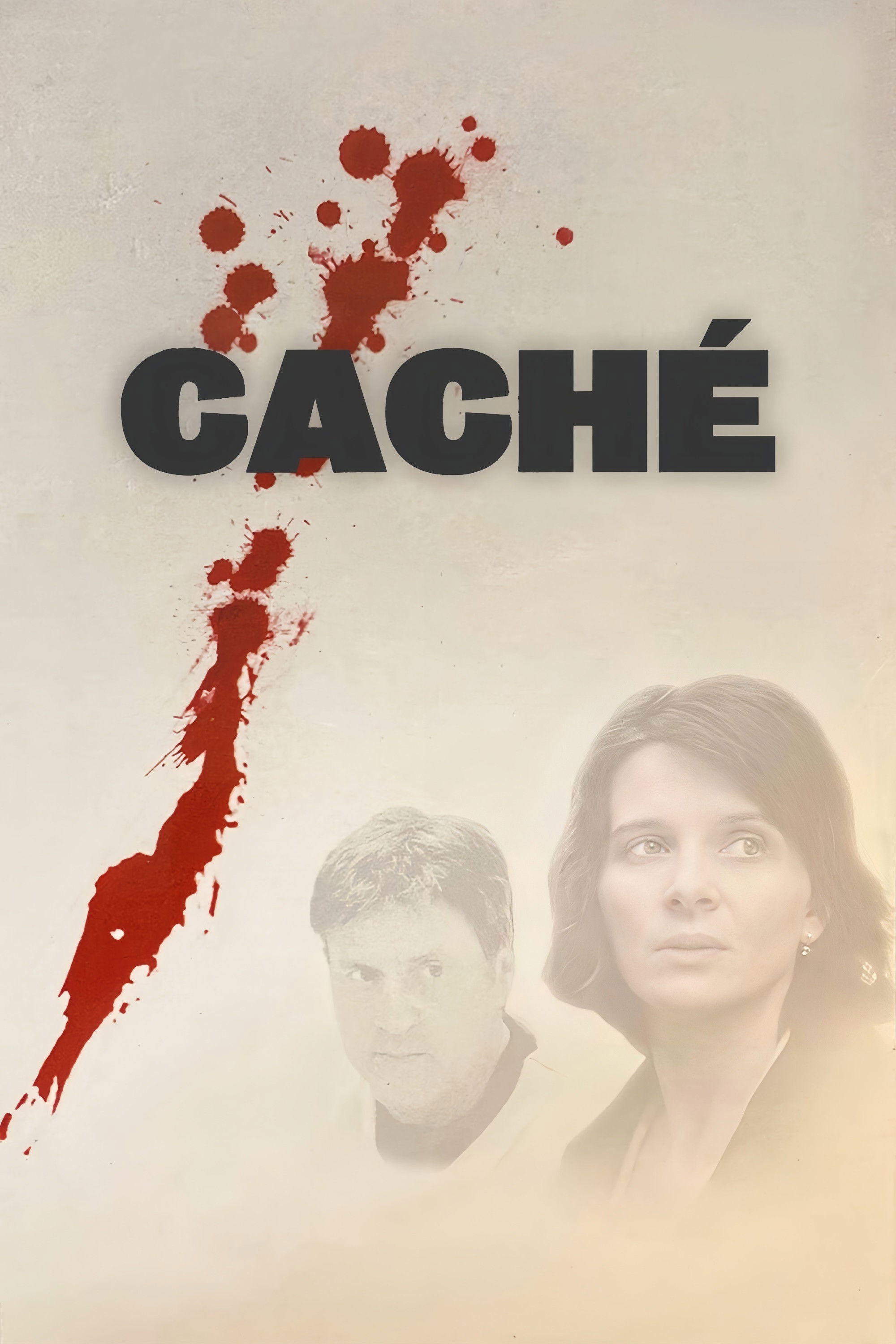
Caché

2005 · Haneke turns another respectable household into an uncomfortable place to examine guilt.

The Spirit of the Beehive poster

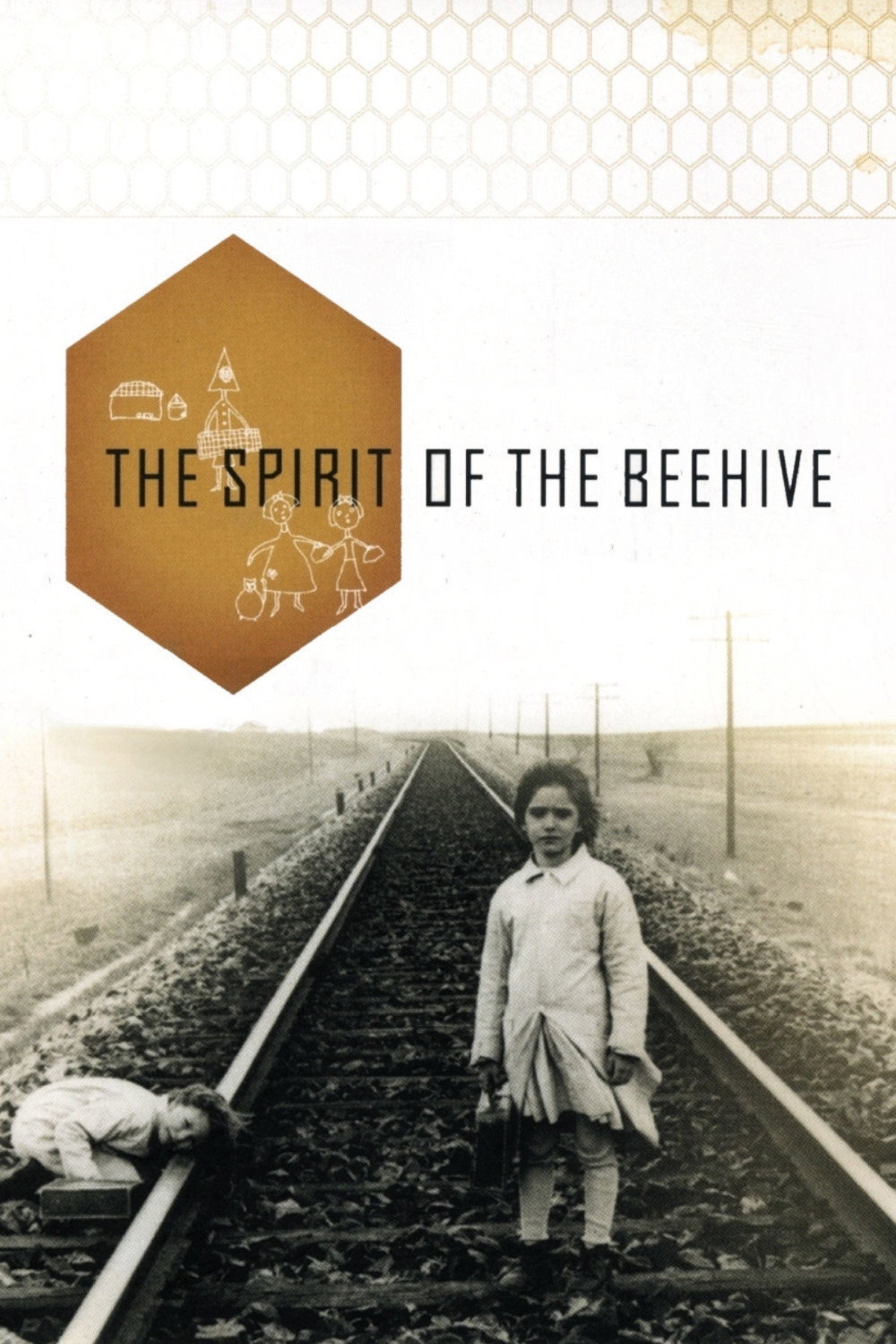
The Spirit of the Beehive

1973 · Another patient study of childhood, adult silence and the fears children inherit.

The Night of the Hunter poster

The Night of the Hunter

1955 · Religious authority becomes a child’s nightmare, photographed with a different monochrome boldness.

The Vanishing poster

The Vanishing

1988 · A quieter sort of menace, with an equally exacting interest in ordinary evil.

The Class poster

The Class

2008 · A classroom drama attentive to the everyday ways adults exercise power over children.