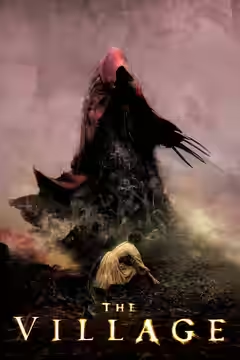
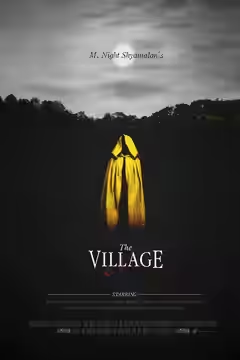
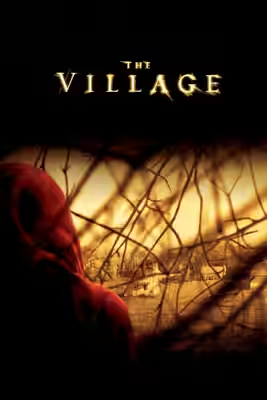
M. Night Shyamalan makes the village and its woods unsettling, with help from Roger Deakins and Bryce Dallas Howard. The storytelling is much less persuasive, making this worth considering for its atmosphere rather than its handling of the mystery.
M. Night Shyamalan’s The Village is worth considering for its atmosphere and Bryce Dallas Howard’s performance, with substantial reservations about the story. It takes an isolated settlement, the woods beyond it and the fear shared by its inhabitants, and treats each with sustained seriousness. That approach suits a mystery in which the prospect of entering the forest is troubling enough. Across 108 minutes, though, the director asks the mood to carry more than it can reasonably bear.
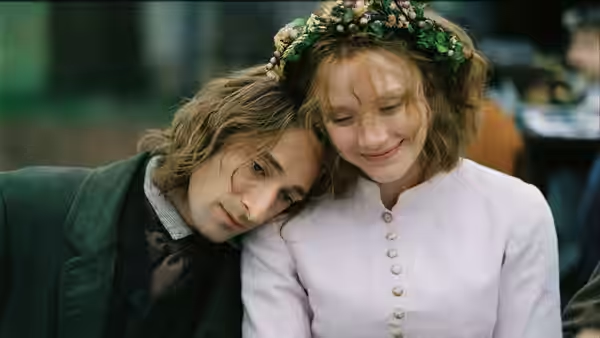
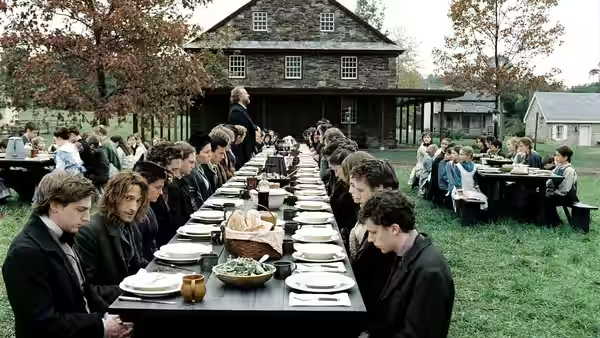
The opening interest lies in the community itself, whose ordinary customs become uncomfortable under this degree of scrutiny. The director, who also writes the screenplay, understands how communal life can become oppressive. The villagers’ routines are troubling because their familiarity does so little to make the place welcoming. Fear has become part of how these people live together, and for a while, watching them is enough to sustain our interest in the settlement.
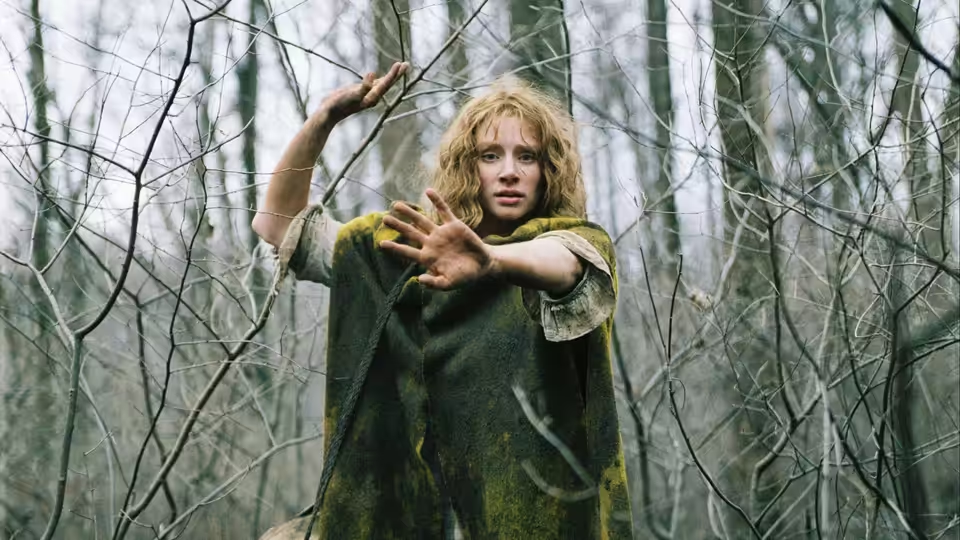
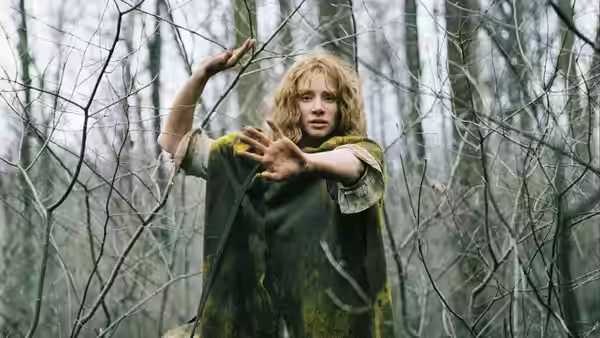
Roger Deakins’s cinematography is the strongest reason to stay, particularly in the night scenes. The framing keeps our attention on what might be outside the image, allowing unseen space to do some of the work that a less patient thriller would assign to an attack. We were unnerved by what we could not see, and caught ourselves searching the edges of the image. The director knows when to hold back, and the photography gives that restraint a purpose. We can study what is visible without feeling that we have been allowed a reassuringly complete view.
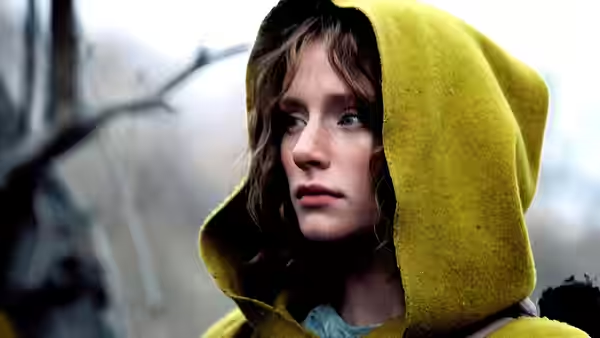
Tom Foden’s production design gives the communal setting enough solidity to support that unease; the village remains interesting even when its inhabitants are merely going about their lives. The significance attached to colour makes the fear legible, though the insistence becomes rather heavy. James Newton Howard’s score helps maintain the film’s solemn mood, but offers too little relief from it. There are passages when we wish the film would let this place feel ordinary for a moment.
Bryce Dallas Howard, playing Ivy Walker, supplies a vulnerability that cuts through much of the ceremony. Her performance gives us someone to care about when the mechanics of the mystery threaten to occupy all our attention. The dialogue is less helpful, asking the cast to sustain a mannered formality that can make a simple exchange feel like a public declaration. The seriousness becomes tiring when every conversation seems to require the same careful handling.
Christopher Tellefsen’s editing gives the suspense time to build, and that patience pays off while uncertainty is doing the work. Once the story asks for a different kind of attention, its contrivances are harder to overlook. Without describing where it goes, the problem is that the explanations invite practical questions which the film has done too little to answer. The director has exercised such close control over what we see that the less convincing reasoning behind it feels careless.
A woodland thriller can survive a fair amount of implausibility when the fear stays immediate. This one puts too much weight on making us reconsider what we have watched, and invites scrutiny it cannot withstand. There is still enough here for viewers who enjoy a slow, solemn mystery and can tolerate some strained plotting. Choose it for the unease, and be prepared to do some forgiving.