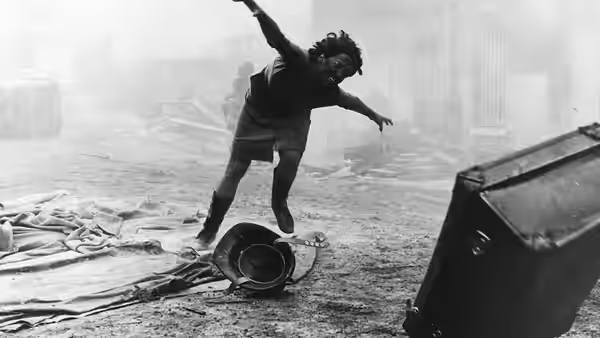
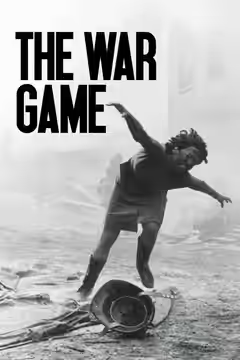
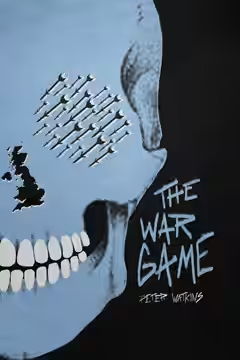
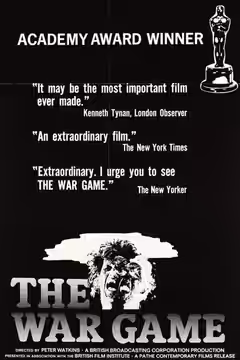
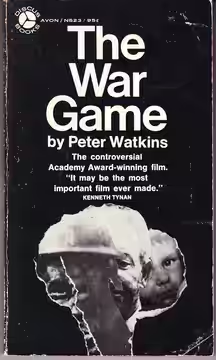
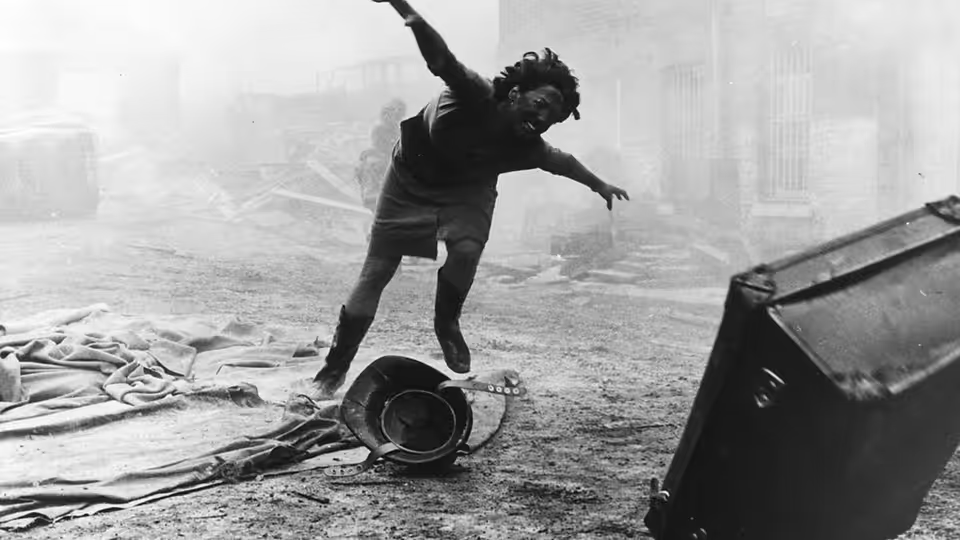
A person staggers with arms outstretched among debris in a devastated street
Film review

The War Game

1966 · Directed by Peter Watkins · 48m

In a sentenceThe bomb falls on Kent and the newsreader keeps his voice level, as if reading the shipping forecast

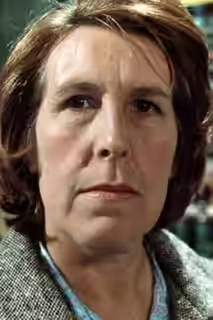
Kent, in a near future the film does not date. A commentator (Michael Aspel) reports that the crisis over Berlin has turned into a shooting war, and the government orders the evacuation of women and children from London. Coaches arrive in Rochester and the towns around it; householders are told how many strangers they must take in, and some refuse. A second commentator (Peter Graham) reads figures on blast radius and shelter space while a reporter stops people in the street to ask what they know about fallout. One woman (Kathy Staff) does not know; almost nobody does. A schoolmaster (Dave Baldwin) puts questions to his class. Then the sirens go, a family tips its dining table against the wall, and a Soviet missile detonates in the air over the county.

Plays from YouTube when you press play; nothing loads from them until then.

Fi1m review

Peter Watkins’s staged newsreel of a nuclear attack on Kent lasts 48 minutes and we would send anyone to it. The argument hectors in places and the politics belong to their moment; the images do not, and they have not aged a day.

The War Game is 48 minutes long, was made for BBC television, and reached British cinemas on 13 April 1966 because the corporation decided it could not be broadcast. It stayed off British television for nearly twenty years. Peter Watkins wrote, produced and directed it as a documentary about something that has not happened: a Soviet nuclear strike on Kent, seen from the pavements of Rochester. We have watched a great many films about the bomb since. None has frightened us more, and we would send a stranger to this one before any of them.

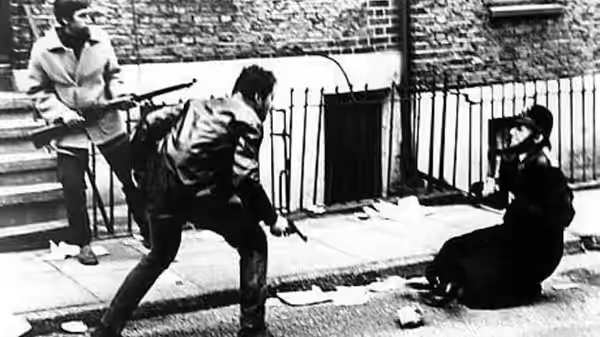
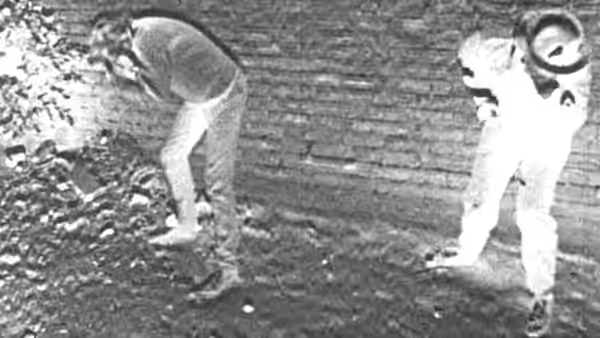
The method is the whole point. Peter Bartlett shoots on grainy black and white with the camera on his shoulder, the way news crews of the period shot riots and floods, and he lets the frame shake when the shockwave arrives. Michael Aspel and Peter Graham read the commentary in the level tones of the evening bulletin, with figures on blast radius, shelter spaces and the number of doctors per thousand casualties. Michael Bradsell cuts between three kinds of material: the staged newsreel, street interviews with real people in Kent, and captions quoting bishops, civil defence pamphlets and American strategists. Because two of the three are true, we believe the third.

The street interviews are the quiet horror. A reporter asks passers-by what strontium-90 is and what they would do in an attack, and they answer honestly, which is to say they have no idea. Kathy Staff is one of them, uncredited, a woman in a headscarf who has been given nothing to go on by anyone in authority. The film then shows what would happen to her street. Anne Davey and Tony Cornell dress ordinary terraces with rubble and blackened timber, and Vanessa Clarke puts white dust on every coat and pinny, so that the cast look like neighbours rather than extras.

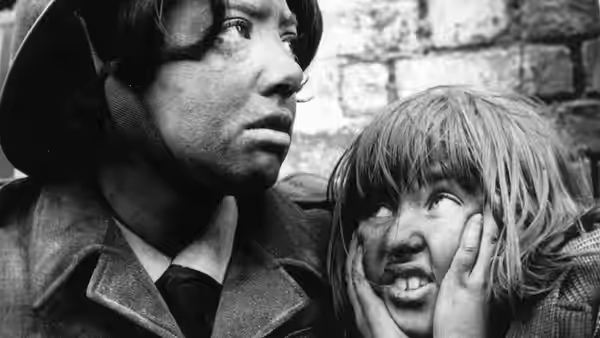
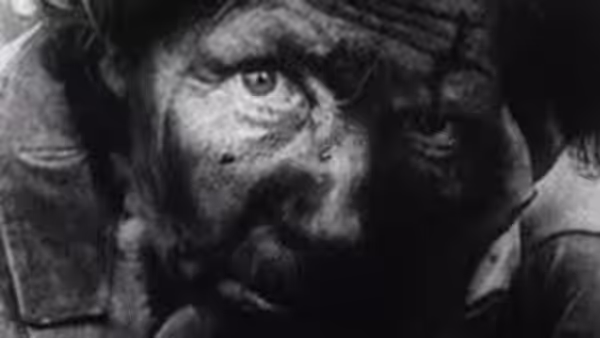
We were horrified, and we know exactly by what. A family upends its dining table against the wall for shelter, as the leaflets advised, and the flash comes through the window anyway. A fireman is knocked flat by the wind of the firestorm. Children stand in a row with ash on their faces and eyes that do not focus, and a schoolmaster (Dave Baldwin) asks them what they want to be when they grow up. The answers are the worst thing in the film and we will not repeat them. Watkins is working with a cast largely of non-professionals, and the flatness of their voices is what makes it unbearable. Nobody is acting.

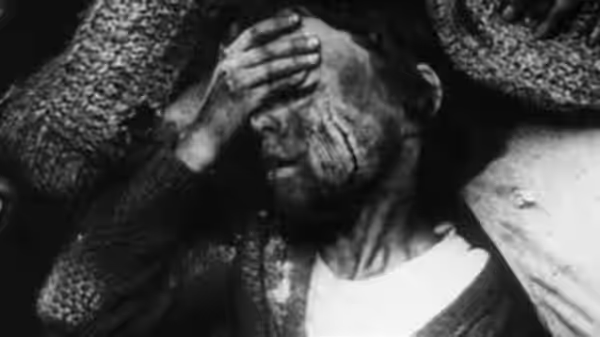
It is not without faults, and they are the faults of a man who has done his reading and wants us to know it. The captions hector. Watkins sets the soothing words of churchmen and civil defence pamphlets beside a burned face and lets the cut do the arguing, and he does this more than once. The commentary’s statistics run together after a while. The set-up, a shooting war over Berlin with China moving in Vietnam, fixes the film to its moment in a way the images never do. There are stretches where it is a lecture with pictures rather than a drama, which is why the one mixed review we have read calls it essential and still gives it middling marks.

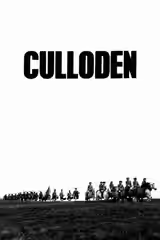
Watkins had used the same method on Culloden two years earlier, reporting a battle of 1746 as if a camera crew had been there, and Threads (1984) would borrow it wholesale at more than twice the length. This is the shorter and the harder film. Most critics rate it highly and we rate it higher still; the dissent finds the politics dated, and they are, but the politics are not what stays with you. It carries a 12 certificate, which seems to us optimistic. Do not put it on before bed, and do not put it on for a child, whatever the certificate says. Forty-eight minutes, and we needed the rest of the evening to get over them.

Critical consensus AI synthesised

79
Positive
6
Mixed
1
Negative
0

The critics are in broad agreement that Peter Watkins’s film still works. Most call it grim, horrifying and necessary, and the praise clusters on the same thing: the newsreel manner, the documentary techniques that make an imagined nuclear attack on Britain look like something a camera happened to record. Several single out the research behind it and the discipline of Watkins’s direction, and critics writing decades apart return to the same pictures of social collapse and ash-covered schoolchildren, which they find they cannot shake.

The spread is narrow, running from warm to unreserved, and nobody dismisses it. The one qualified voice is Slant Magazine, which rates it more modestly than the rest while still calling it an essential warning about war and the officials who withhold the truth; the reservation is one of degree rather than kind. Some of the older notices are more concerned with the film’s history with the BBC than with the film itself, so the consensus rests on fewer detailed verdicts than the count suggests.

Time Out
20 September 2012 · ★★★★★ · Tom Charity
100

Charity gives the film five stars, signaling an emphatically positive verdict. The available excerpt mentions Watkins’s proposals to the BBC but does not reveal what the review specifically singles out for praise.

Read the full review →
The New York Times
14 September 1966 · festival review
90*

The headline presents the film as one of two notable festival achievements. The inaccessible article text prevents identifying what the critic specifically praised.

Read the full review →
Radio Times
★★★★ · Adrian Turner
80

Turner regards the film as powerful and nightmarish. He praises its documentary-style techniques for making the imagined nuclear aftermath feel immediate.

Read the full review →
Sight and Sound
· Frances Morgan
75*

Morgan presents the film as a still-powerful and unsettling vision of nuclear catastrophe. She singles out its bleak portrayal of social collapse, which remains raw despite the passage of time.

Read the full review →
Variety
31 December 1965 · Variety Staff
75*

The critic calls the film grim and horrific but says it deserves to be shown as widely as possible. They praise Watkins’s imaginative direction, grounded in considerable research.

Read the full review →
The Guardian
· Peter Lennon
70*

The framing is positive, suggesting Watkins is finally receiving overdue recognition. It singles out the film’s Oscar win and suppression by Downing Street, but gives no detailed critical verdict in the available text.

Read the full review →

Straight answers AI written, from our review

Is The War Game worth watching?
The War Game is worth watching for anyone who can bear 48 minutes of staged newsreel showing a nuclear strike on Kent, and we scored it 90. Peter Watkins's method, real street interviews cut against a fictional attack, has not aged, though the captions hector and the Cold War set-up belongs to 1966. We needed the rest of the evening to recover.
How long is The War Game, and what is it rated?
The War Game runs 48m. It is a war and tv movie film.
Where can I watch The War Game in Denmark?
The War Game is not on any streaming or rental service in Denmark at the moment. It is available in 1 other country; change your country at the top of the page to see where. Availability is checked daily.
How violent or frightening is The War Game, and is it suitable for children?
The War Game carries a UK 12 certificate, which we think is optimistic, and we would not show it to a child. There is no gore in the modern sense, but children with ash on their faces and eyes that do not focus, a family sheltering under a tipped-up table as the flash arrives, and firestorm casualties frightened us more than any other film about the bomb. Not before bed.
How does The War Game compare to Threads?
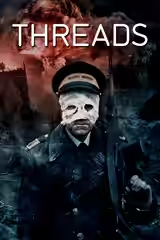
The War Game is the shorter and harder film beside Threads, which borrowed Watkins's newsreel method eighteen years later and stretched it to more than twice the length. Threads spends its extra time building ordinary Sheffield lives before destroying them; The War Game offers 48 minutes with no such cushion. Watch Threads for drama, The War Game for the shock, and neither on a night you need to sleep.
What should I watch after The War Game?
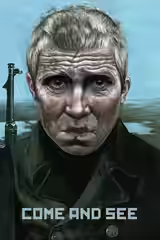
After The War Game, try Threads (1984, Fi1m 92): Sheffield gets the bomb; Watkins’s method stretched to two hours and no less bleak. Then Come and See (1985, Fi1m 92): A Belarusian boy in 1943; the most honest film about war we know; and Dr. Strangelove (1964, Fi1m 93): The same catastrophe played as farce, and only slightly less frightening for it.

Cast

Awards

Academy Awards, 1967

Won
Best Documentary Feature Film

If you liked this, try…

  1. Threads (1984, Fi1m 92)Sheffield gets the bomb; Watkins’s method stretched to two hours and no less bleak.

  2. Culloden (1964) · not on Fi1m yetWatkins takes a news crew to 1746 and finds the same flat, frightened faces.

  3. Come and See (1985, Fi1m 92)A Belarusian boy in 1943; the most honest film about war we know.

  4. Dr. Strangelove (1964, Fi1m 93)The same catastrophe played as farce, and only slightly less frightening for it.

  5. Grave of the Fireflies (1988, Fi1m 94)Two children after the firebombing of Kobe; animated, and it does not spare you.