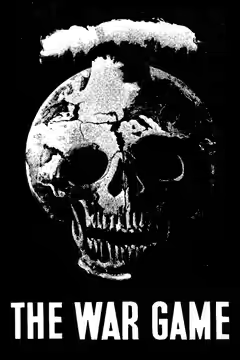
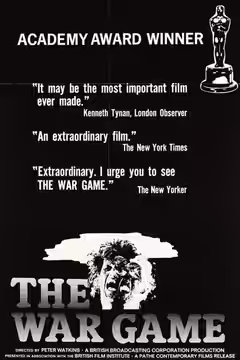
Peter Watkins’s staged newsreel of a nuclear attack on Kent lasts 48 minutes and we would send anyone to it. The argument hectors in places and the politics belong to their moment; the images do not, and they have not aged a day.
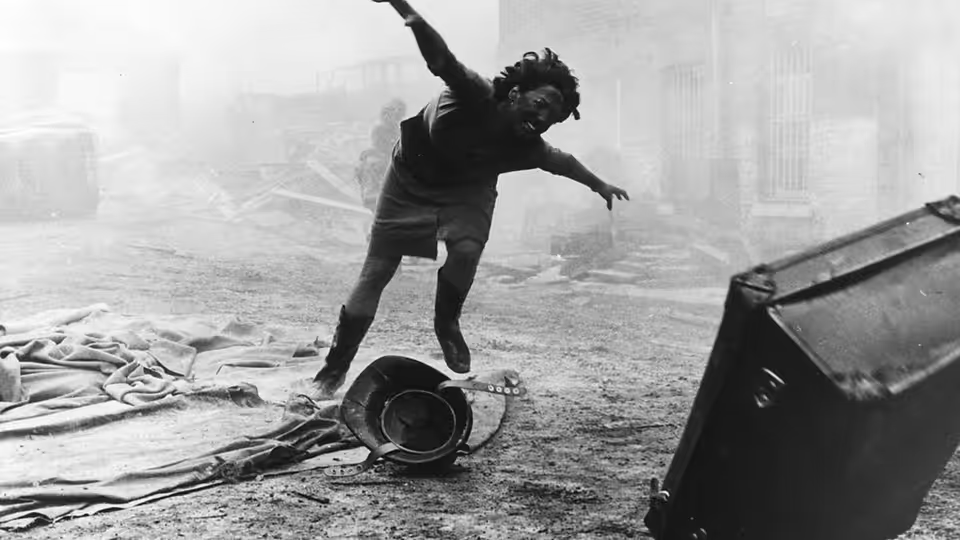
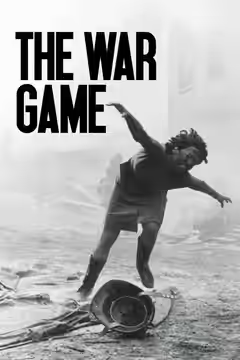
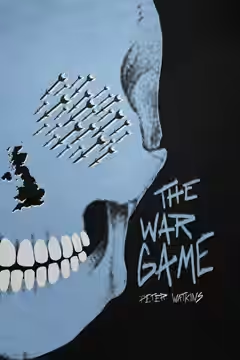
The War Game is 48 minutes long, was made for BBC television, and reached British cinemas on 13 April 1966 because the corporation decided it could not be broadcast. It stayed off British television for nearly twenty years. Peter Watkins wrote, produced and directed it as a documentary about something that has not happened: a Soviet nuclear strike on Kent, seen from the pavements of Rochester. We have watched a great many films about the bomb since. None has frightened us more, and we would send a stranger to this one before any of them.
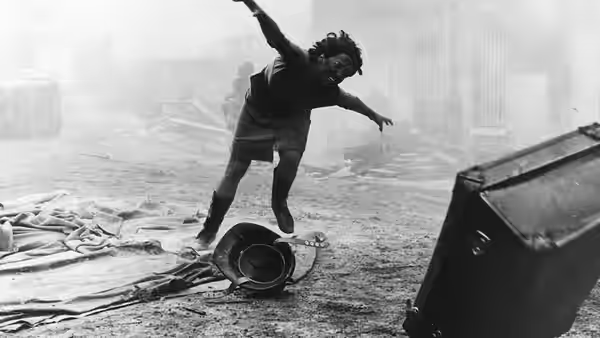
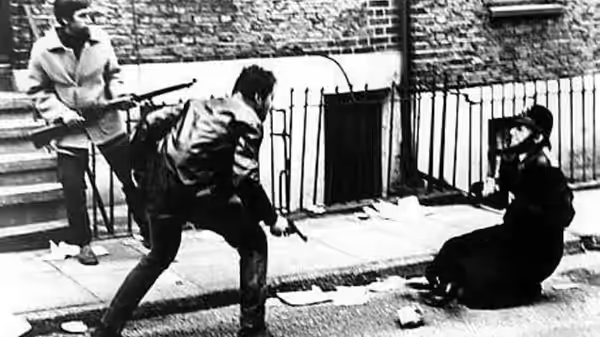
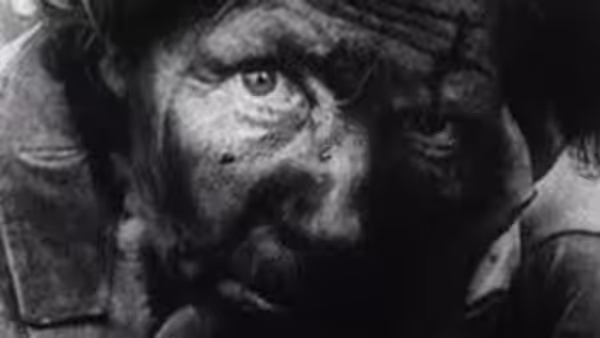
The method is the whole point. Peter Bartlett shoots on grainy black and white with the camera on his shoulder, the way news crews of the period shot riots and floods, and he lets the frame shake when the shockwave arrives. Michael Aspel and Peter Graham read the commentary in the level tones of the evening bulletin, with figures on blast radius, shelter spaces and the number of doctors per thousand casualties. Michael Bradsell cuts between three kinds of material: the staged newsreel, street interviews with real people in Kent, and captions quoting bishops, civil defence pamphlets and American strategists. Because two of the three are true, we believe the third.
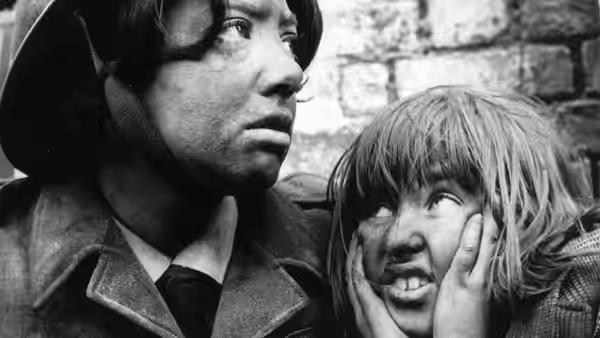
The street interviews are the quiet horror. A reporter asks passers-by what strontium-90 is and what they would do in an attack, and they answer honestly, which is to say they have no idea. Kathy Staff is one of them, uncredited, a woman in a headscarf who has been given nothing to go on by anyone in authority. The film then shows what would happen to her street. Anne Davey and Tony Cornell dress ordinary terraces with rubble and blackened timber, and Vanessa Clarke puts white dust on every coat and pinny, so that the cast look like neighbours rather than extras.
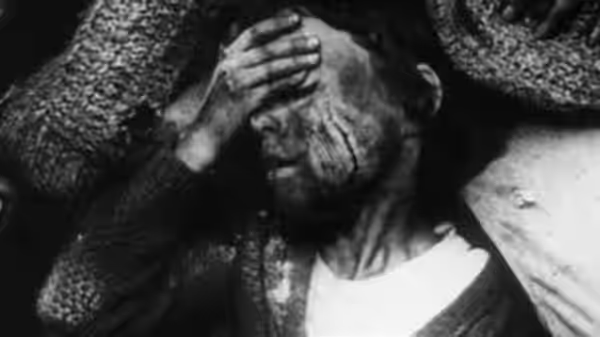
We were horrified, and we know exactly by what. A family upends its dining table against the wall for shelter, as the leaflets advised, and the flash comes through the window anyway. A fireman is knocked flat by the wind of the firestorm. Children stand in a row with ash on their faces and eyes that do not focus, and a schoolmaster (Dave Baldwin) asks them what they want to be when they grow up. The answers are the worst thing in the film and we will not repeat them. Watkins is working with a cast largely of non-professionals, and the flatness of their voices is what makes it unbearable. Nobody is acting.
It is not without faults, and they are the faults of a man who has done his reading and wants us to know it. The captions hector. Watkins sets the soothing words of churchmen and civil defence pamphlets beside a burned face and lets the cut do the arguing, and he does this more than once. The commentary’s statistics run together after a while. The set-up, a shooting war over Berlin with China moving in Vietnam, fixes the film to its moment in a way the images never do. There are stretches where it is a lecture with pictures rather than a drama, which is why the one mixed review we have read calls it essential and still gives it middling marks.
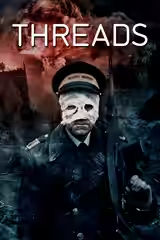
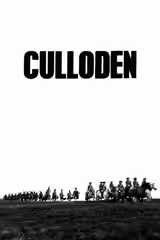
Watkins had used the same method on Culloden two years earlier, reporting a battle of 1746 as if a camera crew had been there, and Threads (1984) would borrow it wholesale at more than twice the length. This is the shorter and the harder film. Most critics rate it highly and we rate it higher still; the dissent finds the politics dated, and they are, but the politics are not what stays with you. It carries a 12 certificate, which seems to us optimistic. Do not put it on before bed, and do not put it on for a child, whatever the certificate says. Forty-eight minutes, and we needed the rest of the evening to get over them.