The Wind Will Carry Us makes a quietly funny, absorbing drama from outsiders and a remote village. Abbas Kiarostami’s patience is mostly repaid, though the repetitions occasionally make the watching feel like work.
The Wind Will Carry Us is funny, humane and worth the attention it demands, with a reservation about how often it asks us to wait. Abbas Kiarostami builds his drama around the uneasy dealings between outsiders and the inhabitants of a remote village. He gives ordinary activity room to continue without immediately explaining its importance, allowing us to become interested before telling us why we should be. At 118 minutes, that is a substantial request, but usually a rewarding one.
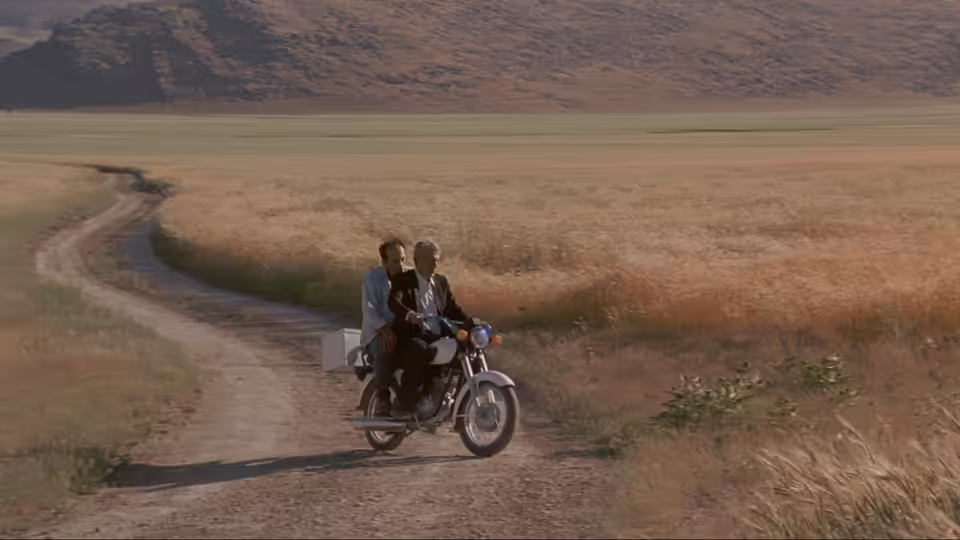
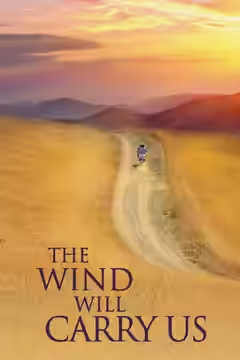
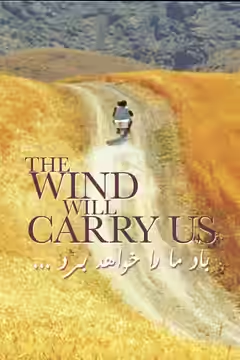
The opening long shot follows a car across a dusty landscape. We relaxed as it travelled through the frame: there was time to look at the country around it without worrying about the next event. Mahmoud Kalari’s landscape photography works because the countryside remains worth looking at even when the story appears to have paused. His carefully composed views establish the village and its surroundings as places deserving attention independently of whatever the visitors have come to do.
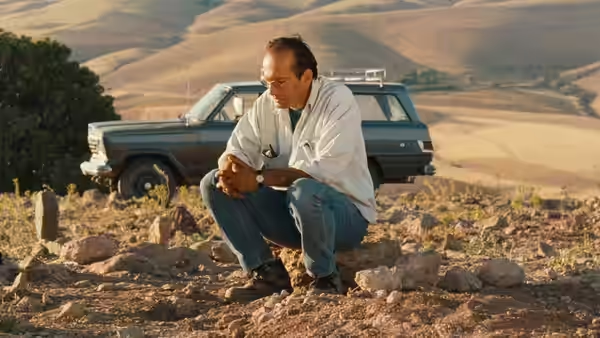
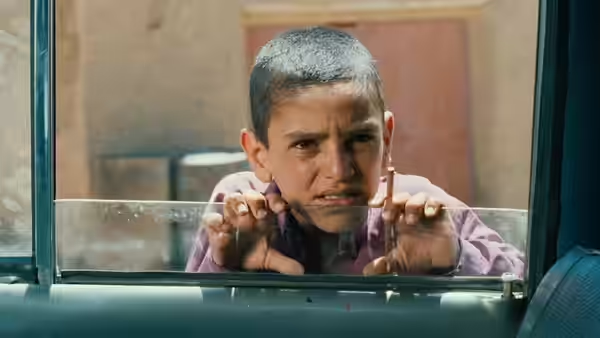
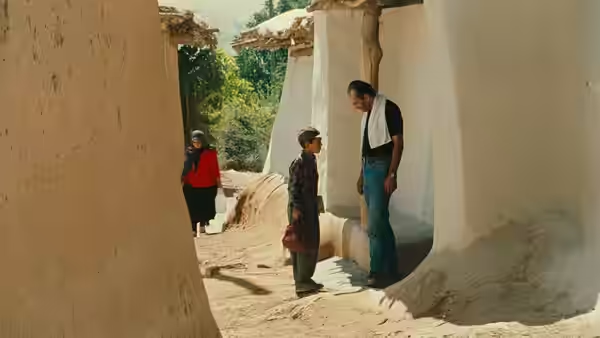
Behzad Dorani’s Behzad gives us someone to watch without settling the question of what we should make of him. That uncertainty helps the comedy, since we cannot simply adopt his attitude towards each encounter and assume he is right. The awkwardness between the sophisticated arrivals and the villagers is funny without making the community itself a quaint attraction. Kiarostami allows these exchanges to remain uncomfortable, and the inhabitants to retain interests beyond accommodating their visitors.
Much of the film’s curiosity comes from people and events kept outside the frame. We have to listen, notice what we have not been shown and decide how much weight to give the information available. Kiarostami, who also edits, allows those gaps to stand rather than supplying a reassuring view of everything being discussed. This can be absorbing, although anyone who needs each scene to deliver a definite answer will have a difficult evening.
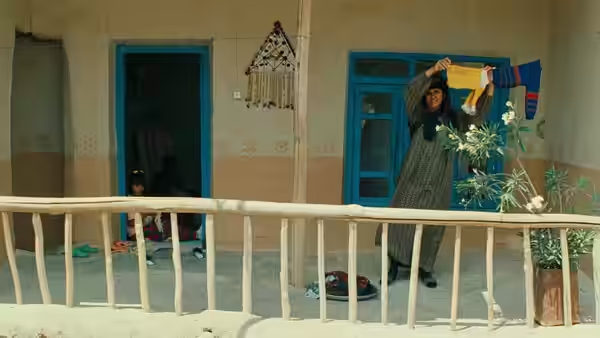
Peyman Yazdanian supplies the music, while the detailed sound gives the village a life beyond the composed images. People do not cease to matter merely because the camera cannot see them, and the attention paid to what remains off-screen helps us remember that. Kalari’s photography offers ample opportunity to admire the countryside, but the sound encourages us to stay interested in its inhabitants. That makes a difference in a film which spends so much time looking at the place.
The weakness is repetition, and there are stretches when watching daily life becomes simply waiting for the film to move. Kiarostami’s editing does not always make another delay feel necessary, particularly once we have understood how deliberately he is withholding information. The unanswered questions can begin to seem more important than the encounters themselves. These are real irritations in a film asking for close attention, though the humour and interest in the villagers generally bring us back.
Within contemplative drama, that humour is a considerable virtue. Kiarostami does not demand that every view of the countryside be received in reverent silence, and the visitors’ awkwardness gives us something familiar to respond to. The concern with life and death grows from this attention to ordinary behaviour, rather than requiring everyone to speak solemnly about it. Give it an evening when watching other people’s daily lives sounds like enough.