Orson Welles makes a police captain frightening enough to justify this crime thriller’s excesses. The plotting can feel manufactured, but the restless camerawork and crowded conversations keep it tense, strange and worth the occasional confusion.
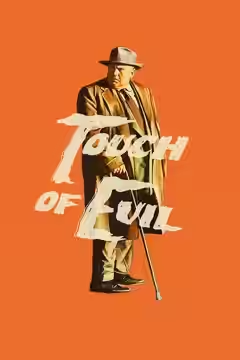
Orson Welles makes Touch of Evil a gripping crime thriller by giving its police captain so much force that the other characters can seem secondary. We recommend it, with a reservation about the conspicuously arranged plotting. The film wants the freedom to be strange, overheated and occasionally difficult to follow, and mostly earns it. What holds our attention is the suspicion that official power has become inseparable from one man’s vanity. Quinlan is alarming company even before we try to work him out.
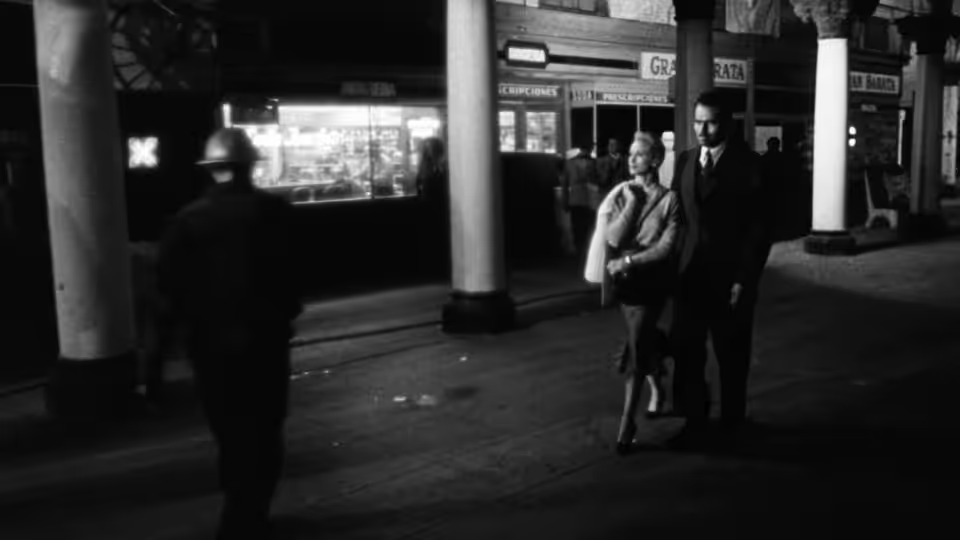
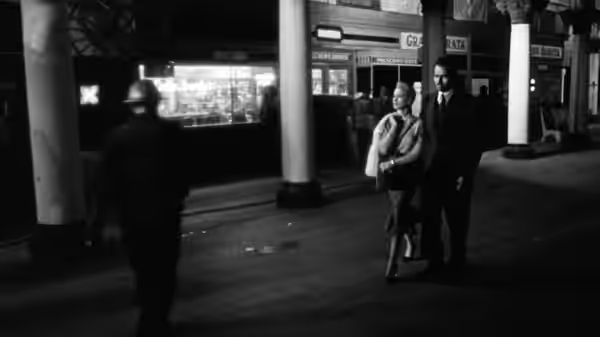
Russell Metty’s cinematography is crucial to that unease. The opening tracking shot holds our attention through sustained movement, and its length makes us conscious of how much a cut would let us relax. We felt tense because the camera kept moving without giving us that release. It is showy work, certainly, but the movement has a clear dramatic purpose. The expressionistic photography gives the film a feverish quality without making the people in it seem less dangerous.
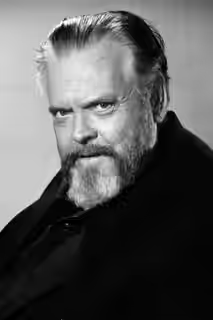
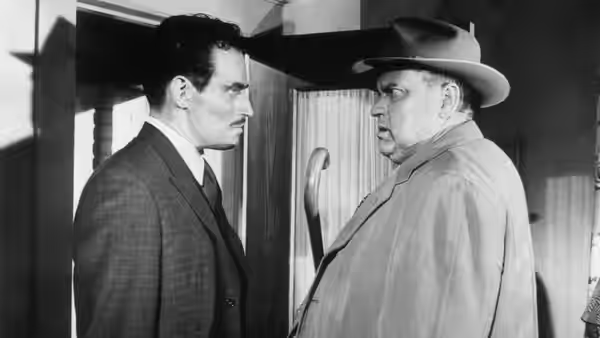
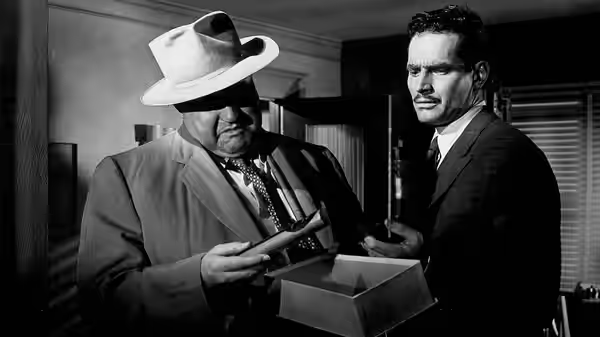
Orson Welles, playing Police Captain Hank Quinlan, is equally unwilling to disappear politely into the story. The performance is broad enough to risk becoming an attraction in its own right, yet its force makes the captain’s authority believable. We can understand why other people might find him difficult to resist without being asked to excuse him. He is disturbing partly because he does not seem to need our approval. The film lets him be compelling without tidying him into a reassuringly simple villain.
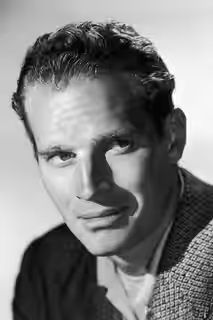
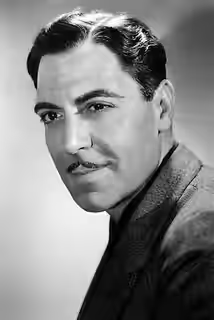
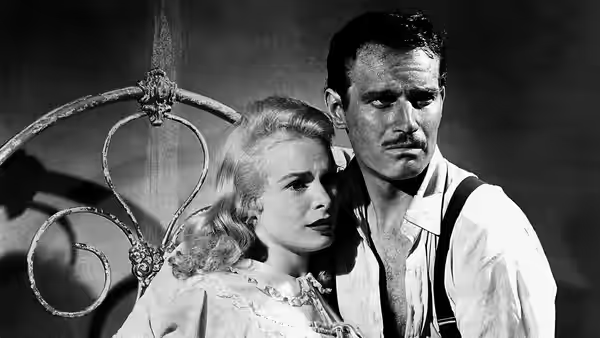
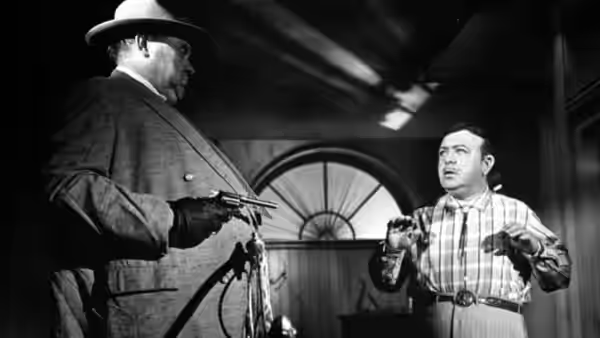
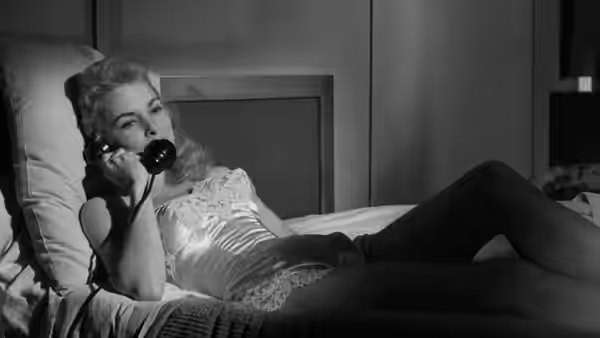
Charlton Heston, as Ramon Miguel Vargas, has a less rewarding part, and Janet Leigh’s Susan ‘Susie’ Vargas cannot quite compete for our attention either. This is a cost of giving Quinlan so much room, rather than a failure of either performer. The supporting characters fare better because their eccentricity suits the film’s crowded, unsettled manner. Joseph Calleia’s Police Sergeant Pete Menzies and Akim Tamiroff’s ‘Uncle’ Joe Grandi make substantial impressions despite having less room than the leads. These performances help keep the film interesting when the mechanics of the story become too apparent.
The overlapping dialogue demands proper listening and makes the exchanges feel more contentious than orderly speeches would. The editing credited to Virgil W. Vogel and Aaron Stell contributes to that abrasive rhythm, though the bustle sometimes makes the plotting harder to follow. Henry Mancini’s music suits a thriller this emphatic, although the revised opening gains from leaving it out. There, the camera sustains the tension without a score pressing the point. The restraint is welcome in a film that otherwise finds so much pleasure in excess.
The screenplay, also by Orson Welles, is less persuasive when it needs us to accept another carefully placed complication. Some of the contrivances are hard to ignore, and admiring the photography does not make them convincing. Yet this is noir with a welcome interest in troublesome people, rather than merely in moving suspects into position. Its tension survives the untidy storytelling because the performances give us something more absorbing to consider than the next piece of information. Give it your attention, especially when several people are talking at once.