W. S. Van Dyke took a crew to Africa and came back with lions, rivers and herds no set could fake, wrapped around a story that barely exists. Remarkable as a record, hard going as a film, and uneasy company today.
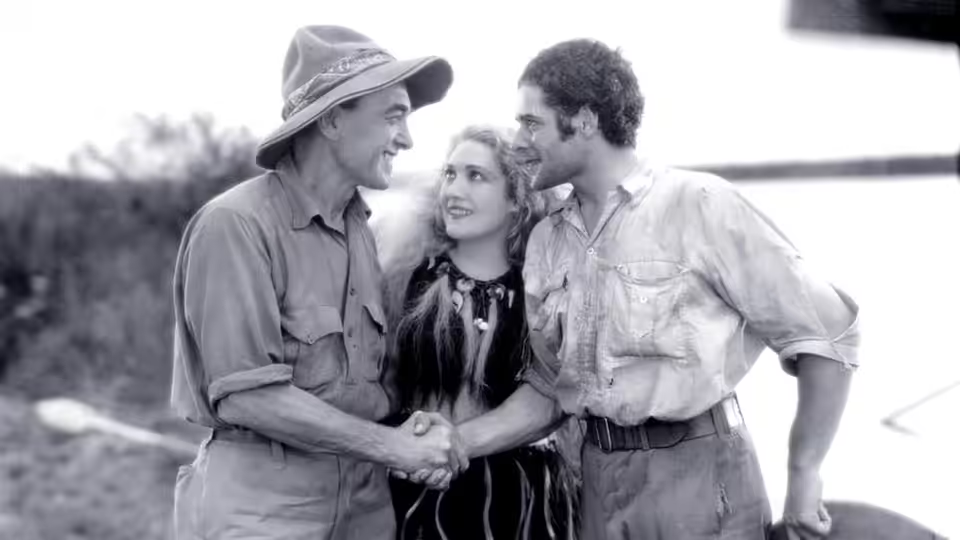
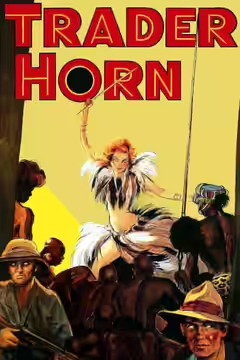
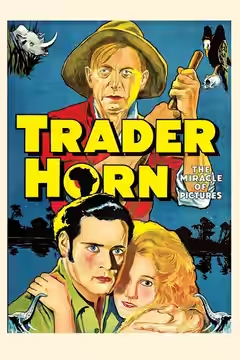
W. S. Van Dyke took his actors and his cameras to Africa to make Trader Horn, and the studio sold the result under the line “The Miracle of Pictures”. The miracle it means is the footage: lions on a real plain, hippos surfacing beside a real boat, people in real villages who had plainly never been told where to look. Around all that, Richard Schayer and Dale Van Every hang a story from Ethelreda Lewis’s book about an old trader, a young greenhorn and a missing girl. The footage is extraordinary and the story is barely there, and for 122 minutes the film asks us to sit through the second for the sake of the first. We can admire it. We cannot recommend it to anyone who is not already curious about how films were made in 1931.
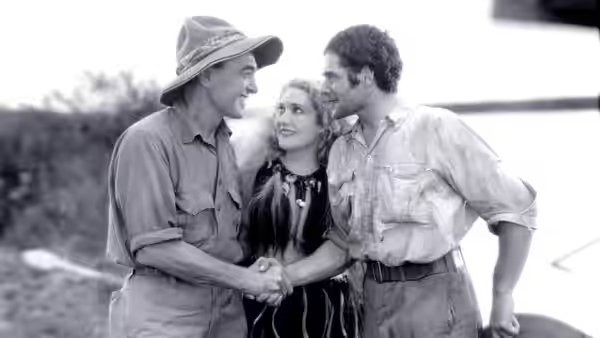
Clyde De Vinna’s camera does the work that matters. He shoots from the deck with the sun behind him, so the hippos come up black against silver water, and he holds on a herd of giraffe crossing the frame for far longer than a sound-era editor would normally permit. The lion sequences are the reason the film was talked about, and they still hold: the animals are close, the men are visibly frightened, and there is nothing in the frame to tell you anyone is safe. We sat up when the first lion walked into shot and did not sit back for some minutes. Ben Lewis then has to marry this to studio scenes of Carey and Renaldo standing in front of it, and the seams show. When Horn points at a rhinoceros, the rhinoceros is somewhere else and the light is a different colour.
The sound is the other novelty. There is almost no music; what you hear instead is water, birds, the boat’s engine and drums, and the drums are the best thing in the picture. They start when the party moves into hostile country and they do not stop, and after twenty minutes of them we understood why the characters had begun to look ill. Irving Thalberg’s production spent its money on getting these things onto the track, and it shows in every scene that is not a conversation.
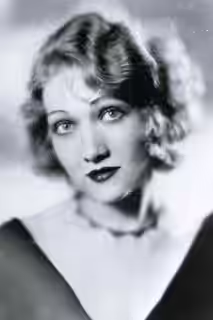
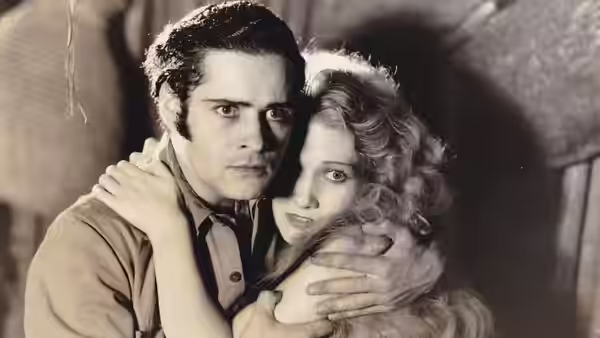
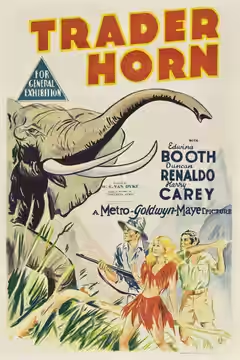
Harry Carey is the best reason to keep watching. He plays Horn as a man who has been out here so long he has stopped noticing danger, and he underplays every line, which in 1931, when most actors were still shouting at the microphone, counts for a good deal. Mutia Omoolu, as Rencharo, is given more to do than the script deserves and is quietly the second-best thing in it; the loyalty between the two men is the only relationship the film bothers to make real. Duncan Renaldo’s Peru is a decent young man in a hat. Olive Carey has one good scene of stubbornness. Edwina Booth, as Nina, is asked to snarl, run and be stared at, and does all three; the part gives her nothing else.
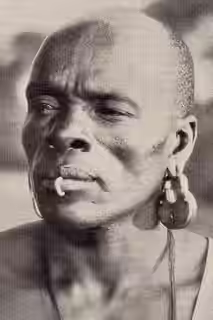
The trouble is what the film thinks it is looking at. Its Africans are scenery, threats or servants, and the camera lingers on bodies and dancing with the same appetite it brings to the wildebeest. We were uneasy early and angry by the end, and the moment that did it was small: a village filmed going about its own business, cut against a line from Horn about savages, as though the footage were proof. That is where the word “miracle” stops fitting.
The reviews from 1931 were warm, and the few we have read rate it well above where we do. They were right about what they saw: nobody had brought this much of Africa back to a screen, and the danger was not faked. But they were reviewing a novelty, and the novelty has gone. What is left is a thin quest with long stretches where the film simply stops to show you an animal, and two hours of that is a long time.
Watch it as a document, with the sound up and your expectations down. The lions are worth it. The rest is the price of the lions.