Shyamalan hands Josh Hartnett a serial killer with a teenage daughter and a pop concert ringed by police, and for an hour it is a sly, funny cat-and-mouse. Then the film leaves the building, and most of the plotting goes with it.
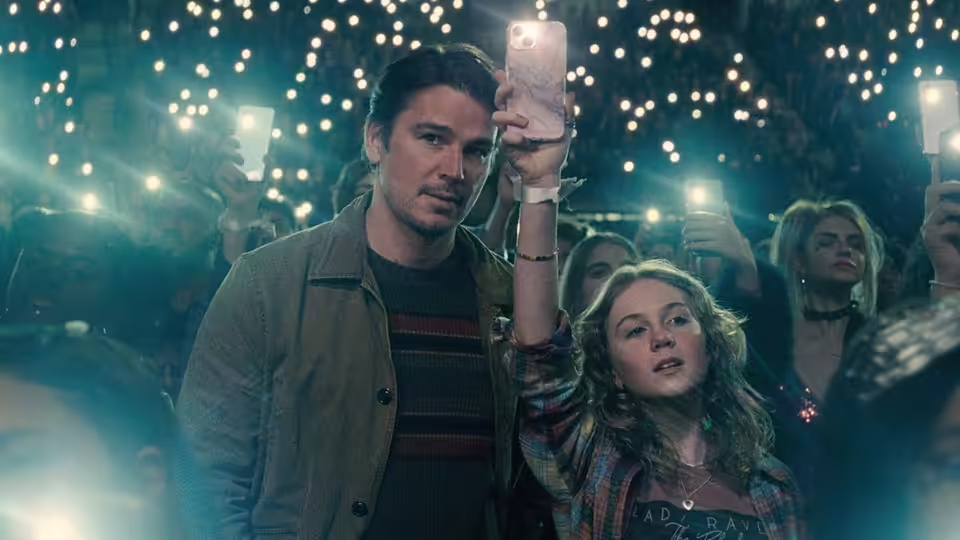
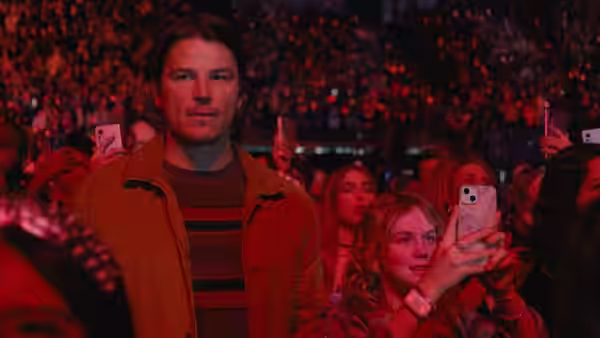
M. Night Shyamalan’s Trap starts with a good idea and a better actor. Cooper (Josh Hartnett) takes his daughter Riley (Ariel Donoghue) to see Lady Raven (Saleka Night Shyamalan), and before the first song is over he has counted the police at the doors. A chatty merchandise seller, Jamie (Jonathan Langdon), tells him what they are for: the concert is bait for a serial killer the press call the Butcher. Cooper thanks him, buys a T-shirt and goes back to his seat, and the film tells us almost at once that the Butcher is him. What follows is an hour of proper, sly fun and roughly forty minutes of a film hunting for a way out and not finding one.
Hartnett is the reason to see it. He plays Cooper as the sort of father who says the word awesome and means it, who knows the words to the songs and is faintly embarrassed to, and he lets us watch that face do two jobs at once: fret about where Riley has got to, and measure the distance to the nearest stairwell. When a stranger speaks to him there is a small delay before the smile arrives. We laughed at his first improvised lie, an outrageous one told to a security guard with a straight face, and then felt a chill at how quickly we had started rooting for him to get away with it. That chill is the film’s best trick, and Hartnett does it without any help from the script.
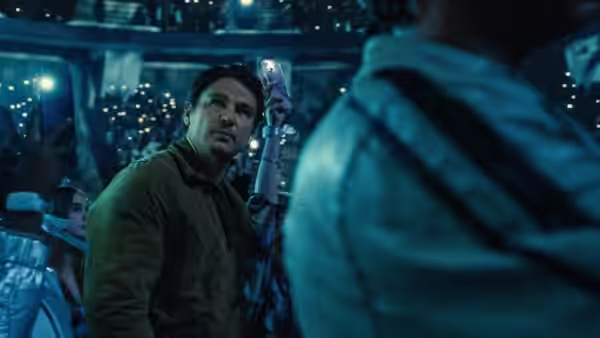
Sayombhu Mukdeeprom shoots the first hour largely from Cooper’s eye level, in the stands and on the concourses, so the stage is usually off to one side and the doors are in the middle of the frame. He keeps the camera close to Hartnett, often too close for comfort, with the crowd a blur of phone lights behind him. The arena is pink and violet where the show is and strip-lit grey where Cooper wants to be, and Debbie DeVilla gives him plenty of grey to work with: service corridors, stairwells, back rooms with the wrong people in them. Noëmi Preiswerk cuts it patiently, one problem at a time, and Herdís Stefánsdóttir’s score stays low and mostly out of the way of the songs.
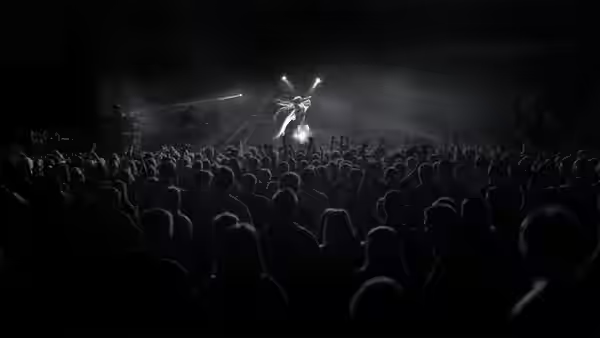
The songs are the first difficulty. Lady Raven performs them in full, several times, and the film stops to watch. Saleka Night Shyamalan is the director’s daughter, can sing, and the songs are competent radio pop; the trouble is that every time the camera lingers on the stage it has left the man we came to watch. Riley is delighted, and Donoghue plays her delight well, all elbows and screaming, but the film’s interest in the concert outlasts ours by some minutes.
The second difficulty is the second half, which leaves the arena, and we will not say where it goes. What we can say is that the escapes that follow depend on one person after another doing the convenient thing, and that each is a little harder to swallow than the last. Hayley Mills, as the profiler Dr Josephine Grant, delivers the killer’s psychology in the tone of someone reading from a leaflet, which may be the writing rather than the actress. Alison Pill, as Cooper’s wife Rachel, arrives late and does more in a few quiet minutes than the plot around her earns. By the last twenty minutes we were sighing at the screen, and then cross with ourselves for having been so pleased an hour earlier.
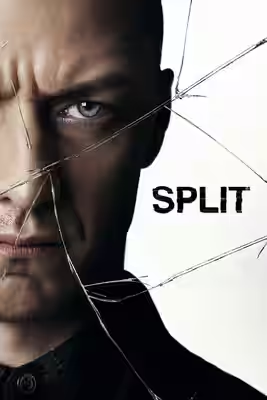
Shyamalan has always written dialogue as if translating it from a language nobody speaks, and here that stiffness helps and hurts. It suits Cooper, whose normality is a performance anyway, and it makes everyone else sound like an extra who has been given a line. Split (2016) built a whole film around one performance and kept the story with the performance. Trap has the performance and lets the story wander off.
See it for Hartnett and for the first hour, which is as much fun as Shyamalan has been in some time. Watch it at home if you can, where the songs are shorter than they feel in a cinema. It runs 105 minutes and carries a 15, and the 15 is earned late.