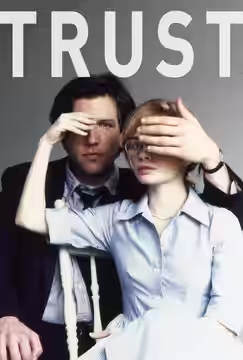
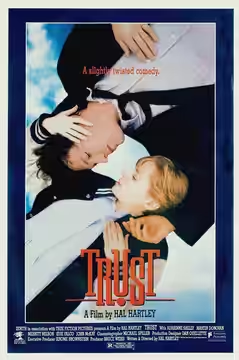
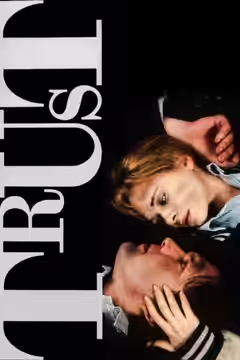
Hal Hartley’s second film is a deadpan romance between two damaged people on Long Island, written in flat, funny, exact sentences. The manner wears thin in places, but Adrienne Shelly and Martin Donovan make the stillness mean something.
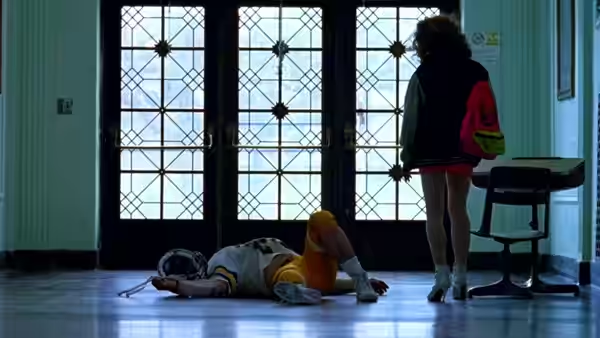
Hal Hartley’s second film, after The Unbelievable Truth (1989), opens with a slap and a death and gets on with it. Maria Coughlin (Adrienne Shelly) tells her parents she is pregnant, her father insults her, she hits him, and he drops dead on the kitchen lino. That is the first three minutes. Hartley, who wrote, produced and directed, does not play it as tragedy or as farce. He shoots it square, cuts away, and moves on to the next room, and the whole of Trust is built like that: dreadful things said in level voices, and a camera that declines to react. It is a good film, and for anyone who can take the manner, a quietly affecting one.
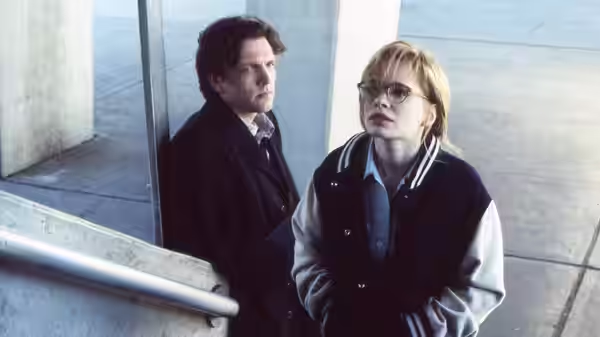
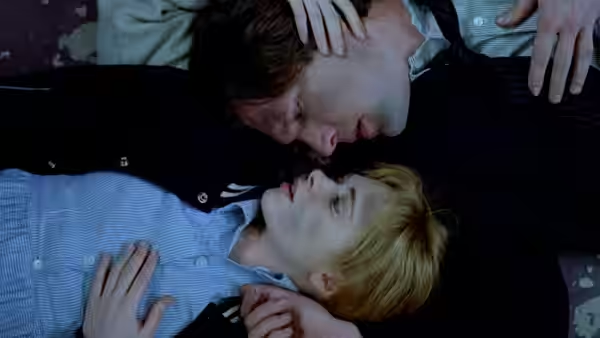
Matthew Slaughter (Martin Donovan) repairs televisions, quits by putting his boss’s head in a vice, and goes home to a father (John MacKay) who makes him clean the bathroom and then makes him clean it again. He carries a hand grenade in his jacket and does not say why. Maria, thrown out by her mother Jean (Rebecca Nelson, credited as Merritt Nelson) and dropped by her boyfriend Anthony (Gary Sauer), wanders the streets in a shiny party dress until she finds Matthew sitting in an empty house. They talk. Hartley’s people talk in sentences that sound written down, because they were, and the trick of the film is that Shelly and Donovan say them as if they had only just thought of them.
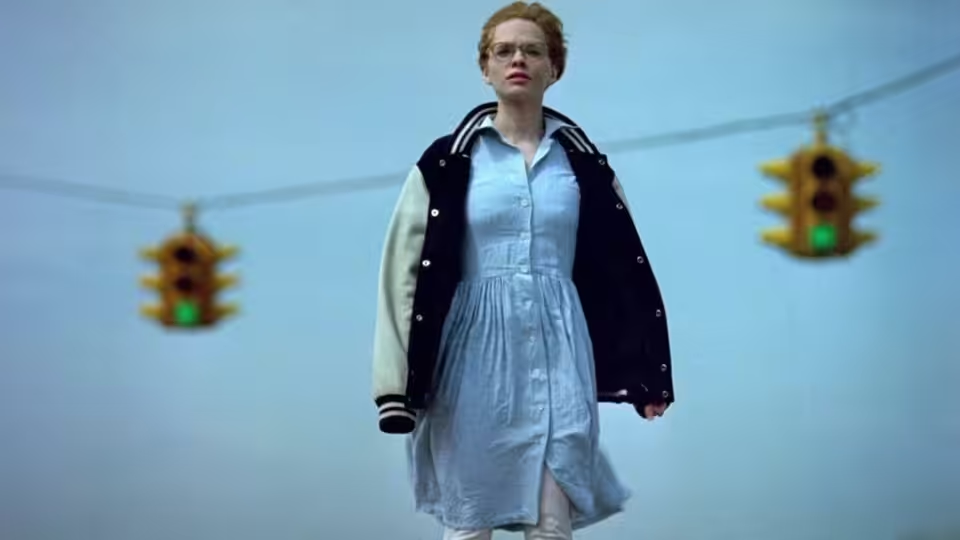
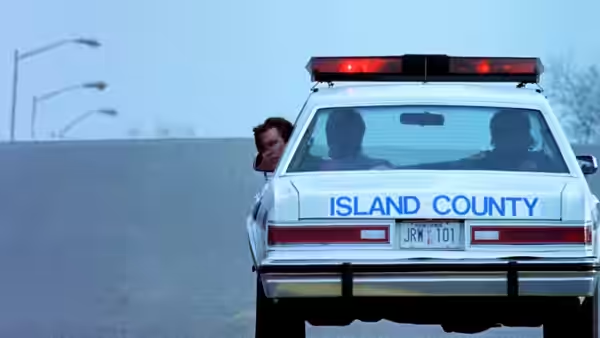
Michael Spiller shoots Long Island in flat, bright colour: a red door, a yellow kitchen, a blue coat, people placed dead centre and often facing us rather than each other. Daniel Ouellette gives the Coughlin house the look of a place where nothing has been moved in twenty years, and the Slaughter house the look of one scrubbed until it hurts. Claudia Brown keeps Maria in that party dress for the first stretch, then puts her in a plain skirt and thick spectacles, and the change in her clothes does the work a page of dialogue about growing up would have done. Nick Gomez cuts on the lines, holding a face for a beat after it has spoken and then leaving hard. Phillip Reed’s score is a few spare electronic figures, repeated under the pauses, that never tell us what to feel.
Shelly plays Maria’s growing up as a run of small, practical decisions, and she is good at looking as though she is deciding. Donovan is a big man holding himself very still, the anger showing only in his hands. There is a conversation between them, some way in, about the difference between loving someone and respecting and admiring them, and we laughed at it and then found it had got under our skin. What did it was Donovan’s face, which does not move while Shelly sets out the distinction, and the plain fact that neither of them is joking. These are two people who cannot say what they feel, and the flat delivery is not a style laid over them; it is who they are.
The manner has its costs. Everyone in the film speaks in the same cadence, so the comedy is all in one key and there are stretches where it wants a second. A thread about a woman (Suzanne Costollos) who lifts a baby from a pushchair at a bus stop is set up with care and used for less than it promises. Jim Slaughter is written as a monster and MacKay plays him as one, and the scenes in that bathroom go from bleak to repetitive before Hartley lets them go. The pauses are long and the faces still, and we lost patience once or twice in the middle stretch before a line pulled us back.
The Coughlin house is where the film has most life. Nelson’s Jean bargains with her daughter for housework as though affection were something you paid off in instalments, and never once raises her voice. Edie Falco, as Maria’s older sister Peg, watches Matthew with an interest she does not bother to hide. Karen Sillas has one scene as a nurse and it is the warmest thing in the picture, a stranger being kind in a room built for bad news.
The Unbelievable Truth had the same voice without much underneath it. Here the voice has a reason to exist, and the film is better for it. Watch it with someone who will not keep asking why nobody blinks. It runs 106 minutes, and there is a grenade in it, and Hartley knows exactly how long you can be made to wait.