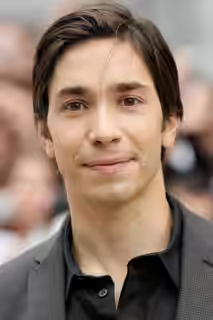
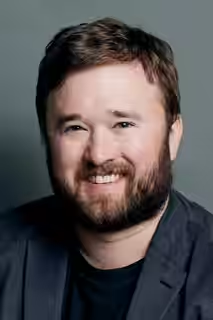
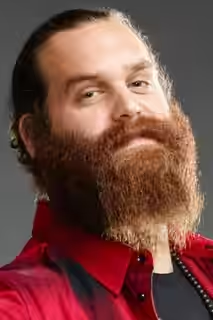
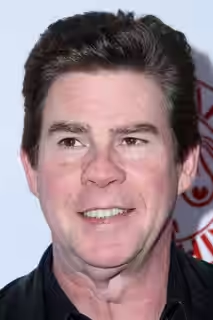
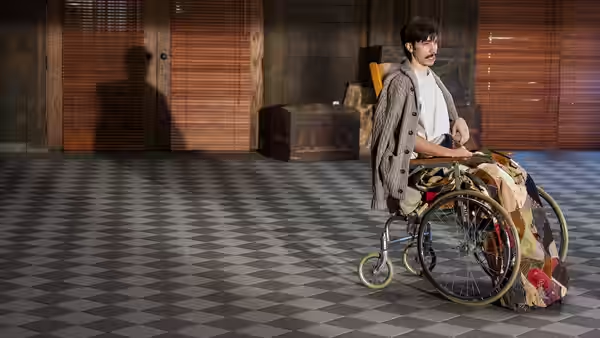
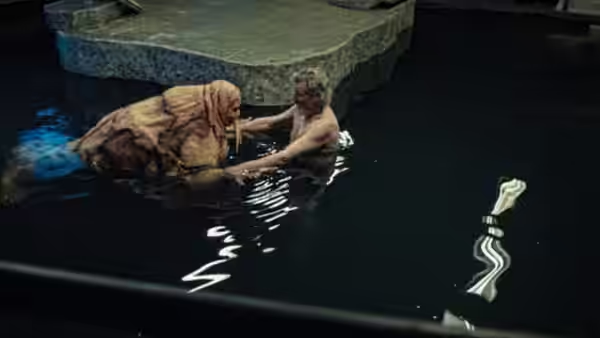
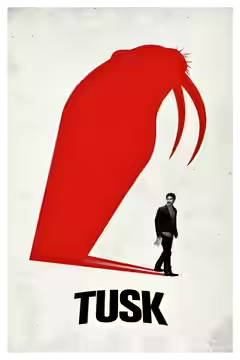
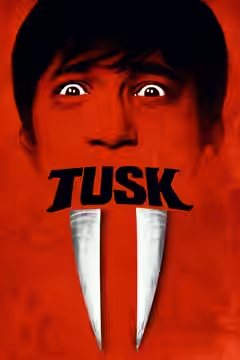
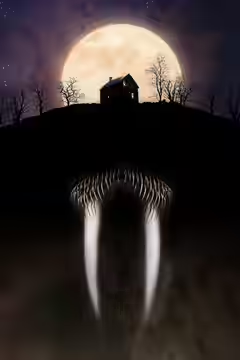
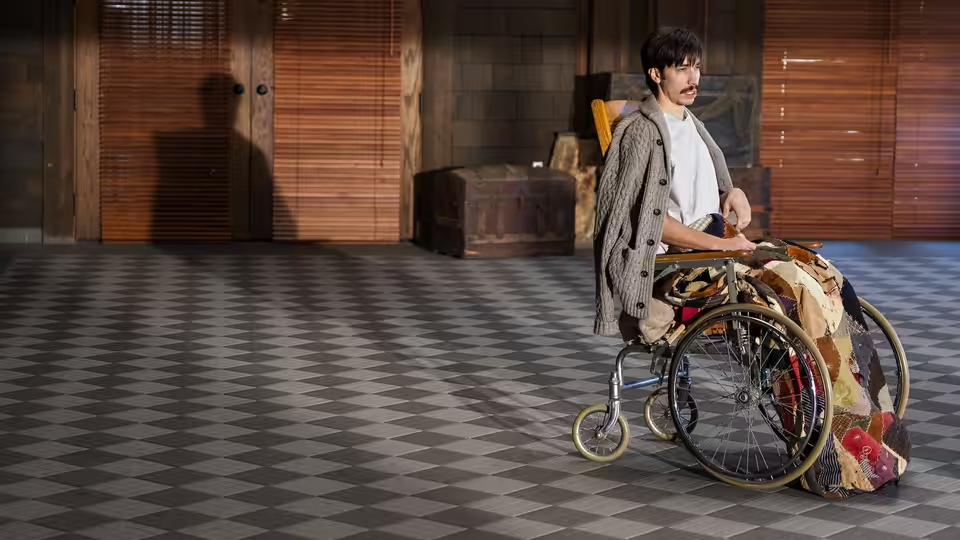
Wallace Bryton (Justin Long) stands behind a wheelchair piled with blankets in a tiled room
Film review

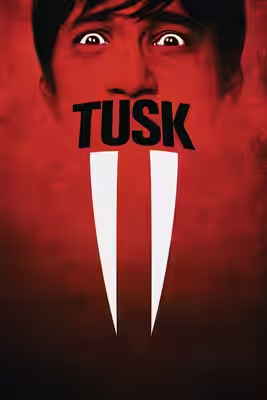
Tusk

2014 · Directed by Kevin Smith · 1h 42m · MPA R

In a sentenceThe scariest thing in it is a cup of tea; the longest thing is Johnny Depp’s accent; we would sit through both again

Wallace Bryton (Justin Long) and Teddy Craft (Haley Joel Osment) host a Los Angeles podcast mocking viral videos. Wallace flies to Canada to record an interview for the show. In a bar toilet he reads a handwritten notice: an old man offers free lodging and a lifetime of stories. He drives to the house of Howard Howe (Michael Parks), who serves tea and talks long into the night. Wallace drinks the tea and wakes the next morning in a bed he cannot leave. His girlfriend Ally Leon (Genesis Rodriguez) and Teddy wait in Los Angeles for a call that does not come.

Plays from YouTube when you press play; nothing loads from them until then.

Fi1m review

Kevin Smith’s horror comedy has a premise most directors would not touch, a performance from Michael Parks that justifies it, and a second half it hands to Johnny Depp in a false nose. Most critics shrugged. We think the nerve is the point.

Kevin Smith’s Tusk began as a joke on Smith’s own podcast, about a classified advert offering free lodging to anyone prepared to live as a walrus, and the film never quite stops being that joke. Smith writes it, directs it and cuts it himself. The question he has set is whether an idea that lasts a minute in conversation can last 102 on screen, and the answer, just, is yes, because of Michael Parks.

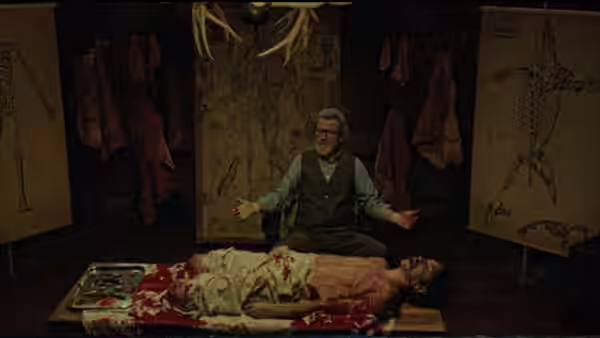
Parks plays Howard Howe, the old man who put the notice up, and he does not play him as a monster. He plays him as a host. He pours tea, he tells long stories about his life, and he does it in a soft, pleased voice that never once asks to be believed. The speeches are long and Parks makes every one of them seem shorter than it is.

James Laxton shoots the house in lamplight, all amber and brown, and keeps the camera low, so that Wallace, upright and chattering, is always looking down at a man he has already underestimated. John D. Kretschmer dresses the place like a museum nobody visits. When Wallace wakes the next morning and Howe, in the same pleasant voice, explains what happened to him in the night, we went cold on the sofa. It is the one stretch where the comedy and the horror are the same thing, and Parks is doing all of it with his face.

Justin Long plays Wallace Bryton as a man we are meant to dislike, a podcaster who makes his living laughing at other people, and Long commits to the moustache and the smirk. It is a brave choice and a costly one. When the plot turns on whether anyone will come for Wallace, the film has spent half an hour making sure we would not. Haley Joel Osment and Genesis Rodriguez, as the partner and the girlfriend who set out to find him, are given scenes of worry that run long and tell us little, and Smith the editor lets them run.

Then Johnny Depp arrives. He plays Guy Lapointe, a former detective from Quebec who has been chasing Howe for years, with a false nose, a beret and an accent that lands somewhere between Clouseau and a man doing Clouseau at a party. His first scene, in a diner, lasts the better part of ten minutes and consists of him telling a story about the time he nearly caught his man. We laughed, twice. Then we became aware that the film had stopped, that Howard Howe was out of sight, and that nobody behind the camera seemed to mind. That scene is where the audience splits, and it is a fault, though not a fatal one, because the film goes back to the house.

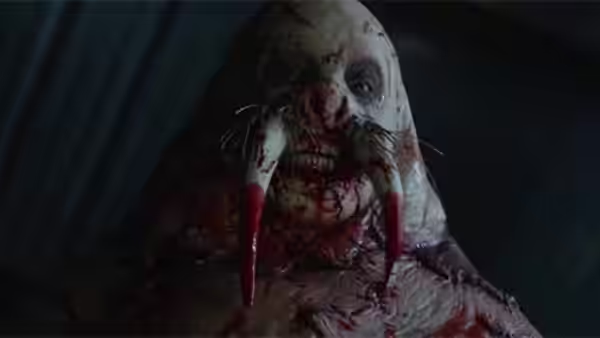
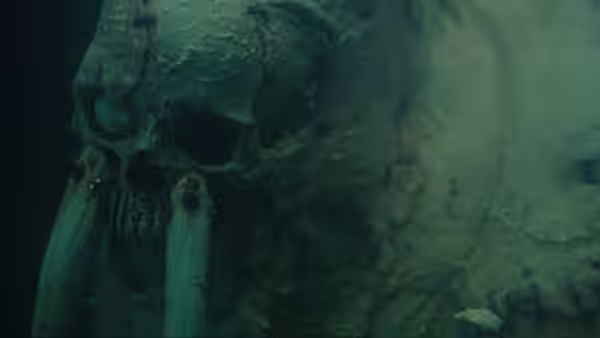
Christopher Drake’s score does the serious work, low strings and a slow pulse under Howe’s monologues, and in the second half it is better than the scenes it is under. Smith plays Fleetwood Mac’s “Tusk” over the climax, and it is the one piece of cheek in the film that is well judged. The make-up, when the title’s promise is finally kept, is wet, grey and far more upsetting than funny, which is to its credit; we will not describe it beyond that.

Smith’s best films, Clerks (1994) above all, are men talking in rooms, and the first half of Tusk is exactly that, except that one of the men is holding a bone saw. Red State (2011) showed he could keep dread going when he wanted to. Here he keeps it going for forty minutes, drops it in a diner, and picks it up again for the end. Most critics marked the film down for the diner and forgot the house. A film that sends half its audience out furious and the other half delighted has not lost its nerve; that is what nerve looks like.

It carries a 15 and runs 102 minutes, and a living room, where you can get up and put the kettle on during the diner scene, is the right-sized place for it.
Critical consensus AI synthesised

58
Positive
6
Mixed
9
Negative
6

The reviews split almost evenly three ways, and the consensus settles on a shrug: a strange, personal film that most critics admire for its nerve more than its result. Michael Parks’s performance as the sinister Howard Howe is singled out again and again, by admirers and detractors alike, and the grotesque walrus makeup draws steady approval. Several critics call it a return to form for Kevin Smith, and Variety ranks it among his best work.

The reservations cluster on the second act, when the film leaves the horror behind for a manhunt and broad comedy; even supportive reviews concede the detour drains tension. The Johnny Depp cameo divides them: Den of Geek calls it the highlight, while Slant and Collider find a caricature. The spread is wide. The Wrap and the Los Angeles Times find neither the horror nor the comedy works, and The AV Club sees a dare rather than a film.

Variety
7 September 2014 · festival review · Scott Foundas
85*

Foundas calls the film a bizarre, compelling surprise and ranks it among Kevin Smith’s best work. He especially praises Michael Parks’ performance, while also noting Justin Long’s demanding, emotionally affecting role.

Read the full review →
IndieWire
7 September 2014 · B+ · Eric Kohn
83

Kohn finds the film kooky and entertaining despite its uneven execution and rushed climax. He praises the grotesque makeup effects and the film’s willingness to take its absurd premise to unsettling extremes.

Read the full review →
The Guardian
· Henry Barnes
70*

Barnes presents the film as a successful return to form for Kevin Smith. He particularly praises Smith’s renewed snarky edge.

Read the full review →
The Hollywood Reporter
7 September 2014 · festival review · THR Staff
70*

The critic finds the film deeply weird and often funny, saying it should please Kevin Smith devotees and some schlock-horror fans. Michael Parks’s commanding performance is singled out for praise, though the film loses momentum when its focus shifts to the manhunt.

Read the full review →
Evening Standard
12 September 2014 · festival review · David Sexton
65*

Sexton finds the film energetic and daftly appealing, though its late shift from horror to broad comedy weakens it. He singles out Michael Parks’s compelling performance as the sinister Howard Howe for particular praise.

Read the full review →
RogerEbert.com
64*

The accessible page provides no review text, so the critic's verdict cannot be verified. No praise or complaint is available from the blocked page.

Read the full review →

Straight answers AI written, from our review

Is Tusk worth watching?
Tusk is worth watching for anyone with the stomach for a horror comedy built on a single grotesque joke, and we scored it 79. Michael Parks carries it as the soft-spoken host whose tea you should not drink; the one real fault is a long Johnny Depp diner scene where the film stops dead. Most critics marked it down for the diner and forgot the house.
How long is Tusk, and what is it rated?
Tusk runs 1h 42m and is rated R by the MPA in the US. It is a comedy and horror film.
Where can I watch Tusk in the US?
Tusk is streaming on HBO Max, Hulu, Amazon Prime Video and The Roku Channel in the US, and it is also available to rent from Amazon Prime Video and Apple TV from $2.99. Availability is checked daily; the links above go straight to each service.
How violent or frightening is Tusk, and is it suitable for children?
Tusk carries a 15 in the UK and an R in the US, and it is not for children. The dread is slow and talky for the first half, then the make-up, when the title's promise is kept, is wet, grey and far more upsetting than funny. The squeamish should know the horror is physical as well as psychological.
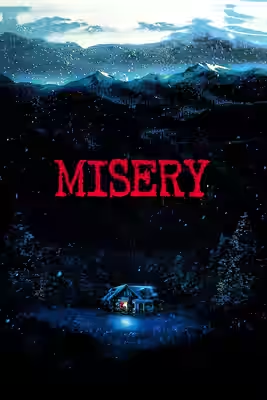
How does Tusk compare to Misery?
Tusk and Misery share a kind host, a bed the guest cannot leave and a pot of tea, but Misery is the tighter and better film. It stays in its house and lets Kathy Bates and James Caan carry it, while Tusk leaves for a long comic detour and loses half its audience there. Choose Misery for a thriller, Tusk if you want the joke pushed as far as it can go.
What should I watch after Tusk?
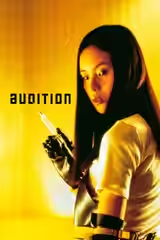
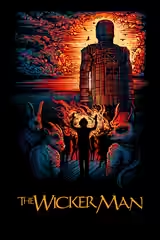
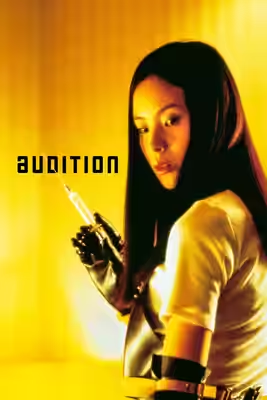
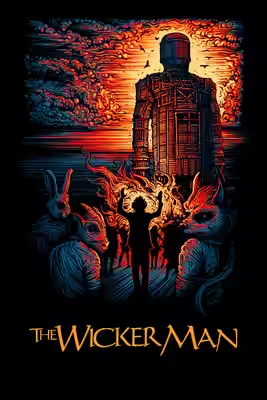
After Tusk, try Misery (1990, Fi1m 83): A kind host, a bed you cannot leave, and Kathy Bates pouring the tea. Then Audition (1999, Fi1m 84): Miike spends an hour being gentle so the last twenty minutes can ruin you; and The Wicker Man (1973, Fi1m 90): A polite rural welcome that turns, slowly, into exactly what it always was.

Cast

If you liked this, try…

  1. Misery (1990, Fi1m 83)A kind host, a bed you cannot leave, and Kathy Bates pouring the tea.

  2. Audition (1999, Fi1m 84)Miike spends an hour being gentle so the last twenty minutes can ruin you.

  3. The Wicker Man (1973, Fi1m 90)A polite rural welcome that turns, slowly, into exactly what it always was.

  4. Red State (2011) · not reviewed yetSmith’s earlier horror, meaner and tighter, with Michael Parks preaching at length.

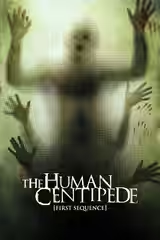
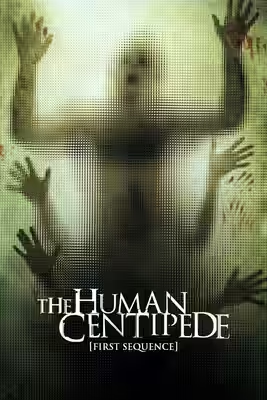
  5. The Human Centipede (First Sequence) (2009) · not reviewed yetThe other surgical dare of its decade, played straighter and with less to say.

Free account

Know what to watch tonight

Two lists that know where things are streaming, collections you can share, your own score beside ours, and Discover that remembers what you have seen.

  • Want to see, sorted by what is streaming now
  • Seen, with your score out of ten
  • No adverts, ever