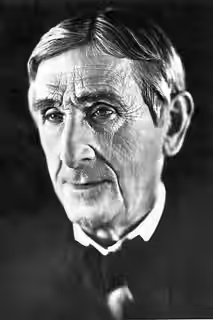
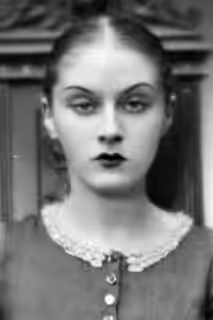
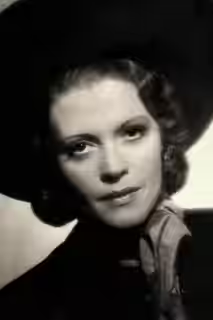
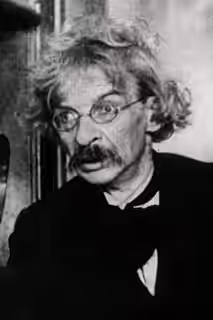
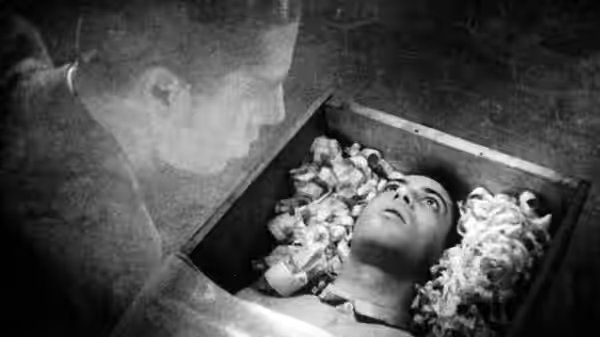
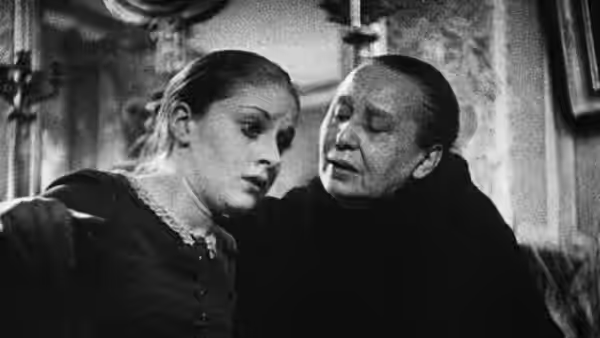
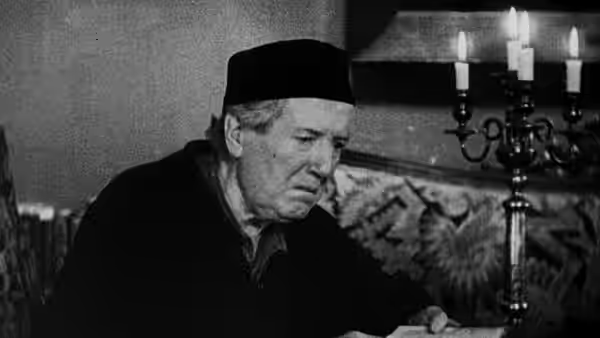
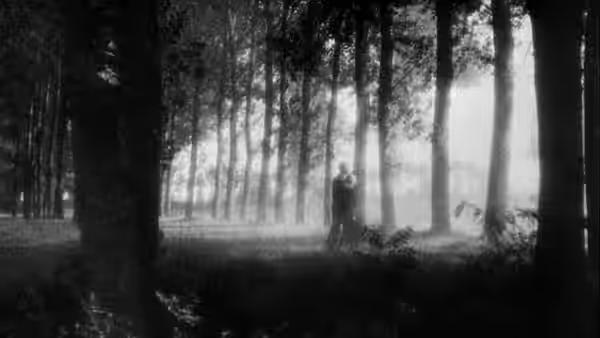
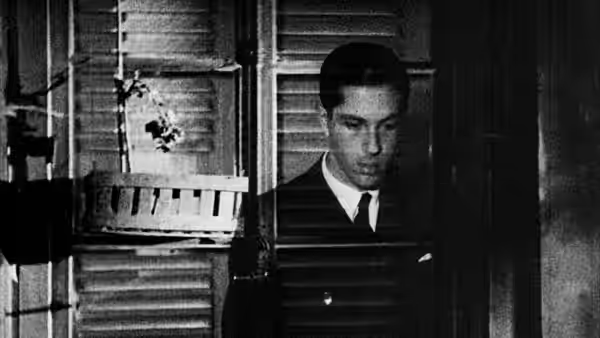
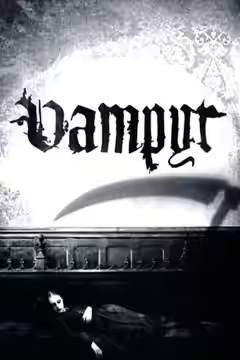
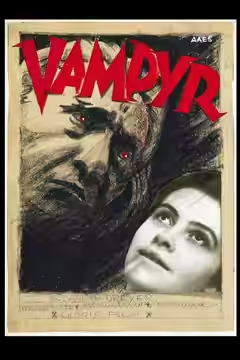
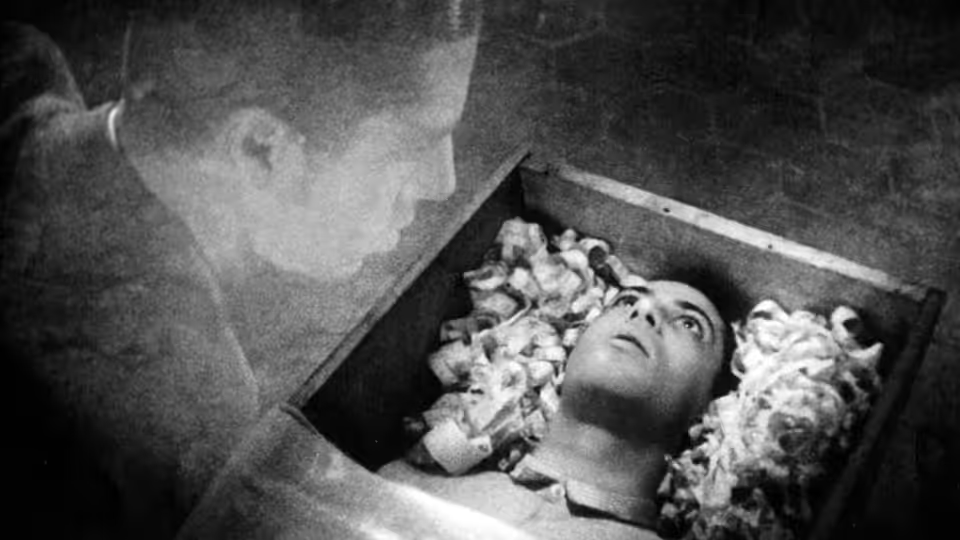
Allan Grey (Nicolas de Gunzburg) looks down at a body lying in a flower-lined coffin
Film review

Vampyr

1932 · Directed by Carl Theodor Dreyer · 1h 14m

In a sentenceSeventy-four minutes of people we would not ask for directions

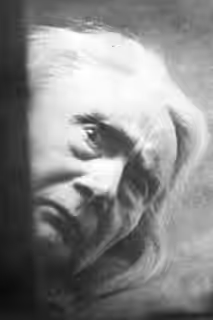
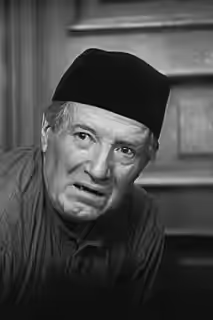
Allan Grey (Nicolas de Gunzburg) is the central figure in a dreamlike horror mystery. Around him are The Lord of the Manor (Maurice Schutz), Giséle (Rena Mandel) and Léone (Sybille Schmitz), along with The Village Doctor (Jan Hieronimko) and The Old Woman from the Cemetery (Henriette Gérard). Faces and surroundings become difficult to read as the film follows Allan through a strange adventure. The story proceeds through disorienting encounters and images, leaving his own uncertainty about what he sees at the centre of the horror.

Plays from YouTube when you press play; nothing loads from them until then.

Fi1m review

Carl Theodor Dreyer’s Vampyr makes human faces frightening through close scrutiny and disorienting cutting. Its hazy storytelling asks for patience, but we recommend it for the sustained discomfort of looking closely and still feeling lost.

Carl Theodor Dreyer’s Vampyr is worth seeing for how thoroughly it makes looking at people an uncomfortable business. The story can be difficult to follow, and there are stretches when that difficulty feels unnecessary. Yet Dreyer sustains a particular kind of fear: the suspicion that a face we can see quite clearly may still conceal something we cannot recognise. He allows us time to examine it. That patience accounts for much of the film’s power.

Louis Née and Rudolph Maté’s cinematography gives the images their pale, uncertain look. We can make out the people, but the space around them offers little reassurance, and the softness keeps us searching the frame for something more definite. Dreyer’s staging lets that search become uncomfortable without hurrying us towards the next shock. We were frightened by the faces, particularly Sybille Schmitz’s Léone, whose expressions grow harder to read the longer we look. Nothing elaborate needs to happen for watching her to feel unpleasant.

Tonka Taldy’s editing makes that discomfort harder to escape. The disorientation comes from being denied the easy sense that one image will explain the one before it; another cut can leave us needing to look harder. We share something of Allan Grey’s helplessness because we cannot get comfortably ahead of him. It is a demanding way to organise a horror film, but it gives the confusion a practical cause in the cutting rather than merely asking the performers to look bewildered.

Nicolas de Gunzburg plays Allan Grey without the assurance that might make him a reassuring guide. There is a stiffness to his presence, though it suits a figure who appears to have little control over what surrounds him. Sybille Schmitz, as Léone, holds our attention more readily, and Dreyer makes good use of how difficult she is to read. The performances can seem awkward if we expect ordinary conversational ease. Given time to watch them, however, we find that their oddness helps make these people frightening.

The screenplay by Carl Theodor Dreyer and Christen Jul is where our patience is most tested. Its people do not always acquire enough individual interest to make their predicament matter beyond the immediate fear. Some connections are so uncertain that trying to follow them takes us out of the horror for a while. Those passages remain a limitation, even in a film that has chosen to work like a dream, and there are moments when a little clarity would help.

Wolfgang Zeller’s music helps sustain our attention through those passages, keeping the unease present when the story becomes elusive. It works particularly well alongside the strange performances, encouraging us to stay with people who offer little reassurance. A horror film can use vagueness as an excuse for not having worked out its story. Dreyer’s care with faces, light and cutting gives us enough reason to accept the uncertainty here, though we occasionally wish he would make following Allan a little easier.

At 74 minutes, Vampyr asks for a relatively short evening and a considerable willingness to be puzzled. We would choose it when being unsettled matters more than solving a mystery. Give the faces the attention Dreyer gives them. If a horror film has to explain itself before bedtime, choose something else.
Critical consensus AI synthesised

89
Positive
5
Mixed
1
Negative
0

Most critics respond enthusiastically to Vampyr, with praise clustering around its dreamlike images and the unease they create. The reviews describe a psychological chiller whose power comes from disorientation: subtle staging, expressive faces and eerie performances make familiar spaces feel uncertain. Editing and cinematography receive particular attention for making viewers feel as helpless as the protagonist, while the film’s hallucinatory structure is repeatedly treated as a strength.

There is little visible disagreement about those strengths, though the lower end of the score range needs care. Time Out accounts for the lone mixed score, but the available material does not expose the critic’s verdict, so no particular objection can safely be assigned to it. The accessible reviews offer few reservations; the recorded spread is wider than the written assessments alone can explain.

Radio Times
★★★★★ · David Oppedisano
100

The critic presents the film as a hypnotic psychological chiller. They single out its eerily poetic, dreamlike structure and visual ethereality.

Read the full review →
Slant Magazine
5 October 2017 · ★★★★★ · Chuck Bowen
100

Bowen praises the Criterion restoration for giving the horror masterpiece a ghostly clarity. He singles out Dreyer’s subtle staging and expressive faces as sources of its uncanny power.

Read the full review →
The New Yorker
90*

The critic calls the film a radically effective and harrowing work of Surrealism. They single out its hallucinatory imagery and the eerie performances of its largely nonprofessional cast.

Read the full review →
The Guardian
17 May 2022 · Peter Bradshaw
85*

Bradshaw presents the film as an eerie, distinctive classic and a unique cinematic experience. He especially praises the hair-raising coffin sequence and its unsettling point of view.

Read the full review →
Time Out
· CPe
65*

The available page shell identifies this as a review but does not expose the critic’s verdict. Its metadata notes the film’s real-location French shooting and psychological-horror significance, without showing what the critic praises or criticizes.

Read the full review →
Eye for Film
2 September 2008 · Jeff Robson
95*

Robson calls the film a profoundly unsettling masterpiece and a landmark of cinema. He especially praises its disorienting editing and cinematography, which make viewers feel as helpless as the protagonist.

Read the full review →

Straight answers AI written, from our review

Is Vampyr worth watching?
Vampyr is worth watching for patient horror viewers who value sustained unease over a clearly explained mystery, and we score it 85/100. We find its closely studied faces and disorienting cutting frightening, though the hazy storytelling sometimes makes following Allan Grey harder than it needs to be.
How long is Vampyr, and what is it rated?
Vampyr runs 1h 14m. It is a horror and fantasy film.
Where can I watch Vampyr in Malaysia?
Vampyr is not on any streaming or rental service in Malaysia at the moment. It is available in 2 other countries; change your country at the top of the page to see where. Availability is checked daily.
How violent or frightening is Vampyr, and is it suitable for children?
Vampyr has a UK PG certificate, but its unsettling faces and disorienting images make it a cautious choice for children, particularly those sensitive to frightening atmospheres. We find its fear comes from looking closely at people and still being unable to read them; the certificate should not be taken to mean a scare-free evening.
How does Vampyr compare to The Spirit of the Beehive?
Vampyr is the stronger choice for sustained fear, while we recommend The Spirit of the Beehive for a more emotionally affecting encounter with horror. Dreyer makes faces and surroundings difficult to read; Erice follows a child’s fascination with Frankenstein into quietly troubling everyday surroundings. Both ask for patience, but Vampyr makes following the story more difficult.
Is Vampyr based on a true story or a book?
Vampyr is based on fiction by Sheridan Le Fanu, rather than a true story. We would not make reading the source a prerequisite: the film’s appeal lies in its frightening faces, pale images and disorienting cutting, though viewers should expect a mystery that remains difficult to follow.

Cast

If you liked this, try…

  1. Carnival of Souls (1962) · not on Fi1m yetAnother disquieting journey where familiar places offer no reliable comfort.

  2. Hour of the Wolf (1968) · not on Fi1m yetFor more uneasy faces and a nightmare that resists tidy explanation.

  3. The Spirit of the Beehive (1973, Fi1m 87)A child’s encounter with screen horror makes ordinary surroundings quietly troubling.

  4. Pulse (2001) · not on Fi1m yetEmpty rooms and uncertain human figures make this a similarly patient fright.

  5. A Girl Walks Home Alone at Night (2014) · not on Fi1m yetVampire horror with unhurried pacing, nocturnal streets and an unexpected tenderness.