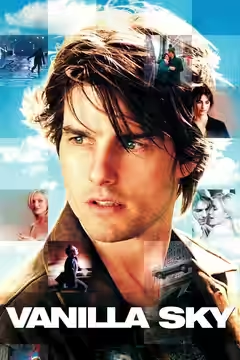
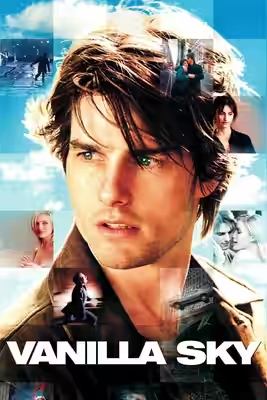
Cameron Crowe’s remake of Abre los ojos has an empty Times Square, a frightening Cameron Diaz and a star willing to lose his face. It also has a long explanation it does not need and songs doing the feeling for it.
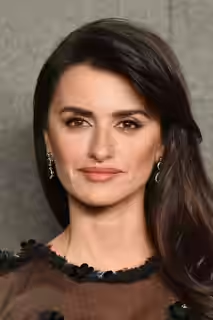
Cameron Crowe, whose last two films were Jerry Maguire (1996) and Almost Famous (2000), has taken Alejandro Amenábar’s Abre los ojos (1997), moved it from Madrid to Manhattan and kept its leading lady. Penélope Cruz plays Sofia for the second time. The story is the same: a rich, careless young man meets a woman he could love, is punished for it within a day, and then has to work out which of the things happening to him are real. Crowe tells it in 136 minutes, which is a good deal longer than Amenábar needed, and most of the difference is explanation.
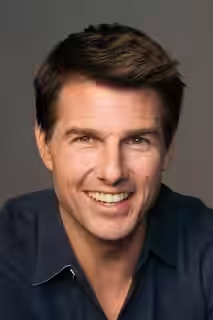
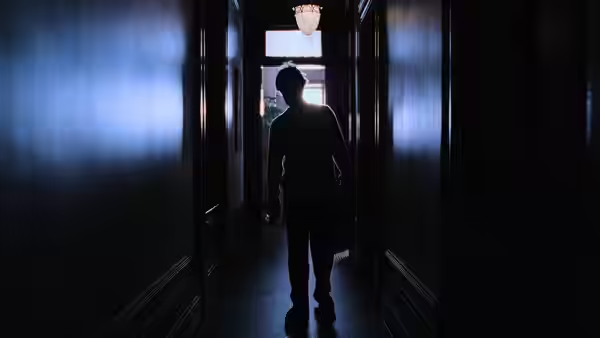
It opens with the best thing in it. David Aames (Tom Cruise) wakes, drives into Times Square and finds it empty: no cars, no people, the screens playing to nobody. John Toll shoots it in flat early light with the camera far back, so that Cruise is a small figure running under the advertising, and we sat forward in our seats. Nothing after it is as strange or as confident. Catherine Hardwicke’s loft for David, with record sleeves on the walls, tells us who he is before anyone speaks, and Betsy Heimann dresses him in clothes that cost a great deal and have never been thought about.
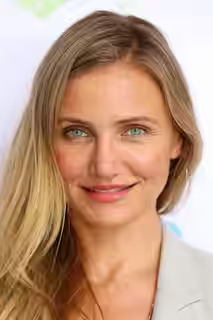
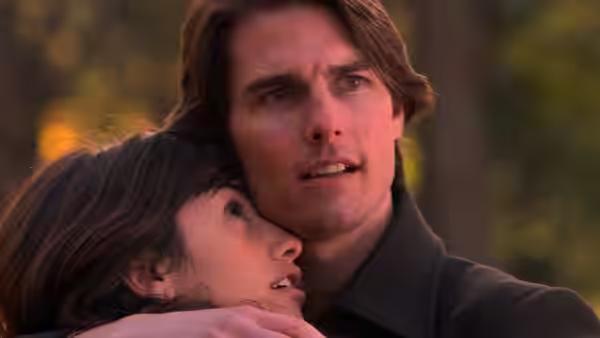
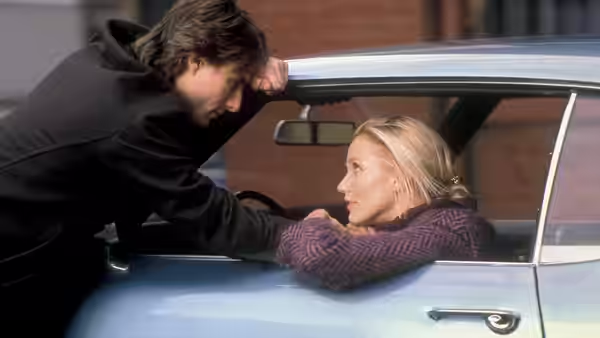
The party and the night that follows are Crowe at his most comfortable: two people in a room, liking each other, talking too much. Cruz is light and quick and makes Sofia’s interest in this man seem like a choice rather than a plot requirement. Then Cameron Diaz takes over. Julie Gianni, the woman David has been sleeping with and forgetting, gets him into her car, and over one long drive goes from sunny to wounded to furious, and Diaz plays every turn of it without raising her voice until the last moment. It frightened us, properly, in a way the film’s later horrors never do, because she is simply a person who has been treated badly and has decided what to do about it.
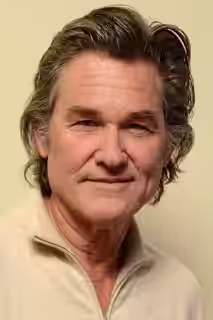
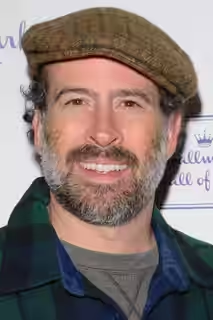
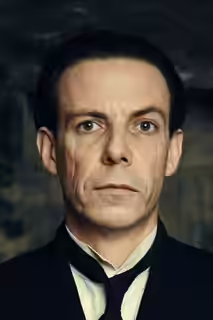
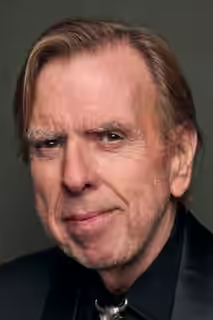
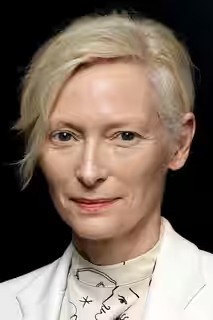
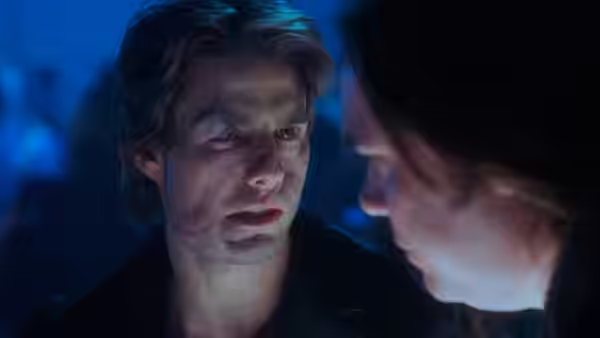
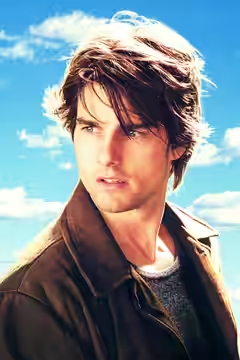
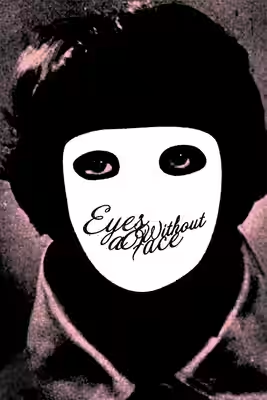
After the car goes off the bridge the film splits in two. In the present David sits in a cell in a prosthetic mask and tells his story to Curtis McCabe, a psychologist played by Kurt Russell with a plainness that makes him the easiest person in the film to believe. In the past David’s face is rebuilt as far as it can be, and he goes back out into a city that stares. Cruise, who also produced, lets himself be made ugly and petulant, and he is better in this stretch than in the charming one; the sulk suits him, and the moments when the mask comes off in company are hard to watch. Jason Lee’s Brian is the friend who says what nobody else will, and Timothy Spall, as Thomas Tipp, gets a couple of good scenes of English decency. Noah Taylor and Tilda Swinton turn up later, and we will say nothing about why.
Crowe cannot leave a scene alone. Nancy Wilson’s score is quiet and useful, but it is forever being pushed aside by a song, and the songs tell us what to feel in case the actors had not managed it. Joe Hutshing and Mark Livolsi keep the two timelines clean for an hour; in the last half hour the cutting becomes a flicker of inserts, film stills and album covers and old television, which is meant to show a mind coming apart and mostly shows a director’s shelves.
The second half takes a turn we will not describe. Having taken it, the film sits down and explains it, slowly and more than once, to a man who has already lived through it and to an audience that had mostly got there. Amenábar explained too, but in less time and with less need to be loved for it. By the end we were tired, and then we were cross, because the empty square and Diaz’s drive had promised a sharper film than the one that spent its last twenty minutes making sure we were all right.
Crowe’s gift is for people talking in rooms, and this story keeps marching him out of them into places where the talking is all that is left. See it for Diaz, for Times Square at dawn, and for Cruise agreeing to be looked at with distaste. See Abre los ojos first, or instead; it is shorter and it trusts you more.