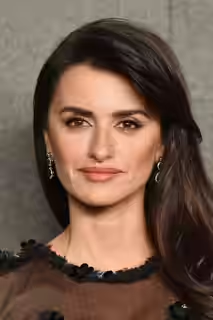
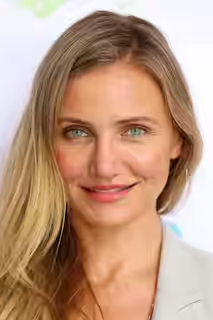
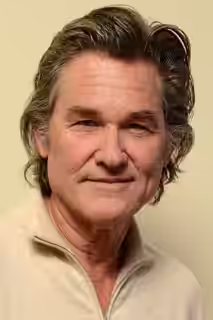
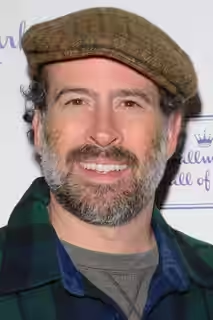
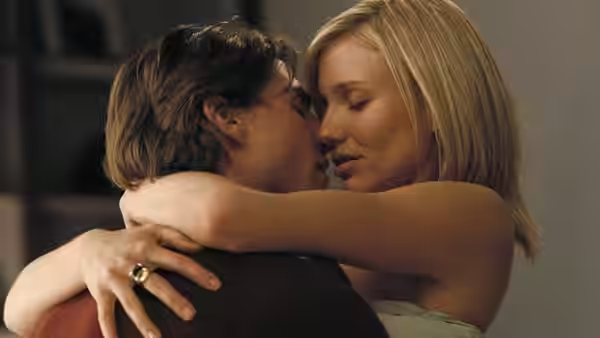
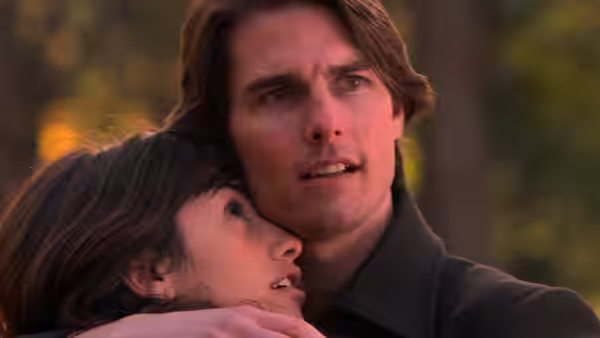
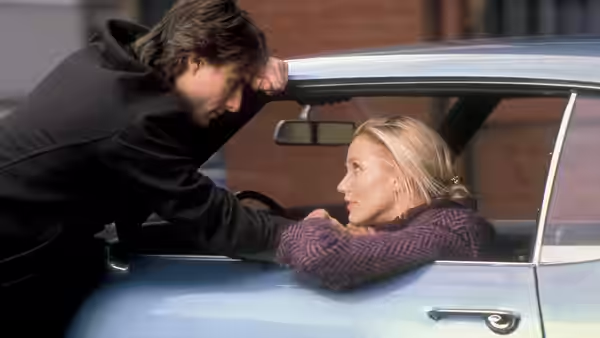
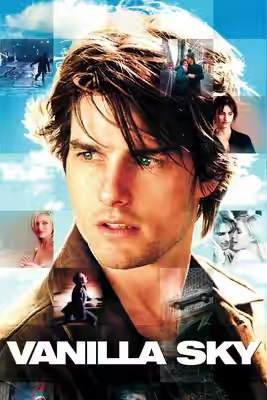
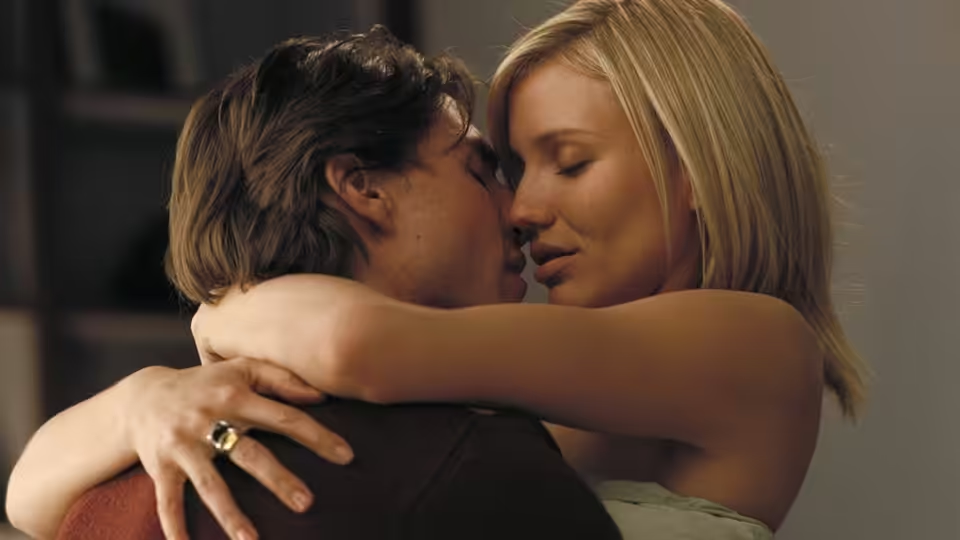
David Aames (Tom Cruise) and Julie Gianni (Cameron Diaz) embrace and kiss
Film review

Vanilla Sky

2001 · Directed by Cameron Crowe · 2h 16m

In a sentenceTom Cruise runs through an empty Times Square in the first five minutes and nothing afterwards is quite so clear

New York. David Aames (Tom Cruise) has inherited his father’s publishing company, a Manhattan loft lined with record sleeves, and a board of older men who think he is not up to the job. His friend Brian Shelby (Jason Lee) brings a date to David’s birthday party: Sofia Serrano (Penélope Cruz). David spends the whole party, and then the night, talking to her at her flat. Also at the party, uninvited, is Julie Gianni (Cameron Diaz), the woman David has been sleeping with and not thinking about. The next morning Julie pulls up outside Sofia’s building and offers him a lift. Between these scenes the film keeps cutting forward to David in a prison cell, his face hidden by a mask, telling his story to a psychologist, Curtis McCabe (Kurt Russell).

Fi1m review

Cameron Crowe’s remake of Abre los ojos has an empty Times Square, a frightening Cameron Diaz and a star willing to lose his face. It also has a long explanation it does not need and songs doing the feeling for it.

Cameron Crowe, whose last two films were Jerry Maguire (1996) and Almost Famous (2000), has taken Alejandro Amenábar’s Abre los ojos (1997), moved it from Madrid to Manhattan and kept its leading lady. Penélope Cruz plays Sofia for the second time. The story is the same: a rich, careless young man meets a woman he could love, is punished for it within a day, and then has to work out which of the things happening to him are real. Crowe tells it in 136 minutes, which is a good deal longer than Amenábar needed, and most of the difference is explanation.

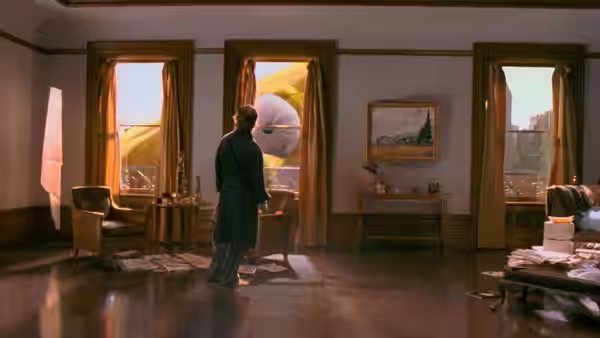
It opens with the best thing in it. David Aames (Tom Cruise) wakes, drives into Times Square and finds it empty: no cars, no people, the screens playing to nobody. John Toll shoots it in flat early light with the camera far back, so that Cruise is a small figure running under the advertising, and we sat forward in our seats. Nothing after it is as strange or as confident. Catherine Hardwicke’s loft for David, with record sleeves on the walls, tells us who he is before anyone speaks, and Betsy Heimann dresses him in clothes that cost a great deal and have never been thought about.

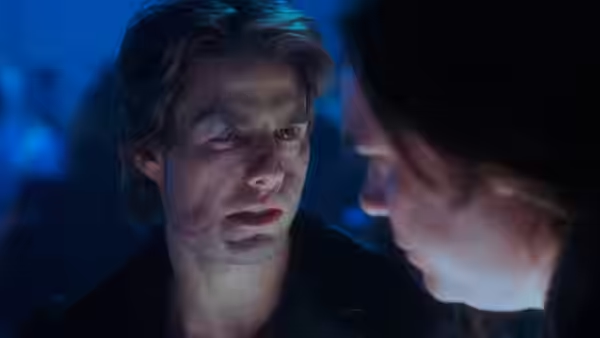
The party and the night that follows are Crowe at his most comfortable: two people in a room, liking each other, talking too much. Cruz is light and quick and makes Sofia’s interest in this man seem like a choice rather than a plot requirement. Then Cameron Diaz takes over. Julie Gianni, the woman David has been sleeping with and forgetting, gets him into her car, and over one long drive goes from sunny to wounded to furious, and Diaz plays every turn of it without raising her voice until the last moment. It frightened us, properly, in a way the film’s later horrors never do, because she is simply a person who has been treated badly and has decided what to do about it.

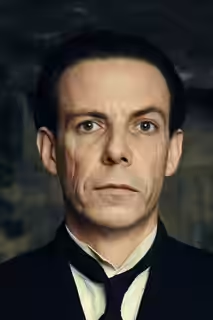
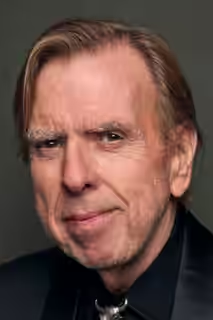
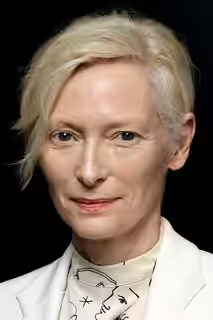
After the car goes off the bridge the film splits in two. In the present David sits in a cell in a prosthetic mask and tells his story to Curtis McCabe, a psychologist played by Kurt Russell with a plainness that makes him the easiest person in the film to believe. In the past David’s face is rebuilt as far as it can be, and he goes back out into a city that stares. Cruise, who also produced, lets himself be made ugly and petulant, and he is better in this stretch than in the charming one; the sulk suits him, and the moments when the mask comes off in company are hard to watch. Jason Lee’s Brian is the friend who says what nobody else will, and Timothy Spall, as Thomas Tipp, gets a couple of good scenes of English decency. Noah Taylor and Tilda Swinton turn up later, and we will say nothing about why.

Crowe cannot leave a scene alone. Nancy Wilson’s score is quiet and useful, but it is forever being pushed aside by a song, and the songs tell us what to feel in case the actors had not managed it. Joe Hutshing and Mark Livolsi keep the two timelines clean for an hour; in the last half hour the cutting becomes a flicker of inserts, film stills and album covers and old television, which is meant to show a mind coming apart and mostly shows a director’s shelves.

The second half takes a turn we will not describe. Having taken it, the film sits down and explains it, slowly and more than once, to a man who has already lived through it and to an audience that had mostly got there. Amenábar explained too, but in less time and with less need to be loved for it. By the end we were tired, and then we were cross, because the empty square and Diaz’s drive had promised a sharper film than the one that spent its last twenty minutes making sure we were all right.

Crowe’s gift is for people talking in rooms, and this story keeps marching him out of them into places where the talking is all that is left. See it for Diaz, for Times Square at dawn, and for Cruise agreeing to be looked at with distaste. See Abre los ojos first, or instead; it is shorter and it trusts you more.
Critical consensus AI synthesised

55
Positive
4
Mixed
4
Negative
4

The critics split three ways on Vanilla Sky, and the middling overall number comes from that split rather than from any shared lukewarmness. Where praise lands, it lands on the surface: John Toll’s camerawork, the club scene, the empty Times Square and Cameron Crowe’s use of pop music are all picked out. Cameron Diaz is the performance most often singled out, with Jason Lee mentioned as a smaller pleasure. Several reviews also credit the film with ambition, calling it an audacious, puzzle-like construction that asks the viewer to keep up.

The reservation most reviews share is the comparison with its Spanish source. Most critics find the remake softer, less suspenseful and less provocative than the original, and some find it plainly confusing. The Guardian calls it cumbersome and bombastic, and Eye for Film finds the shifting realities tiresome because the rules keep changing. Tom Cruise draws some complaint for lack of depth. The spread is wide, from warm to hostile.

Total Film
25 February 2002 · ★★★★ · Total Film
80

The review praises the film as an intelligent, thrilling psychodrama that successfully reworks the original. It singles out Cameron Crowe’s deft blend of pop-culture touches with the strong story structure, while noting occasional pacing and exposition issues.

Read the full review →
RogerEbert.com
14 December 2001 · ★★★/4 · Roger Ebert
75

Ebert gives the film a positive but qualified verdict. He praises its audacious, puzzle-like construction, while finding it short on time for its characters.

Read the full review →
Empire
1 January 2000 · Angie Errigo
70*

Errigo finds the film ambitious, unsettling and emotionally engaging, though it demands close attention. She particularly praises its visual design, strong performances and evocative use of music.

Read the full review →
Slant Magazine
18 May 2002 · ★★★½ · Ed Gonzalez
70

Gonzalez finds the film a reductive, self-centered pop-culture thriller that is less compelling than its source. He praises Crowe’s mise-en-scène and John Toll’s camerawork, especially in the club scene.

Read the full review →
Screen Daily
9 December 2001 · Emanuel Levy
64*

The review's verdict cannot be determined from the accessible page. No praised or criticized element is visible in the paywall shell.

Read the full review →
The New York Times
14 December 2001 · A.O. Scott
64*

The accessible page does not reveal the critic’s verdict. Its article text is blocked, so no specific praise or complaint can be verified.

Read the full review →

Straight answers AI written, from our review

Is Vanilla Sky worth watching?
Vanilla Sky is worth watching only for the interested, and we scored it 58. Its best things come early: an empty Times Square shot by John Toll, and Cameron Diaz turning one car journey from sunny to frightening without raising her voice. The last half hour explains itself slowly and more than once, and the songs keep telling us what to feel.
How long is Vanilla Sky, and what is it rated?
Vanilla Sky runs 2h 16m. It is a mystery and romance film.
Where can I watch Vanilla Sky in Vietnam?
Vanilla Sky is streaming on Netflix in Vietnam. Availability is checked daily; the links above go straight to each service.
How violent or frightening is Vanilla Sky, and is it suitable for children?
Vanilla Sky is a 15 certificate in the UK and R in the US, which puts it beyond children. There is a car going off a bridge, a face badly damaged and rebuilt, and scenes of Tom Cruise unmasked in company that we found hard to watch. The most frightening thing in it is Cameron Diaz being quietly, reasonably furious.
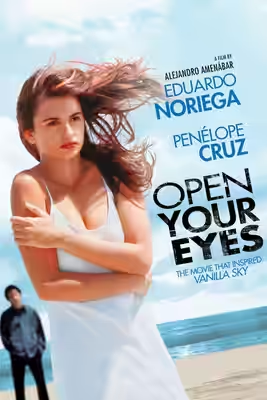
How does Vanilla Sky compare to Open Your Eyes?
Vanilla Sky tells the same story as Open Your Eyes, moved from Madrid to Manhattan, at greater length and with far more explanation. Amenábar's original is the shorter and the tighter film, and it trusts its audience more; Crowe's has a more striking opening and a better villain in Diaz. We would see the Spanish film first, or instead.
What should I watch after Vanilla Sky?
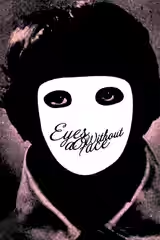
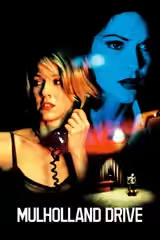
After Vanilla Sky, try Abre los ojos (1997, Fi1m 73): Amenábar’s original: same story, Madrid instead of Manhattan, shorter and far less anxious to be understood. Then Eyes Without a Face (1960, Fi1m 86): Franju’s quiet French horror about a surgeon, a daughter and a mask; the face as a prison; and Mulholland Drive (2001, Fi1m 92): Lynch’s Los Angeles dream, from the same year, which refuses the explanation Crowe cannot resist.

Cast

Awards

Chicago Film Critics Association Award for Best Supporting Actress, 2002

Won
Chicago Film Critics Association Award for Best Supporting Actress

SAG Awards, 2002

Nominated
Outstanding Performance by a Female Actor in a Supporting Role

Saturn Awards, 2002

Won
Best Actor

Broadcast Film Critics Association Award for Best Supporting Actress, 2001

Nominated
Broadcast Film Critics Association Award for Best Supporting Actress

Golden Globes, 2001

Nominated
Best Supporting Actress – Motion Picture

Golden Raspberry Award for Worst Actress, 2001

Nominated
Golden Raspberry Award for Worst Actress

If you liked this, try…

  1. Abre los ojos (1997, Fi1m 73)Amenábar’s original: same story, Madrid instead of Manhattan, shorter and far less anxious to be understood.

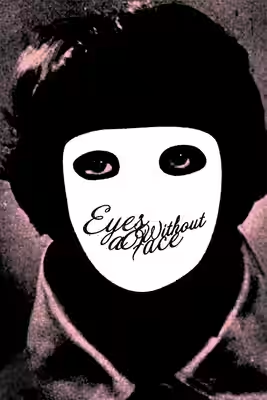
  2. Eyes Without a Face (1960, Fi1m 86)Franju’s quiet French horror about a surgeon, a daughter and a mask; the face as a prison.

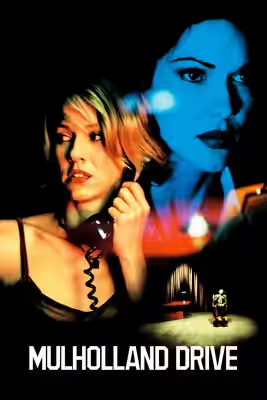
  3. Mulholland Drive (2001, Fi1m 92)Lynch’s Los Angeles dream, from the same year, which refuses the explanation Crowe cannot resist.

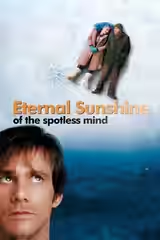
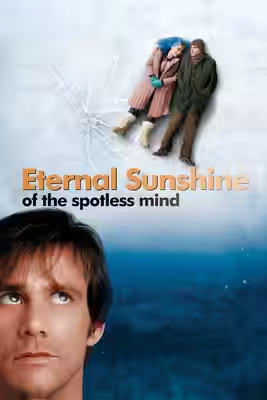
  4. Eternal Sunshine of the Spotless Mind (2004, Fi1m 88)Memory edited for money, done with wit and a heart; what Vanilla Sky wanted to be.

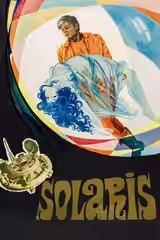
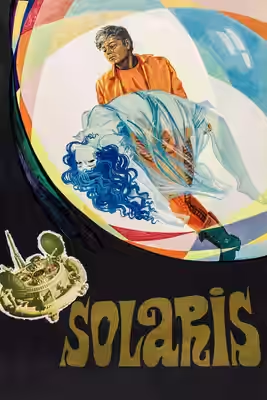
  5. Solaris (1972, Fi1m 87)Tarkovsky’s slow Soviet science fiction about a man visited by someone he lost, patient where Crowe hurries.

Free account

Know what to watch tonight

Two lists that know where things are streaming, collections you can share, your own score beside ours, and Discover that remembers what you have seen.

  • Want to see, sorted by what is streaming now
  • Seen, with your score out of ten
  • No adverts, ever