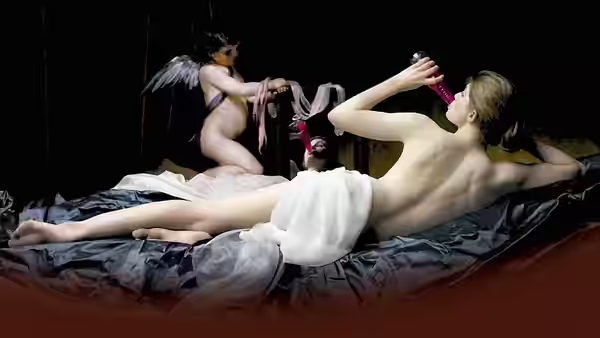
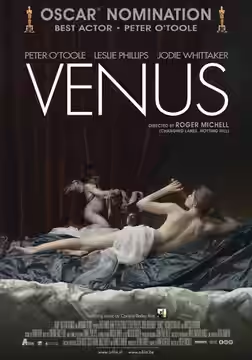
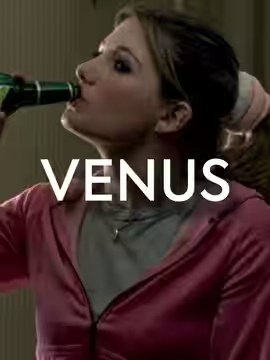
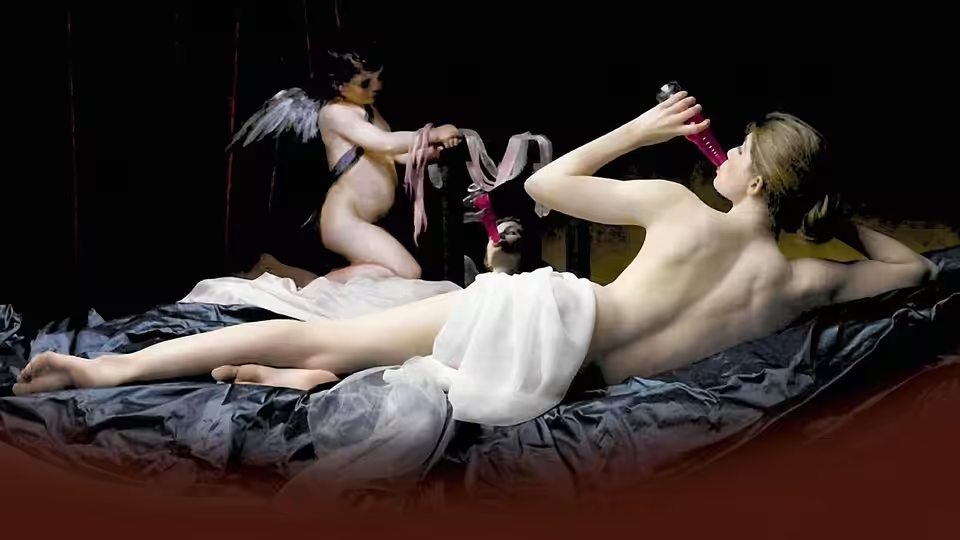
A nude model reclines on a dark-draped platform as a winged figure adjusts her pose
Film review

Venus

2006 · Directed by Roger Michell · 1h 35m

In a sentencePeter O’Toole smells a girl’s neck as if it were a vintage, and the film knows exactly how that looks

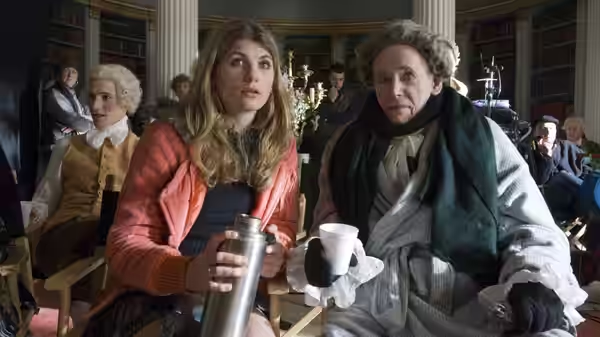
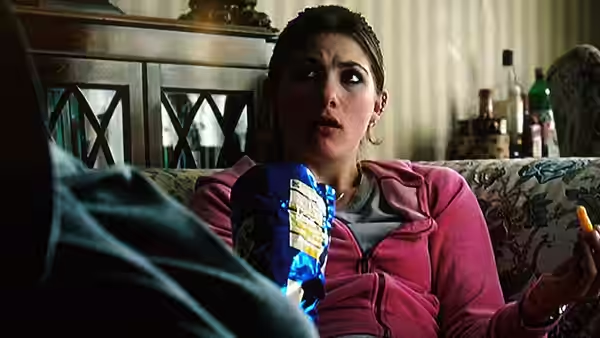
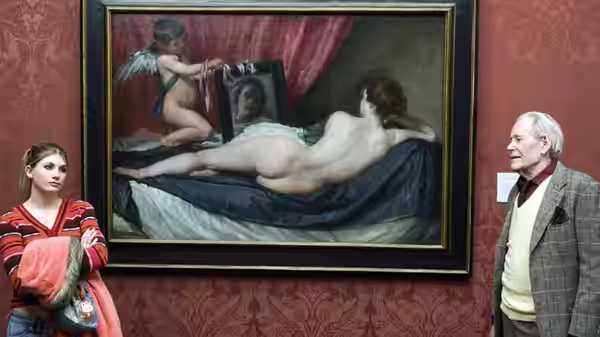
London, in winter. Maurice (Peter O’Toole) is an actor in his seventies who now mostly plays corpses on television, and who spends his mornings over coffee and the obituaries with two old colleagues, Ian (Leslie Phillips) and Donald (Richard Griffiths). Ian’s great-niece Jessie (Jodie Whittaker) arrives from the north to keep house for him; she drinks, sulks, eats crisps in front of the television and will not cook, and within a day Ian wants her gone. Maurice does not. He takes her to the National Gallery, stands her in front of the Velázquez Venus and gives her the name. He buys her clothes and small treats, and she lets him come a little closer each time, on her own terms. Meanwhile he faces a prostate operation, and goes to be fed by Valerie (Vanessa Redgrave), the wife he left years ago.

Plays from YouTube when you press play; nothing loads from them until then.

Fi1m review

Roger Michell and Hanif Kureishi give Peter O’Toole an old actor who falls, uncomfortably and without apology, for a girl young enough to be his granddaughter. It is funny and frank and well played, and it runs out of ideas before it runs out of film.

Hanif Kureishi and Roger Michell made The Mother (2003) about an older woman who wants a younger man, and the film did not flinch. Venus turns it round. An old actor in his seventies, dying by inches, finds himself wanting a sullen girl of about twenty, and the film declines either to punish him for it or to pretend it is sweet. It is a small, cold, often funny 95 minutes, and for an hour it is as honest about an old man’s body and appetite as any British film we can think of. Then it gets nervous, and kind, and a little vague. It is still worth your evening.

O’Toole has not had a part like this in years and he knows it. Maurice walks as if the pavement were slightly further away than he remembers. He plays corpses on hospital dramas and treats the make-up chair as a small daily rehearsal for the real thing. The voice is still the instrument, that long musical rumble, and O’Toole uses it to flirt, to beg, to recite poetry at a girl who does not want to hear it, and to say plainly that he is frightened of dying. What is remarkable is that he plays the vanity and the fear in the same breath. We never doubt that Maurice is a selfish man, and we never stop liking him, and the film has the nerve to let both stand.

The mornings with Leslie Phillips are the funniest material. Phillips plays Ian as a fastidious old bachelor who counts his pills into a saucer and regards his great-niece as a form of weather, and the two of them bicker in the register of men who have been having the same argument since the 1950s. Richard Griffiths, as Donald, mostly listens and eats, and gets a laugh from the way he reads an obituary. The scenes between O’Toole and Vanessa Redgrave are the best in the film. Valerie feeds him, scolds him and refuses to be sorry for him, and when he says what he owes her she tells him, briefly, what it cost. We were moved more than we expected to be, and it was Redgrave who did it: a woman who stopped waiting decades ago and has decided to be fond of him anyway.

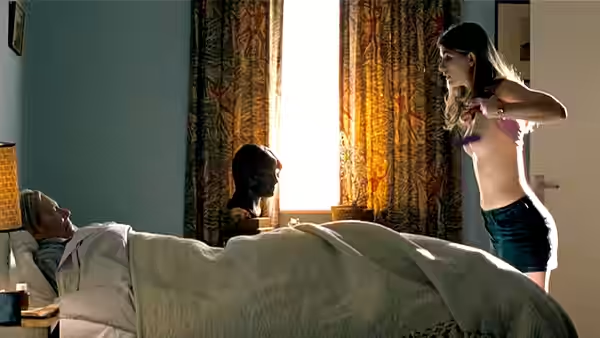
Jodie Whittaker is making her film debut and it shows in the right ways. Jessie is not a muse. She wants a drink, a modelling job and somebody to stop telling her what to do, and she treats Maurice’s attention as a deal to be haggled over. Whittaker plays her flat and watchful, and it is her refusal to be charming that keeps the film from becoming a dirty old man’s daydream. We squirmed, more than once, when his hand went to her neck. The film means us to. Kureishi has written the discomfort in, and Michell does not cut away from it.

Haris Zambarloukos shoots London in grey winter light, mostly hand-held, so that the flats look cramped and the streets look cold and the gallery, with its red walls and the pale body on the canvas, is the only warm room in the film. John Paul Kelly gives Ian a flat crowded with the belongings of a man who has never thrown anything away. Natalie Ward dresses Maurice in a long coat and scarf and Jessie in tracksuit bottoms and a hooded top, and the clothes he buys her look like what they are, an old man’s idea of a young woman. Nicolas Gaster cuts scenes off a line or two before they finish, which suits the comedy and keeps the running time down.

The trouble is the last half hour. Having set up a transaction between two people who each want something the other has, Kureishi does not quite know how to end it, and the film reaches for feeling where it had been content with fact. There is a trip we will not describe, and it is the one stretch where the light goes soft and the film asks us to be touched rather than letting us be. After an hour of looking straight at Maurice, it looks slightly past him.

Most critics have been a little warmer than this, and we understand why: O’Toole is reason enough. But The Mother kept its nerve to the end and this does not. Watch it for him, for Phillips’s saucer of pills, and for the ten minutes with Redgrave, and forgive it the last reel.

Critical consensus AI synthesised

70
Positive
4
Mixed
2
Negative
0

Most critics like Venus, warmly if not wholeheartedly. The praise clusters almost entirely on Peter O’Toole, whose performance as Maurice, an ageing actor, is called charming, irresistible and remarkable, and on the older cast around him: the lively exchanges with Leslie Phillips and the scenes with Vanessa Redgrave are singled out repeatedly. The film’s tone is described as gentle, funny and melancholy, with a kind and unsentimental treatment of old age.

The reservations are about structure rather than acting. Several reviews find the later scenes lose their footing, and even the kinder verdicts say the film is warm-hearted without quite coming together. Slant Magazine goes furthest, calling the writing clever but the whole muffled and uncertain, and judging the O’Toole and Redgrave scenes better than the film around them. The spread is narrow: nobody is hostile, but nobody is unreserved, and the consensus is a modest recommendation carried by one performance.

Total Film
26 January 2007 · ★★★★ · Total Film
80

The review finds the film gentle, funny and melancholy, with a warm treatment of ageing. It especially praises Peter O’Toole’s charming, irresistible performance.

Read the full review →
Empire
2 January 2007 · Alan Morrison
70*

Morrison finds the film an engaging, melancholy showcase, though it loses its footing in later scenes. He particularly praises Peter O’Toole’s performance and the lively exchanges between O’Toole and Leslie Phillips.

Read the full review →
The Guardian
20 July 2007 · Rob Mackie
70*

Mackie finds the film warm-hearted, though it does not entirely come together. He singles out Peter O’Toole’s performance and the warmly self-mocking performances of the older cast for praise.

Read the full review →
Time Out
19 October 2006 · Ben Walters
64*

The critic’s verdict cannot be determined because the review text is unavailable. The visible description introduces Maurice, an aging actor, but does not reveal what the critic praises or criticizes.

Read the full review →
Slant Magazine
28 November 2006 · ★★½/4 · Dan Callahan
62

Callahan finds the film cleverly written but ultimately muffled and uncertain. He praises the scenes between Peter O’Toole and Vanessa Redgrave, whose performances and dialogue outshine the rest of the project.

Read the full review →
Eye for Film
25 January 2007 · Scott Macdonald
75*

The critic finds Venus a rough but affecting gem, despite a final act that falters. He especially praises Peter O’Toole’s remarkable performance and the chemistry among the actors.

Read the full review →

Straight answers AI written, from our review

Is Venus worth watching?
Venus is worth watching for Peter O'Toole, who plays an old actor's vanity and fear of dying in the same breath, and we scored it 72. The mornings with Leslie Phillips and the ten minutes with Vanessa Redgrave are the best of it. The last half hour goes soft and asks to be touching where the rest had been content to be honest.
How long is Venus, and what is it rated?
Venus runs 1h 35m. It is a comedy and drama film.
Where can I watch Venus in Japan?
Venus is not on any streaming or rental service in Japan at the moment. It is available in 3 other countries; change your country at the top of the page to see where. Availability is checked daily.
How violent or frightening is Venus, and is it suitable for children?
Venus has no violence and nothing frightening in it, but it is an adult film about an old man's desire for a girl of about twenty, and the US R certificate reflects that. There is drink, frank talk about his body and illness, and scenes of his hand at her neck that are written to make the audience squirm. It is not for children, and it will make some adults uncomfortable too.
How does Venus compare to Harold and Maude?
Venus runs the age gap the other way from Harold and Maude: an old man wanting a young woman, filmed in cold grey London rather than with hearses and folk songs. Ashby's film is the warmer and the more tender, and it holds its tone to the end, where Michell's loses its nerve in the last reel. Choose Venus for O'Toole and its frankness about an old body; choose Harold and Maude if you want to be charmed.

What should I watch after Venus?
After Venus, try Harold and Maude (1971, Fi1m 81): The age gap run the other way, with hearses, folk songs and real tenderness. Then Wild Strawberries (1957, Fi1m 88): Bergman’s old professor drives to collect an honour and meets his whole life on the way; and Umberto D. (1952, Fi1m 91): A pensioner, a dog and a Rome that has no further use for either.

Cast

Awards

Academy Awards, 2007

Nominated
Best Actor

If you liked this, try…

  1. The Mother (2003) · not on Fi1m yetMichell and Kureishi’s harder companion piece; an older woman, a younger man, no apologies.

  2. Harold and Maude (1971, Fi1m 81)The age gap run the other way, with hearses, folk songs and real tenderness.

  3. Wild Strawberries (1957, Fi1m 88)Bergman’s old professor drives to collect an honour and meets his whole life on the way.

  4. Umberto D. (1952, Fi1m 91)A pensioner, a dog and a Rome that has no further use for either.

  5. Gloria (2013) · not on Fi1m yetA Santiago divorcee in her fifties goes dancing and refuses to be pitied.