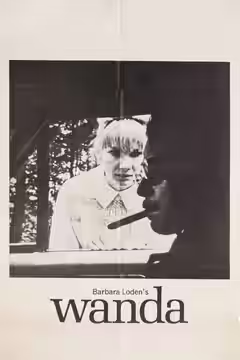
Barbara Loden’s Wanda is a moving character study, carried by her unshowy performance and Nicholas T. Proferes’s rough, intimate photography. Its wandering pace occasionally tests patience, but we recommend staying with it.
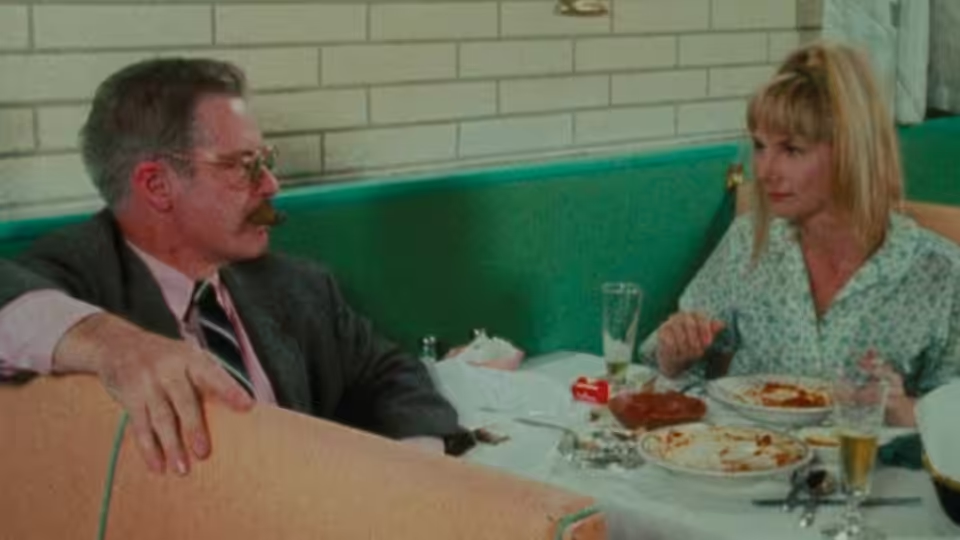
Wanda is worth the patience it asks for, chiefly because Barbara Loden makes its central woman so difficult to dismiss. Her performance as Wanda Goronski gives this wandering crime drama its hold on us. There is nothing brisk or reassuring about the way it proceeds, and some stretches do drag. But the film takes hardship seriously without treating the person experiencing it as a specimen. We recommend it, with the warning that much of its force comes quietly.
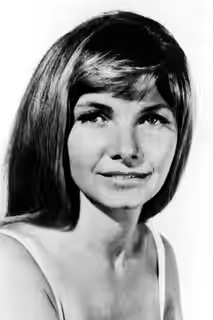
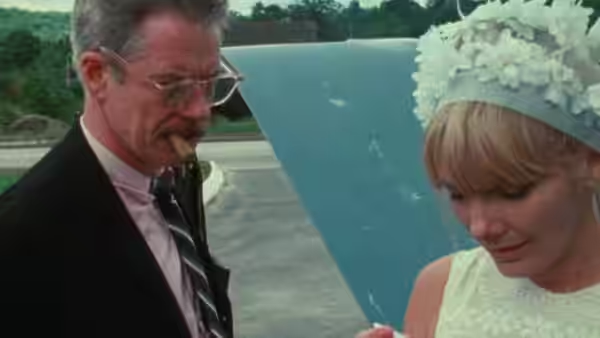
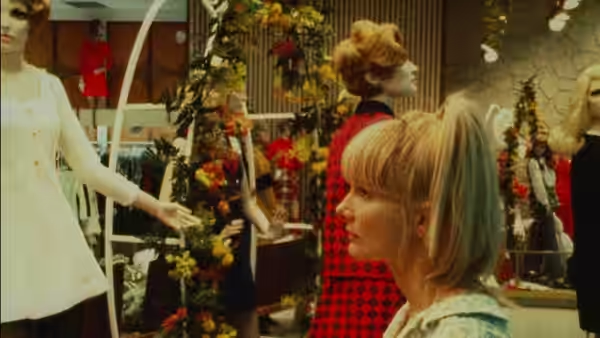
Her acting is unusually free of the little signals that tell us a performance is under way. She lets Wanda be vulnerable without asking us to approve of her, and she never makes the character’s resilience a cause for applause. We were moved by how exposed she seems in those harsh surroundings. That unshowy acting made the hardship harder to shrug off. We kept attending to Wanda, even when she was difficult to understand.
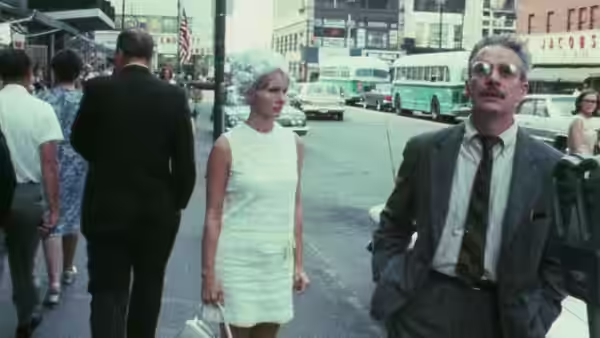
Nicholas T. Proferes’s handheld photography makes the surroundings hard to ignore. The grain keeps the image rough, while the camera’s movement gives it an unsettled closeness. There is beauty here, but it does not make hardship look like an appealing way to live. The photography works because it gives the woman and her surroundings equal weight. We are allowed to notice what is around Wanda without losing sight of the person trying to get through it.
He also edits, allowing the film’s wanderings to determine the pace rather than pushing us rapidly towards the next development. Barbara Loden’s unforced acting benefits from the time he gives it. The drawback is a slackness that becomes harder to overlook when Wanda herself is difficult to read. We can be left studying a performance without finding much new in it. A little tightening would have made the slow stretches more absorbing, without turning this into a different sort of film.
As writer and director, Barbara Loden keeps the attention firmly on Wanda, and that concentration has a cost. The people around her are less absorbing, including Michael Higgins’s Mr. Dennis. We are interested in what they bring out in her, but they do not stay with us in quite the same way. This makes the film feel narrower than it needs to. Still, the central performance has enough uncertainty in it to withstand such close attention without becoming a simple illustration of suffering.
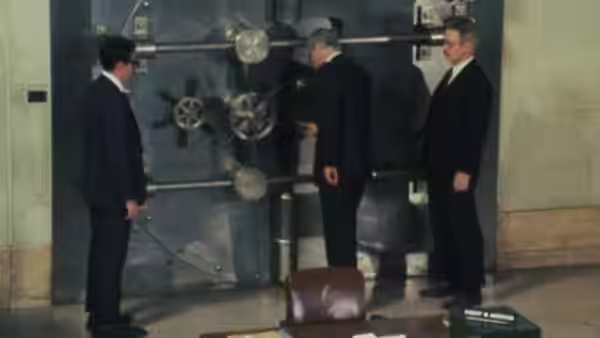
Anyone coming to Wanda chiefly for the crime may find its priorities frustrating. It concentrates on following this woman and makes few concessions to an appetite for brisk plotting. At 103 minutes, it nevertheless feels longer than its running time suggests. That is the caveat we would give alongside a warm recommendation. Choose it for an evening when watching a person closely sounds like enough; Barbara Loden makes that attention worthwhile.