Alex Gibney makes the WikiLeaks story accessible and gives Chelsea Manning’s messages proper attention. It is compelling, moving documentary work, held back by an uneven structure and too much fascination with Julian Assange.
Alex Gibney’s We Steal Secrets: The Story of WikiLeaks is a good introduction to a difficult subject, though it spends too long trying to make its founder explain the whole enterprise. It wants to understand how confidential information becomes public, who makes that happen and what it costs them. Gibney keeps the material accessible and allows conflicting views enough space to become interesting. The trouble is that the personal disputes become more absorbing than the questions about disclosure, and the film does too little to correct that drift.
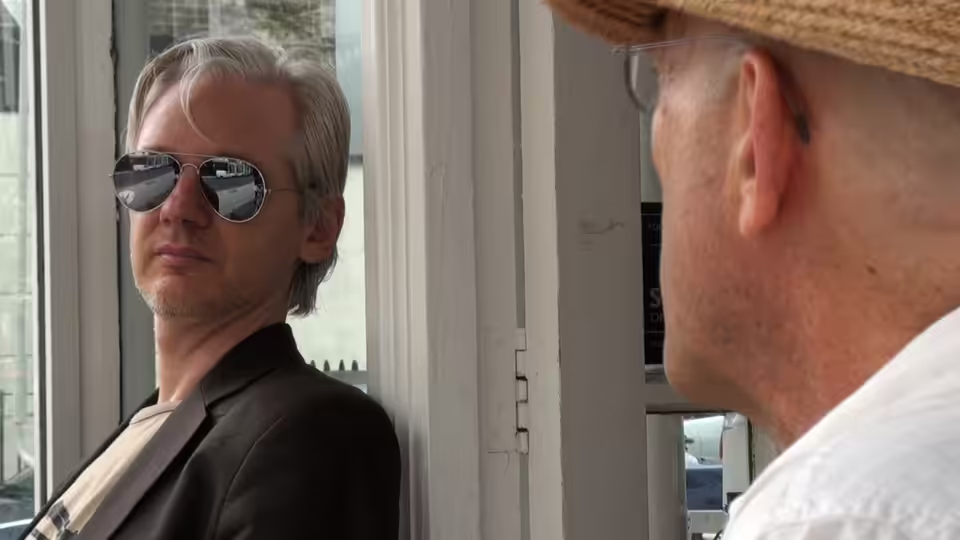
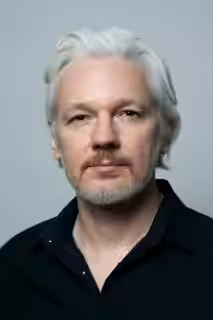
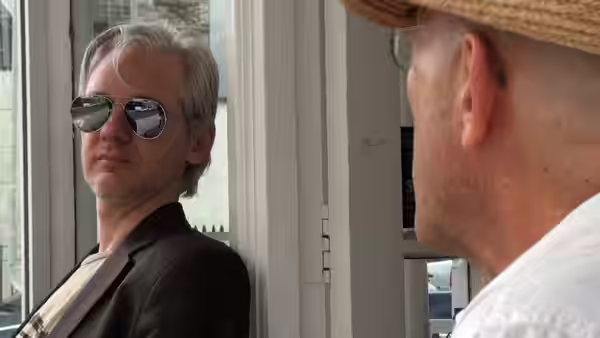
Julian Assange is a compelling subject for this approach, and an awkward one. He appears through archive footage, so there is a limit to how directly Gibney can test the impressions supplied by other people. The glimpse of Assange dancing alone to disco music is welcome because it gives us something to look at beyond the public figure being discussed. It also shows the limitation: an unguarded moment can make someone more approachable without explaining their decisions.
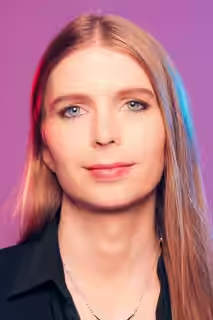
Chelsea Manning is where the film becomes more attentive. The online chat messages bring the scale down to words sent by one person to another, and Gibney lets those words carry emotional weight that the larger account sometimes struggles to find. We were moved by Manning’s messages, because they make the distress of the person supplying the information impossible to overlook. They give us a reason to care about the source beyond the disclosures themselves.
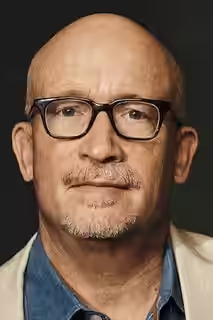
Andy Grieve’s editing makes the movement between Assange and Manning clear, which matters when the film has so many voices to accommodate. The candid interviews keep that movement from feeling like a procession of official statements. Maryse Alberti’s cinematography serves those interviews well: the speakers hold our attention without needing the surrounding graphics to make their words interesting. The visual embellishments elsewhere are less persuasive, often giving us another thing to watch when we would rather think about what has just been said.
Will Bates’s music adds urgency, but urgency is not always what this material needs. At 127 minutes, the film has room to weigh its competing accounts more patiently. Instead, its embellishments sometimes hurry us past a question that deserves more time, while the portrait of Assange receives another pass. Grieve keeps individual passages moving, but the amount of attention given to each subject remains frustratingly uneven.
An investigative documentary needs to help us judge how much each interview actually establishes. Gibney is right to scrutinise the people handling secrets rather than assume their stated principles settle every question about their conduct. But the attention paid to Assange’s elusive personality does not always help us understand WikiLeaks. The broader account feels unfinished, and the confidence of the presentation can make that limitation easy to miss.
We would recommend it as an introduction, with a warning against accepting the portrait of Assange as a settled account. Allow room afterwards to question how much one person’s behaviour can explain about an organisation built around disclosure. And give Manning’s words your closest attention.